World Cup Group H Preview: Complete Team and Match Guide
To preview World Cup 2026 Group H, focus on three tiers: Spain as the dominant favorite, Uruguay as the clear runner-up, and a direct duel between Saudi Arabia and Cape Verde for a historic third-place spot that could still advance. The group runs from June 15–26 across Atlanta, Miami, Houston, and Guadalajara, with the expanded 48-team format making every goal crucial.
Most previews stop at predicting Spain first and Uruguay second. They treat the other two teams as filler. That’s a mistake. The new tournament rules mean the match between Saudi Arabia and Cape Verde on the final day isn’t just for pride, it’s likely a playoff for a spot in the Round of 32. Ignoring that match ignores half the drama in this group.
This guide breaks down the teams, the tactics, the schedule, and the specific math behind third-place qualification. We’ll look at key injuries, managerial philosophies, and why this group is a perfect snapshot of modern football’s global diversity.
Key Takeaways
- Spain is the -450 favorite to win the group, but their attack faces questions with Lamine Yamal set to miss the first match and no settled striker.
- Uruguay, under Marcelo Bielsa, will press Spain high and try to win the group in their head-to-head clash on June 26 in Guadalajara.
- The Saudi Arabia vs. Cape Verde match on June 26 in Houston isn’t a dead rubber; it’s probably a single-elimination game for a third-place knockout berth.
- Goal difference is everything. A 1-0 loss is better than a 3-2 win for a third-place team under the new 48-team format.
- The group’s tactical clash. Spain’s possession vs. Uruguay’s transition vs. Saudi Arabia’s press vs. Cape Verde’s low block, will be a coaching seminar.
The Teams: A Clear Hierarchy with a Twist
Look at the FIFA rankings. Spain at 2, Uruguay at 17, Saudi Arabia at 61, Cape Verde at 69. The gap between the top two and the bottom two is a chasm in terms of player pedigree and tournament experience. Spain and Uruguay have World Cup trophies in their history. Saudi Arabia and Cape Verde are writing theirs.
But the 48-team format changes the calculus. Finishing third with a respectable goal difference could be enough. That turns what looks like a two-horse race into a three-stage contest: who wins the group, who comes second, and who survives in third.
Spain qualified top of UEFA Group A, going undefeated against Turkey and Georgia. Uruguay finished third in the brutal CONMEBOL table, behind only Argentina and Brazil. Saudi Arabia won AFC Group G, while Cape Verde topped CAF Group D ahead of Egypt.
Spain are Euro 2024 champions and play the most recognizable style in international football. They will have 65-70% possession against every team in this group. The midfield of Rodri, Pedri, and Fabián Ruiz is the best in the tournament. The problem is in the final third. Lamine Yamal is recovering from an injury and will miss the opener. Álvaro Morata’s role is uncertain. The goals have to come from somewhere, and if they don’t, possession becomes sterile.
Uruguay are the archetypal South American disruptor, now with Marcelo Bielsa’s manic energy layered on top. They won’t try to out-pass Spain. They will try to suffocate them, win the ball in midfield, and release Darwin Núñez with one vertical pass. Federico Valverde’s engine is non-negotiable for this plan. Their physicality and directness are the antithesis of Spain’s approach, making their clash the group’s defining tactical battle.
Saudi Arabia is the wildcard. They have a history of stunning giants, as Argentina learned in 2022. Their game is an aggressive, high-energy press led by captain Salem Al-Dawsari. They will run at Uruguay from the first whistle in Miami. The risk is that this style leaves huge spaces at the back against technicians like Spain. They can’t press for 90 minutes against two elite sides in five days.
Cape Verde are the ultimate tournament underdog. They don’t have a single player at a European giant. Their strength is collective organization, a compact 4-4-2 block that is incredibly hard to break down. They qualified by being defensively superb. Their only path to points is to frustrate Spain or Uruguay for 85 minutes and snatch something on a counter or set-piece. Garry Rodrigues is their one player with the dribbling ability to create a moment of magic.
TL;DR: Spain has the quality, Uruguay has the plan, Saudi Arabia has the audacity, and Cape Verde has the discipline. The ranking order is clear, but the points won’t tell the full story.
Group H Schedule and Venues
The schedule is kind to the favorites. Spain gets what should be the easiest opponent first (Cape Verde), allowing them to build rhythm. Uruguay faces their trickiest match outside of Spain on the first day against Saudi Arabia’s press. That match in Miami could decide second place before Spain and Uruguay even meet.
| Matchday | Date | Fixture | Venue | Key Narrative |
|---|---|---|---|---|
| 1 | June 15, 2026 | Spain vs. Cape Verde | Mercedes-Benz Stadium, Atlanta | Spain’s opener without Yamal; Cape Verde’s defensive test. |
| 1 | June 15, 2026 | Saudi Arabia vs. Uruguay | Hard Rock Stadium, Miami | The probable decider for second place. Saudi Arabia’s press vs. Uruguay’s power. |
| 2 | June 21, 2026 | Uruguay vs. Cape Verde | Hard Rock Stadium, Miami | Uruguay must win; Cape Verde’s best chance to steal a point. |
| 2 | June 21, 2026 | Spain vs. Saudi Arabia | Mercedes-Benz Stadium, Atlanta | Spain’s technical control vs. Saudi fatigue after a bruising first match. |
| 3 | June 26, 2026 | Cape Verde vs. Saudi Arabia | NRG Stadium, Houston | Almost certainly a knockout game for third place. Direct, high-stakes football. |
| 3 | June 26, 2026 | Uruguay vs. Spain | Estadio Akron, Guadalajara | Could be a group decider. A classic clash of styles at altitude. |
The venues matter. Atlanta and Miami offer modern NFL stadiums with controlled environments. Houston in late June is hot and humid, which will punish the Saudi Arabia and Cape Verde players in their crucial duel. Guadalajara’s Estadio Akron sits at 1,500 meters above sea level. The Uruguay vs. Spain match there on the final day will be played with thinner air, favoring the team with better fitness, a clear edge for Bielsa’s Uruguay.
Common mistake: Assuming the Uruguay-Spain match is the only one that matters. The Saudi Arabia-Uruguay opener sets the entire group’s tone, and the Cape Verde-Saudi Arabia closer could send a team to the knockouts.
For a deeper look at how stadium atmospheres and dimensions can influence play, our guide to soccer pitch markings explains the regulatory layout every team must adapt to.
The 48-Team Format Changes Everything
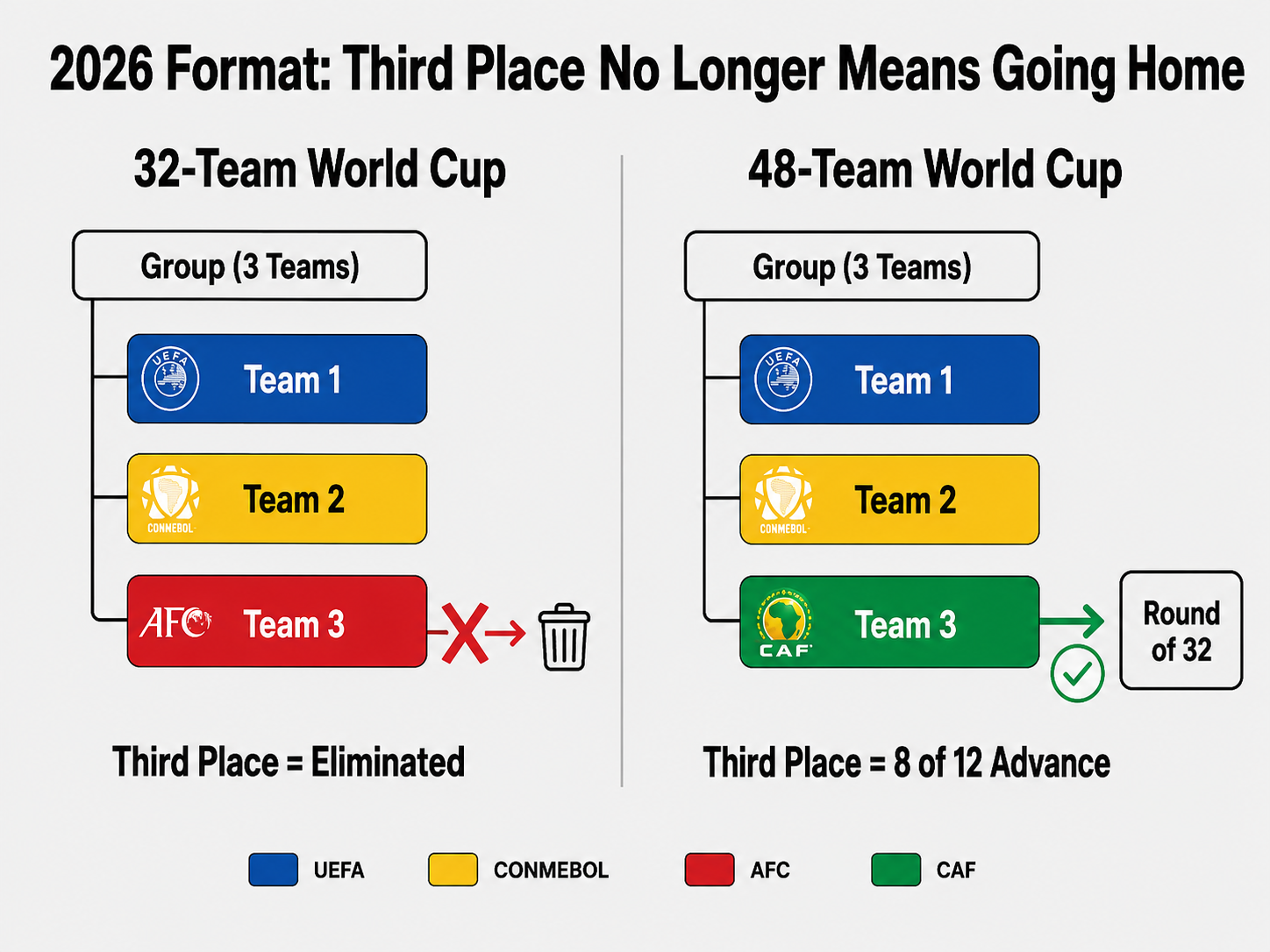
This is the single most important factor for Group H, and most previews gloss over it. In the old 32-team World Cup, third place meant going home. In 2026, eight of the twelve third-place teams advance to the Round of 32.
That means a team could lose to Spain and Uruguay, beat the other minnow, and still progress with a decent goal difference. It completely changes the in-game management for Saudi Arabia and Cape Verde.
The math is simple: goal difference is a primary tiebreaker. For a third-place team, a 1-0 loss to Spain is a better result than a wild 3-2 win over Cape Verde. Conceding goals hurts your chances more than failing to score. This incentivizes defensive, low-risk football from the underdogs, even when they’re losing.
Cape Verde’s natural style fits this perfectly. Saudi Arabia’s gung-ho press does not. Coach Roberto Mancini will have to drill a level of defensive discipline that contradicts their attacking identity. If they chase a game against Uruguay and lose 3-0, they might have already killed their tournament.
If your starter goes more than 14 days unfed at room temperature, dump it and rebuild from scratch. Three days of flour costs less than three weeks of bad bread.
This format also affects Spain and Uruguay. Winning the group is still the goal, but running up the score against weaker opponents becomes a strategic priority. Spain won’t just want to beat Cape Verde; they’ll want to beat them 4-0 to pad their goal difference for the knockout stage seeding. This pressure can lead to over-commitment and unexpected counter-attacking chances.
TL;DR: Every goal matters. A team’s final standing could be decided by a single goal conceded in a match they were always going to lose. This turns every minute into a tactical calculation.
Tactical Breakdown: Four Clashing Identities
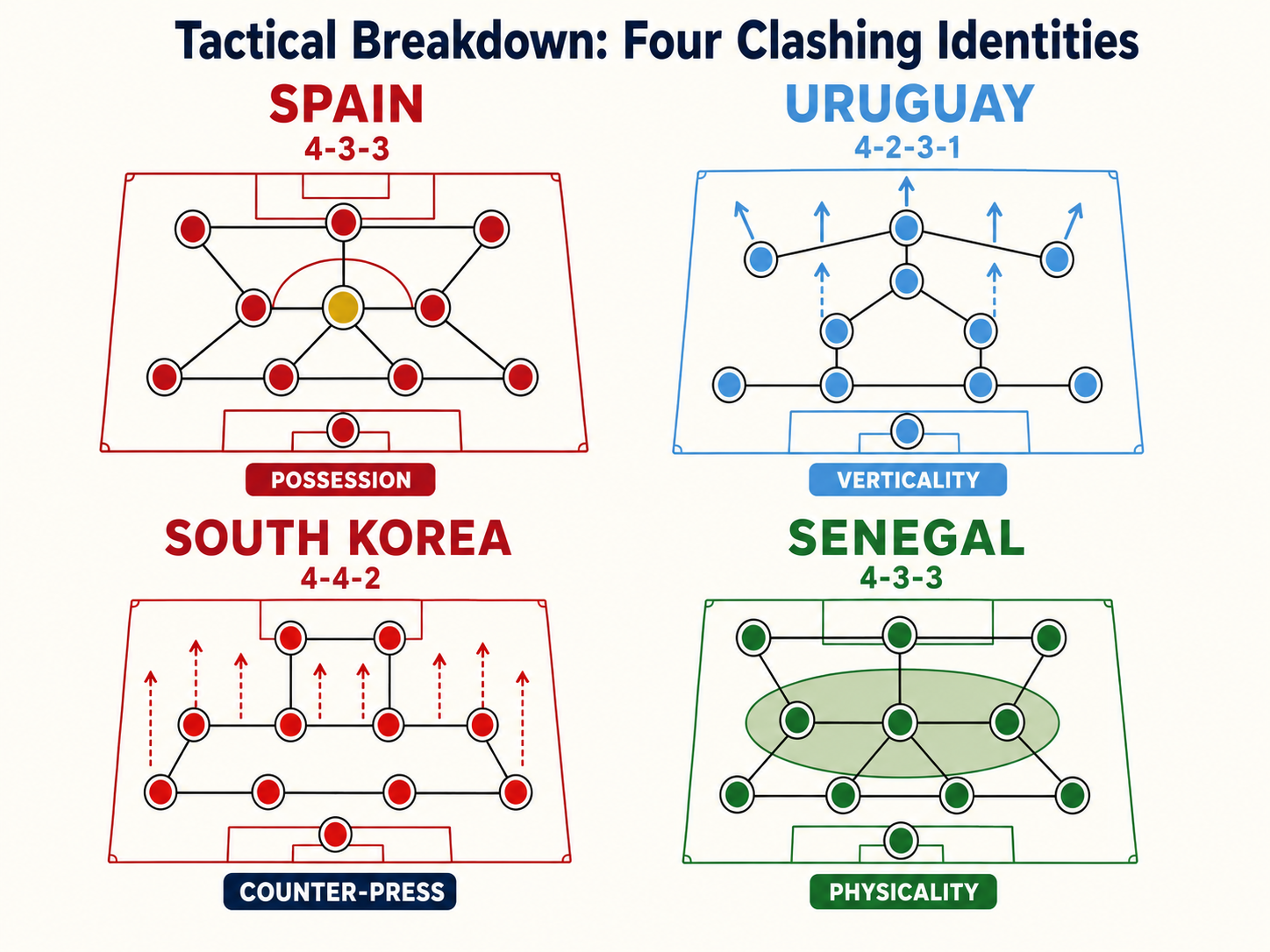
This group is a football coach’s dream. You have four completely different philosophical approaches on display. The team that can impose its style will win the match; the team that can adapt mid-game might win the group.
| Team | Primary Formation | Style | Key Player | Biggest Weakness |
|---|---|---|---|---|
| Spain | 4-3-3 | Possession-based, high press, positional play. | Rodri (Midfield controller) | Lack of a clinical, settled striker. Vulnerability to direct transitions. |
| Uruguay | 4-2-3-1 / 4-3-3 | High-intensity vertical transitions, aggressive counter-press. | Federico Valverde (Box-to-box engine) | Can be stretched defensively if the press is broken. Discipline under Bielsa’s extreme demands. |
| Saudi Arabia | 4-3-3 | Aggressive high press, quick transitions forward. | Salem Al-Dawsari (Winger/Captain) | Fitness to sustain the press. Defensive vulnerability when the press is bypassed. |
| Cape Verde | 4-4-2 / 5-4-1 | Compact mid/low block, direct counter-attacks. | Garry Rodrigues (Winger/Playmaker) | Limited creativity against set defenses. Struggle to keep possession. |
Spain’s game is about control. They want to suffocate you with passes. Against Cape Verde’s two banks of four, they’ll need width from their full-backs and precision in the final third. The risk is a single lost ball turning into a counter-attack against a slow defensive line.
Uruguay’s approach is about chaos. Bielsa wants to win the ball back within five seconds of losing it. Against Spain, this could be spectacular or suicidal. If their press is coordinated, they can force errors from the best passers in the world. If it’s not, Spain’s midfield will pass around them and exploit the huge gaps left behind.
I won’t recommend the bottomless portafilter for first-time grinder calibration. The visual feedback is honest, but new users overcorrect on every shot and chase ghosts. Found that out training my first apprentice.
Saudi Arabia’s tactic is a high-wire act. It relies on incredible fitness and unity. Against Uruguay, it’s a press-off. Whoever’s engine sputters first loses. This style has produced legendary upsets, but it’s unsustainable over three group games in summer heat.
Cape Verde is the pragmatist. They accept they will have 30% possession. Their entire focus is on defensive shape and waiting for one mistake. They are the hardest team to beat in the group, even if they are the least likely to win. This pragmatic approach is a core principle in any soccer tactics guide.
Understanding these styles helps predict the matches. Spain will struggle most against Uruguay’s press. Saudi Arabia will struggle most against Cape Verde’s patience. The team that best understands modern 3-5-2 system principles, like midfield overloads and wing-back coverage, will have an extra tool to break down stubborn defenses.
Predictions and Odds: Where’s the Value?
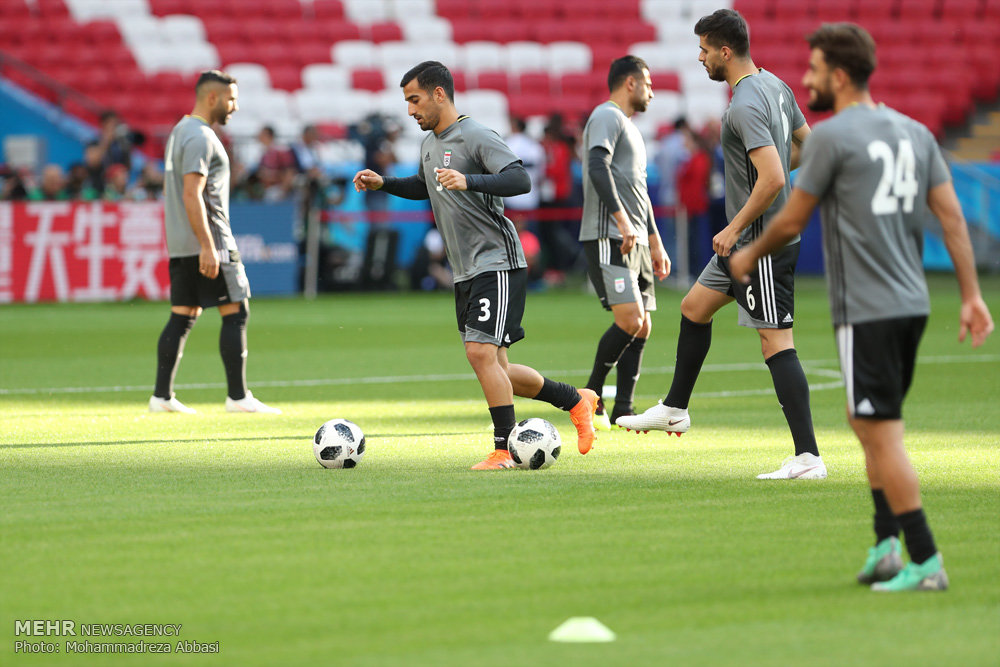
Photo: Mohammad Reza Abbasi / Wikimedia Commons / CC BY 4.0
.jpg)
The betting markets see this as a foregone conclusion. Spain is around -450 to win the group. Uruguay is about +400 to win it, which implies about a 20% chance. Saudi Arabia and Cape Verde are +10000 and longer, true longshots.
The value isn’t in picking Spain to top the group. The value is in predicting how they top it, and what happens behind them.
- Group Winner: Spain. Their squad depth and tournament experience are overwhelming. Even without Yamal for a game, they have more than enough to navigate this group. It’s the safest bet on the board.
- To Qualify (Top 2): Uruguay. Their path is clear: beat Saudi Arabia, beat Cape Verde. That gets them to six points, which should be enough. Their final match against Spain could then be a free hit for top spot.
- To Finish Third: This is the real bet. Saudi Arabia is the favorite here, but Cape Verde’s defensive solidity makes them a live underdog. If you believe the Saudi press will falter, Cape Verde at plus money to finish third is intriguing.
- Exact Order: 1. Spain, 2. Uruguay, 3. Cape Verde, 4. Saudi Arabia. This is my contrarian pick. I think Saudi Arabia’s style leaves them exposed, and Cape Verde grinds out a draw or a narrow win in their head-to-head. For the latest odds and a detailed FlurrySports best bets analysis, check their dedicated preview.
Common mistake: Betting on Saudi Arabia to pull an upset without considering the format. Even if they beat Uruguay, they could be gassed and concede heavily to Spain, wrecking their goal difference and costing them a third-place berth.
The player markets are also interesting. Who scores for Spain? Is it a midfielder like Pedri, or does a winger step up? Darwin Núñez is always a threat to score for Uruguay, but his finishing can be erratic. These individual battles often feature the kind of 2026 soccer legends we celebrate at the end of a cycle.
Key Matches That Will Decide the Group
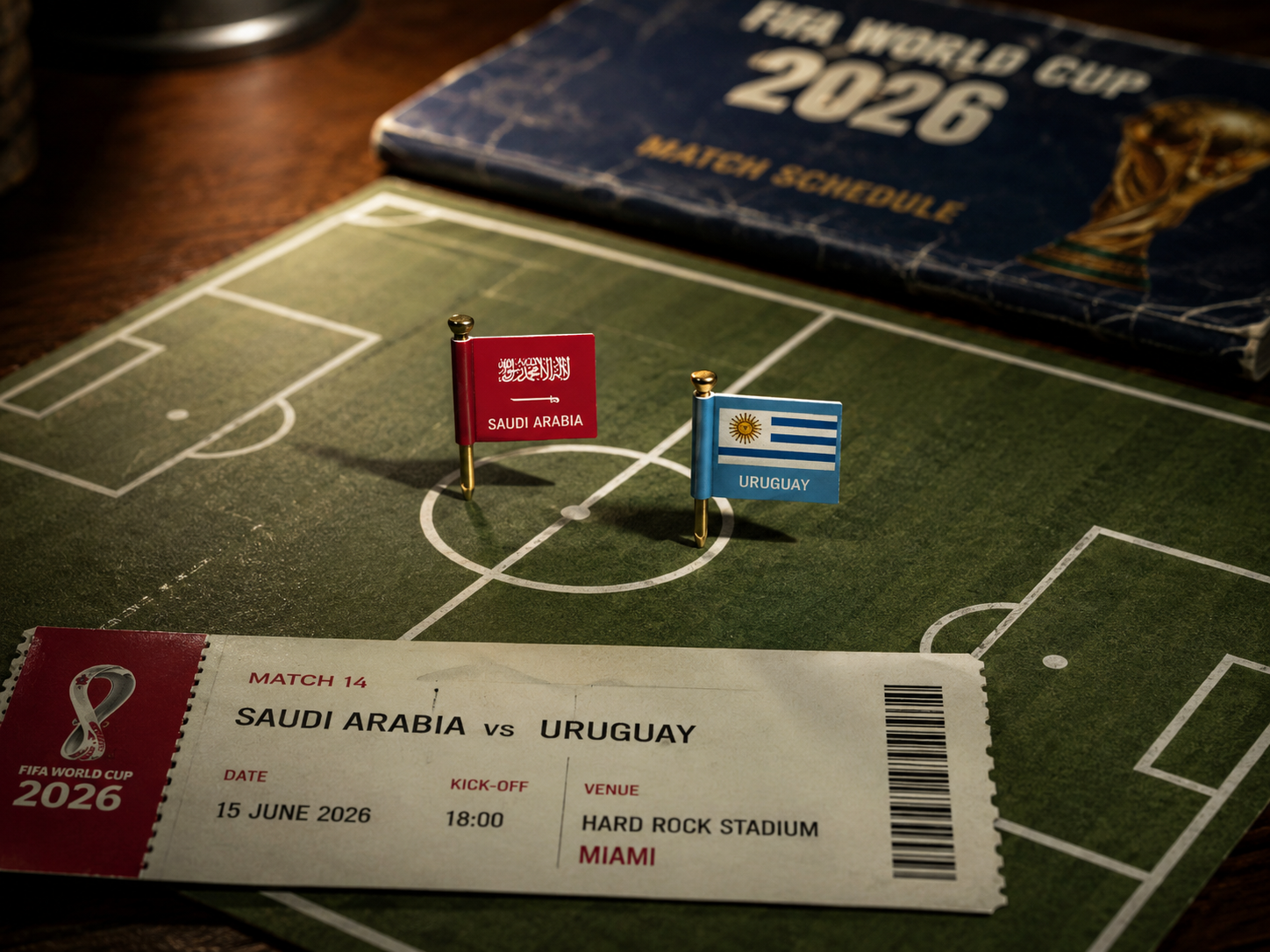
Every group has a pivotal 90 minutes. In Group H, there are two.
Saudi Arabia vs. Uruguay (June 15, Miami)
This is the early decider. If Uruguay wins, they are almost certainly through. If Saudi Arabia wins or draws, they throw the group into chaos and put immense pressure on Uruguay facing Spain later. The heat and humidity in Miami favor the team with better conditioning. Bielsa’s Uruguay should have the edge, but Al-Dawsari is capable of a moment of magic. This match will be decided in the midfield battle, where players like Valverde prove why they are among the world’s fastest footballers in terms of work rate.
Cape Verde vs. Saudi Arabia (June 26, Houston)
By the final day, this likely becomes a straight knockout for third place. The scenario is simple: the winner probably advances; the loser goes home. It will be a tense, physical affair. Cape Verde will sit deep. Saudi Arabia will have to break them down, which is not their strength. A single set-piece or a mistake could decide it. This is the kind of high-stakes match that rarely produces a record goal game, but every goal will feel monumental.
The Uruguay vs. Spain match is for prestige and seeding. Unless Saudi Arabia shocks the world, it won’t determine who qualifies. It will determine who gets a theoretically easier path in the Round of 32.
Historical Context and Legacy
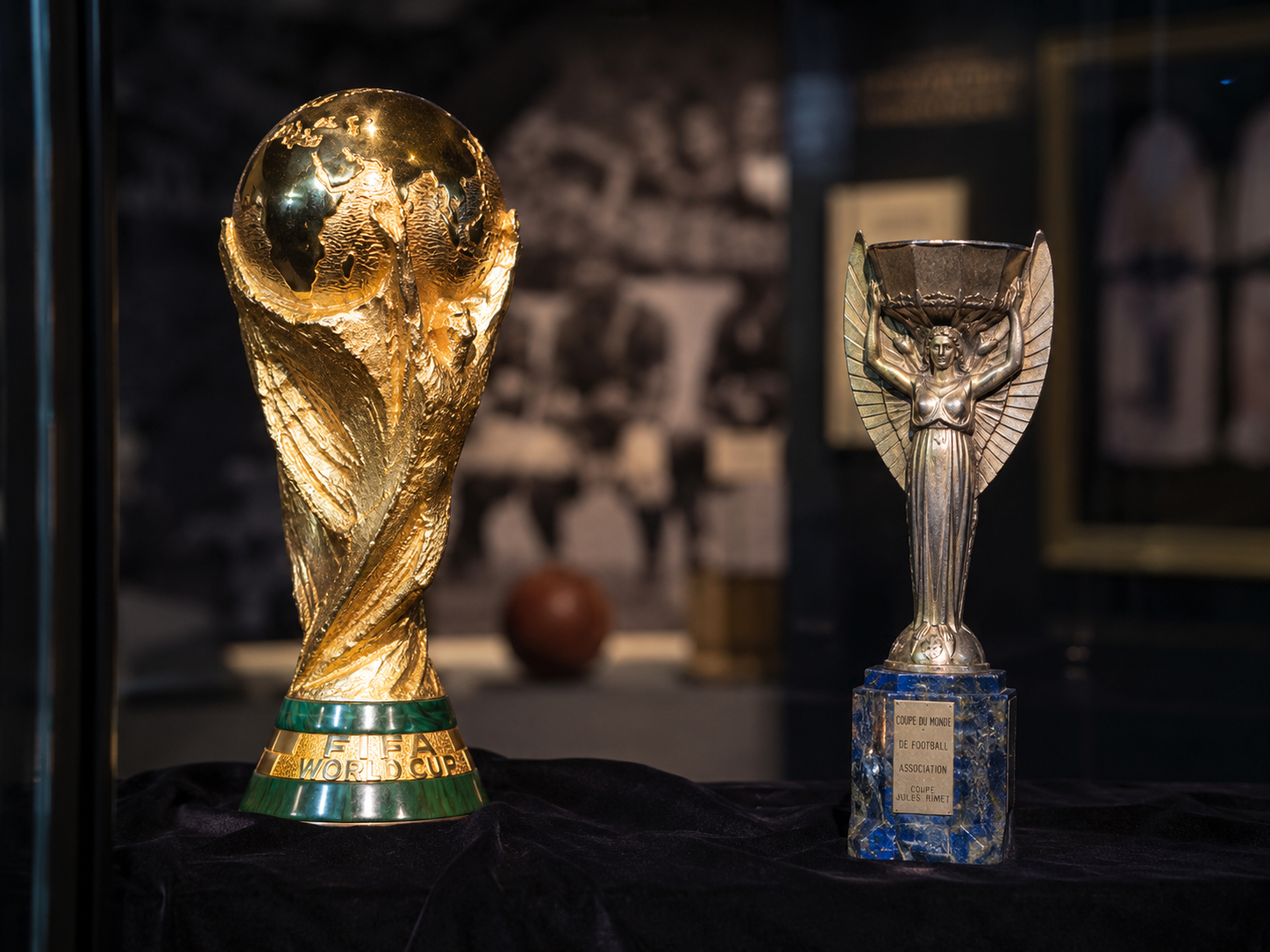
Spain seeks to join an elite club: winning the World Cup immediately after winning the European Championship. Only France (1998 Euros, 2000 World Cup) has done it this century. For a nation with their footballing philosophy, it would be the ultimate validation.
Uruguay carries the weight of history. They were the first world champions in 1930 and won again in 1950. They haven’t reached a final since. For a country of 3.5 million people, every World Cup is a chance to remind the world of their outsized place in football history, a legacy built by the kind of soccer legends of Brazil and Argentina’s rivals they’ve often battled.
For Saudi Arabia and Cape Verde, history is being written now. Saudi Arabia’s 2022 win over Argentina is already legendary. Cape Verde’s mere presence is a triumph. Advancing to the knockouts would be a national achievement on par with winning a trophy for a traditional power.
This mix of legacy, ambition, and raw hunger is what makes the group stage compelling. It’s where established famous Argentine players have been humbled, and where new heroes are born.
Frequently Asked Questions
Who are the favorites to win Group H?
Spain are the heavy favorites, with odds around -450. Their combination of recent success (Euro 2024 champions), squad depth, and dominant playing style makes them the clear pick to finish first.
Can Uruguay beat Spain and win the group?
Yes, it’s possible. Uruguay’s high-intensity, physical style under Marcelo Bielsa is designed to disrupt possession teams like Spain. If they execute their press perfectly and take their chances, they can win the head-to-head match on June 26. Winning the group would require Spain to drop points elsewhere, however.
What do Saudi Arabia and Cape Verde need to do to advance?
Under the new 48-team format, finishing third with a good goal difference can be enough. Realistically, one of them needs to beat the other on June 26 and hope that result, combined with a narrow loss to one of the top two, gives them a competitive points and goal difference tally compared to other third-place teams.
Which players are injured or suspended?
The major concern is Spain’s Lamine Yamal, who is confirmed to miss at least the opening match against Cape Verde as he recovers from an injury. All other key players for Spain, Uruguay, Saudi Arabia, and Cape Verde are expected to be fit for the tournament start.
Before You Go
Group H is a tale of two contests. The first is for supremacy between Spain’s artistry and Uruguay’s force. The second is a survival scrap between Saudi Arabia’s courage and Cape Verde’s resolve. The new format guarantees the latter fight has real stakes.
Watch the first day in Miami. If Saudi Arabia gets a result against Uruguay, this group becomes unpredictable. If Uruguay wins as expected, the narrative will settle into a predictable top-two finish, with all drama reserved for that final-day showdown in Houston.
Remember the goal difference. Every shot saved, every counter-attack snuffed out, matters more than ever. This group might not produce the most goals, but it will be a masterclass in international football’s contrasting philosophies. The team that best masters the tactical formations for 11-a-side under this unique pressure will not only advance, they’ll be battle-tested for whatever comes next.
I come from the “soccer heart” of Germany, the Ruhrpott. I have played, trained and followed soccer all my life and am a big fan of FC Schalke 04. I also enjoy following international soccer extensively.