How to Train Your Skill Using the Best Soccer Rebounder Tools
To train your skill with the best soccer rebounder, you match the right rebounder type to your specific training goal, first-touch precision, power shooting, or cognitive reaction, and then follow a structured drill progression that forces game-speed repetition. A quality rebounder turns 10 minutes of solo time into 200+ meaningful touches, which is the single biggest accelerator for technical skill outside of team practice.
Most players buy a rebounder, whack a ball at it a few times, and let it gather dust in the garage. They treat it like a toy, not a precision tool. The mistake is expecting the equipment to do the work. The rebounder just gives you the ball back. You have to tell it what to do.
This guide breaks down the four rebounder families, the exact drills that work on each, and how to weave a rebounder into your weekly routine so your first touch sharpens within a month.
Key Takeaways
- A hard-board rebounder like the Hackk Soccer Pro Series Elite is for first-touch and passing accuracy; it returns the ball at game pace proportional to your strike.
- A large net-style rebounder like the Tekk Pro Edition is for power shooting and long-range passing; its forgiving surface absorbs hard strikes and returns them consistently.
- Smart rebounders (Voon Soccer Pro, RebounderGo) add cognitive training and performance tracking, making you scan and react while controlling the ball.
- The real value is in the reps. A focused 15-minute session can deliver more quality touches than an entire hour of casual pickup.
- Always start your drill progression with simple one-touch passes at close range. Complexity, angles, volleys, weak foot, comes only after the basic touch is automatic.
Why a Rebounder Beats Any Other Solo Training Tool
A wall is static. A passing partner has their own schedule. A rebounder is an on-demand teammate that never gets tired and, if it’s a good one, returns the ball with realistic pace and spin.
The math is simple. In a typical team practice, a field player might get 40 to 60 quality touches on the ball in an hour. Most of that is during rondos or passing patterns. With a rebounder, you can hit 200 to 300 deliberate touches in 15 focused minutes. That volume forces neurological adaptation. Your foot learns the correct cushioning angle, your ankle learns the required stiffness, and your brain stops overthinking the reception. This is the core mechanism behind rapid skill gain. You’re not just kicking a ball; you’re programming muscle memory under consistent, repeatable conditions.
A high-density polyethylene (HDPE) board rebounder returns the ball with a rebound coefficient that closely mimics a pass from another player. The ball compresses against the rigid surface and springs back with pace and spin proportional to the force of the strike, training true ball composure.
I used to think my first touch was decent until I got a proper board rebounder. The first session was humbling. My cushioned reception sent the ball skidding two yards away every third return. The board didn’t lie. It showed me I was meeting the ball with a lazy, flat foot instead of a soft, angled one. After two weeks of daily 10-minute sessions, that loose first touch tightened up. The difference showed in my next Sunday league game. I could receive a driven pass in midfield and have it stick, giving me that extra half-second to look up.
TL;DR: The rebounder’s superpower is rep density. It condenses a week’s worth of in-game touches into one short, brutal, and highly effective solo session.
The 4 Main Rebounder Types and What They’re For
Not all rebounders train the same skill. Picking the wrong type for your goal is like using a driver to putt, you’ll make contact, but you won’t get better. Your choice hinges on the quality of rebound, the surface material, and the intended training distance.
| Rebounder Type | Best For Training | Ideal User | Key Limitation |
|---|---|---|---|
| Hard-Board (HDPE) | First touch, short-pass accuracy, ball composure under pressure. | Technical players, midfielders, anyone wanting a clean first touch. | Less effective for full-power shooting from distance; can be noisy. |
| Net-Style Frame | Power shooting, long-range passing, heading, volleys. A large target area. | Strikers, wingers, goalkeepers, players with ample backyard space. | The rebound can be less predictable than a board; may not return weak passes well. |
| Smart/Tech-Integrated | Cognitive reaction speed, scanning, performance tracking, varied drill patterns. | Serious players with training budgets, those who love data and app integration. | Highest cost; requires battery management and sometimes a smartphone. |
| 3-in-1 Goal System | All-in-one backyard training: shooting target, rebounder, and ball stop. | Parents, youth players, anyone needing a contained practice area to prevent chasing. | Bulkier and less portable; primarily a fixed backyard installation. |
1. The Hard-Board Rebounder: First-Touch Factory
This is the purist’s tool. Models like the Hackk Soccer Pro Series Elite use a sheet of high-density polyethylene (HDPE). The surface is rigid and unyielding. Strike it softly, and it returns a soft pass. Strike it with pace, and it fires the ball back at game speed. This proportional feedback is irreplaceable.
The board forces you to cushion the ball perfectly. A bad touch is punished immediately, the ball rockets away or dies at your feet. Most quality board rebounders also offer adjustable angles. You can set it flat for ground passes, lean it back for lofted receptions, or tilt it forward for driven returns to practice volleys. This versatility in a simple package is why it’s the first rebounder I recommend for any player focused on foundational technical skills.
2. The Net-Style Frame Rebounder: The Power Player’s Canvas
Think of the Tekk Pro Edition Soccer Trainer Rebounder. It’s a large frame, often built with aircraft-grade aluminum, stretched with a tight net, usually tensioned by bungee cords. The net absorbs tremendous force, making it perfect for unloading full-power shots from 20 yards out. The ball comes back with enough energy to control but without the harsh, unpredictable bounce of a wall.
These are fantastic for strikers working on follow-up shots and for practicing driven crosses and long switches. The Williams Athletics portable net rebounder also introduces a “random reaction” feature, where the ball can rebound slightly offline, training your adjustment steps. The trade-off is that the net doesn’t provide the same crisp, immediate feedback on passing technique that a hard board does.
3. The Smart Rebounder: The Cognitive Drill Sergeant
This is where training tech gets interesting. The Voon Soccer Pro focuses on maximizing rebound power to train lightning-fast reaction and first touch. The RebounderGo, which pairs with external systems like ROX, turns the rebounder into a cognitive trainer. Lights or app commands tell you where to pass or move before you even receive the ball, forcing you to scan and decide under pressure.
Common mistake: Using a smart rebounder only for its basic rebound function, you’re paying a 300% premium for the tech, but ignoring the cognitive drills that actually create faster game decisions.
These tools are for the player who has mastered the technical component and now needs to train the mental processor that sits between seeing the ball and controlling it. It’s the next level.
4. The 3-in-1 Goal System: The Backyard Solution
The Open Goaaal system is the answer to the parent’s eternal problem: ball retrieval. It combines a full-size goal, an angled rebounder net, and a full backstop net. The player shoots on goal, the ball rebounds from the angled net, and if they miss, the backstop catches it. It creates a closed, high-rep training loop in your own yard. It’s less about nuanced first touch and more about maximizing shooting and rebounding repetitions in a confined space. For developing players who just need to hit the ball a lot, it’s a phenomenal investment.
TL;DR: Want a clean first touch? Get a board. Want to smash shots and practice volleys? Get a large net. Want to train your brain and your touch? Invest in smart tech. Need a contained backyard setup? The 3-in-1 system is your answer.
How to Choose Your Rebounder: The 5-Point Checklist
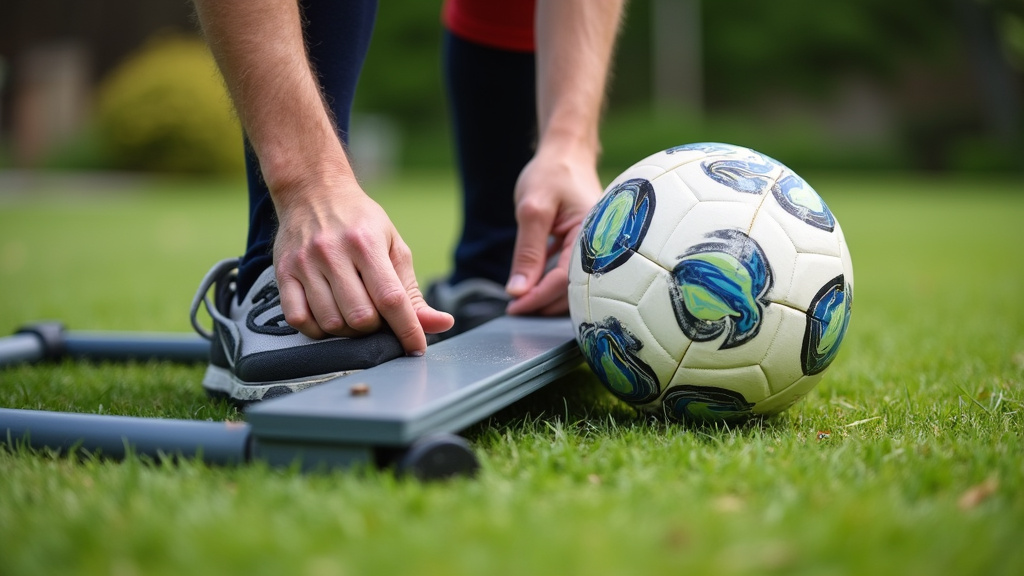
Walking into a store or browsing online with a clear checklist prevents you from buying a flimsy toy that breaks in two weeks. Here are the non-negotiable specs to vet.
- Rebound Quality & Realism. Does it return the ball like a real pass? For boards, the material must be rigid (HDPE, not flimsy plastic). For nets, the tension must be high and even. Read reviews specifically about the rebound feel.
- Durability & Weather Resistance. Will it survive outdoors? Look for UV-protected HDPE, powder-coated or aircraft-grade aluminum frames, and weather-resistant netting. A rebounder that warps in the sun or rusts after one rain is trash.
- Adjustability. Can you change the angle? At minimum, you need a flat setting and a few angled options. This one feature multiplies your drill variety tenfold.
- Portability & Setup. If you need to move it, how easy is it? Tool-free assembly and a lightweight frame are key. Some premium net rebounders are heavy and meant to stay in one place.
- Size & Training Space. Match the rebounder to your available area. A massive 8-foot net rebounder is useless in a small garden. A tiny board might not be challenging enough for a teenager with power.
Your surface matters too. Place a board rebounder on soft, uneven ground, and it will rock, ruining the rebound consistency. Always use it on level grass, turf, or a smooth concrete patio.
Your 5-Step Rebounder Drill Progression
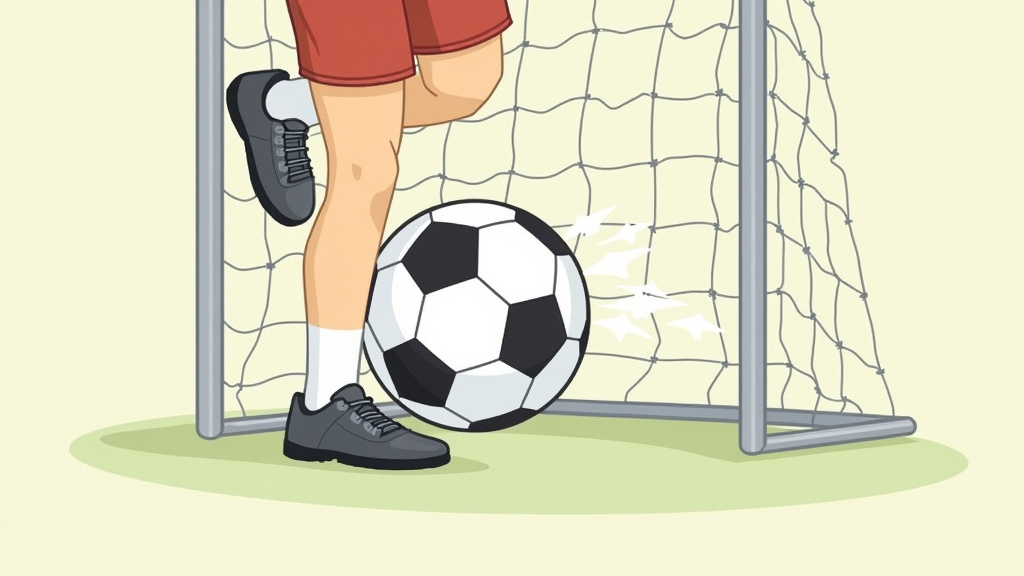
Buying the tool is step one. Using it correctly is everything. This progression takes you from absolute fundamentals to game-realistic combinations. Do not skip steps. Each builds the muscle memory for the next.
Before you start: Always warm up for 5 minutes, jogging, dynamic stretches, light juggling. A cold muscle meeting a hard, game-speed rebound is a prime strain risk. Also, inspect your rebounder for loose bolts or frayed nets before each session.
Step 1: Foundation – One-Touch Pass & Control
- Goal: Program the perfect receiving touch.
- Setup: Place the rebounder flat. Stand 5 yards away.
- Drill: Pass the ball firmly into the center. Receive the return with the inside of your foot, cushioning it dead within a yard of your body. Do 50 reps with your dominant foot.
- Why it works: This eliminates any backswing or elaborate movement. It isolates the moment of reception. Your ankle learns to relax and absorb the ball’s energy. This is the bedrock of all ball control.
- Skip it, and… your touch will always be bouncy under pressure. You’ll waste that precious half-second controlling the ball instead of playing the next pass.
Step 2: Introduction of Weak Foot & Movement
- Goal: Eliminate your “weak” side and receive on the move.
- Setup: Same as Step 1.
- Drill A: Repeat the one-touch drill, but now use only your weaker foot for 30 reps. It will feel awkward. That’s the point.
- Drill B: Add a trigger. Before each pass, take two shuffle steps to your right. Pass, receive, reset. Then two steps to your left. This simulates checking your shoulder and moving to meet the pass.
*
Step 3: Angled Returns & Volleys
- Goal: Control balls coming from different heights and trajectories.
- Setup: Adjust your rebounder to a 45-degree angle.
- Drill A (Thigh Control): Toss the ball underhand against the angled board. Receive the looping return with your thigh, guiding it down to your feet. 20 reps per leg.
- Drill B (Foot Volley): Let the ball bounce once, then strike it on the half-volley back into the board. Control the next return with your foot out of the air. This sequence trains timing and soft feet.
- This is where you start integrating the rebounder with other core agility drills to become a more complete athlete.
Step 4: Combination Play with Cones
- Goal: Integrate control into dribbling and direction changes.
- Setup: Place two cones 3 yards apart, 5 yards in front of the rebounder.
- Drill: Pass into the rebounder. Receive the return and immediately dribble through the two cones. Turn and repeat. This links the first touch to your next action, breaking the static “pass-control-stop” habit.
- For a real challenge, set the cones in a zig-zag pattern. This drill directly improves the quick feet needed for the rainbow flick or other advanced maneuvers.
Step 5: Cognitive & Pressure Drills
- Goal: Train your brain and touch simultaneously.
- Setup: Use a smart rebounder or create manual cues.
- Drill A (Call & Respond): Have a partner (or an app) call “left” or “right” as you strike the ball. You must receive the return and pass it to a cone on that side.
- Drill B (Two-Touch Finish): Set up a small goal or target beside the rebounder. Pass into the rebounder, control the return, and immediately shoot on the small goal. This simulates a quick turn and shot in the box.
- This kind of integrated work complements a structured soccer workout plan that builds the strength to execute these skills at full speed.
TL;DR: Start stupidly simple. Master the one-touch dead stop. Only then add your weak foot, then movement, then air, then combinations. This progression builds skill in layers, like a house. Skip the foundation and the whole thing wobbles.
Integrating Your Rebounder into a Complete Training Week
A rebounder isn’t a magic box you use in isolation. It’s a component of your broader development. Here’s how a serious player might weave it into their weekly routine.
- Monday (Technical Focus): 20 minutes on the rebounder. Emphasis on Step 1 and 2 drills. Pure repetition.
- Tuesday (Strength & Conditioning): Gym session focused on lower body power and core. Follow our guide for building the ideal soccer body training.
- Wednesday (Skill Integration): 15 minutes of rebounder drills (Step 3 & 4), followed by 30 minutes of solo shooting drills with a static ball.
- Thursday (Active Recovery): Light jog, stretching, hydration focus. Perfect day to study your soccer player diet for optimal recovery.
- Friday (Pre-Game Sharpness): 10 minutes of light, crisp rebounder passes. Focus on feel and confidence, not fatigue. Check your gear, ensuring you have the right soccer cleat types for the match surface.
- Weekend: Match day.
This structure ensures the technical gains from the rebounder are supported by athleticism, tactical understanding (from team training), and proper recovery. The rebounder accelerates the technical piece, but you still need the engine and the brain.
Maintenance, Longevity, and What Breaks First
A good rebounder should last for years. But they do wear. Here’s what to watch for.
For board rebounders, the main enemy is prolonged, direct sun on one side. It can cause slight warping over many months, affecting the rebound point. Rotate it occasionally if it’s permanently stationed. Clean the surface with mild soap and water to maintain consistent ball friction.
For net-style rebounders, the bungee cords or elastic ties are the failure point. They lose tension after thousands of impacts. Most quality brands sell replacement cord kits. The net itself can fray where the ball consistently strikes. Inspect it monthly.
For smart rebounders, protect the electronic components from rain. Even if marketed as weather-resistant, a sealed container is better than trust. Battery contacts can corrode; keep them clean and dry.
The frame joints, especially on foldable models, will loosen over time. A monthly check with an Allen key to tighten bolts is a five-minute habit that prevents catastrophic failure mid-drill. Storing it indoors or under a cover during harsh winters will easily double its lifespan.
Frequently Asked Questions
What size soccer ball should I use with a rebounder?
Always use a regulation Size 5 ball. Training with the correct weight and size is non-negotiable for developing proper touch. Using a smaller, lighter ball builds bad habits for receiving a full-weight pass. Make sure you understand soccer ball materials to choose a durable training ball.
Can a rebounder help with heading practice?
Yes, but carefully. Net-style rebounders are best. Toss the ball underhand against the net to create a soft, looping return. Start with very light touches to avoid neck strain. Never use a hard-board rebounder for heading, the rebound is too fast and direct, posing a real risk of injury.
Is a soccer rebounder suitable for very young players (under 8)?
For young kids, focus on fun and engagement. A large, soft net rebounder is safer and more forgiving than a hard board. Use a Size 3 or Size 4 ball. Keep sessions very short (5-10 minutes) and game-like. The goal is to build a love for striking the ball, not technical perfection.
How do I stop the ball from always coming back to the same spot?
That’s a feature, not a bug, for basic drills. To create variation, you have to create it. Strike the ball off-center. Adjust the rebounder angle slightly between reps. Use a smart rebounder with random settings. Or, simply move your feet to receive the ball from different positions.
Can I use a rebounder on concrete or asphalt?
You can, but it’s harder on your equipment and the ball. The rebounder base may slide more. The ball will wear down faster. If you must train on hard ground, place a rubber mat or piece of artificial turf under the rebounder for stability. Always wear proper soccer shin guards and footwear with good cushioning.
What’s the difference between a soccer rebounder and a lacrosse or hockey rebounder?
The core difference is the rebound surface and intended ball behavior. A soccer rebounder is designed for a larger, lighter ball with specific spin. Using a lacrosse ball on a soccer net will over-stress it. The frame construction and cleat design differences between sports are a good analogy, tools are optimized for their specific game.
The Bottom Line
The best soccer rebounder is the one you use consistently. It’s not a decoration. It’s a sparring partner. Whether you invest in a no-nonsense HDPE board or a tech-loaded smart net, the principle is the same: deliberate, repetitive practice at game speed.
Start with five minutes a day. Master the one-touch control. Then build. Your first touch will get quieter. Your passing will become crisper. Your confidence receiving under pressure will grow because you’ve felt that same pace a thousand times in your backyard. The rebounder doesn’t teach you new skills. It makes the essential ones automatic. And that automation is what separates a player who thinks from a player who plays. Now go get your touches.
I come from the “soccer heart” of Germany, the Ruhrpott. I have played, trained and followed soccer all my life and am a big fan of FC Schalke 04. I also enjoy following international soccer extensively.