Italy’s World Cup History: Wins, Finals, and Recent Struggles
Italy’s World Cup history includes four tournament wins (1934, 1938, 1982, 2006) from six final appearances. This legacy of success stands in stark contrast to its current, unprecedented crisis of failing to qualify for three consecutive World Cups, marking a dramatic fall from grace.
Italy’s World Cup history is defined by four championships (1934, 1938, 1982, 2006), six final appearances, and a current, unprecedented crisis of missing three consecutive tournaments. Their story isn’t just about trophies; it’s about a nation’s football identity cycling between global dominance and sudden, humbling exclusion.
Most fans remember the triumphs but underestimate the depth of the current failure. A country that once defended its title and won on foreign soil first now can’t even get to the party. It’s not a slow decline. It’s a collapse.
This guide walks through each victory, each near-miss, and the specific matches that locked them out of the last three World Cups. We’ll look at the players, the coaches, and the tactics that built their legacy, and the ones that broke it.
Key Takeaways
- Italy’s four wins span 72 years, with the 1938 title being the first ever defended and won on foreign soil.
- The 2006 victory happened amidst the Calciopoli scandal, proving a team can win a World Cup while its domestic league is in turmoil.
- Missing the 2018, 2022, and 2026 tournaments is unique for a nation of this stature; the 1-0 loss to North Macedonia in 2022 was the symbolic low point.
- The Italian style evolved from rigid catenaccio defense to more flexible, balanced systems, but recent teams have lacked a clear tactical identity.
- Historical records like the Wikipedia page on Italy’s World Cup history confirm 18 tournament participations out of 23 possible.
Italy’s Four World Cup Titles Explained
The wins are the pillars. Each one has a different flavor, a different set of heroes, and a different story about Italian football’s place in the world.
The first came in 1934, on home soil. Coach Vittorio Pozzo built a pragmatic, physical side. They beat Czechoslovakia 2-1 in extra time in the final. That tournament established Italy as a force, but it was the 1938 victory that cemented a legend. They traveled to France and beat Hungary 4-2. No team had ever defended a World Cup title before. No team had ever won a final away from home. Pozzo and stars like Giuseppe Meazza set a standard that took 44 years to match again.
The 1938 Italy squad, managed by Vittorio Pozzo, defeated Hungary 4-2 in the final in Paris. This victory marked the first successful defense of a World Cup title and the first win by a nation on foreign soil. Key players included Giuseppe Meazza, Silvio Piola, and Gino Colaussi.
The 1982 win is the comeback tale. Italy opened with three straight draws in the group stage. They looked sluggish. Then Paolo Rossi, returning from a suspension, woke up. He scored six goals in the knockout phase, including three against Brazil in the classic second-round match. The final was a 3-1 win over West Germany. That team, coached by Enzo Bearzot, combined resilient defense with sudden, lethal bursts of attack. It was catenaccio with a sharper knife.
The 2006 story is the redemption arc. The Calciopoli scandal had just ripped through Serie A, implicating Juventus and other top clubs. The national team, led by Marcello Lippi, became a sanctuary. They weren’t flashy. They were tough. The final against France, 1-1 after extra time, ended with a 5-3 penalty shootout win. Zinedine Zidane’s headbutt on Marco Materazzi is the iconic moment, but the real story was Italy’s collective discipline under extreme pressure.
TL;DR: Italy’s wins are 1934 (home), 1938 (first repeat champion), 1982 (the Rossi resurgence), and 2006 (scandal-era redemption). Each required a different tactical formula.
The Near Misses: Six Finals and the Ones That Got Away
Winning four times means you got to the final six times. The two losses are heartbreak etched into history.
The 1970 final against Brazil is often called the greatest team performance ever. Italy lost 4-1. They had a solid side, but facing that Brazilian generation. Pelé, Jairzinho, Tostão, was a mismatch. The 1994 final is the penalty-shootout ghost. After 120 minutes of tense, goalless football against Brazil, Roberto Baggio’s missed penalty decided it. That image, Baggio staring at the ground, sums up the fine margin between legend and runner-up.
Italy also finished third in 1990, hosting the tournament, and fourth in 1978. These placements show a consistent ability to reach the business end of the World Cup. For decades, if Italy qualified, they were a threat to go deep. That expectation is now broken.
How Italy’s Football Style Evolved Over the Decades
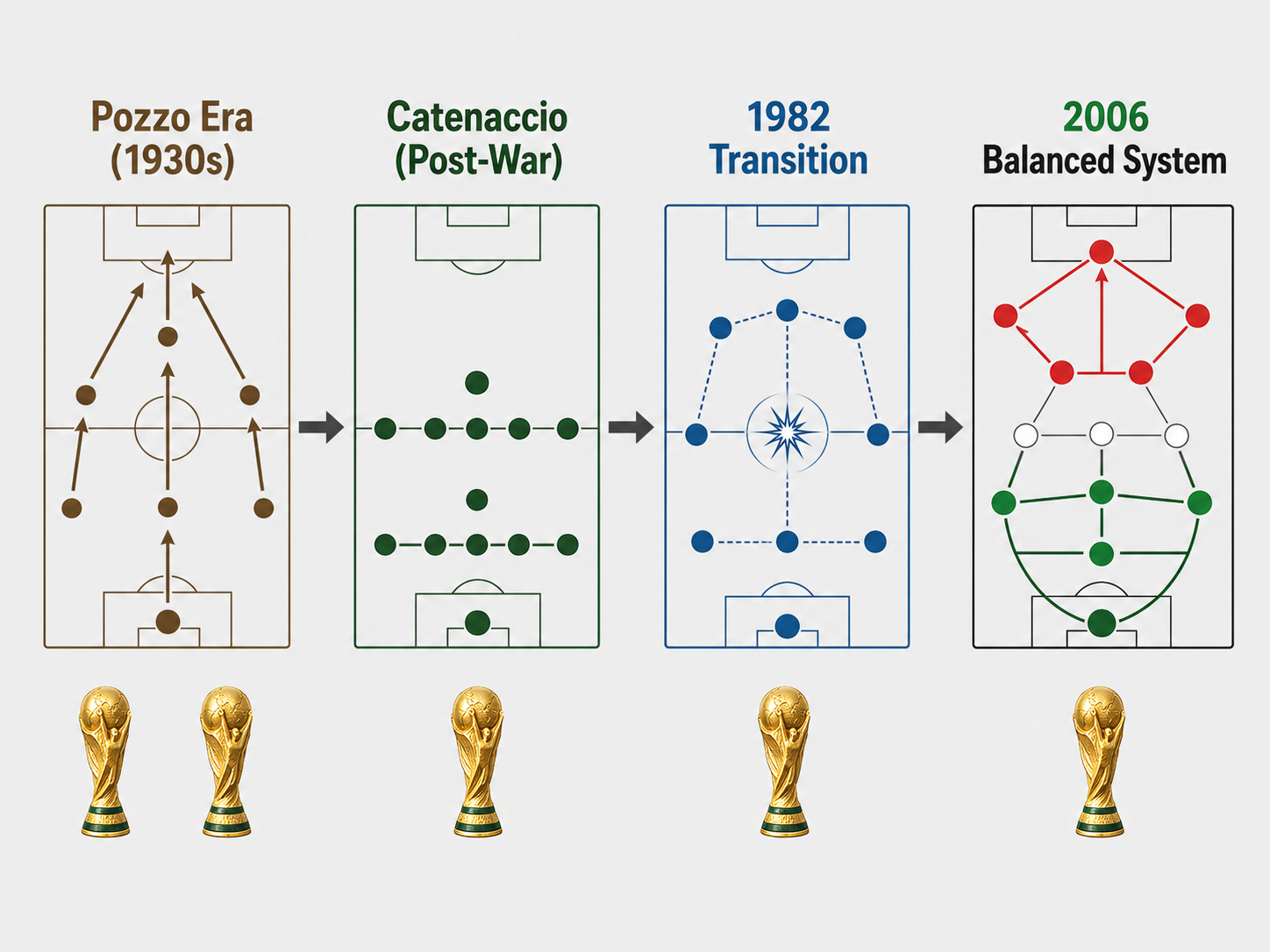
The tactics changed with the trophies. The early Pozzo teams were direct and organized. The post-war era brought catenaccio, the chain. It was a hyper-defensive system with a sweeper, designed to suffocate attacks and counter with precision. It worked for tournaments but often produced dull football.
The 1982 team softened it. Bearzot allowed more midfield creativity. The 2006 team under Lippi wasn’t strictly catenaccio; it was a balanced 4-3-1-2 with a playmaker like Francesco Totti. They could defend, but they could also control possession. Modern soccer tactics require this adaptability, something recent Italian squads have lacked.
Look at the formations used across winning campaigns. The rigid 5-3-2 formation underpinned the 1960s defensive era. The shift to a more fluid 4-4-2 formation was evident in 1982 and 2006. Today, Italy has experimented with a 3-5-2 formation without settling on an identity. This indecision costs them in qualification.
| World Cup Era | Dominant Tactical Style | Key Figure | Result |
|---|---|---|---|
| 1934–1938 | Organized, direct attack | Vittorio Pozzo | Two titles |
| 1960s–1970s | Catenaccio (rigid defense) | Giacinto Facchetti | Runner-up 1970 |
| 1982 | Flexible defense + counter | Enzo Bearzot | Title |
| 2006 | Balanced 4-3-1-2 control | Marcello Lippi | Title |
| 2018–Present | Unsettled, inconsistent | Various coaches | Non-qualification |
That table tells a story. Style clarity brings success. Style confusion brings failure.
The Anatomy of a Modern Crisis: Missing Three World Cups
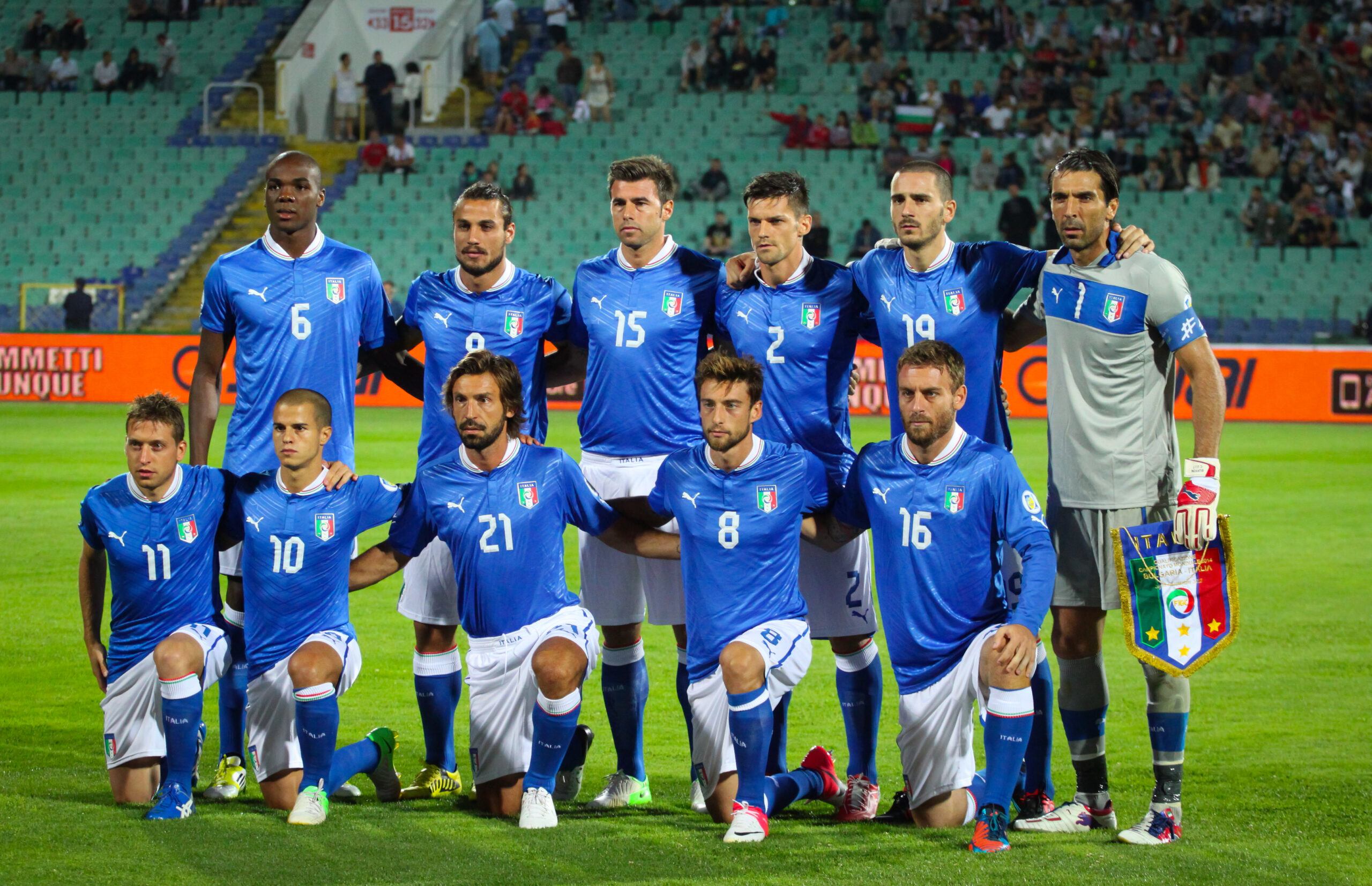
Photo: Biser Todorov / Wikimedia Commons / CC BY 3.0
The numbers are brutal. 2018, 2022, 2026. Italy will not play in those tournaments. For a nation with this history, it’s apocalyptic.

The 2018 failure was a slow bleed. They lost 1-0 to Sweden over two legs in the playoff. The team lacked creativity. The 2022 failure was a sudden stab. A 1-0 home loss to North Macedonia in the playoff semi-final. That match, in Palermo, ended with Italian players lying on the pitch. The 2026 failure is confirmed, a 4-1 loss to Norway sealed they couldn’t qualify automatically. They still have playoff chances, but the trend is undeniable.
Common mistake: Blaming Italy’s failures on a single player or moment, like the North Macedonia loss. The real cause is systemic: a generation gap in talent production, tactical indecision across multiple coaching cycles, and the psychological weight of the previous misses compounding each new attempt.
Why does this happen? Look at the player pipeline. The 2006 team had legends like Alessandro Del Piero, Gianluigi Buffon, and Andrea Pirlo. The current squad lacks that caliber of decisive, experienced winners. Also, the coaching turnover has been frantic. From Antonio Conte to Roberto Mancini to Luciano Spalletti, each brought a different philosophy. No continuity.
Compare this to the stability under Pozzo or Lippi. They built a culture. Modern Italy seems to rebuild every two years. That’s why they lose to Sweden, North Macedonia, and Norway. Teams with a clear plan beat teams with a confused one, even if the confused team has a bigger name.
TL;DR: Italy missed 2018 (Sweden), 2022 (North Macedonia), and 2026 auto-qualification (Norway) due to a talent gap, tactical inconsistency, and coaching instability.
Key Players and Coaches Who Defined the Legacy
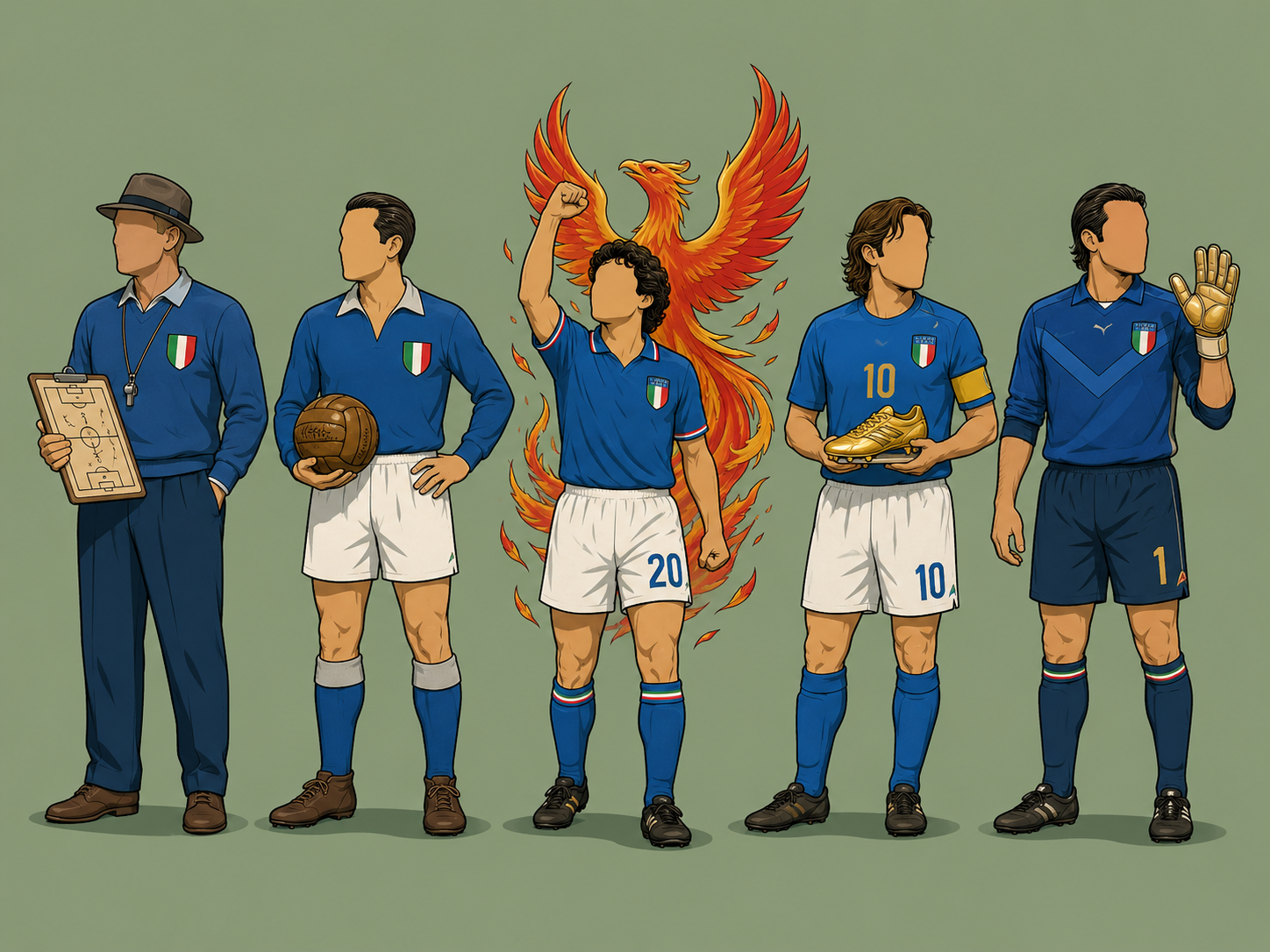
The names are the heartbeat of this history. Pozzo is the architect. He won two titles with two different squads, adapting to the players he had. That’s coaching mastery.
Giuseppe Meazza was the star of the 1930s, a versatile attacker. Paolo Rossi was the 1982 resurrection, scoring when everything seemed dead. Francesco Totti and Andrea Pirlo provided the genius for 2006. Gianluigi Buffon gave them the security. These players weren’t just good; they were timely. They delivered in the exact moments Italy needed them.
Modern Italy doesn’t have that timely hero. Giorgio Chiellini was a great defender, but he couldn’t score the goal against North Macedonia. Ciro Immobile scores in Serie A but falters in national team pressure games. The difference between a legend like Lionel Messi carrying Argentina and Italy’s current forwards is stark. Messi delivers in playoffs. Italy’s stars lately don’t.
The coach’s role is to identify and empower those heroes. Lippi did it in 2006 by trusting players from scandal-hit clubs. Recent coaches have shuffled lineups without building a core. That uncertainty transmits to the pitch. You see it in their hesitant play during critical qualification matches.
What’s Next for Gli Azzurri?
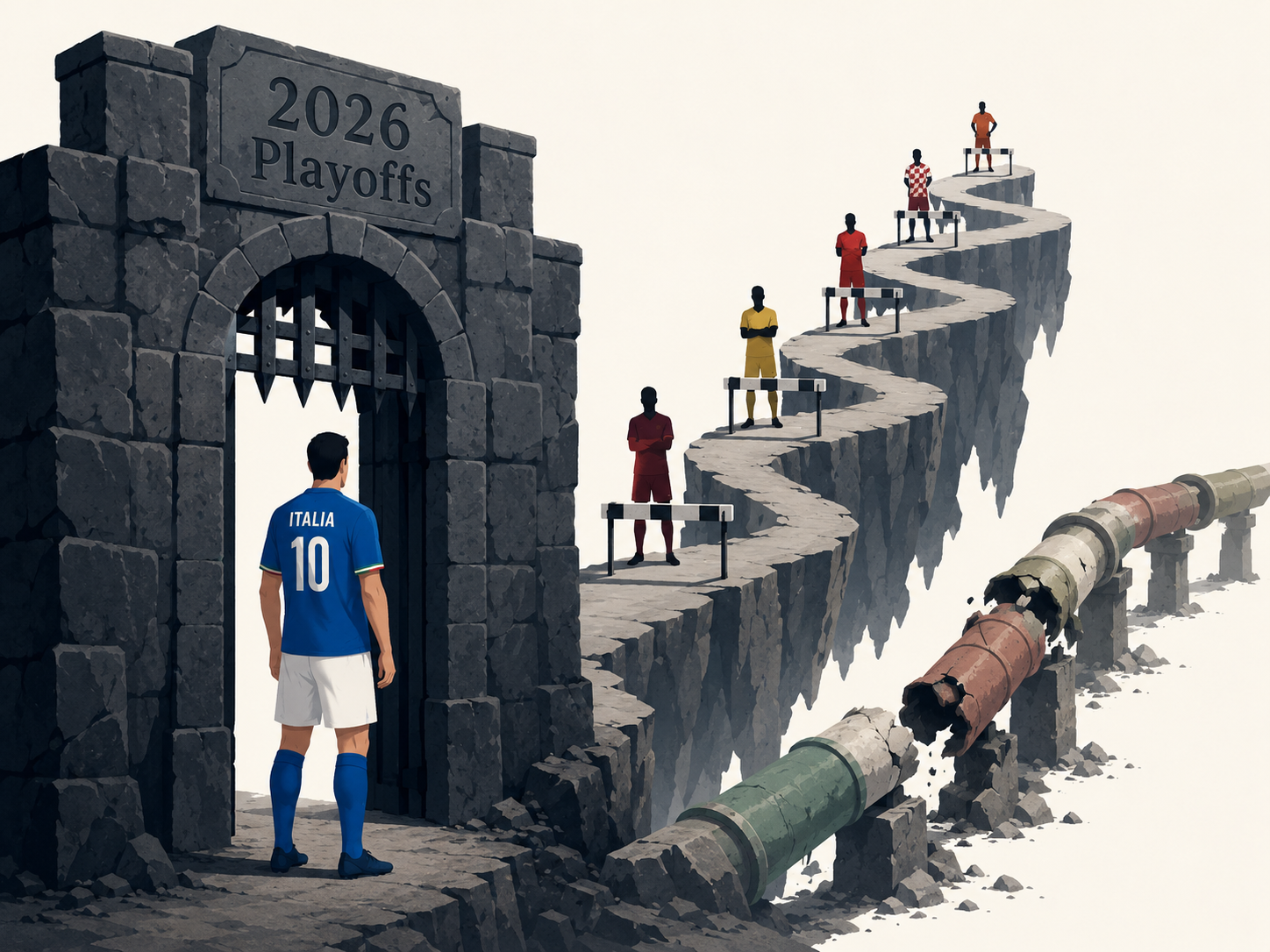
The path now is the playoff route for 2026. It’s a narrow gate. They must win a series of single matches against other disappointed European teams. The pressure will be immense.
The deeper fix requires rebuilding the talent pipeline. Italy’s youth teams haven’t produced a generation of winners lately. They also need to settle on a tactical identity. Whether it’s a revived 3-4-3 formation for attacking play or a solid 11v11 formation that balances the team, they must pick one and drill it for years.
History says Italy can come back. The 44-year gap between 1938 and 1982 proved they could return to the summit. But that return required a clear plan, a heroic player (Rossi), and a unified team. The current situation lacks all three.
Fans should watch the playoffs, but they should also watch the under-21 team. If that group starts winning, the future has hope. If it keeps struggling, the crisis will extend beyond three missed World Cups. It could become a new, painful normal.
Frequently Asked Questions
How many World Cups has Italy won?
Italy has won four FIFA World Cup titles: in 1934, 1938, 1982, and 2006. This places them second behind Brazil (five titles) in total championships.
Why has Italy missed the last three World Cups?
Italy failed to qualify for the 2018 tournament after a playoff loss to Sweden. They missed 2022 after a shocking home loss to North Macedonia. Their 4-1 defeat to Norway in 2024 confirmed they would not automatically qualify for 2026, extending this unprecedented absence streak for a historic football nation.
What was Italy’s best World Cup performance besides winning?
Italy has reached the final six times, so their two runner-up finishes (1970 and 1994) are notable near-misses. Their third-place finish as hosts in 1990 also stands out, as they played memorable matches like the semi-final loss to Argentina.
Who is Italy’s most famous World Cup player?
Several players define different eras. Giuseppe Meazza starred in the 1930s wins. Paolo Rossi was the hero of 1982. Francesco Totti and Andrea Pirlo were central to the 2006 victory. Gianluigi Buffon, as goalkeeper across multiple tournaments, holds a unique place for longevity and leadership.
Before You Go
Italy’s World Cup story is a tale of peaks and valleys. The four titles are permanent landmarks. The six finals show consistent excellence. The current three-tournament absence is a deep valley, unprecedented for a nation of this stature.
Understanding it requires looking at the specifics: the 1938 repeat win, the 2006 scandal-era triumph, the 2022 loss to North Macedonia. Each event reveals something about Italian football’s character, its resilience, its unity under pressure, and its current fragility.
Check the RSSSF Italy World Cup statistics for the raw match data. Read the history of the Italy national football team for the broader context. Then watch their next playoff match. You’ll see a team carrying the weight of all that history, trying to find a way back.
I come from the “soccer heart” of Germany, the Ruhrpott. I have played, trained and followed soccer all my life and am a big fan of FC Schalke 04. I also enjoy following international soccer extensively.