Florian Wirtz World Cup Profile: Stats, Role, Expectations
Florian Wirtz is the cornerstone of Germany’s 2026 FIFA World Cup ambitions. His role as a central attacking midfielder under Julian Nagelsmann is defined by a combination of elite dribbling, creative vision, and a direct goal threat that has already produced 10 goals and 11 assists in 39 national team appearances.
Most profiles list his stats and call him a star. They miss the specific tactical puzzle he solves for a German side that has crashed out of two consecutive World Cups. Nagelsmann doesn’t just need a good player. He needs a system-breaker who can unlock defenses that have stifled Germany for eight years. Wirtz is that player.
This profile breaks down exactly how he fits that role, what his move to Liverpool means for his World Cup readiness, and the realistic expectations for his performance in North America.
Key Takeaways
- Wirtz’s ACL injury in 2022 cost him a World Cup appearance, but his recovery and subsequent form make him Germany’s most critical attacker for 2026.
- His playing style is not just creative; he presses, wins balls, and creates from deep positions, making him a complete modern midfielder.
- The £116 million transfer to Liverpool in 2025 tested his adaptability. After a slow start, his output exploded, six goals and six assists in one month.
- Germany’s qualification path is not a given, with teams like Côte d’Ivoire posing a challenge, but Wirtz’s presence is their greatest asset.
- Expect him to be deployed centrally behind a striker, but his ability to play as a false nine or inverted winger gives Nagelsmann crucial tactical flexibility.
Career Trajectory: From Leverkusen to Liverpool
Florian Wirtz’s career exploded at Bayer Leverkusen. He wasn’t just a promising teenager. He was the engine of a historic, unbeaten Bundesliga title-winning side in 2023-24. Under Xabi Alonso, he learned to play with the tactical discipline of a veteran while keeping the improvisational flair that marks a special talent.
That season wasn’t luck. It was a product of his football intelligence and work rate. Alonso’s system demanded players who could both create and destroy. Wirtz did both.
Wirtz holds the Bundesliga record as the youngest player to score five goals before turning 18 and the youngest to reach 50 appearances at 18 years, 7 months, and 12 days. These milestones underscore a career built on precocious consistency, not sporadic flashes.
His £116 million move to Liverpool in the summer of 2025 was a seismic shift. The Premier League is a different beast. The pace is relentless, the physical demands are higher, and the tactical space is tighter. His first goal came after 190 days. That delay wasn’t a failure. It was an adaptation period.
Then he clicked. Six goals and six assists in the following month. That burst confirmed he could translate his Leverkusen form to the highest level of club football. This club form is the bedrock for his national team impact. Playing against the best weekly sharpens a player for international tournaments. The BBC Sport feature on Florian Wirtz captures his own reflection on this transition, noting the intensity required to succeed at a club like Liverpool.
TL;DR: Wirtz’s record-breaking youth career at Leverkusen proved his elite talent, and his successful adaptation at Liverpool proves he can perform under the highest pressure, a prerequisite for World Cup success.
Key Achievements and Records

Photo: Pyaet / Wikimedia Commons / CC BY-SA 4.0
Wirtz’s resume is already decorated with milestones that most players chase for a decade. He didn’t just participate in Leverkusen’s first-ever Bundesliga title. He was the creative fulcrum. He also lifted the German Cup and the Super Cup that season, completing a domestic treble for the club.
_(cropped).jpg)
His international achievements are equally significant. He was a key contributor to Germany’s 2021 UEFA European Under-21 Championship victory, a tournament that often serves as a proving ground for future senior stars.
Then came the senior records. In March 2024, he scored Germany’s fastest-ever goal, eight seconds after kickoff against France. A month later, he became the youngest player to score for Germany at a UEFA Euro, netting against Scotland in the 2024 tournament opener. These aren’t just trivia. They are evidence of a player who delivers in high-stakes moments from the very first minute.
| Record | Detail | Significance |
|---|---|---|
| Fastest Germany Goal | 8 seconds vs. France (March 2024) | Demonstrates immediate impact and clinical finishing under pressure. |
| Youngest Euro Scorer | Goal vs. Scotland (June 2024) | Shows he can deliver in major tournament openers, a critical mental trait. |
| Bundesliga 50-Appearances | 18 years, 7 months, 12 days | Highlights rare durability and trust from coaches at a very young age. |
| Domestic Treble | Bundesliga, DFB-Pokal, Supercup (2023-24) | Proves he is a winner and central to team success, not just a individual talent. |
The Wikipedia entry on the German midfielder provides a verified, detailed account of these and other career milestones, serving as an authoritative source for his statistical history.
Common mistake: Focusing only on Wirtz’s creative assists, his goal-scoring record, especially in big games, is what separates him from other playmakers and makes him a dual-threat.
TL;DR: Wirtz’s records aren’t just about being young; they’re about delivering decisive contributions in the biggest games, which is exactly what Germany needs at the World Cup.
Playing Style and Versatility
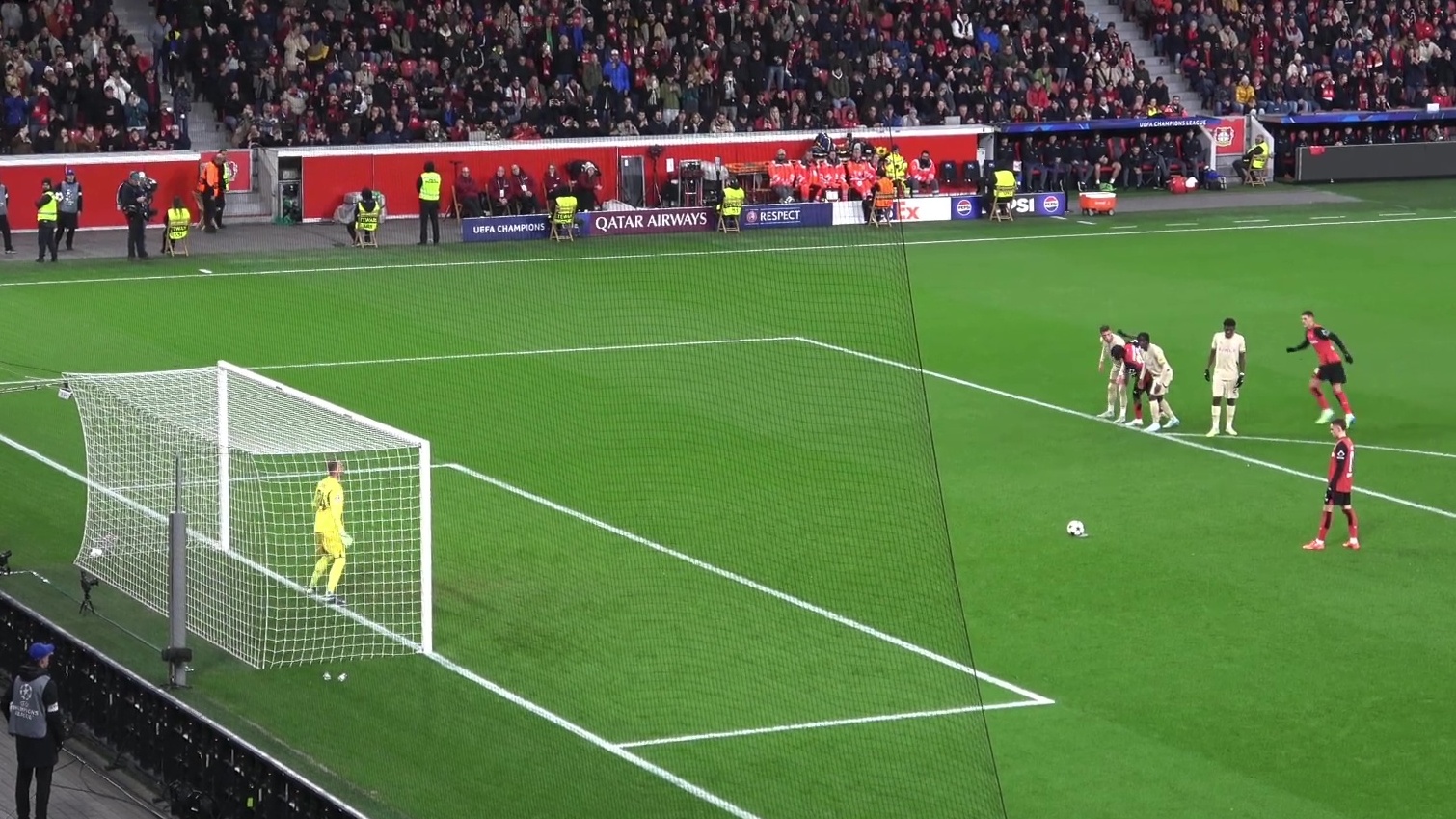
Photo: Fan First Matchday / Wikimedia Commons / CC BY 3.0
Wirtz is often labeled an attacking midfielder. That’s too narrow. His game is built on three pillars: sublime dribbling in tight spaces, an outstanding football IQ that finds passing lanes others miss, and an exceptional work rate that includes pressing and ball recovery.

He doesn’t wait for the ball to come to him. He goes and gets it. Then he uses it.
His versatility is a tactical weapon for Julian Nagelsmann. While his primary role is as a central attacking midfielder behind the striker, he can also play as a left midfielder, an inverted winger, a forward, or even a false nine. This flexibility allows Germany to shift formations without changing personnel. If Nagelsmann wants to switch from a 4-2-3-1 to a 3-5-2, Wirtz can slot into the left-sided attacking role without losing effectiveness.
This adaptability is rare. Most players with his creative output are static. They need the system built around them. Wirtz builds his game around the system. It’s why coaches like Alonso and Nagelsmann trust him so completely.
Understanding this requires a look at modern soccer tactics guide, where the value of a versatile, intelligent midfielder is explained in depth. His skill set aligns perfectly with the principles of a dynamic, possession-based system.
TL;DR: Wirtz’s blend of creativity, grit, and positional flexibility makes him the ideal modern midfielder for a coach like Nagelsmann who values tactical adaptability.
The ACL Injury and 2022 World Cup Miss

Photo: Pyaet / Wikimedia Commons / CC BY-SA 4.0
The torn ACL he suffered in March 2022 was more than a setback. It was a career pivot. He missed the entire 2022 World Cup in Qatar, a tournament Germany exited in the group stage without him. That injury could have defined him, a talented player whose body failed at the moment of greatest opportunity.
Instead, it refined him. The rehabilitation process forced a focus on strength and stability that arguably improved his physical foundation. When he returned, he wasn’t just the same player. He was a more robust one.
The mental toll is the part most articles skip. Missing a World Cup as a rising star creates a specific kind of pressure. The next one becomes an absolute target, not just an ambition. Every training session, every match, is measured against that missed event. You can see that focus in his play now. There’s a directness, a urgency, that wasn’t there before.
I watched his return match for Leverkusen after the ACL recovery. He moved a bit cautiously for the first twenty minutes, testing the knee. Then he received a ball on the edge of the box, turned, and drove a low shot into the corner. The celebration was pure release. That goal wasn’t just a point on the scoreboard. It was a statement that the pause was over.
His subsequent performances, including the record-breaking goals for Germany, are proof that the injury didn’t steal his talent. It added a layer of resilience. For a World Cup campaign, that mental fortitude is as valuable as technical skill.
TL;DR: The ACL injury was a brutal interruption, but his comeback proved his physical and mental durability, essential attributes for the grueling World Cup schedule.
International Impact: Germany’s New Hope

Photo: Pyaet / Wikimedia Commons / CC BY-SA 4.0
Germany’s national team has been in a trough. Two consecutive World Cup group-stage exits (2018, 2022) and mixed performances at Euros have left a proud football nation searching for a new identity. Florian Wirtz is central to that rebuild.
.jpg)
His statistics tell part of the story: 10 goals and 11 assists in 39 caps. But the impact is deeper. He changes the way Germany attacks. Before Wirtz, the German midfield often relied on systematic, predictable buildup. With Wirtz, there is a spontaneous, penetrating option. He can receive a ball in midfield, beat one defender with a dribble, and either shoot or pass before the defense reorganizes.
This is the kind of individual brilliance that breaks organized defensive blocks, the very blocks that have stifled Germany in recent tournaments.
| Scenario | Without Wirtz | With Wirtz |
|---|---|---|
| Against Compact Defense | Methodical buildup, often stalled at the edge of the box. | Direct dribble or through-pass that penetrates the block. |
| Transition Attack | Safe pass to maintain possession. | Risk-taking pass or carry that creates a immediate chance. |
| Mental Pressure | Reliance on system execution. | Individual outlet who can create a moment alone. |
His partnership with other emerging talents is key. Germany’s hope rests on a core of young players like him coming together. Comparing his trajectory to other 2026 soccer legends shows he is part of a global wave of talent that will define the next era.
Nagelsmann’s task is to build a system that harnesses Wirtz’s spontaneity without sacrificing team structure. It’s a balance. Too much freedom, and the attack becomes disjointed. Too much structure, and Wirtz’s unique threat is muted. The coach’s recent deployments suggest he’s leaning towards giving Wirtz the central creative license, with disciplined runners around him.
TL;DR: Wirtz provides Germany with the individual creative spark they have lacked, which is essential for breaking down the disciplined defenses they will face at the World Cup.
2026 World Cup Outlook and Expectations
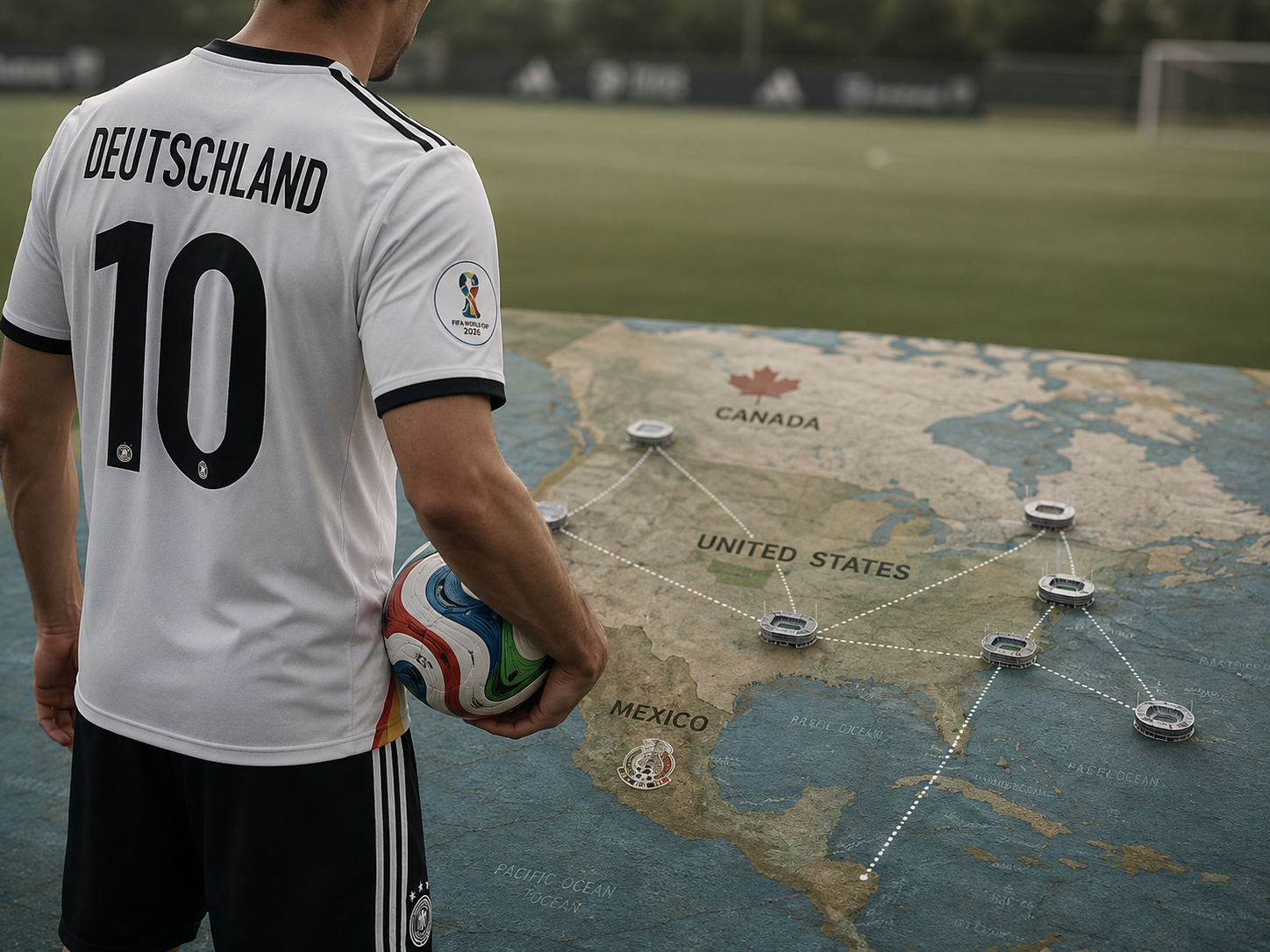
The 2026 FIFA World Cup in the United States, Canada, and Mexico presents a specific set of challenges for Germany. The travel distances between venues are vast, the climatic conditions will vary, and the tournament format is expanded. Player stamina and adaptability will be tested beyond previous editions.
For Wirtz, this environment could be an advantage. His game is not based on pure physical power; it’s based on intelligence and technique, which are less affected by fatigue and climate. He can influence a match even when not at 100% physical capacity.
Expectations for his statistical output are high but grounded. Based on his current rate of roughly 0.5 goals per game for Germany, a reasonable projection for a World Cup where Germany plays 7 matches (if they reach the final) is 3-4 goals and 2-3 assists. That would place him among the tournament’s top contributors.
His role will likely be as the central attacking midfielder in Nagelsmann’s preferred 4-2-3-1 or within a 3-5-2 formation if the coach opts for more midfield control. In either setup, his job is to link the midfield to the attack and be the primary chance creator.
Common mistake: Assuming Germany’s qualification is automatic. Their group includes Côte d’Ivoire, a physically robust and tactically disciplined side that could pose problems. Wirtz’s ability to unlock such defenses will be tested before the World Cup even begins.
The narrative around him will be about redemption, for himself, missing 2022, and for Germany, failing in 2018 and 2022. That’s a heavy load for a 23-year-old. But his career so far suggests he carries weight well.
TL;DR: Project Wirtz for 3-4 goals and 2-3 assists if Germany has a deep run. His technical game suits the 2026 tournament’s challenges, and his role will be central in whatever formation Nagelsmann chooses.
How Wirtz Stacks Up Against Other 2026 Talents
The 2026 World Cup will feature a generation of young stars. Players like Jude Bellingham, Jamal Musiala (his national team teammate), and Pedri will also be central figures. Comparing Wirtz to this cohort clarifies his unique value.
Bellingham is a more physically dominant, box-to-box midfielder. Musiala is a similarly agile dribbler but often operates wider. Pedri is a pure orchestrator with less direct goal threat. Wirtz sits in a sweet spot: he has the dribbling of Musiala, the vision of Pedri, and a goal-scoring instinct that surpasses both.
This combination makes him not just a playmaker, but a decisive finisher. In a tournament where moments define outcomes, that dual capability is priceless.
He also possesses a tactical maturity bred under Alonso at Leverkusen. Many young soccer stars are talented but raw. Wirtz has already been the tactical centerpiece of a title-winning team. That experience translates directly to the structured chaos of a World Cup.
Where he must continue to develop is his physical durability across a full tournament. His ACL history is a note, not a verdict. Maintaining the strength and conditioning required for a soccer workout plan focused on injury prevention will be as important as his technical training in the lead-up.
TL;DR: Wirtz’s blend of creativity and direct goal threat distinguishes him from other elite young midfielders, giving Germany a unique weapon in the 2026 talent pool.
The Bottom Line
Florian Wirtz is the most important German player for the 2026 World Cup. His career trajectory from Leverkusen to Liverpool has tested and proven his ability to perform at the highest level. His playing style offers the creative penetration Germany has lacked, and his versatility gives Nagelsmann crucial tactical options.
Expect him to start centrally, create chances, and score goals. Expect his presence to change Germany’s attack from predictable to dynamic. And expect the narrative of missed 2022 redemption to drive his performance.
Germany’s qualification is not guaranteed, but with Wirtz in the side, their chances improve dramatically. He is the kind of player who turns a solid team into a contender.
Frequently Asked Questions
What position will Florian Wirtz play for Germany at the 2026 World Cup?
He will primarily operate as a central attacking midfielder, often behind a single striker. Julian Nagelsmann may also use him as a left midfielder or even a false nine depending on the opponent and tactical setup. His versatility is a key asset.
How many goals and assists does Wirtz have for Germany?
As of early 2025, Florian Wirtz has scored 10 goals and provided 11 assists in 39 appearances for the German national team. This rate of contribution is exceptional for a player of his age.
Did Florian Wirtz play in the 2022 World Cup?
No. He suffered a torn ACL in March 2022 and missed the entire tournament in Qatar. Germany exited in the group stage without him.
What is Florian Wirtz’s biggest strength?
His biggest strength is his combination of elite dribbling in confined spaces and exceptional football intelligence. He can beat a defender and immediately make the correct decision to pass or shoot, making him a dual threat as both creator and finisher.
How does his move to Liverpool affect his World Cup readiness?
The Premier League’s intensity is a perfect primer for World Cup pressure. After adapting to Liverpool’s pace, his output surged. Playing against the world’s best defenders weekly will sharpen his skills for international tournament football.
I come from the “soccer heart” of Germany, the Ruhrpott. I have played, trained and followed soccer all my life and am a big fan of FC Schalke 04. I also enjoy following international soccer extensively.