World Cup Best Young Players to Watch: The 7 Future Stars
The best young players to watch at the 2026 FIFA World Cup are those aged 21 or under at the start of the year who are already starters for elite clubs and have significant international caps. The expanded 48-team format creates more opportunities, but the Young Player of the Tournament award historically favors midfielders and forwards who deliver in decisive moments.
Most lists miss the tactical reason a teenager succeeds at this level. It’s not just talent. A 17-year-old playing for Mexico isn’t there because he’s good. He’s there because his specific skill, say, Gilberto Mora’s ability to break lines from deep, fills a gap his national team desperately needs. The World Cup isn’t a youth tournament. It’s a pressure cooker where a missing piece gets exposed over three weeks.
This guide breaks down the seven players with the strongest case to win the Young Player award, the dark horses from smaller nations who could steal the spotlight, and the one thing that could derail even the brightest star before the tournament kicks off.
Key Takeaways
- The Young Player of the Tournament award is for players aged 21 or under on January 1, 2026. No defender has won it since 1982.
- Lamine Yamal (Spain) is the favorite, but a recent hamstring tear means his group-stage availability is uncertain. Spain’s attack changes if he’s limited.
- The 48-team format means more matches and rotation. Coaches from less-established nations will use young players earlier, creating breakout chances.
- Club minutes matter more than hype. A player with nearly 180 appearances for PSG like Warren Zaïre-Emery handles pressure differently than a prospect with 30 senior games.
- Defenders Pau Cubarsí (Spain) and Dean Huijsen (Spain) could break the award’s attacking-player bias if their teams reach the deep rounds.
Who is the best young player at the 2026 World Cup?
That’s Lamine Yamal. The Barcelona winger isn’t just a prospect, he’s a finished product at 19, with 146 club appearances, 46 goals, 50 assists, and 25 caps for Spain. He plays with the calm of a 30-year-old. The award criteria fit him perfectly.
But his hamstring tear in late April 2026 is the variable nobody wants to talk about. If he misses Spain’s first two group matches, his rhythm is gone. The Young Player award isn’t judged on per-minute brilliance. It’s judged on impact across the tournament. A delayed start cuts his runway.
The Young Player of the Tournament is awarded to the most impressive player aged 21 or under at the beginning of the calendar year of the competition. Since its inception, the award has been given exclusively to midfielders and forwards, with the last defender winning in 1982. Performance is measured across the entire tournament, not just a single match.
Yamal’s main competition comes from his own national team. Pau Cubarsí, the 19-year-old Barcelona center-back, has become a cornerstone for Spain. His composure and passing range let Spain build from the back without a veteran organizer. Dean Huijsen, 21, brings a silky, technical style to Real Madrid’s defense. A defender winning the award would be historic, but it requires Spain to go deep, and for Cubarsí or Huijsen to be visibly decisive in a knockout game.
TL;DR: Lamine Yamal is the best young player on paper, but a recent injury clouds his start. Spanish defenders Pau Cubarsí and Dean Huijsen are the only realistic candidates to break the award’s 44-year streak of going to midfielders and forwards.
The Contenders for Young Player of the Tournament
Beyond Yamal, the pool is deep with players who have already proven themselves at the highest club level. This isn’t a list of hopefuls. It’s a list of starters.
Aleksandar Pavlović at Bayern Munich isn’t just filling a spot. He’s the future of Germany’s midfield, making imposing runs and providing defensive analysis that reminds people of Toni Kroos. He has the minutes. Warren Zaïre-Emery at PSG has nearly 180 club appearances and 10 caps for France. He’s tenacious and versatile, playing in midfield and at right-back. His experience matters.
Michael Olise is the outlier. At 24, he’s technically too old for the Young Player award, but his season with Bayern Munich, 22 goals, 26 assists, makes him a lock for the Fox Sports 2026 breakout players list. He’s the archetype of a player who uses the World Cup to leap from club star to global name.
The table below shows the core contenders, their current club status, and why they fit the award’s historical pattern.
| Player | Club | Why They Contend |
|---|---|---|
| Lamine Yamal | Barcelona | Already a regular for Spain & Barcelona; elite production (46G, 50A in 146 apps). |
| Aleksandar Pavlović | Bayern Munich | Regular starter for Bayern; seen as Germany’s next midfield anchor. |
| Warren Zaïre-Emery | Paris Saint-Germain | 180 PSG appearances, 10 France caps; versatile and battle-tested. |
| Pau Cubarsí | Barcelona | Defensive intelligence & passing range; cornerstone for Spain’s rebuilt defense. |
| Dean Huijsen | Real Madrid | Technical grace and composure; 7 caps for Spain. |
| Kendry Páez | Chelsea (loan) | Debuted for Ecuador at 16; experienced internationally despite being a teenager. |
Common mistake: Assuming a player’s club hype translates directly to World Cup impact, a teenager with 30 senior club games will freeze in a quarter-final against a veteran back line. The award has always gone to players who were already starters for elite clubs, not prospects.
The 48-team format changes the math slightly. More games mean more rotation, especially for nations with deep squads like France or Germany. A player like Zaïre-Emery might get 20-30 minutes in a group-stage match he wouldn’t see in a 32-team tournament. Those minutes build confidence for a knockout-round start.
But the historical bias is real. Look at the list of winners. It’s all attackers. Cubarsí or Huijsen would need to be the best defender in the tournament, not just the best young defender. That’s a taller order.
Teenage Sensations Set to Turn Heads
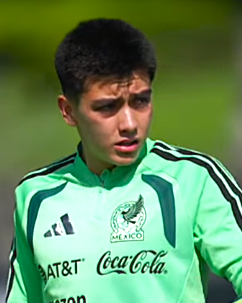
Photo: Selección Nacional de México / Wikimedia Commons / CC BY 3.0

Some players on this list aren’t contenders for the Young Player award, they’re too young, or their nations aren’t expected to go deep, but they will capture global attention simply by being there. Their early youth careers are already record-breaking.
Gilberto Mora is 17. He’s not just Mexico’s hope; he’s already the youngest player to win a major senior international trophy (the Gold Cup). He has 49 senior appearances and 9 goals for Club Tijuana. His role is specific: break lines from deep midfield. Mexico lacks that profile, so he’ll play.
Kendry Páez, on loan from Chelsea to River Plate, debuted for Ecuador at 16. He’s an experienced teenager internationally. His creative playmaking could place him among the top assist providers in the tournament if Ecuador advances.
Ibrahim Mbaye, 18, has already scored and assisted for Senegal. He’s a left winger for PSG. Lennart Karl, 18, is having a breakout season at Bayern Munich with 8 goals and 6 assists in 35 appearances. His explosive dribbling and intelligent play fit Germany’s system.
These players represent a shift. The World Cup used to be for established stars. Now, with the expanded format and global scouting networks, a 17-year-old from Mexico or a 18-year-old from Senegal gets a real chance to influence a match.
I watched Schalke’s youth academy produce players who looked ready at 18 but stumbled under the pressure of a Bundesliga debut. The difference here is minutes. Mora has 49 senior games. Páez has international caps. That’s not academy promise, it’s professional evidence. They’ve already passed the stage where most teenagers freeze.
The risk for these teenage sensations is role clarity. A coach bringing a 17-year-old into a World Cup squad must have a precise plan for him. If Mora is just a backup, he won’t turn heads. If he’s the designated line-breaker in a specific tactical scenario, he could become the story of a match.
How the 48-Team Format Changes Everything

The expansion to 48 teams isn’t just more countries. It’s more matches, more rotation, and more opportunities for a young player to get on the pitch. In a 32-team World Cup, a coach from a top nation might not risk a teenager until the knockout rounds. Now, with three group-stage games and a likely fourth for many, that coach can give a young player 30 minutes in a match against a weaker opponent.
That changes development trajectories. A player like Yan Diomande, the 19-year-old winger at RB Leipzig with 10 goals and 7 assists this season, fits Ivory Coast’s counter-attacking style perfectly. In a tighter tournament, he might be a sub. In this one, he could start a group game and gain the confidence to feature later.
The math is simple. More games mean more squad depth is tested. Nations with thinner talent pools, like Australia with Nestory Irankunda or Türkiye with Can Uzun, will rely on their young stars earlier and more heavily. This exposure is what creates a 2026 standout performer from a nation that previously wouldn’t have gone past the group stage.
| Player | National Team | Impact of 48-Team Format |
|---|---|---|
| Yan Diomande | Ivory Coast | More counter-attacking opportunities against weaker opponents; could start group games. |
| Nestory Irankunda | Australia | Likely starter for a nation needing dynamic wing play to advance. |
| Can Uzun | Türkiye | Key creative piece for a team that will attack more in an expanded group stage. |
| Ibrahim Maza | Algeria | Bayer Leverkusen prospect gets minutes in a squad looking for midfield invention. |
The format also increases injury risk. More matches in a shorter period mean less recovery time. A young player coming off a long club season, like Yamal after a hamstring tear, faces a compressed schedule that could limit his peak performances. Coaches will have to manage minutes carefully, which ironically might benefit a fresh, less-experienced substitute who gets a surprise start.
TL;DR: The 48-team World Cup means more games and more rotation. Young players from both top and emerging nations will get earlier minutes, creating breakout chances that didn’t exist in the 32-team format. It also increases fatigue and injury risk for stars coming off long club seasons.
The Dark Horses and Overlooked Talents
Every World Cup has a player who wasn’t on anyone’s list in March but becomes a household name by July. The expanded format makes this more likely. Look for the underrated young talents from nations that aren’t traditional powers.
Fermín López is 23, so he’s outside the Young Player award age bracket, but his 30 goal contributions for Barcelona this season make him a wildcard for Spain. Nico Paz, 21, has been crucial for Como 1907’s success with 20 goal contributions. He’s an Argentinian prodigy playing in Italy, and Argentina’s squad depth could give him a surprise role.
But the real dark horses are the ones from nations that barely qualified. A player from a Confederation that rarely sends teams, think an Oceania or Asian nation that benefits from the expansion, could debut and immediately become their country’s hero. These players lack the global popularity metrics of a Yamal or an Olise, but they carry the weight of a nation’s first World Cup appearance in decades.
Their challenge is tactical integration. A coach bringing a teenager into a squad for the first time must build a system around him, or he becomes a passenger. Gilberto Mora’s success depends on Mexico’s coach defining a specific midfield role for him. If that role isn’t clear, he disappears.
Common mistake: Discounting a player because his nation isn’t a favorite, a teenager from a smaller nation often plays with more freedom and less tactical rigidity than a star from a top team bound by a complex system. That freedom can produce a memorable moment that defines his career.
The social media age amplifies this. A single goal or assist from a dark horse can explode on Instagram, turning him from an unknown to a player brand power phenomenon in 24 hours. The World Cup is the ultimate accelerator.
What Could Derail a Young Star’s World Cup
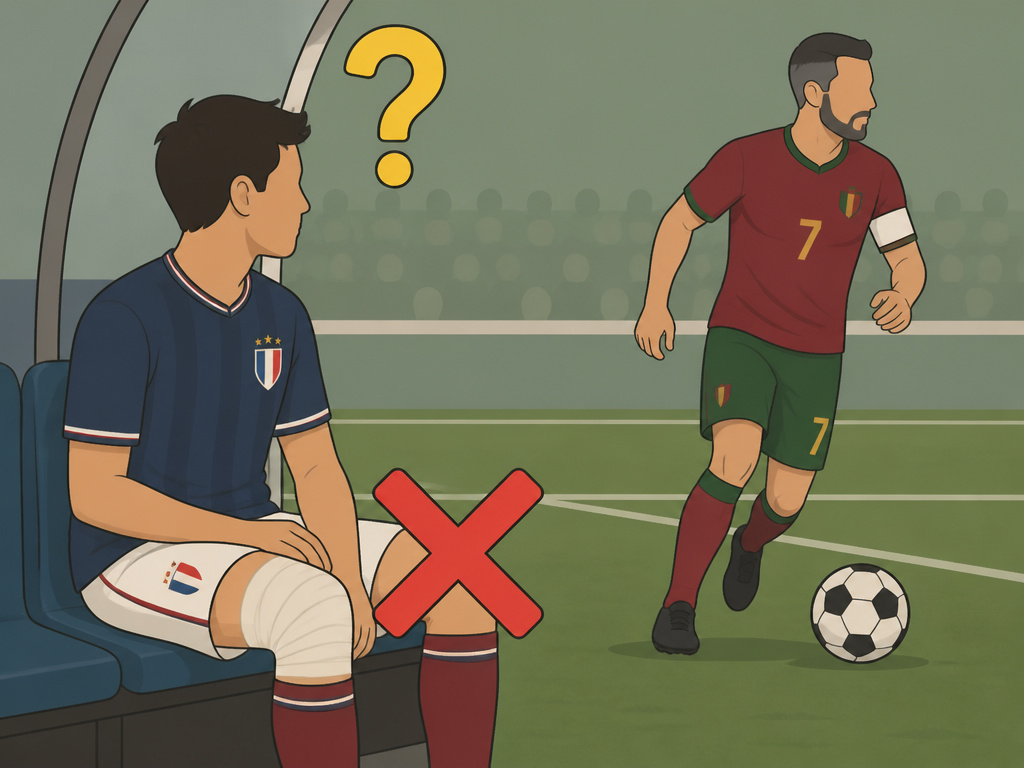
Injury is the obvious one. Yamal’s hamstring is the example. But there’s a subtler risk: role confusion.
A young player who is a star at his club, like Aleksandar Pavlović at Bayern, might be a backup for his national team because the coach prefers a veteran. Pavlović could sit behind İlkay Gündoğan or Joshua Kimmich for Germany. Those limited minutes reduce his chance to shine for the Young Player award.
Another risk is system mismatch. A winger like Yan Diomande thrives in open, counter-attacking spaces. If Ivory Coast plays a possession-based game against a deep defensive block, his pace and acceleration are neutralized. He becomes a spectator.
The third risk is pressure. A teenager with 50 senior club games handles a World Cup quarter-final differently than a veteran with 300. The mistakes are mental, a misplaced pass under pressure, a missed defensive assignment. Those mistakes get magnified on the global stage and can define a player’s tournament negatively.
Here are the three main derailment factors, with their specific consequences:
- Injury before or during the tournament. A player misses group-stage matches, loses rhythm, and returns tentatively. His impact is diluted across fewer minutes.
- Tactical misplacement. A coach uses a young player in a role that doesn’t maximize his skills. He becomes ineffective and is benched after one game.
- Pressure-induced errors. A single high-profile mistake in a knockout game, a missed penalty, a defensive lapse, creates a narrative that overshadows his overall performance.
The players who avoid these are the ones who have already faced similar pressure. Warren Zaïre-Emery has played Champions League semifinals for PSG. Pau Cubarsí has faced Real Madrid in a title-deciding La Liga match. That experience translates.
TL;DR: Injury, tactical misplacement, and pressure-induced errors are the three things that can derail a young star’s World Cup. Players with significant high-pressure club experience. Champions League, domestic title races, are more likely to avoid the third.
Frequently Asked Questions
Who qualifies for the Young Player of the Tournament award?
Players aged 21 or under on January 1, 2026. The award is judged across the entire tournament, not a single match. Historically, it has always gone to midfielders or forwards; the last defender to win was in 1982.
Is Lamine Yamal definitely going to play?
He is expected to play, but a hamstring tear in late April 2026 makes his availability for the group stage uncertain. If he misses Spain’s first two matches, his impact on the award could be limited.
How does the 48-team World Cup help young players?
More teams mean more matches and more rotation. Coaches from top nations can give young players minutes in group games against weaker opponents, building confidence. Coaches from smaller nations rely on young stars earlier, giving them exposure they wouldn’t get in a 32-team tournament.
Can a defender win the Young Player award?
It’s possible but historically unlikely. Pau Cubarsí and Dean Huijsen are the strongest candidates, but they would need to be the best defenders in the tournament, not just the best young defenders, and their teams would need to reach the deep rounds.
Who is the best young player outside of Europe?
Kendry Páez (Ecuador) and Gilberto Mora (Mexico) are the standout non-European talents. Páez has international experience since age 16, and Mora is already a Gold Cup winner and a regular for Club Tijuana.
What is the biggest risk for a young player at the World Cup?
Pressure-induced errors in high-stakes moments. A teenager with fewer than 100 senior club games is more likely to make a mental mistake in a knockout game than a veteran. Players like Warren Zaïre-Emery, with nearly 180 PSG appearances, have already faced that level of pressure.
Before You Go
Watch Lamine Yamal’s fitness reports in the weeks before the tournament. If he’s fully recovered, he’s the favorite. If he’s limited, the award opens up to players like Aleksandar Pavlović or Warren Zaïre-Emery.
Remember the 48-team format. It creates opportunities for young players from nations like Australia, Türkiye, and Ivory Coast to become breakout stars simply by getting more minutes.
And ignore the hype lists that only feature attackers. Defenders Pau Cubarsí and Dean Huijsen have the skill and club pedigree to challenge the award’s 44-year bias, if Spain goes deep and they are visibly decisive in a knockout game.
The World Cup is a pressure cooker, not a showcase. The young players who succeed are the ones whose clubs have already put them in the fire.
I come from the “soccer heart” of Germany, the Ruhrpott. I have played, trained and followed soccer all my life and am a big fan of FC Schalke 04. I also enjoy following international soccer extensively.