When is a Goal Kick Taken in Soccer? The Rule Explained
A goal kick is taken when the entire ball crosses the goal line, on the ground or in the air, after last being touched by an attacking player. The defending team places the ball anywhere in the six-yard goal area, and the ball is in play the moment it is kicked and clearly moves.
Most people think the goalkeeper must boot it long. That’s the old way. The real mistake is not seeing a goal kick for what it is now: the first pass of an attack.
This guide breaks down the exact Law 16 rules, the 2019 change that rewrote tactics, and how top teams from the Premier League to the Bundesliga use this simple restart as a weapon.
Key Takeaways
- The ball must be stationary within the goal area, but any defender can take the kick, not just the keeper.
- Opponents must stay outside the penalty area until the ball is in play, but the kicking team doesn’t have to wait for them.
- Since the 2019 IFAB rule change, the ball is in play immediately upon being kicked, even if it never leaves the penalty box. This killed time-wasting and birthed modern build-up play.
- If the kicker touches the ball twice before anyone else, the referee awards an indirect free kick to the opposition.
- You can score directly from a goal kick against the opposing team. Putting it in your own net results in a corner kick.
What Triggers a Goal Kick? (The Awarding Rule)
Look at the goal line, not the net. A goal kick is awarded strictly when the whole ball passes completely over the goal line and the last player to touch it was from the attacking team.
This includes balls rolling out, shots wide, and deflections off an attacker. If a defender touches it last, the restart is a corner kick. The referee signals it with a straight arm parallel to the ground, pointing toward the goal.
The awarding condition is binary: whole ball over the line, last touch by an attacker. The location on the line does not matter, left, right, or center, as long as a goal was not scored. This restart is governed by IFAB’s Law 16 in the official Laws of the Game.
The distinction is absolute. A ball brushing a defender’s heel before rolling out triggers a corner, not a goal kick. This is why assistants watch the line so closely. Get this wrong, and you gift the opposition a dangerous set-piece instead of a defensive restart.
TL;DR: Whole ball over the goal line + last touch by attacker = goal kick. Any other combination is a corner or a goal.
Where and How to Take the Kick
Place the ball anywhere inside the six-yard box, the goal area. It does not have to be on the line. The ball must be stationary.
Any player from the defending team can take it. While the goalkeeper often does, a center-back with a better long pass might step up, especially at youth levels. The players on the field from the defending team are all eligible.
| Rule Component | Specification | Consequence If Violated |
|---|---|---|
| Ball Location | Any point within the goal area (6-yard box) | Kick retaken from the correct area. |
| Ball State | Stationary | Kick retaken. |
| Kicker | Any player from defending team | Play continues; no infraction. |
| Opponent Location | Outside the penalty area (18-yard box) until ball is in play | Early entry: kick retaken. |
| Ball In Play | When kicked and clearly moves | N/A—this defines the restart. |
Opposing players must remain outside the penalty area until the ball is in play. They cannot challenge or block the kick from inside the box. If they do, the kick is retaken. You don’t have to wait for them to amble out, though. Take it quick, and they assume the risk.
The ball is in play the instant it is kicked and moves. A mere tap counts. You cannot just stand on it.
Common mistake: Waiting for all opponents to clear the penalty area before kicking. The law only requires they be outside; if you delay, the referee can start a five-second countdown and then award a corner kick to the opposition for time-wasting.
I’ve seen a referee caution a keeper for this in a Regionalliga match. He was waiting for his midfield to get set, but the rule is about opponents, not your own team. The ref’s hand went up, he counted, and then pointed to the corner flag. We conceded from that corner. Lesson learned.
The Critical 2019 Rule Change
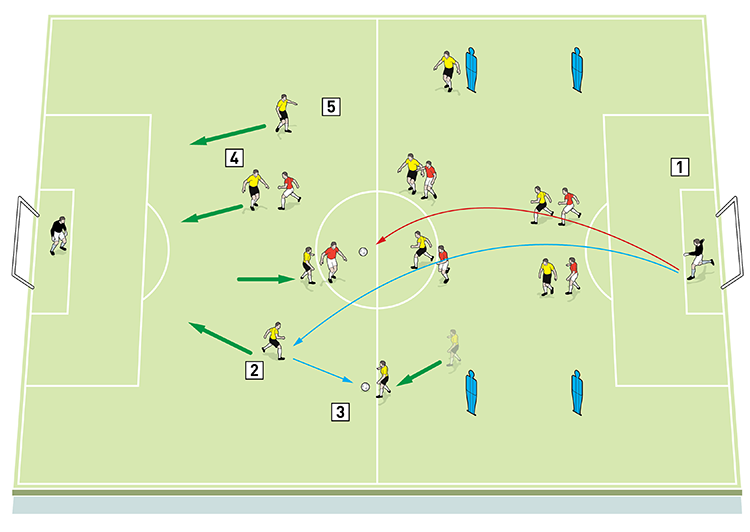
Before 2019, the ball had to leave the penalty area before another player could touch it. That old rule forced a long boot or a risky pass to the edge of the box. It was a boring, predictable restart.
The IFAB changed Law 16. Now, the ball is in play immediately when kicked. It can be passed to a teammate standing two yards away, inside the same penalty area.
This wasn’t a minor tweak. It was a tactical earthquake.
The 2019 rule change removed the requirement for the ball to exit the penalty area. Overnight, goal kicks transformed from a clearance into a structured build-up opportunity, accelerating the trend of playing out from the back.
Teams now design elaborate routines. The goalkeeper becomes a spare center-back. Defenders drop into the box to receive. The aim is to lure the opposition’s press forward, then play through or over them into the space left behind. The match duration didn’t change, but the number of strategic sequences from a restart exploded.
Look at the Premier League. Short goal kicks have more than doubled since 2018/19. Manchester City, Arsenal, and Brighton treat the goal kick as the first phase of possession, not a relief valve.
How the 2019 Rule Change Reshaped Soccer
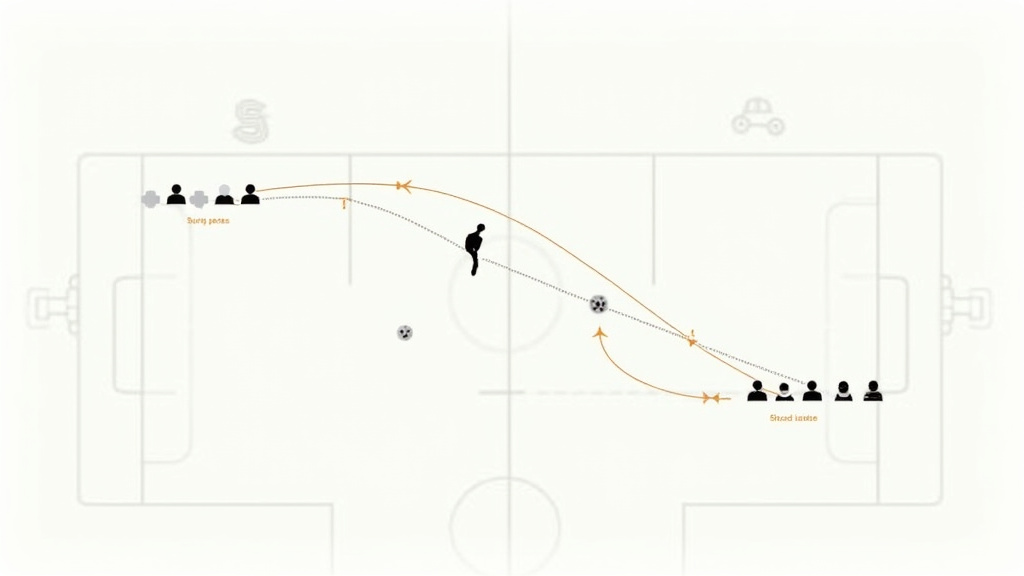
The change gave coaches a blank canvas. The trends it spawned are now standard in the Champions League and international tournaments.
First, it hastened man-to-man pressing. To stop short build-ups, opposing forwards and midfielders now push higher to mark defenders individually. This creates a chain reaction. If the pressing team commits six players forward, they leave themselves exposed at the back. A successful long pass over the top turns a goal kick into a 4v4 counterattack.
Second, it hollowed out central midfield. When pressing teams push up, their midfielders often follow, leaving a vast space between the lines. A team playing out can exploit this channel with a single pass. Germany’s national team used this against the Netherlands in 2024, with Manuel Neuer playing a central pass that sprung a direct attack.
Third, it made the goalkeeper a key playmaker. The keeper is no longer just a shot-stopper. They are the first passer. Arsenal’s David Raya regularly receives passes from Gabriel inside the box. This draws the opponent’s striker, creating a numerical advantage elsewhere.
The risk is obvious. Lose the ball inside your own penalty area, and you gift a scoring chance. But the reward, controlled possession and attacking transitions, is why every top club does it. The rule turned a simple restart into a strategic weapon.
Goal Kick vs. Corner Kick: The Restart Comparison
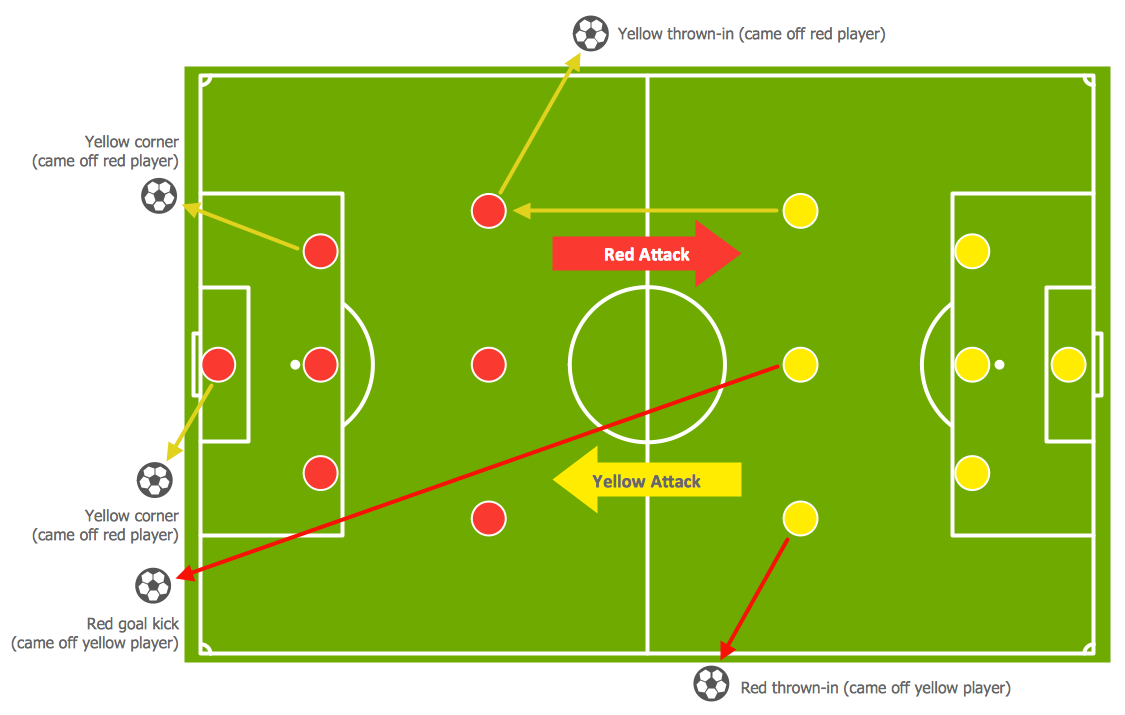
These two restarts are opposites, triggered by the same line but different last touches. Knowing the difference is fundamental.
A corner kick is awarded when the ball goes over the goal line after last being touched by a defender. It’s an attacking set-piece taken from the corner arc. The scoring a goal objective is immediate, with teams loading the box for a cross.
A goal kick is a defensive restart after an attacker’s last touch. The location is your own goal area. The initial objective is safety, then build-up.
| Aspect | Goal Kick | Corner Kick |
|---|---|---|
| Trigger | Attacker last touched ball. | Defender last touched ball. |
| Location | Defender’s goal area. | Attacker’s corner arc. |
| Taker | Any defender. | Any attacker. |
| Opponent Distance | Must stay outside penalty area. | Must be 10 yards from ball (corner arc). |
| Strategic Default | Build possession from the back. | Direct cross into penalty box. |
The pressure is inverted. At a corner, the defending team is under threat. At a goal kick, the attacking team must decide whether to press high or drop off. This decision shapes the next minute of play.
TL;DR: Last touch by attacker = goal kick (defensive restart). Last touch by defender = corner kick (attacking restart). Mix them up, and you misunderstand the game’s flow.
Rules, Violations, and Consequences
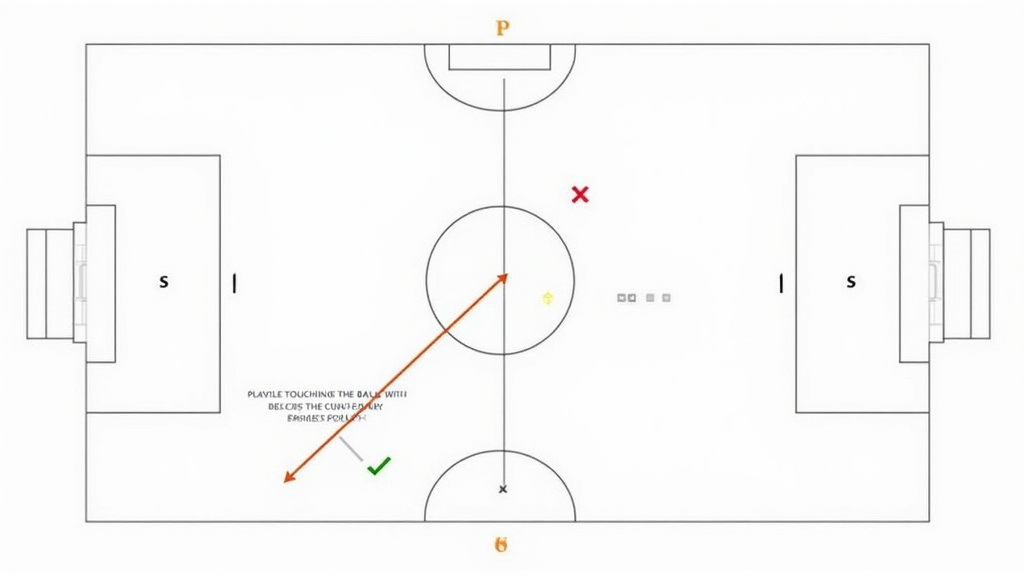
The Laws are specific. Break them, and the consequences are immediate.
- Opponent enters the penalty area early. If an attacking player is inside the box when the kick is taken and interferes, the kick is retaken. If they don’t interfere, play often continues.
- Kicker touches the ball twice. This is the big one. If the player who took the goal kick touches it again before any other player, the referee awards an indirect free kick to the opposition from the spot of the second touch. If that second touch is a handball offense, it becomes a direct free kick (or a penalty if inside the kicker’s own box).
- Ball goes directly into the kicker’s own goal. You cannot score an own goal from a goal kick. If the ball flies directly into the kicker’s net, a corner kick is awarded to the opponents.
- Delaying the restart. The referee can start a five-second countdown. Fail to take the kick, and a corner kick is awarded. The player may also be cautioned.
The offside rule does not apply to a player receiving the ball directly from a goal kick. This is a key exception. A striker can be in an offside position when the kick is taken and still legally receive the pass. This allows for those direct long balls over the press.
I watched a lower-league keeper forget the two-touch rule after a slick back-pass from his defender. He dribbled once, panicked, and picked the ball up. Indirect free kick, six yards out. They scored. The basic soccer rules are simple, but under pressure, instinct betrays you.
Keep it simple. Pass it, then get out of the play. Let your substitute players and midfielders do the work.
Frequently Asked Questions
Can you score directly from a goal kick?
Yes, but only against the opposing team. If the ball goes directly into the opponents’ goal, a goal is awarded. It’s rare, but possible with a huge wind or a massive misjudgment by the opposing keeper. Putting it directly into your own net results in a corner kick.
Does the ball have to leave the penalty area?
No. This rule was changed in 2019. The ball is in play the moment it is kicked and clearly moves, even if it stays inside the penalty area. This allows for short passes to defenders within the box.
Who is allowed to take the goal kick?
Any player from the defending team. It does not have to be the goalkeeper, though they usually do. A defender with a stronger or more accurate foot may take it, especially in youth soccer.
What is the referee’s signal for a goal kick?
The referee points their arm straight, parallel to the ground, toward the goal from which the kick will be taken. This clear signal indicates the restart type and direction to all on-field personnel.
What happens if an opponent is inside the penalty area when the kick is taken?
If the opponent interferes with play, the goal kick is retaken. If they do not interfere, the referee may allow play to continue. The law states opponents must be outside, but the referee applies common sense based on impact.
Can you be offside from a goal kick?
No. A player cannot be offside when receiving the ball directly from a goal kick. This is a specific exception in the offside offense law, which encourages teams to play long over a high press without penalty.
Before You Go
A goal kick is no longer just a restart. It’s a signal. It tells you whether a team wants to play or hoof. The 2019 rule change unlocked this.
Remember the trigger: attacker’s last touch, whole ball over the line. Remember the spot: anywhere in your own six-yard box. And remember the new reality: the first pass starts now, not after the ball leaves the box.
Use it to build. Use it to lure. Use it to launch. But never waste it. That five-second countdown is shorter than you think, and the injury time added later won’t give it back. Place the ball, scan the field, and play.
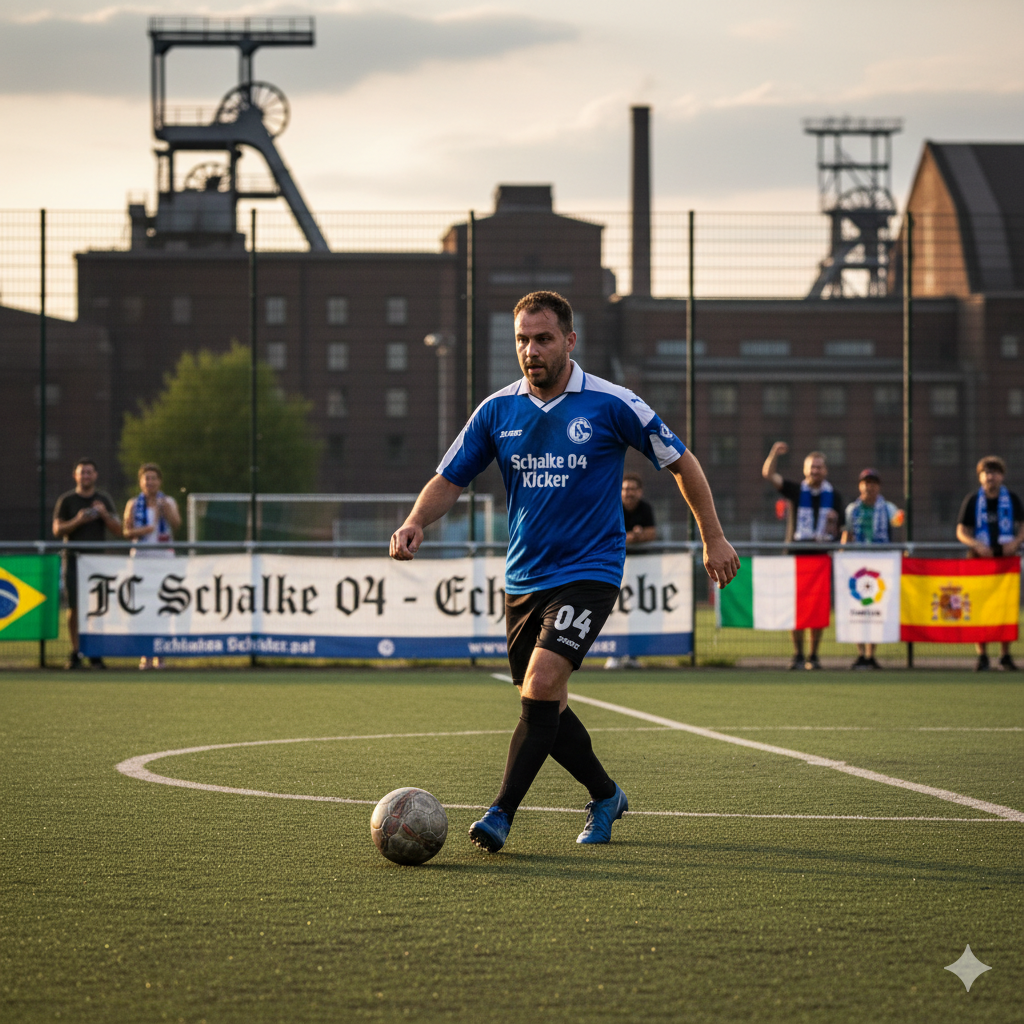
I come from the “soccer heart” of Germany, the Ruhrpott. I have played, trained and followed soccer all my life and am a big fan of FC Schalke 04. I also enjoy following international soccer extensively.