The Ultimate Guide on How to Shoot a Soccer Ball with Power
To shoot a soccer ball with power, match five things: a committed plant foot beside the ball, a fully loaded kicking leg, a strike on the ball’s center with a locked ankle, a complete follow-through, and specific strength in your glutes and hip rotators. Power without accuracy is useless, so the technique must be repeatable.
Most players think a longer run-up or just swinging harder creates power. They lean back, stop their follow-through, and watch the ball sail over the bar or miss the frame entirely. The real engine is a sequence of precise body mechanics, supported by the right muscles.
This guide breaks down the five-step formula, the strength you actually need, and the drills that make a powerful shot feel automatic, not forced.
Key Takeaways
- Power comes from hip rotation and glute engagement, not just quad strength. Your plant foot placement dictates the shot’s trajectory.
- Find the “credit-card sweet spot” on your foot: strike the ball as high on the instep as comfortable, just below the ankle bone.
- Eccentric braking ability, how fast your muscles can stop and reverse motion, is the key physical quality for velocity, proven by a Frontiers in Sports research article.
- Practice 3,000 deliberate contacts over six weeks. Fifty quality repetitions after every training session makes the movement unconscious.
- An 80% power shot aimed at a corner beats a 100% power shot off target every time. Accuracy first, then power.
The 5-Step Power Shot Formula
Head design changes the entire process. Look at the business end of your trimmer. Wind direction decides whether the head feeds or jams.
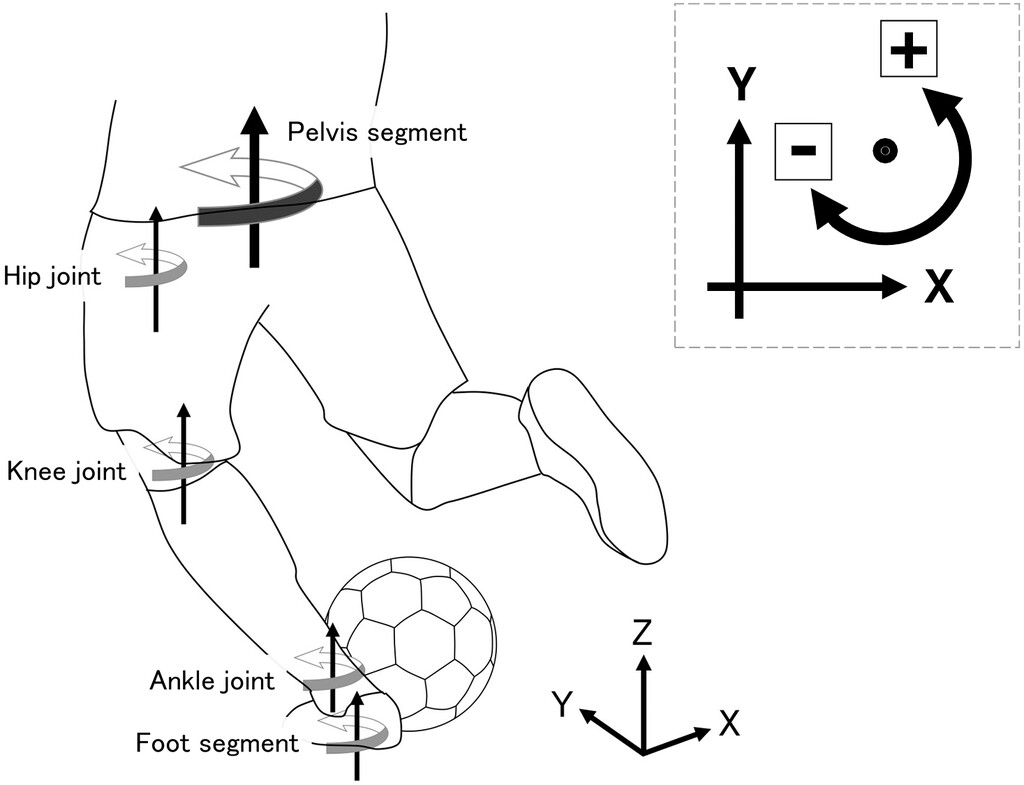
The power shot is a full-body kinetic chain. The plant foot anchors the hip rotation, the glutes and hip rotators initiate the swing, the quad extends the knee, the stiff ankle delivers the force, and the follow-through transfers the remaining energy. Missing any link leaks power.
Start from a 4–6 step curved approach. The last stride should be longer, a commitment step that opens your hips and loads the spring. Extra steps only add speed if your rhythm stays intact. Most players mess up the first step.
Step 1: The Plant Foot Commitment
Place your non-kicking foot beside the ball, pointing directly at your target. It should be about a hand-width away. This distance allows full knee extension and proper hip opening. Too close jams your swing. Too far makes you lean back and lose control. Your toes point where the ball should go. Every time.
Step 2: Load the Kicking Leg
Bring your kicking leg back as far as comfortable, forming a sharp “V” at the knee. Your hip should rotate open. This isn’t about stretching your hamstring. It’s about pre-tensioning your glutes and hip rotators, the actual engine for shot power. The swing starts from the hip, not the knee.
Step 3: Strike with a Locked Ankle
Drive your leg forward. Strike the center of the ball with the top of your foot, on the laces. Your ankle must be locked and stiff. Imagine squeezing a tennis ball in your hand. A loose ankle is a wet noodle. All force dissipates. The foot should arrive on a slight downward plane. This is the “credit-card sweet spot”, just high enough on the instep to maximize the lever, but not so high it hits the ankle bone and hurts.
Step 4: Follow Through Completely
Continue the swing after contact. Your foot should finish in the air ahead of your body, with your chest slightly over the ball. Stopping the follow-through is like braking before a collision. The kinetic energy stays in your leg instead of the ball. A full follow-through also keeps you from leaning back, which skies the shot.
Step 5: The Last Glance
Just before you strike, glance up at your target, the corner flag, the keeper’s position. Elite strikers use this micro-second to pre-align their hips and shoulders. It’s not about seeing the goal. It’s about calibrating your body’s aim subconsciously. Do it late. If you look up too early, you disrupt your approach rhythm.
TL;DR: A 4–6 step run-up, a planted foot beside the ball, a loaded hip, a stiff-ankle strike on the center, and a full follow-through. That’s the sequence.
Why Your Glutes Are the Real Engine
Quad strength gets the credit. Glutes and hip rotators do the work. The swing is a rotational movement. Your quad extends the knee, but the hip initiates the torque. Weak glutes mean a slow, arm-punch style shot. You’re not putting your ass into it.
A 2023 study on elite arena soccer players found shot velocity linked directly to eccentric braking ability. That’s how fast your muscles can stop and reverse direction. The glutes and hamstrings are prime brakes. The faster they brake the backward swing, the faster they can fire the leg forward. Reactive strength, how quickly you can generate force from a stretched position, matters more than raw maximal strength for pure power.
| Muscle Group | Primary Role in Power Shot | Key Exercise |
|---|---|---|
| Glutes & Hip Rotators | Initiate hip rotation and torque; provide eccentric braking | Hip thrusts, lateral band walks |
| Quadriceps | Extend the knee; deliver final leg speed | Squats, leg presses |
| Hamstrings | Assist eccentric braking; protect knee from hyperextension | Nordic curls, single-leg deadlifts |
| Core | Transfer force from lower to upper body; stabilize torso | Medicine ball throws, planks |
Common mistake: Only training quads with heavy squats, you get stronger legs but a slower shot because the hip engine isn’t primed. Add glute-focused work for two weeks and your shot feels quicker, not just harder.
Building leg power requires a balanced routine. Nordics are brutal but they build hamstring strength that prevents knee injury when you over-commit on a shot. Single-leg hops develop the reactive strength that that Frontiers study highlighted. Don’t skip them.
Accuracy Before Power: The 80% Rule
A clean strike beats a hard strike. An 80% power shot aimed at a corner converts. A 100% power shot off target is a turnover. Your first job is making the technique repeatable. Power will follow.
The best shooting accuracy drills start stationary. Place cones in each corner of the goal. Hit fifty shots aiming only for the cones. Don’t think about power. Think about clean contact and plant foot placement. Once you can hit eight out of ten, add a one-touch pass from a partner. Then add a defender’s shadow. Then a time limit.
This progression mirrors match pressure. Shooting from a stationary ball makes game situations feel alien. You need to practice the shooting with the instep under movement and stress.
I trained a young striker who could blast the ball from a standstill. In games, he’d snatch at shots and sky them. We spent three weeks on accuracy practice routines where he had to receive a pass, take one touch, and hit a small target. His conversion rate doubled because his technique stabilized under pressure. The power came later.
Your first touch is part of the shot. A bad touch means a rushed, unbalanced strike. A strong first touch gives you time, balance, and a clearer sight of goal. Drill it together.
Building the Shot Engine: Strength and Conditioning
Raw strength helps. Specific strength matters more. You need exercises that build the eccentric braking and reactive strength the science calls for.
The 4-Week Power Foundation Plan
- Nordic Curls (2x per week): Start with partial range. Build hamstring strength that protects the knee and aids braking. Three sets of five reps.
- Hip Thrusts (2x per week): Load the glutes directly. Use a barbell or resistance band. Four sets of eight reps.
- Single-Leg Hop Series (3x per week): Forward hops, lateral hops, rotational hops. Develop ankle-dominant reactive strength. Three sets of ten hops per direction.
- Medicine Ball Throws (1x per week): Rotational throws against a wall. Train core power transfer. Four sets of six throws.
This isn’t bodybuilding. It’s building leg power for a specific task. The gains translate within a month. Your shot feels quicker off the foot.
Combine this with the power shooting exercises that follow.
Drills That Translate to Matches
Drills without pressure are just rehearsals. You need to add defenders, time limits, and fatigue.
The Pressure Pyramid Drill
Set up a goal with four small targets (cones or small nets) in the corners. Start at the penalty spot.
– Level 1: Stationary ball. Hit each target ten times. Focus on proper kicking technique.
– Level 2: Receive a pass from a partner 10 yards away. One touch, then shoot. Twenty repetitions.
– Level 3: Add a passive defender who shadows you after the pass. Twenty repetitions.
– Level 4: Add a time limit, you have three seconds after receiving the pass to shoot. Twenty repetitions.
– Level 5: Perform the drill after a 5-minute high-intensity conditioning circuit. Ten repetitions.
This builds the technique under escalating stress. The last level mimics a game situation where you’re tired and pressed.
The 3000-Contact Rule
A skill becomes unconscious after about 3,000 deliberate repetitions. That’s six weeks of fifty quality shots after every training session. Don’t just blast balls. Each shot must follow the five-step formula. Track your progress. Count shots on goal and conversion rate. The numbers tell you when power is catching up to accuracy.
For variety, integrate curving a shot or free kick technique drills. The mechanics differ, but the core principles of plant foot and follow-through remain.
The Mental Component: When and How to Shoot
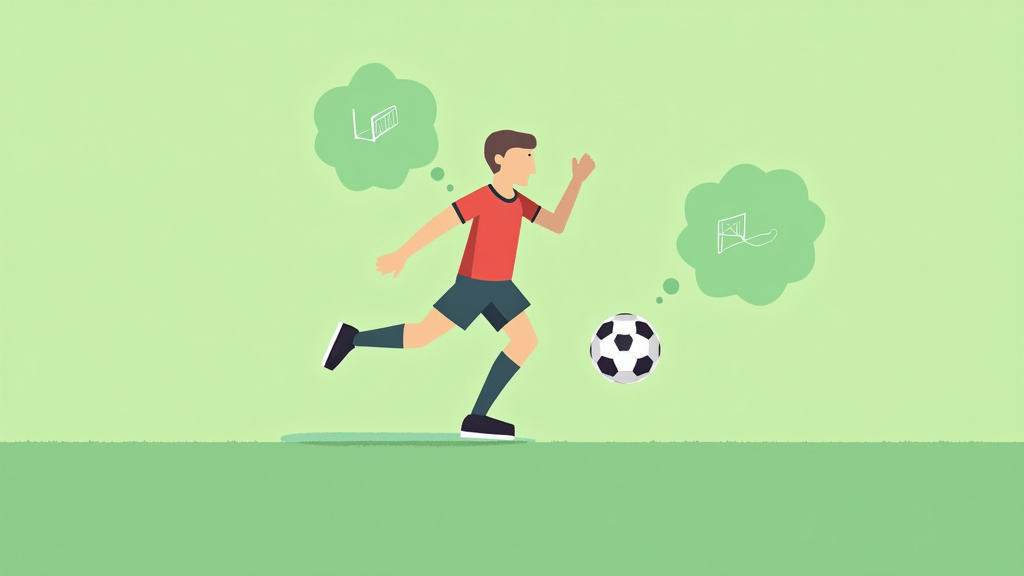
Knowing when to shoot is as important as how. A power shot is a tool, not a default.
In the box, with a clear sight of goal and time, use the full technique. From distance, with a defender closing, sometimes a quick, low instep kick technique with less power but more placement is smarter. The game doesn’t always give you the perfect run-up.
Decision-making drills help. Watch clips of elite strikers. Note when they choose power versus placement. Then replicate those scenarios in training.
Common mistake: Always trying to blast the ball from distance, it becomes predictable and low-value. Mix in placed shots, bending shot technique, and even a knuckleball technique to keep the keeper guessing.
Your aura matters. A striker who looks confident and decisive shoots better. It’s not mystical. It’s about being committed to the action. Plant your foot with conviction. The shot follows.
Frequently Asked Questions
What part of my foot should I use for maximum power?
Use the top of your foot, on the laces (the instep). Strike the ball as high on the instep as comfortable, the “credit-card sweet spot” just below the ankle bone. Your ankle must be locked stiff. A loose ankle wastes all force.
How can I increase my shot power without losing accuracy?
Follow the 80% rule. Practice shot placement techniques first, aiming for small targets with clean technique. Once your accuracy is stable, gradually increase swing speed while maintaining the same plant foot placement and follow-through. Power builds on a repeatable foundation.
Why does my ball always go over the goal when I try to shoot hard?
You are leaning back at the moment of contact. This happens if your plant foot is too far from the ball or if you stop your follow-through. Keep your chest slightly over the ball and complete the swing. Your foot should finish in the air ahead of your body.
How important is leg strength for shooting power?
Specific strength is crucial. Raw quad strength helps, but the Frontiers sports science study shows eccentric braking ability in the glutes and hamstrings is the key physical quality for velocity. Train with Nordic curls, hip thrusts, and single-leg hops.
Can a longer run-up generate more power?
4–6 step curved run-up is sufficient. The last stride should be a long commitment step to open your hips. Extra steps only add speed if you maintain perfect rhythm. Most players lose technique with a longer approach, sacrificing accuracy for minimal power gain.
The Bottom Line
Shooting with power is a formula, not a mystery. Match the five steps: committed plant foot, loaded hip, stiff-ankle strike, full follow-through, and the last glance. Train the specific muscles, glutes, hamstrings, that science says drive velocity. Practice under pressure, not just in empty rehearsals. And always remember that an accurate 80% shot beats a wild 100% shot. Put in the 3,000 deliberate contacts. The thunderbolt will come.

I come from the “soccer heart” of Germany, the Ruhrpott. I have played, trained and followed soccer all my life and am a big fan of FC Schalke 04. I also enjoy following international soccer extensively.