Free Kick Wall Distance: The 9.15 Meter Rule Explained
A defensive wall must be at least 9.15 meters (10 yards) from the ball on a free kick. This distance is non-negotiable for all opponents, except a goalkeeper standing on the goal line between the posts. If three or more defenders form that wall, a second rule kicks in: all attacking players must stay at least 1 meter (1 yard) away from it.
Most people think the referee’s ten-pace walk is perfectly accurate. It isn’t. A misplaced wall by even half a yard changes the entire geometry of the free kick, turning a sure goal into a routine save. Players who don’t know the exact rules and their consequences give away cheap retakes or, worse, indirect free kicks in their own box.
This guide breaks down the 9.15-meter rule, the 1-meter attacking player law, and what happens when someone breaks them. You will learn how referees enforce these distances, the strategic implications of getting them wrong, and the specific free-kick scenarios that most players and coaches misunderstand.
Key Takeaways
- The mandatory 9.15-meter (10-yard) distance applies to all defending players, not just the wall. Encroachment before the kick forces a retake.
- If three defenders make a wall, attacking players must stay 1 meter back. Violating this before the kick results in an indirect free kick for the defense.
- A quick free kick can be taken even if opponents are within 9.15 meters, but a player who deliberately blocks that quick restart receives a yellow card.
- For indirect free kicks inside the goal area, the ball is placed on the goal area line parallel to the goal line, but defenders must still retreat 9.15 meters.
- Referees measure the distance by stepping it off, but human error is common. A wall positioned even 11 yards away gives the kicker a significant advantage.
The Core 9.15 Meter Rule for Defenders
Opponents must be at least 9.15 meters from the ball when a free kick is awarded. This is Law 13, straight from the IFAB Laws of the Game PDF. The only exception is a defender standing on their own goal line between the goalposts. The distance is absolute until the ball is in play, which happens the moment it is kicked and moves clearly.
The minimum distance of 9.15 meters (10 yards) must be maintained by all opponents from the point where the free kick is taken. This distance is measured from the location of the ball, not the player taking the kick. Failure to retreat is an infringement punishable by a retaken kick or, if advantage is applied, play continues.
This rule exists to give the attacking team a fair chance to execute the restart without immediate pressure. It shapes every defensive tactic around set pieces. The team fouled has two choices: take the kick quickly before the wall is set, or wait for the referee to enforce the distance ceremonially.
TL;DR: All defenders must be 9.15m back. Take a quick kick before they get there, or force the referee to measure and give you a clean shot.
How Referees Enforce the Distance (And Why They Get It Wrong)
Referees don’t carry a tape measure. They enforce the distance by pacing it out from the ball. The standard is ten normal walking steps, which is supposed to approximate 9.15 meters. This method is notoriously imprecise. In a Premier League match not long ago, laser measurement showed a wall at 11.2 yards, not 10. That extra 1.2 yards is the difference between the ball clearing the wall and smacking into the forehead of the jumping defender.
Players in the wall have a right to ask for a proper measurement if they suspect the referee is short. Most don’t. They shuffle back until the referee’s arm goes up, then stop. That passive acceptance costs goals. A smart goalkeeper or wall organizer will verbally question the official’s positioning. It is not dissent; it is ensuring the law is applied correctly. The visual cue is the referee’s referee’s spray line on the grass. That line marks where the wall’s front foot must stand, not where their chests can lean over.
Common mistake: Assuming the referee’s ten-step measurement is always exact — an error of just 10% (one yard) gives the free-kick taker enough extra space to lift the ball over the wall and dip it under the crossbar with pace.
The Critical Difference Between Quick and Ceremonial Free Kicks
The 9.15-meter rule has a crucial caveat for game tempo. The attacking team can choose to take a “quick” free kick, even if opponents haven’t retreated the full distance. If they take it quickly and an opponent who is too close intercepts the ball, play continues. The referee will not call the infringement back. This rewards alertness and punishes defensive disorganization.
However, if an opponent deliberately blocks or prevents that quick free kick from being taken, it’s a different story. That player receives a yellow card for delaying the restart of play. The referee then demands a ceremonial free kick, ensuring the full 9.15 meters is granted. This dichotomy is central to smart game management. A team that wants to slow the game down and set its defensive formation will often commit a tactical foul, then immediately stand over the ball to force the ceremonial restart.
The 1-Meter Rule for Attacking Players
This is the rule most amateur players and Sunday league coaches miss entirely. Law 13 states that if three or more defending players form a wall, all attacking players must remain at least 1 meter (1 yard) from that wall until the ball is in play. This prevents attackers from jostling, leaning, or creating a “tunnel” through the wall that deceives the goalkeeper.
| Situation | Required Distance | Consequence of Infringement (Before Kick) |
|---|---|---|
| Defending Players | 9.15 meters from the ball | Free kick is retaken |
| Attacking Players (vs. a 3+ man wall) | 1 meter from the wall | Indirect free kick awarded to defending team |
| Goalkeeper | On goal line between posts (if closer than 9.15m) | No infringement |
The enforcement is strict. If an attacker is within that 1-meter buffer when the kick is taken, the referee stops play and awards an indirect free kick to the defending team from the spot of the offense. This can be catastrophic if the original free kick was on the edge of the opponent’s box, as it gifts them possession and relieves pressure.
The timing is everything. The offense only occurs if the attacker is too close before the ball is kicked and clearly moves. If the attacker sprints forward and encroaches within 1 meter after the ball is in play, it is not an offense. A goal scored from such a play would stand. This nuance separates knowledgeable players from those who shout incorrectly for an infraction every time.
Why This Rule Exists and How to Use It
The rule exists to preserve the integrity of the defensive wall. Without it, attackers could physically disrupt the wall’s shape, block the goalkeeper’s sight, or create illegal screening situations. For the attacking team, it means rehearsed set-piece routines must account for this buffer. You cannot station a player right next to the wall to flick on a low shot; they must start their run from at least a yard away.
For the defense, it is a tactical tool. A smart team forming a wall can use this rule to its advantage. By ensuring three players clearly form the wall, they trigger the 1-meter restriction, which can disrupt the timing of complex attacking plays. This kind of detail is what separates basic defensive organization from expert-level set-piece strategies.
Consequences of Encroachment: Retakes, Indirect Kicks, and Cards
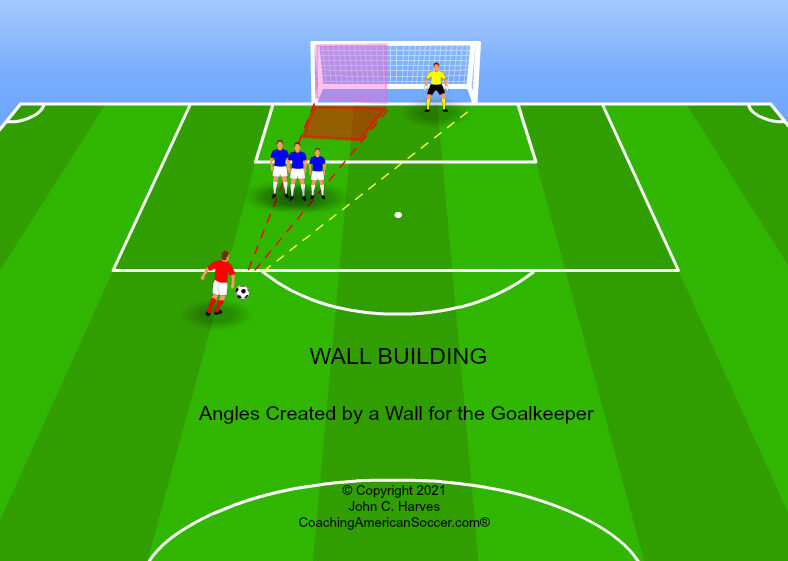
Breaking the distance rules has direct, escalating consequences. What happens depends entirely on who encroached and when.
-
Defensive Encroachment (Closer than 9.15m):
- If the kick is taken quickly and the ball enters play: The referee allows play to continue. Advantage is applied.
- If the kick is ceremonial and defenders encroach: The referee stops play and orders the free kick to be retaken.
- If a defender deliberately blocks a quick restart: The player is cautioned (yellow card) for delaying the restart, and the free kick is retaken ceremonially.
-
Attacking Encroachment (Closer than 1m to a 3+ man wall):
- If the attacker is too close when the kick is taken, the referee stops play immediately and awards an indirect free kick to the defending team from the spot of the infringement.
-
Both Teams Encroach:
- The free kick is always retaken, regardless of which team’s offense seemed more impactful. This is a strict application to avoid rewarding simultaneous fouls.
The most painful mistake is an attacking player encroaching in the opponent’s penalty area. The resulting indirect free kick gives the defense possession in a dangerous area with no offside from the kick. I have seen a cup tie lost this way: a 1-0 lead in the 88th minute, a free kick on the edge of the box, an eager striker leaning in, and a whistle for the indirect free kick. The other team cleared it, held on, and won in extra time. That striker learned the rule the hardest way possible.
Special Free Kick Scenarios and Placement Rules
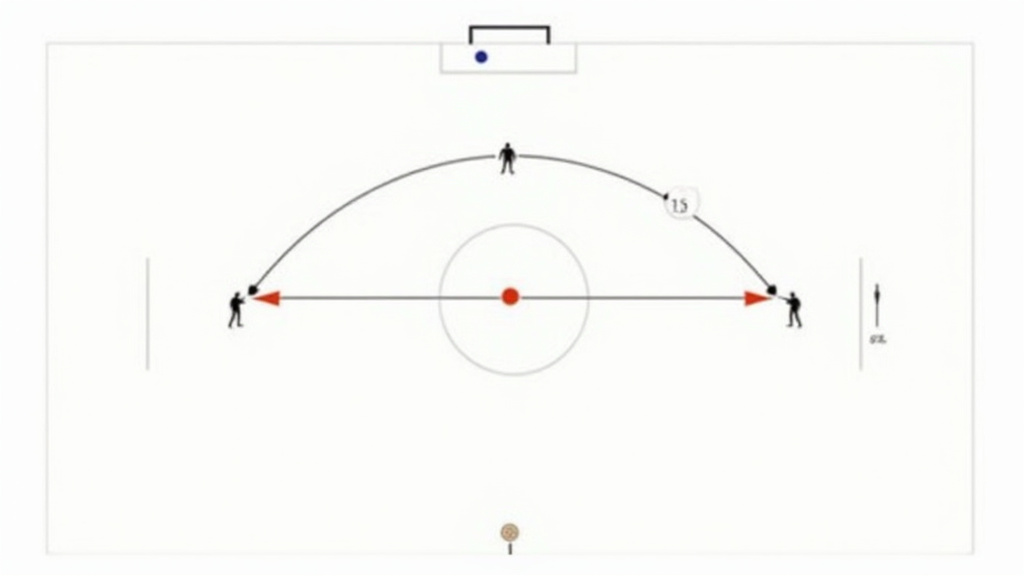
Not all free kicks are created equal. Two specific situations change the geometry and application of the wall distance rules: indirect free kicks and kicks awarded inside the goal area.
Indirect Free Kicks Inside the Penalty Area
When an indirect free kick is awarded to the attacking team inside the opponent’s penalty area (for example, for a back-pass offense or dangerous play), placement is different. The ball is not placed exactly where the offense occurred if that spot is inside the six-yard goal area.
Instead, the ball is moved to the nearest point on the goal area line which runs parallel to the goal line. This gives the ball a bit of room. However, the 9.15-meter rule for defenders remains fully in effect. Defenders must retreat to the penalty area line or further if necessary to be 9.15 meters away. This often results in the entire defending team, except the goalkeeper, standing on the goal line itself, as the goal area is only 5.5 meters deep.
Common mistake: Defenders bunching on the goal line for an indirect free kick in the box. The law requires them to be 9.15m away, which usually means standing on the edge of the six-yard box, not the goal line. This mistake leaves a huge swath of the goal unprotected.
Direct vs. Indirect: Does It Change the Wall Distance?
No. The wall distance is identical for both direct and indirect free kicks. The 9.15-meter rule is a universal standard for all free kicks, regardless of type. The only difference is what the kicker can do with the ball next. This uniformity simplifies enforcement for referees and players. Whether you are setting up for a shot or a tap-pass in a 3-4-3 formation routine, the space you are granted is the same.
How Teams Strategize Around the Wall Rules
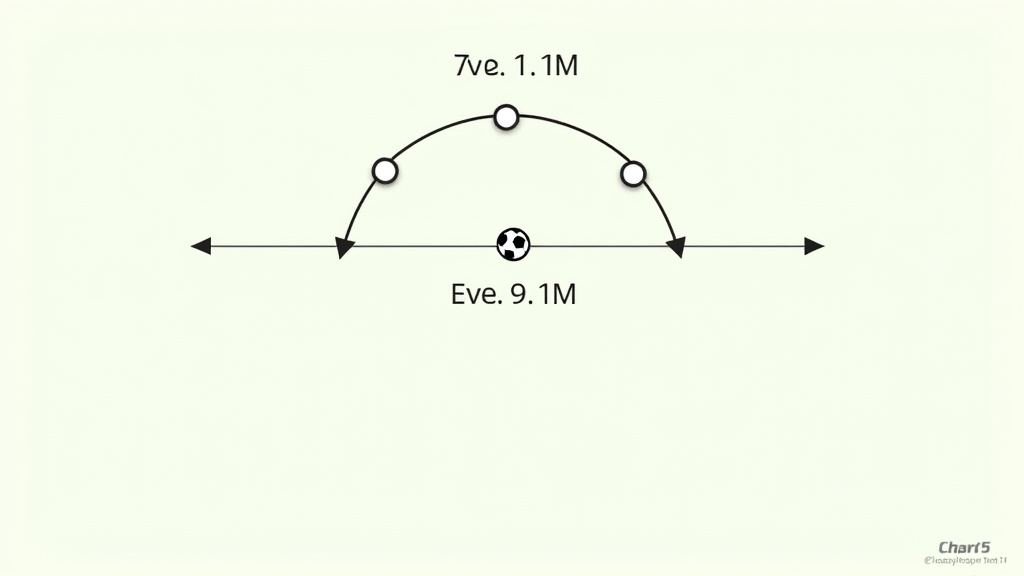
Understanding the rules allows teams to build them into their coaching strategies. The distance is not just a restriction; it is a variable to be manipulated.
- For the Attack: The choice between a quick or ceremonial kick is the first strategic decision. A quick kick exploits disorganization, while a ceremonial kick allows for a rehearsed play and ensures the wall is at maximum distance. Some teams train a player to always stand in front of the ball legally, forcing the ceremonial restart to guarantee the full 9.15 meters for their specialist taker.
- For the Defense: The priority is to form a legal, organized wall as fast as possible. The moment three players are in the wall, the 1-meter rule activates, giving defenders a buffer. Goalkeepers must orchestrate this while also checking the positioning of attackers for potential encroachment. A well-drilled team in a compact defensive shape will use these seconds to get everyone goal-side and organized.
The best teams integrate this knowledge into their overall team shape. They know that conceding a free kick in a central area 20 yards out is a major defensive crisis. The response is a protocol: who runs to the wall, who marks zonally, who presses the second ball. It is a practiced defensive structure, not panicked scrambling.
Frequently Asked Questions
What is the official distance for a soccer free kick wall?
The official distance is 9.15 meters, which is equivalent to 10 yards. This measurement is taken from the ball’s position to the nearest point of any defending player, except a goalkeeper standing on the goal line between the posts.
What happens if the wall is too close on a free kick?
If the wall is too close on a ceremonial free kick, the referee will stop play and order the kick to be retaken. If the attacking team takes a quick free kick while defenders are too close, play continues and the encroachment is ignored.
Can attacking players stand in the wall?
No. If three or more defenders form a wall, all attacking players must remain at least 1 meter (1 yard) away from that wall until the ball is kicked. If an attacker is closer, the referee awards an indirect free kick to the defending team.
How does the referee measure 10 yards?
The referee measures the distance by pacing it out from the ball, typically taking ten normal walking steps. They may use referee’s spray to mark the spot of the foul and the line where the wall must stand. This method is not perfectly precise, and errors of over a yard are not uncommon.
Where is the ball placed for an indirect free kick in the 6-yard box?
For an indirect free kick awarded to the attack inside the opponent’s goal area (6-yard box), the ball is placed on the goal area line parallel to the goal line, nearest to where the offense occurred. Defenders must still be 9.15 meters away, which usually forces them to the edge of the six-yard box or the penalty spot.
The Bottom Line
The 9.15-meter rule is the bedrock of free-kick fairness. It creates the space for spectacle and skill. But it is the 1-meter rule for attackers and the nuances of quick kicks that truly define high-level set-piece play. Ignorance of these details leads to conceded goals and squandered opportunities.
Memorize the two numbers: 9.15 and 1. Know that a referee’s steps are a guide, not a guarantee. Train your team to use the ceremonial restart to its full advantage and to defend against it with organized urgency. The difference between winning and losing a tight game often comes down to who knows, and who can exploit, these exact distances on the pitch. Your player footwear and hydration equipment matter, but your knowledge of the laws matters more.
I come from the “soccer heart” of Germany, the Ruhrpott. I have played, trained and followed soccer all my life and am a big fan of FC Schalke 04. I also enjoy following international soccer extensively.