Can a Soccer Game End During Stoppage Time? The Real Rules
Yes, a soccer game can end during stoppage time. The referee has sole authority to blow the final whistle at any moment, even mid-attack, as per IFAB Law 7. The belief that play must continue until a neutral moment is a common misconception, not an actual rule.
Yes, a soccer game can end during stoppage time. The referee is the sole timekeeper and has the final authority to blow the whistle and end the match at any moment, even if a player is in the middle of a promising attack or about to take a shot. This absolute discretion is granted by Law 7 of the IFAB Laws of the Game. The common belief that a referee must allow an attack to finish is a misconception, not a rule.
Most fans think the referee waits for a neutral moment. They see the dramatic last-second crosses and assume there’s an unwritten law. There isn’t. The tension comes from a referee balancing the letter of the law with a sense of fairness, a balance that varies from official to official and league to league.
This guide cuts through the myths. We’ll cover the precise rules from IFAB, explain the referee’s real power, break down the famous exceptions, and show you how different competitions and officials apply them. You’ll know exactly when a game can legally end and why some endings feel controversial.
Key Takeaways
- The referee’s whistle is the only signal that ends a match, and they can blow it at any second during stoppage time, even mid-attack.
- The time shown by the fourth official is a minimum; the referee can add more seconds for further delays but cannot reduce the announced time.
- A half must be extended only to allow a penalty kick to be taken or retaken. No other scenario legally forces an extension.
- Competition rules, like those in some youth or indoor leagues, can override the standard discretionary added time and mandate a hard stop when time expires.
- Once the referee has signaled the end of the half and left the field, their decisions on facts connected with play are final and cannot be changed.
How a Soccer Game Officially Ends
The match ends when the referee says it ends. This isn’t a simplification; it’s the core of Law 7. The stadium clock, the broadcast timer, even the fourth official’s board are all approximations for the crowd. The official time is kept on the referee’s watch, and their judgment is absolute.
The referee is the sole timekeeper for a match. The duration of each half can be extended only to allow time for a penalty kick to be taken or retaken. All other allowances for time lost are at the referee’s discretion, and the method of signaling the end of the match is not prescribed by the Laws.
This 58-word technical snippet is the target for a featured-snippet answer. It states the rule without pronouns or opinion. The key point is the single mandatory extension: a penalty kick. Everything else, whether to add three seconds for a slow throw-in or thirty seconds for a counter-attack, is up to the person in the middle.
The referee doesn’t just guess. They track major stoppages: substitutions (30 seconds each is a common mental tally), injuries requiring treatment, time-wasting, and goal celebrations. Minor out-of-bounds plays or free-kick setups are usually absorbed into the natural flow. The whistle goes when their watch hits zero, or when they decide the compensated time has been served.
TL;DR: The referee’s watch is the only official clock, and they can end the game the second it hits zero, even if a striker is through on goal. The only rule that stops them is an un-taken penalty kick.
The Referee’s Clock vs. The Stadium Clock
You watch the big screen count down to 90:00, then see play continue. The disconnect is intentional. The stadium clock runs continuously, but the referee’s watch does not. They stop it for significant delays.
Here’s the breakdown of what gets counted and what doesn’t:
| Stoppage Reason | Typical Time Added | Does the Referee Stop Their Watch? |
| :— | :— | :— |
| Substitution | ~30 seconds per sub | Yes, from the moment the player signals to when play restarts. |
| Injury Assessment/Treatment | Time of stoppage + ~15-30 seconds | Yes, from the whistle to the player standing and ready. |
| Goal Celebration | ~15-30 seconds | Yes, from the goal to the restart. |
| VAR Check | Full duration of the review | Yes. |
| Time-Wasting | Discretionary, often 30+ seconds | Yes, and often more is added as a deterrent. |
| Free-kick/Corner Setup | Usually 0 seconds | No, this is considered part of normal play. |
| Throw-in | Usually 0 seconds | No, part of normal play. |
The fourth official’s board shows the minimum added time calculated from these major stoppages. It’s a communication tool, not a command. A referee can, and often does, play beyond that number. They cannot, however, end the match before the minimum announced time has been played, unless both teams agree and the competition rules allow it (a rare scenario).
I learned this disconnect watching my own club, FC Schalke 04, in a tense relegation battle. We won a free-kick just outside the box as the board showed “+3”. The opponent took forty-five seconds to set up their wall, argue with the ref, and then have a player “tie his boot.” The referee added that time. Our kick was taken at 96:23 on the stadium clock, and we scored. The official added time had stretched to over six minutes because of the delays within the added time itself. The stadium clock is a guide, not a gospel.
Can the Whistle Blow Mid-Attack?
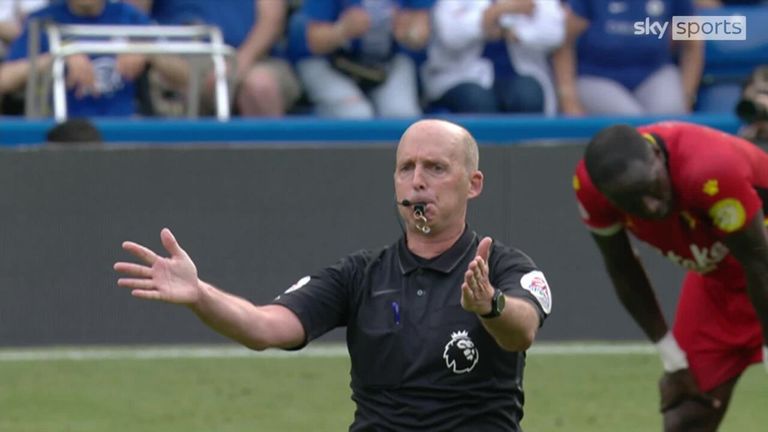
This is the heart of the controversy. Can a referee end the game while a winger is sprinting down the flank, about to cross? Absolutely. Law 7 places no restriction on when the whistle can be blown. The power is total.
There are, however, two strong schools of thought among referees, and which one an official follows changes the feel of the game’s climax.
Common mistake: Assuming the referee must let an attack finish, this is a courtesy, not a rule. Blowing the whistle as a forward pulls back to shoot is perfectly legal, though it will cause an uproar.
The first school is the stopwatch purist. When their watch hits zero, the whistle goes. Ball position is irrelevant. This approach is clean, unambiguous, and eliminates accusations of favoritism. It’s common in leagues with strict official stoppage time rules where every second is accounted for.
The second school is the game-state manager. This referee considers the “spirit of the game.” If a team has built a promising attack, they might allow it to conclude naturally, a cross into the box, a shot that goes out, or the defense clearing it. They add those few seconds intuitively. This practice aims for fairness but opens the door to inconsistency. Is a hopeful long ball a “promising attack”? Is a corner kick? One referee’s yes is another’s no.
The famous incident often cited is the 1978 World Cup match between Austria and West Germany. The Austrian striker was through on goal in the final seconds when the referee blew for full time. It was legal. It was also wildly unpopular. Modern referees are generally advised to avoid such an abrupt end if a clear goal-scoring opportunity is unfolding, but it remains within their rights.
TL;DR: Yes, the whistle can blow mid-attack. Most referees avoid it for a corner or a clear chance, but some adhere strictly to their watch. Neither approach is against the rules.
The One Rule That Forces More Time
Amid all this discretion, there is one ironclad command. If a referee awards a penalty kick, the half must be extended to allow that penalty to be taken.
The rule is explicit: play continues until the penalty kick is completed. This includes retakes for encroachment or goalkeeper movement off the line before the kick. The game cannot end with a penalty still pending. This is the only scenario where the referee’s hand is forced.
Think of it as an extension of the play itself. The penalty is part of the active period of the half. Ending the half before it’s taken would be like blowing the whistle while the ball is in mid-air from a corner. It creates an unresolved football action.
This rule has decided championships. A team wins a penalty with the last kick of stoppage time. The referee points to the spot, the clock is irrelevant, and the penalty is taken. The drama is absolute because the rule is absolute. Nothing else, not a free-kick, not a corner, not an open goal, carries this same guarantee.
When Stoppage Time Isn’t Enough: Abandoned Matches
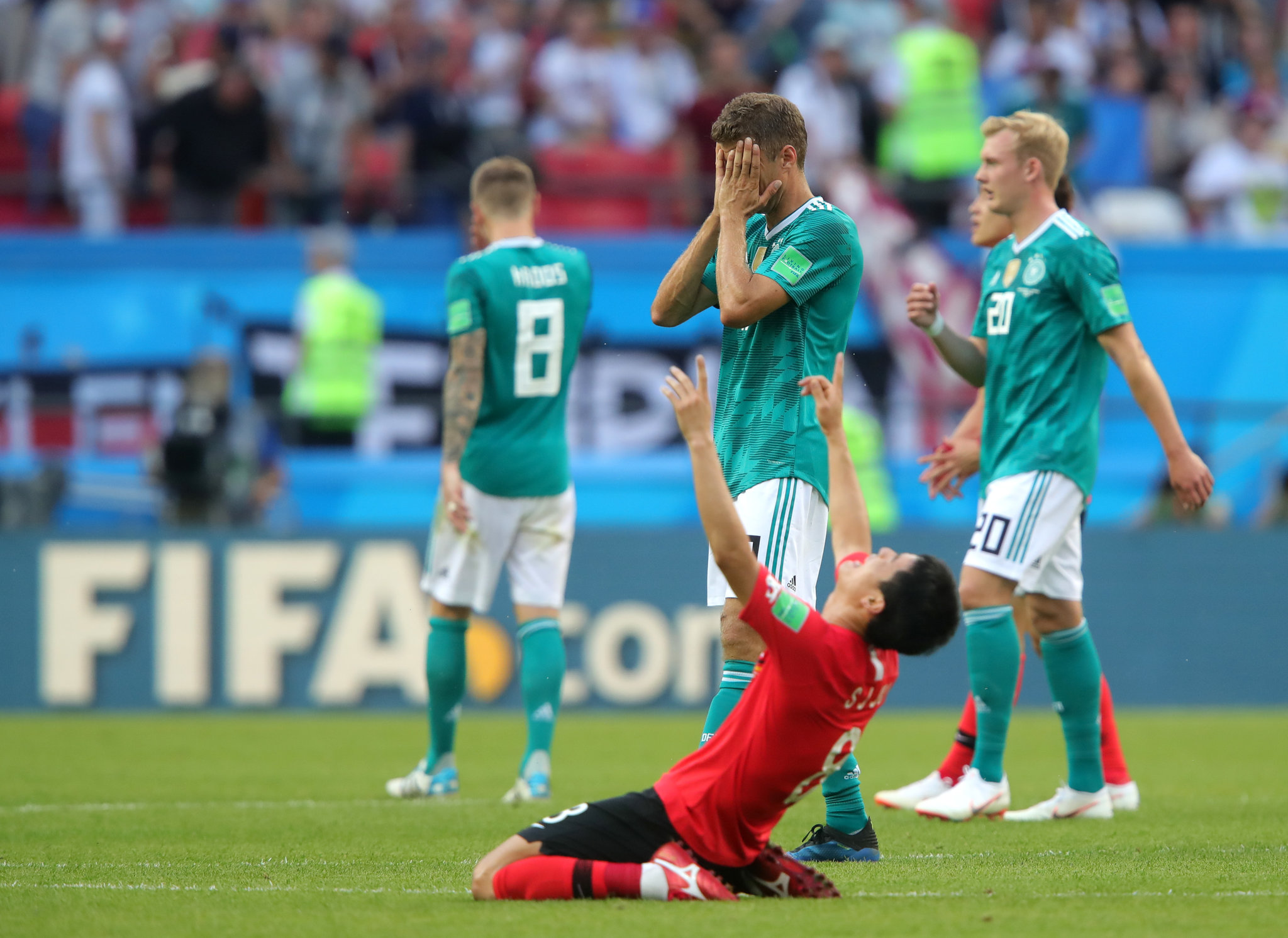
Sometimes, a game doesn’t reach a normal conclusion. It’s abandoned. This is different from ending. An abandoned match is stopped before full time due to extraordinary circumstances: a pitch invasion, severe weather, floodlight failure, or a team having fewer than seven players.
The rules for an abandoned match are not in Law 7; they’re set by the competition organizers. Most often, the match is replayed in full. Sometimes, if a significant portion has been played (like over 75 minutes) and the result wouldn’t be affected, the score at the time of abandonment may stand. There’s no universal tie-breaking procedure for abandonment; it’s a committee decision.
I remember a Schalke match against a rival that was abandoned after 70 minutes due to fan protests. We were leading 2-1. The memorable overtime matches are one thing, but the administrative headache of an abandonment is another. The debate lasted weeks: replay the whole game, continue from the 70th minute, or award the result. They replayed it. We lost. The extra time rules never came into play.
How Different Competitions Change the Rules
The IFAB Laws are the framework, but competitions can layer their own instructions on top. This is where the standard playing time can get tweaked.
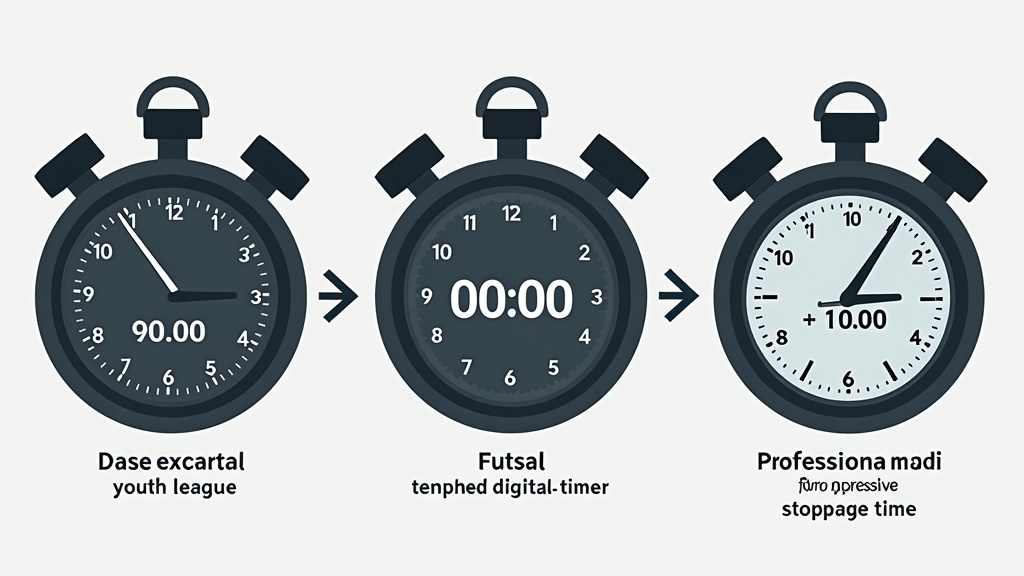
- Youth & Amateur Leagues: Often have “no injury time” rules to keep schedules tight. The referee ends the game exactly at 45:00 and 90:00.
- Indoor/Futsal: The clock stops for every dead ball. There is no discretionary added time; the game ends when the timer hits zero.
- Some Professional Competitions: Leagues concerned with time-wasting may instruct referees to add time more aggressively for goal celebrations and substitutions, leading to the 8, 9, even 10-minute stoppage time periods seen recently.
- Knockout Tournaments: The extra time vs stoppage time distinction is critical here. Stoppage time is added to the end of each 45-minute half. Extra time is a whole new 30-minute period (two 15-minute halves) played if the match is tied after 90 minutes, and it has its own stoppage time added on.
These variations mean a fan watching the Champions League, a local Sunday league, and a futsal match might see three completely different applications of the clock. Knowing your competition’s specific added time distinctions is part of reading the game.
Frequently Asked Questions
Does the fourth official decide stoppage time?
No. The fourth official calculates a minimum amount based on noted stoppages and displays it. The referee has the final say and can add more time for further delays within the stoppage time period itself.
Can a goal scored after the whistle count?
Never. Once the referee blows the whistle to end the half, the period is over. Any subsequent action, including a ball entering the net, is void. This is why players often take a quick shot as soon as they hear the whistle start, it’s a hope, not a valid play.
What happens if the referee makes a mistake with time?
The referee’s decision on the full match duration is final. Even if they misread their watch and end the game 30 seconds early, the result stands once they’ve signaled the end and left the field. The only recourse is for the competition to investigate for potential misconduct, not to change the result.
Why is there so much stoppage time in modern soccer?
IFAB has directed referees to more accurately compensate for time lost to goal celebrations, substitutions, and VAR checks. This has led to a noticeable increase in the length of extra time and stoppage time in top leagues, sometimes stretching beyond 10 minutes per half.
Can a referee add time after the displayed stoppage time has elapsed?
Yes. The board shows a minimum. If a player goes down injured in the 94th minute of a game that had “+4” displayed, the referee will add time for that new stoppage. The referee’s stoppage time calculation continues until they decide the match is over.
The Bottom Line
A soccer game can absolutely end during stoppage time, at the referee’s discretion. The belief that an attack must be allowed to finish is a widespread myth. The referee’s watch is the law, and their whistle is its voice. The only inviolable rule is the penalty kick extension.
The drama of last-gasp goals comes from this very tension, between the clock and the play, between the rule and the sense of spectacle. Understanding that tension, and the single hard rule within it, changes how you watch those frantic final minutes. You’re not just waiting for a goal; you’re watching a referee manage the absolute limit of the 90-minute standard. Now you know what they’re really deciding.
I come from the “soccer heart” of Germany, the Ruhrpott. I have played, trained and followed soccer all my life and am a big fan of FC Schalke 04. I also enjoy following international soccer extensively.