Estadio Azteca History: Host of Two FIFA World Cup Finals
Estadio Azteca is a stadium built on volcanic rock in Mexico City, conceived for the 1966 World Cup. Its construction from 1962 to 1966 was an immense engineering feat, overcoming budget overruns and the physical challenges of building at altitude to create football’s most iconic stage.
The history of Estadio Azteca is the story of a stadium built on volcanic rock that became football’s most iconic stage, hosting World Cup wins for Pelé and Diego Maradona and preparing for a historic third tournament in 2026. Its construction from 1962 to 1966 was an engineering feat, its ownership by media giant Televisa shaped its destiny, and its concrete bowls have echoed with the sport’s most legendary moments.
Most summaries get the timeline wrong. They treat the Azteca as a finished monument, not a living project that ran over budget, changed names, and constantly evolved. They skip the financial gambles and the physical toll of building at altitude.
This guide walks through the stadium’s full life. We’ll cover the blasting of its foundation, the two World Cup finals that define it, the painful match that broke its invincibility, and the multi-million dollar remodel for 2026.
Key Takeaways
- Estadio Azteca is the only stadium to host two men’s FIFA World Cup finals (1970, 1986) and will be the first to host three in 2026.
- Construction from 1962-1966 cost 260 million pesos, went over budget, and required blasting through solid volcanic rock, uncovering mammoth remains.
- The stadium’s official name has always been Estadio Azteca, despite brief renamings to Estadio Guillermo Cañedo (1997-1998) and a current sponsorship deal as Estadio Banorte.
- Its most famous matches are the 1970 “Game of the Century” (Italy vs West Germany) and the 1986 quarter-final where Maradona scored the “Hand of God” and “Goal of the Century.”
- A defining, painful moment in its history is the “Aztecazo” in 2001, when Costa Rica became the first team to beat Mexico in a World Cup qualifier at the Azteca.
The 7-Year Build: Blasting Through Volcanic Rock
The idea was bigger than a stadium. In the early 1960s, media magnate Emilio Azcárraga Milmo wanted a monument to boost Mexican football and secure a World Cup bid. He commissioned architects Pedro Ramírez Vázquez and Rafael Mijares Alcérreca. Their vision was a 100,000-seat coloso inspired by pre-Hispanic architecture, built in the Santa Úrsula neighborhood.
The ground broke in 1962. The first problem was the ground itself.
The construction site sat on an ancient lava flow. Workers had to blast through solid volcanic rock to create the stadium’s foundation. During excavation, they unearthed mammoth bones, a literal layer of deep history beneath the future temple of football.
The project hemorrhaged money. The initial budget ballooned. A critical loan from Banco Nacional de México, now Banorte, kept the lights on. The iconic roof wasn’t even finished for the inauguration. They opened without it.
The first stone was laid in 1962. The doors opened four years later, on May 29, 1966. The inaugural match saw Club América face Italy’s Torino, ending in a 2-2 draw. Brazilian Arlindo Dos Santos Cruz etched his name first, scoring the stadium’s maiden goal. The opening capacity was 107,494.
TL;DR: Built on a volcanic rock foundation from 1962-1966, the Azteca was an over-budget engineering gamble financed by a media mogul and a bank, opening with an unfinished roof.
An Arena of Firsts: World Cups and Olympic Fire
The Azteca’s global destiny was sealed quickly. It served as the main football venue for the 1968 Mexico City Summer Olympics. But its true purpose was revealed two years later.
Mexico had won the right to host the 1970 FIFA World Cup. The Azteca was the crown jewel. It hosted nine matches, including a semifinal and the final. This tournament cemented its legend with two timeless contests.
The semifinal between Italy and West Germany is called the “Game of the Century.” It had everything: a last-minute equalizer, extra time, five goals, and Franz Beckenbauer playing with a dislocated shoulder. Italy won 4-3. The final featured Pelé’s Brazil against Italy. Brazil’s 4-1 victory, capped by Carlos Alberto’s iconic team goal, gave Pelé his third World Cup. The Azteca had its first immortal champion.
Sixteen years later, it happened again. For the 1986 World Cup, the stadium was the centerpiece. It hosted the quarter-final between Argentina and England. In four minutes, Diego Maradona scored twice, the infamous “Hand of God” followed by the mesmerizing “Goal of the Century.” Argentina marched back to the Azteca for the final, defeating West Germany 3-2. Maradona lifted the trophy. The stadium now had a perfect, unmatched record: two finals, two victories for the game’s greatest icons.
This sequence of events is why the Azteca holds a unique place in the history of memorable overtime matches. Its role in hosting consecutive finals for different legends is a key part of any study on modern football legends.
| Tournament | Year | Azteca’s Key Matches | Legacy Created |
|---|---|---|---|
| Summer Olympics | 1968 | Football tournament finals | Established as a major international venue |
| FIFA World Cup | 1970 | Semifinal (Italy 4-3 West Germany), Final (Brazil 4-1 Italy) | “Game of the Century”; Pelé’s third title |
| FIFA World Cup | 1986 | Quarterfinal (Argentina 2-1 England), Final (Argentina 3-2 West Germany) | Maradona’s “Hand of God” & “Goal of the Century” |
| FIFA World Cup | 2026 | Scheduled Opening Match & Knockout Games | Will become first stadium to host three World Cups |
The Temple’s Defining Moments (Beyond the Finals)
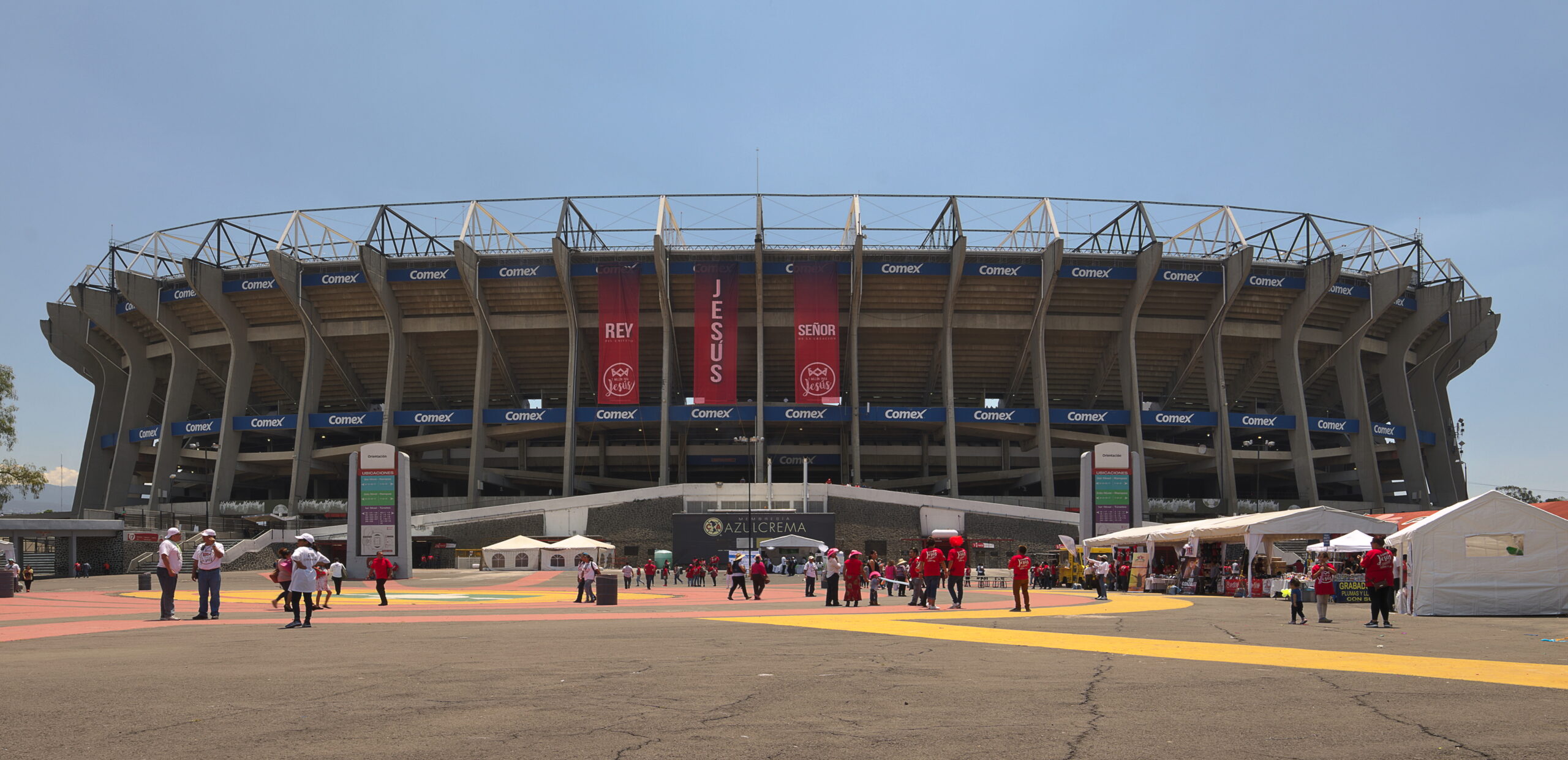
Photo: Carlos Valenzuela / Wikimedia Commons / CC BY-SA 4.0

World Cups made the Azteca famous. Other events made it a cultural heart. It has been a concert venue for Michael Jackson, U2, and Elton John, their music bouncing off the concrete designed for football chants.
In 1999, Pope John Paul II held a mass here for millions. That visit triggered a specific upgrade: the installation of the stadium’s first high-definition giant video screens. The hardware for worship later showed football replays.
Then there is the match that scarred the national psyche. For decades, the Azteca was a fortress for the Mexican national team. They were unbeaten there in World Cup matches. That ended on June 16, 2001.
Common mistake: Assuming the Azteca’s aura made Mexico invincible. Costa Rica’s 2-1 victory in a 2002 World Cup qualifier, dubbed the “Aztecazo”, proved the crowd’s roar couldn’t compensate for tactical failure. The loss forced a managerial change and a reckoning.
The stadium has also been a canvas for historic tactical battles, where the size of the pitch and the pressure of the crowd became strategic weapons. Visiting teams had to adapt their classic 11v11 formations to survive the altitude and the noise.
Who Owns the Colossus? Names, Money, and Steel
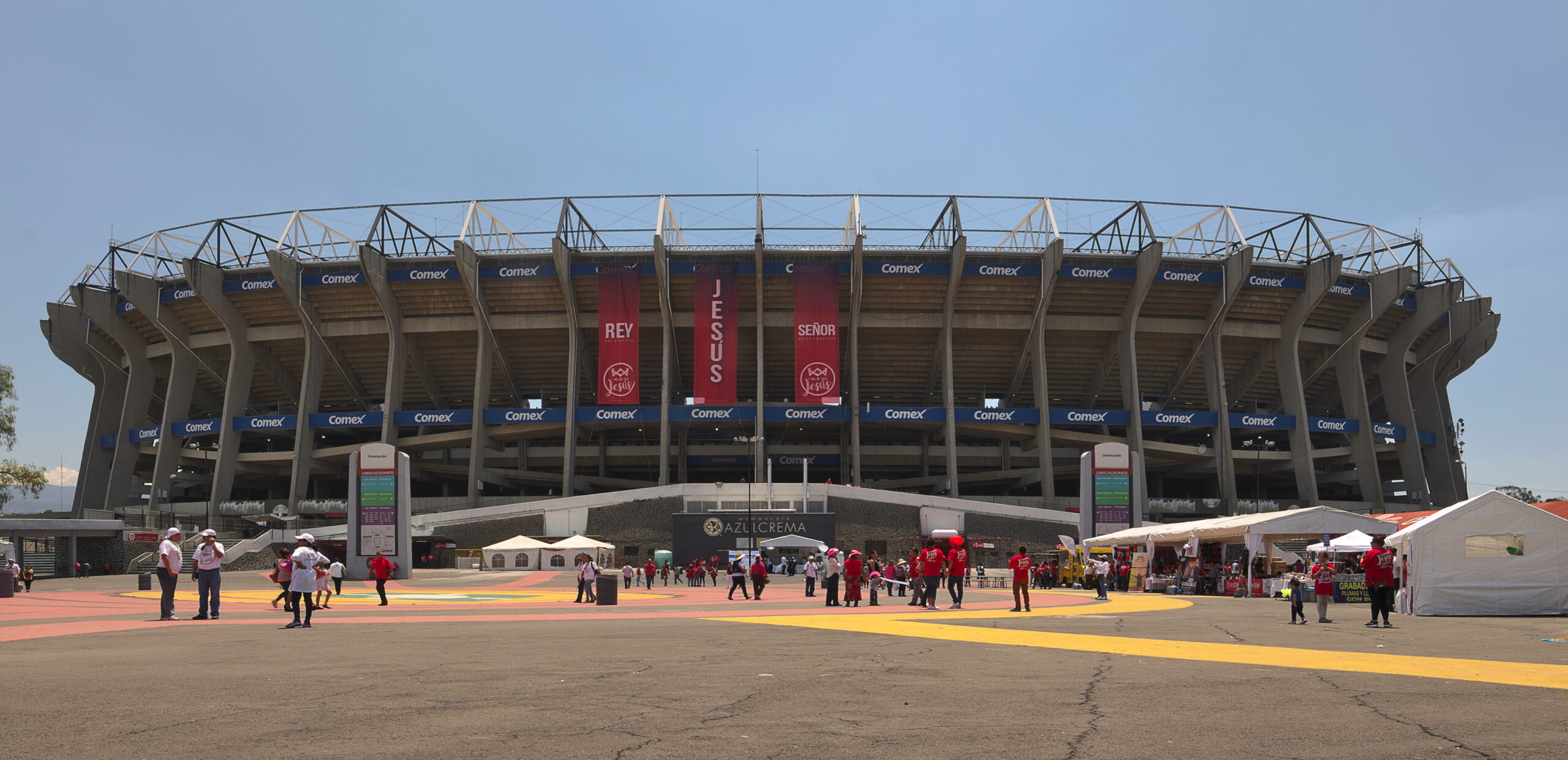
Photo: Carlos Valenzuela / Wikimedia Commons / CC BY-SA 4.0
The stadium has always belonged to Televisa, the Mexican media conglomerate founded by Emilio Azcárraga Milmo. This ownership is why it was built and how it evolved. Televisa invested not just in bricks, but in the events that filled them.
The name “Azteca” was chosen to honor Mexico’s indigenous heritage. It has stuck, despite two official challenges.
In 1997, it was renamed Estadio Guillermo Cañedo for a year, honoring Televisa’s vice-president and a FIFA power broker. The public rejected it. The name reverted. Cañedo’s real legacy was his behind-the-scenes work in securing those World Cup bids for Mexico.
The latest change is a sponsorship, not a rename. In 2024, Banorte, the same bank that funded the original construction, secured naming rights as part of financing a 3.5-billion-peso renovation for the 2026 World Cup. Outside of FIFA events, it’s called Estadio Banorte. For the World Cup, FIFA will use “Estadio Azteca Ciudad de México.” The soul of the name remains.
These renovations are constant. The capacity has swung wildly:
* 1966: 107,494 (inauguration)
* 1986: ~115,000 (peak for World Cup)
* Today: 87,523 (modern, safer configuration)
The current remodel, detailed in a Sports Illustrated Mexico report, includes new seats, VIP areas, lighting, and a playing surface that meets the latest regulation soccer pitch standards for a global tournament.
Why the Azteca’s Altitude and Design Matter
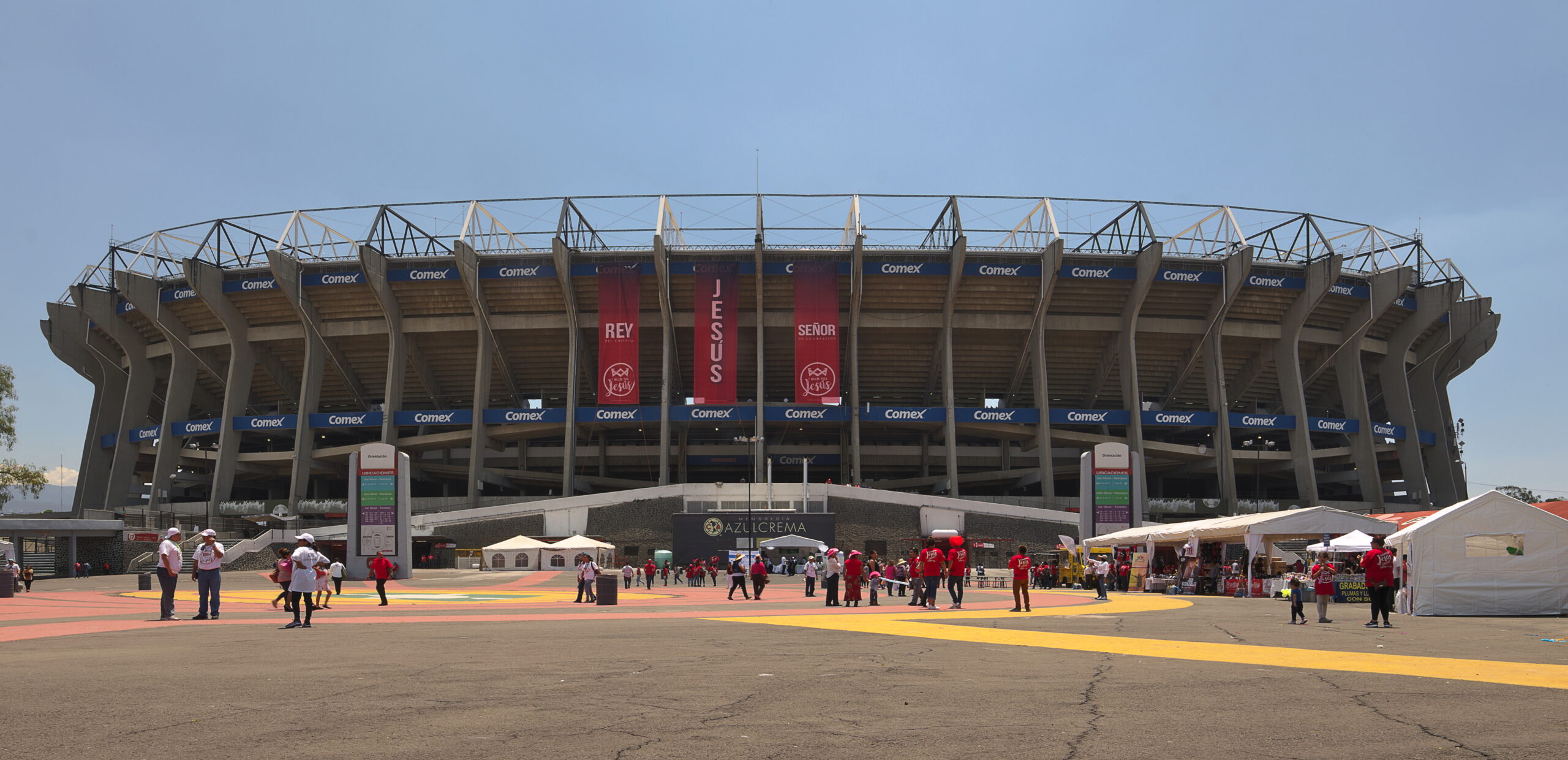
Photo: Carlos Valenzuela / Wikimedia Commons / CC BY-SA 4.0
Sitting at 2,200 meters (7,200 feet) above sea level, the Azteca is a physical test. The thin air affects ball flight and player stamina. Visiting teams used to arrive days early to acclimatize. It’s a built-in home advantage, a twelfth man made of atmosphere.
The architectural design contributes to the intimidation. The steep, double-tiered bowls bring the crowd close to the field. The noise gets trapped, creating a cauldron effect. When full, it’s one of the loudest stadiums on earth. This environment has influenced the strategic use of the stadium by home teams, who often use high pressure to exhaust unacclimatized opponents.
The design also allows for clear sightlines from every seat, a principle laid out in any good field markings guide. This focus on spectator experience, combined with the altitude, creates a unique and formidable stage, one that has witnessed the work of famous Argentine players like Maradona and, in friendlies, Lionel Messi.
Azteca’s Future: The 2026 World Cup and Beyond
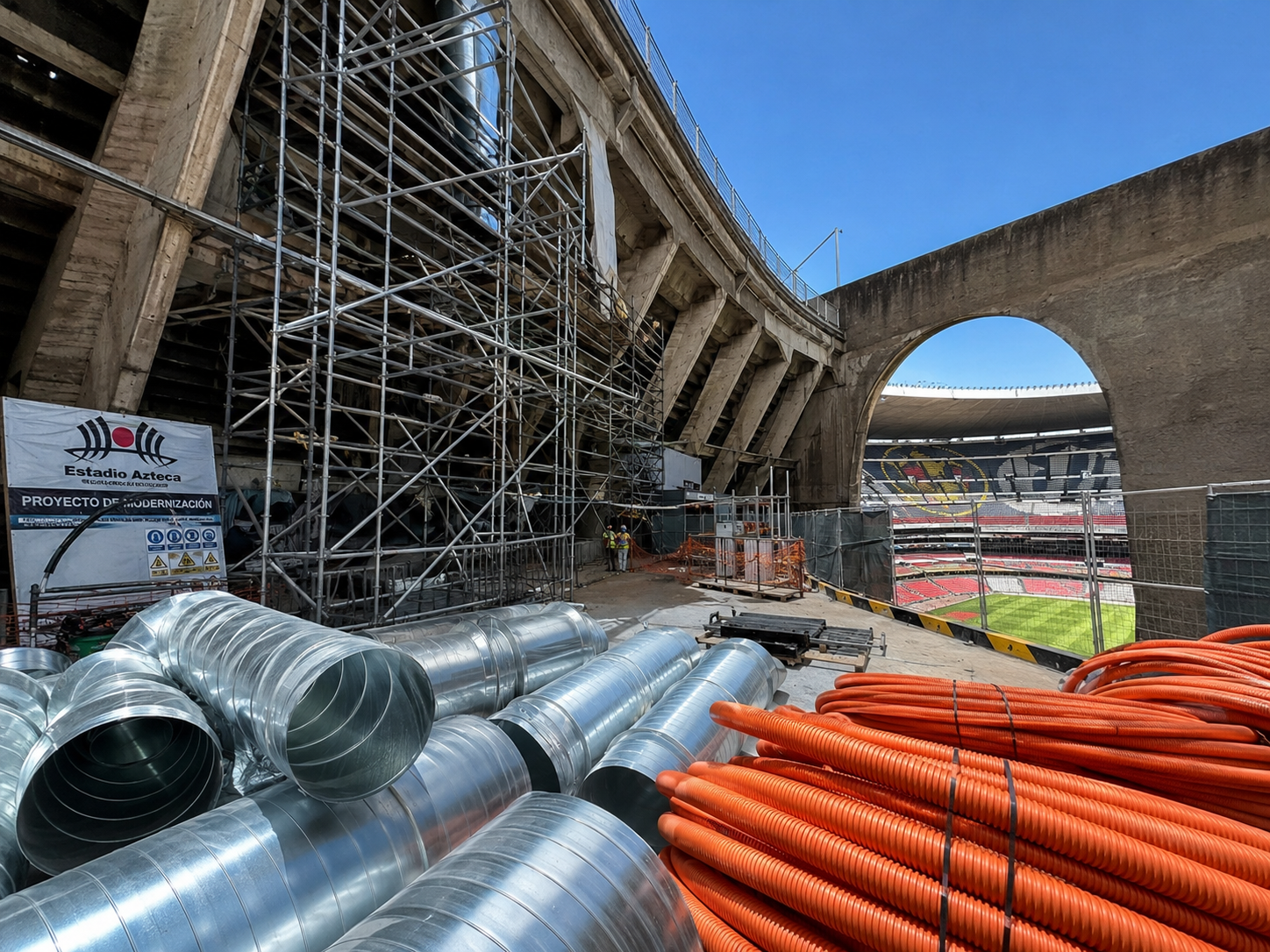
The story isn’t over. The Azteca is preparing for the 2026 FIFA World Cup, co-hosted by the USA, Canada, and Mexico. It is scheduled to host the opening match of the tournament, making it the first stadium ever to host World Cup games in three different editions (1970, 1986, 2026).
The 2024-2025 renovation is for this moment. The Banorte-funded project aims to modernize facilities while preserving the stadium’s historic character. The goal is to blend the legacy with the demands of a 21st-century mega-event.
This future is a direct link to its past. The same stadium where a young Cristiano Ronaldo’s early career was just beginning during his first World Cup in 2006 will now host the next generation of stars. It will continue to be a benchmark, a place where contemporary soccer icons seek to create their own legacy beside the ghosts of Pelé and Maradona.
Frequently Asked Questions
When was Estadio Azteca built and opened?
Construction began in 1962 and the stadium was inaugurated on May 29, 1966, with a match between Club América and Torino FC of Italy. The first goal was scored by Brazilian player Arlindo Dos Santos Cruz.
Why is Estadio Azteca so famous?
It is the only stadium to have hosted two men’s FIFA World Cup finals (1970 and 1986), where Pelé and Diego Maradona won their respective titles. It also hosted the legendary 1970 “Game of the Century” and Maradona’s “Hand of God” and “Goal of the Century” in 1986.
What is the capacity of Estadio Azteca?
The capacity has changed over time. It opened holding 107,494. For the 1986 World Cup, it held over 114,000. After modern renovations for safety and comfort, its current official capacity is 87,523 spectators.
Is it called Estadio Azteca or Estadio Banorte?
Its official and historical name is Estadio Azteca. Due to a major sponsorship deal with Banorte bank to fund 2026 World Cup renovations, it is currently called Estadio Banorte for commercial purposes. During the 2026 World Cup, FIFA will refer to it as “Estadio Azteca Ciudad de México.”
What was the “Aztecazo”?
The “Aztecazo” refers to June 16, 2001, when Costa Rica defeated Mexico 2-1 at the Azteca in a World Cup qualifier. It was the first time Mexico ever lost a World Cup qualifying match at the stadium, breaking its aura of invincibility and causing a national football crisis.
The Bottom Line
The Estadio Azteca’s history is a physical timeline of modern football. Its concrete was poured for a World Cup bid, hardened by the triumphs of Pelé and Maradona, cracked slightly by the Aztecazo, and is now being reforged for 2026. It’s not a museum. It’s a machine that manufactures legend, owned by a television company, funded by banks, and filled with the voices of millions. You can read a dry list of facts on its Wikipedia entry on Estadio Azteca, but the real history is in the thin air, the echoed cheers, and the knowledge that the next chapter is already being written in its renovated halls. For a deeper look at the moments that shaped its myth, the BBC Mundo Azteca stadium moments article captures the emotion no stat sheet can hold.

I come from the “soccer heart” of Germany, the Ruhrpott. I have played, trained and followed soccer all my life and am a big fan of FC Schalke 04. I also enjoy following international soccer extensively.