How to Improve Soccer Speed and Acceleration: Key Training
To improve soccer speed and acceleration, train five components: explosive starting strength, maximal velocity mechanics, reactive agility, foundational strength, and sport-specific decision-making. Isolate each with targeted drills, then integrate them for game-ready speed that translates from the gym to the pitch.
To improve soccer speed and acceleration, you must train five interconnected components: explosive starting strength, maximal velocity mechanics, reactive agility, a robust strength foundation, and football-specific decision-making under fatigue. Isolate each component with targeted drills, then integrate them. Most players fail by focusing only on long, straight-line sprints and ignoring the strength work that makes those sprints possible.
The gap between being quick and being fast on a football pitch is about ten meters. You see it every weekend, a player bursts past a defender with two explosive steps, then gets caught from behind because their top-end speed hasn’t been trained. Or they’re strong in the gym but can’t translate that power into a first-step explosion. Speed isn’t one thing. It’s a system.
This guide breaks down that system. We’ll move from the weight room to the pitch, covering the exact drills, strength protocols, and recovery strategies that build match-winning pace. Forget generic running workouts. This is about building football speed.
Key Takeaways
- Relative strength is your speed ceiling. Your strength-to-bodyweight ratio determines how much force you can drive into the ground. No amount of sprint drills will bypass a weak foundation.
- Football acceleration happens in 5-10 meters. Train it with stationary starts, push-up starts, and resisted sprints. Your torso should be at a 45-degree angle, driving forward, not upward.
- Top speed requires longer distances and full recovery. To hit maximal velocity, you need 30-40 meters of space. Use flying sprints (a 20-meter build-up into a 20-meter max effort) to achieve high intensities with less systemic fatigue.
- Plyometrics are the translator. Exercises like box jumps and bounds teach your nervous system to use your newfound strength rapidly, converting raw power into explosive strides.
- Train deceleration as hard as acceleration. Hamstring strength, built with Nordic curls and Romanian deadlifts, is non-negotiable for changing direction safely and setting up your next explosive move.
The 5 Pillars of Soccer Speed
Most training articles list drills. Drills are tools, not a plan. The plan is built on five pillars that support each other. Skip one, and the whole structure gets shaky.
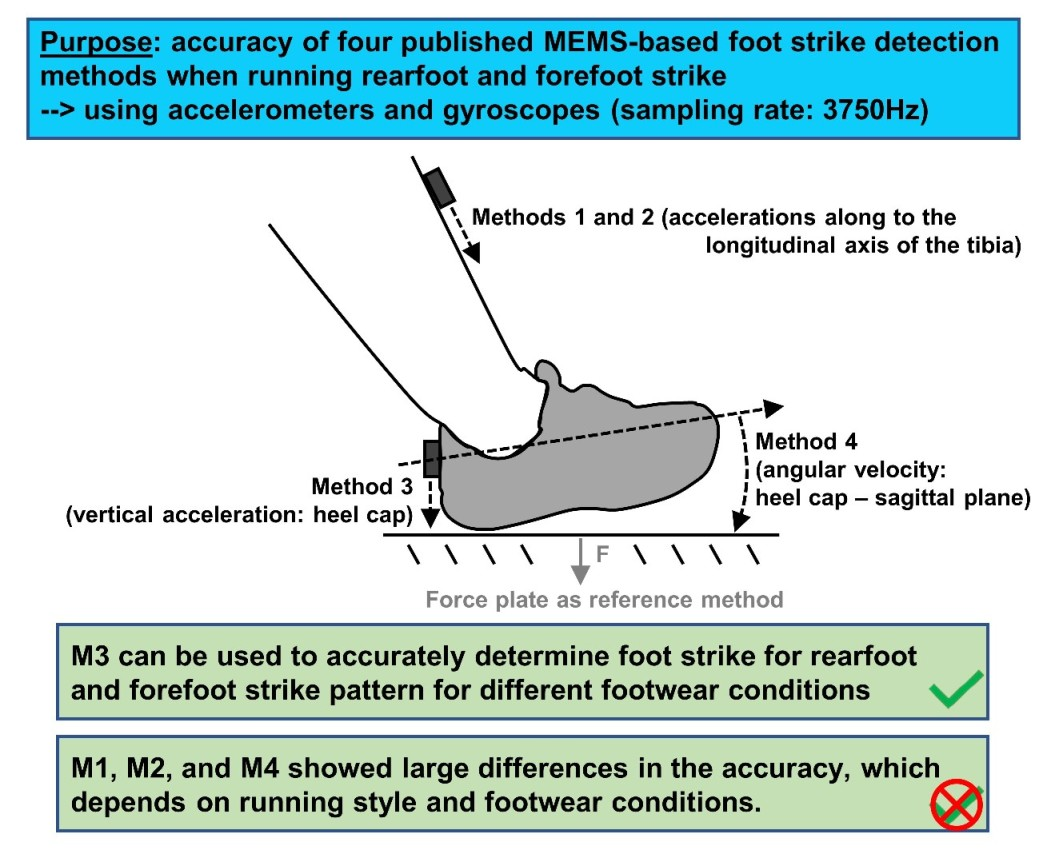
Acceleration (0–10m), maximal velocity (30–40m), reactive agility, foundational strength, and sport-specific integration are the interdependent physical components of soccer speed. A 2025 study in Scientific Reports analyzing football-specific sprint exercises found that drill selection directly influences the peak speed achieved and the subsequent fatigue profile, making structured programming essential.
Your first job is to figure out which pillar is your weakest. A powerful player who’s slow off the mark needs acceleration work. A quick player who gets caught over distance needs maximal velocity training. A fast player who gets turned inside-out by a feint needs reactive agility. You get the idea. The following soccer workout plans help you design a balanced program, but you must target your specific gap.
Pillar 1: Build Explosive Acceleration
Football is a game of short, violent bursts. The average sprint distance is under 20 meters, and you’re often starting from a jog, a backpedal, or a standstill. Acceleration is about overcoming inertia.
Forget upright running form. Your first three steps should be powerful, piston-like drives. Think low and forward. A common visual cue is to imagine pushing the ground away behind you, not down beneath you.
Here is a weekly acceleration menu. Pick two drills per session, 3-5 sets each.
| Drill | Distance | Key Focus | Rest Between Reps |
|---|---|---|---|
| Stationary Start Sprints | 10m | Explosive first step; low body angle | 90 seconds |
| Push-Up Position Starts | 10m | Core stiffness; rapid limb coordination | 2 minutes |
| Resisted Sled Sprints | 15m | Overloading the drive phase; power development | 3 minutes |
| Build-Up Sprints | 20m (5m segments) | Gradual acceleration curve; smooth transition | 2 minutes |
Common mistake: Standing straight up after two steps, you lose forward lean and your acceleration plateaus immediately. The defender recovers and tackles you from the side.
The resisted sled sprint is brutal but effective. Load a sled with just enough weight that your sprint mechanics stay clean but you feel significant resistance. If your form breaks down, it’s too heavy. This drill directly builds the leg power exercises required for that initial burst.
TL;DR: Train 10-meter sprints from awkward starts, maintain a forward lean, and use a sled once a week to overload the drive phase.
Pillar 2: Train for Top-End Velocity
This is where you pull away. If acceleration is about force, top-speed is about rhythm, relaxation, and mechanics. You can’t reach it in a 15-meter sprint. A player needs about 30-40 meters to hit true maximal velocity.
The most efficient way to train this without wrecking yourself is the flying sprint. You build up over 20 meters, then hit a 20-meter zone at 95-100% effort. A Scientific Reports speed dynamics study confirmed that flying starts allow players to achieve near-peak speeds with a lower perceived cost than starting from a dead stop, making them superior for in-season fatigue management.
Your weekly top-speed session could look like this:
- Warm up thoroughly (dynamic stretches, buildups).
- Flying 20s: 3-5 reps. (20m build-up + 20m max effort). Rest 4-5 minutes between reps.
- Or, Linear 40s: 2-4 reps from a stationary start. Rest 4-5 minutes.
The rest period is not a suggestion. It’s a requirement. Your phosphocreatine energy system needs 3-5 minutes to fully replenish. If you cut rest short, you’re training fatigue tolerance, not speed. That’s a different type of soccer conditioning.
I learned this the hard way coaching a youth team. We did 8 x 30-meter sprints with 90 seconds rest. By rep five, the kids were jogging. Their times dropped by over a second. We weren’t building speed; we were teaching them how to be slow. Now we do 4 x 40m with four minutes rest. Times stay consistent, and the quality of each stride is high.
TL;DR: Use flying 20-meter sprints or full 40-meter linear sprints once a week. Rest 4-5 minutes between reps to ensure every sprint is maximal.
Pillar 3: Develop Reactive Agility and Change of Direction
Pure speed in a straight line is useless if you can’t use it. Agility is speed with a decision. It’s the ability to decelerate, change direction, and re-accelerate based on a stimulus, a feint, a loose ball, a teammate’s run.
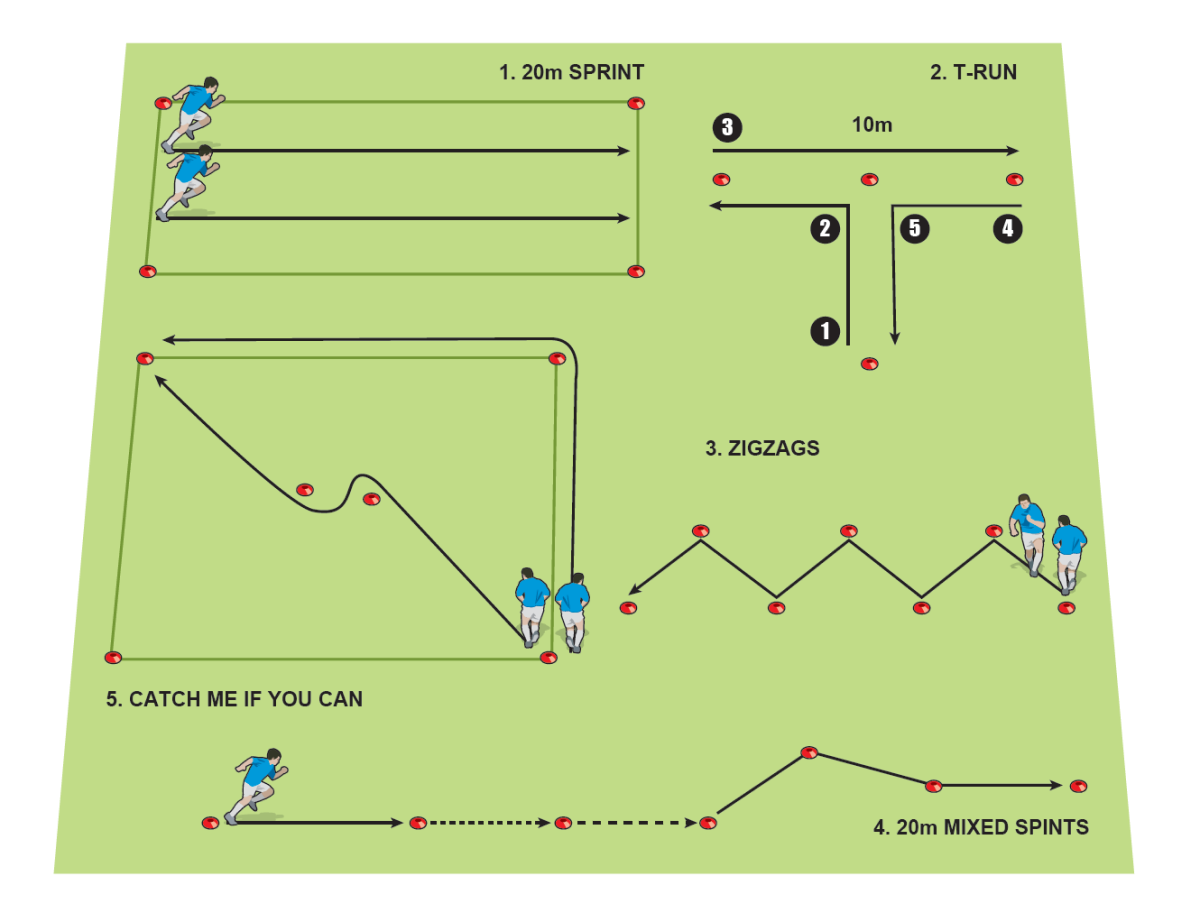
This is where agility ladder drills build a base of coordination, but you must progress beyond pre-planned patterns. The end goal is open-response drills.
Progression of Agility Training:
- Closed Drills: Pre-planned zig-zags around cones. Focus on sharp cuts and low center of gravity.
- Reactive Drills: Partner points or shouts a direction as you move. You must react and change course.
- Football-Integrated Drills: Add a ball. Receive a pass, beat a passive defender, and finish. The cognitive load changes everything.
Common mistake: Training change of direction with slow, controlled steps, you’re practicing technique, not speed. The transfer to a match is minimal. Always perform agility drills at maximum intentional speed.
Your hamstrings are the brakes and steering system for agility. Strengthen them with Nordic curls and Romanian deadlifts. Weak hamstrings are the single biggest predictor of non-contact knee injuries during cutting movements. This isn’t just about performance; it’s about career longevity. A Springer study on plyometric activation on youth players highlighted the importance of targeted strength work for both performance and structural resilience.
TL;DR: Move from pre-planned cone drills to reactive partner calls, then add a ball. Pair this with rigorous hamstring strengthening to stay safe.
Pillar 4: Forge the Strength Foundation
This is the pillar most players want to skip. They’d rather just run. But here’s the non-negotiable truth: your acceleration is a direct product of your relative strength. How much force can you produce relative to your body weight?
The best exercises are compound, multi-joint movements. They build the systemic strength that carries over to the pitch.
The Essential Strength Exercises:
- Trap-Bar Deadlift: Superior to the straight bar for athletes. It allows a more upright torso, placing less shear force on the spine and mimicking the acceleration position.
- Back Squat: The king of lower-body strength. Builds quad, glute, and core power.
- Bulgarian Split Squat: Unilateral strength fixes imbalances and builds stability specific to the single-leg stance of running.
- Hip Thrust: Isolates and overloads the glutes, the primary engine for hip extension in sprinting.
- Nordic Hamstring Curl: The gold standard for eccentric hamstring strength. Critical for health.
Train strength 2-3 times per week, not on days before your hardest speed sessions. The goal is to get stronger, not sore. A simple progression is to add 2.5kg to the bar each week you can complete all your target reps with good form. This methodical approach is the core of intelligent soccer-specific strength training.
TL;DR: Strength is not optional. Prioritize trap-bar deadlifts, split squats, and Nordic curls. Get stronger to get faster.
Pillar 5: Integrate for Football Speed
The final pillar is where it all comes together. Football speed isn’t tested in a sterile 40-meter dash. It’s tested in the 85th minute, when you’re fatigued, have to track a runner, and then explode onto a through ball.
This means you must practice being fast while doing football things. This is the domain of sprint training for soccer that includes ball mastery.
Sample Integration Session (after warm-up):
- Speed-Endurance Shuttles: 30-second drill: sprint 10m, backpedal 10m, sprint 10m, rest 30 seconds. Repeat 4-6 times. Builds repeat effort ability.
- Ball-at-Feet Sprints: Dribble at pace over 30 meters, focusing on tight touches. Rest. Then sprint the same 30 meters without the ball. Compare times. The gap shows your technical deficit under speed.
- Small-Sided Games: 3v3 or 4v4 on a long, narrow pitch. The constraints force repeated accelerations and decelerations in a decision-rich environment.
This is where you see the qualities of the world’s fastest players, they’re not just fast runners; they’re fast footballers. Their speed is an integrated skill.
TL;DR: Use conditioned small-sided games and ball-at-feet sprint drills to force your body to apply its new speed in chaotic, football-specific contexts.
Programming Your Week: A 12-Week Blueprint
You can’t train all five pillars with max intensity every day. Here’s how to structure a week, dividing focus between development and integration.
Off-Season / Pre-Seample Week:
- Monday: Strength Foundation (Heavy) + Plyometrics
- Tuesday: Acceleration Focus (Short Sprints, Resisted Work)
- Wednesday: Active Recovery (Light jog, mobility)
- Thursday: Strength Foundation (Medium) + Top-Speed (Flying Sprints)
- Friday: Reactive Agility & Football Integration
- Saturday: Optional Light Skill Session or Rest
- Sunday: Rest
In-Season Week:
- Monday: (Post-Match) Active Recovery
- Tuesday: Acceleration & Strength (Maintenance Volume)
- Wednesday: Tactical Training (Integrated Speed within Drills)
- Thursday: Top-Speed Maintenance (Low Volume, High Quality)
- Friday: Pre-Match Light Activation
- Saturday: Match
- Sunday: Rest
The in-season shift is crucial. Volume drops, but intensity on speed days must remain high. You’re maintaining the engine, not building it. This periodization is a key part of any effective interval training for soccer plan.
Frequently Asked Questions
Can I improve my speed just by doing sprint drills?
No. Sprint drills improve your technique and neurological efficiency, but they are limited by your strength ceiling. If you can’t produce sufficient force, perfect technique will only get you so far. You must combine drills with dedicated strength training. The most dramatic improvements come from athletes who are new to lifting.
How long does it take to see real improvements in soccer speed?
With a consistent program addressing all five pillars, measurable improvements in 10-meter acceleration can be seen in 4-6 weeks. Significant changes in maximal velocity and repeat sprint ability typically require 8-12 weeks of dedicated training. Genetics set the potential, but work ethic determines how much of it you unlock.
What’s more important for a soccer player, acceleration or top speed?
Acceleration is more important for the vast majority of positions and situations. The ability to beat an opponent in 5-10 meters is decisive. However, neglecting top-speed training leaves potential on the table and can make you vulnerable over longer distances, especially for wingers and strikers. Train both, but prioritize acceleration.
Does running long distances slow you down for soccer?
Excessive, slow-paced distance running can be detrimental if it replaces high-intensity, football-specific conditioning. It trains the wrong muscle fibers and energy systems. Your soccer stamina training should mirror the game’s demands: intervals, repeated sprints, and high-intensity small-sided games.
How can I improve my speed with the ball at my feet?
First, get faster without the ball using the methods above. Then, bridge the gap with specific dribbling speed techniques. Practice dribbling at maximum controlled speed over 20-30 meters. Use a lighter touch and focus on pushing the ball further ahead as your pure sprinting speed increases. The drill where you sprint with and without the ball, comparing times, is the best diagnostic tool.
The Bottom Line
Soccer speed is a skill you build, not a gift you’re given. It’s built in the weight room with trap-bar deadlifts, on the track with focused 10-meter explosions, and on the pitch with reactive agility drills. The players who separate themselves commit to the unglamorous work, the Nordic curls, the full rest periods, the hamstring care.
Start by testing your 10-meter and 40-meter times. Identify your weakest pillar. Then, follow the blueprint: strength twice a week, speed and power twice a week, integrate on the pitch. Be consistent for twelve weeks. The first thing you’ll notice isn’t a faster 40-time. It’s beating a defender to a ball you had no right to reach. That’s football speed.
I come from the “soccer heart” of Germany, the Ruhrpott. I have played, trained and followed soccer all my life and am a big fan of FC Schalke 04. I also enjoy following international soccer extensively.