Kevin De Bruyne: Career, World Cup Story & Future ()
Kevin De Bruyne’s career and World Cup story is defined by his status as a generational midfielder who dominated the Premier League with Manchester City while leading Belgium’s Golden Generation on the international stage, falling short of the ultimate prize but cementing a legacy of visionary playmaking.
Most profiles get the timeline right but miss the texture. They list the six Premier League titles, the Champions League, the hundred-plus caps. What they often gloss over is the specific, almost surgical way he changed games at the highest level, and the unique pressure that came with being the engine for a nation’s golden era.
This guide breaks down his journey from a prodigy in Belgium to a global superstar, with a clear-eyed look at his World Cup campaigns and what the 2026 tournament in North America truly means for his final act.
Key Takeaways
- De Bruyne’s club legacy is built at Manchester City, where his record-breaking creativity powered a historic era of domestic and European dominance under Pep Guardiola.
- His World Cup narrative with Belgium is a bittersweet tale of a Golden Generation: a 2018 bronze medal highlight sandwiched between a 2014 quarter-final and a shocking 2022 group-stage exit.
- At 35, his role for the 2026 World Cup shifts from primary conductor to experienced leader, tasked with guiding a Belgian squad in transition through a challenging group stage.
- His confirmed free transfer to Napoli in July 2025 adds a major variable, potentially impacting his form and fitness ahead of the final tournament of his career.
- Despite never lifting the World Cup, his combination of technical execution, football intelligence, and relentless output secures his place among the all-time great midfielders.
The Engine: De Bruyne’s Unparalleled Club Career
His path wasn’t linear. After winning the Belgian Pro League with Genk, a forgettable stint at Chelsea proved he wasn’t a plug-and-play talent. The real catalyst was Wolfsburg. There, unshackled, he won the 2015 DFB-Pokal and was named Germany’s Footballer of the Year. That season was his audition tape, and Manchester City paid a then-club record £54 million to sign the conductor they needed.
De Bruyne’s tenure at Manchester City redefined the modern attacking midfielder’s statistical ceiling. Operating primarily as a central or right-sided playmaker, he combined a high volume of progressive passes and through-balls with a potent goal threat from distance, directly contributing to over 150 Premier League goals during his peak years.
The partnership with Pep Guardiola was alchemy. Guardiola provided the structured chaos; De Bruyne provided the incisive, often improbable, final ball. He was the heartbeat of teams that achieved a 100-point Premier League season, a domestic treble, and finally, the continental treble in 2023. His individual accolades, two Premier League Player of the Season awards, two PFA Players’ Player of the Year titles, are merely footnotes to the team success he engineered.
The numbers tell a ruthless story. He doesn’t just hold the record for most assists in a single Premier League season (20); he owns seasons where his expected assisted goals (xAG) dwarfed his peers’. His shooting technique, a whipped, driven ball with minimal backlift, became a trademark weapon from outside the box. This blend of creator and scorer makes him a nightmare to defend. You can’t sit deep because of his passing range, and you can’t get tight because of his ability to burst past and shoot.
TL;DR: De Bruyne’s City career transformed him from a talented playmaker into the definitive creative engine of a footballing dynasty, measurable in both trophies and record-breaking statistical output.
Forged in Belgium: The International Crucible
The weight of a nation’s expectations is a different kind of pressure. De Bruyne debuted for Belgium in 2010, entering a squad overflowing with individual talent. Eden Hazard, Romelu Lukaku, Vincent Kompany. This was the proclaimed “Golden Generation,” and the mandate was clear: win something. He became their tactical centerpiece, the player tasked with unlocking defenses when space was at a premium in tournament football.
He has delivered, scoring 36 goals in over 110 caps. His 100th cap came in June 2024, marked typically with a goal against Montenegro. But international football is defined by moments in short tournaments, not longevity. His relationship with former national team coaches, notably Marc Wilmots, was sometimes strained, with debates about his best position bubbling publicly. He thrived under Roberto Martinez’s more possession-oriented system, which mirrored his club environment.
Common mistake: Assuming De Bruyne’s club form automatically translates to dominant World Cup performances, international tournaments are a brutal test of squad depth, tactical flexibility, and peaking at the exact right month, factors often beyond one player’s control.
His role has evolved. The explosive, younger De Bruyne who could carry the ball 50 yards has given way to a more cerebral, positionally disciplined controller. He picks his moments to surge forward, conserving energy to deliver the game-breaking pass. This maturity will be critical in 2026. For a deeper look at how top players adapt their games over time, our analysis of a player’s professional career longevity explores the physical and tactical shifts required.
| Tournament | Belgium’s Finish | De Bruyne’s Key Contribution | The Lingering Question |
|---|---|---|---|
| 2014 World Cup | Quarter-finals | Scored & assisted vs. USA in RO16; assisted equalizer vs. Algeria. | Could a more experienced squad have beaten Argentina? |
| 2018 World Cup | Third Place | Scored a brilliant winner vs. Brazil in QF; assisted vs. Panama. | Was this the peak this generation could realistically reach? |
| 2022 World Cup | Group Stage Exit | Struggled with form/fitness; team looked disjointed. | Did the “Golden Generation” window officially close here? |
The World Cup Stage: Peaks and Valleys
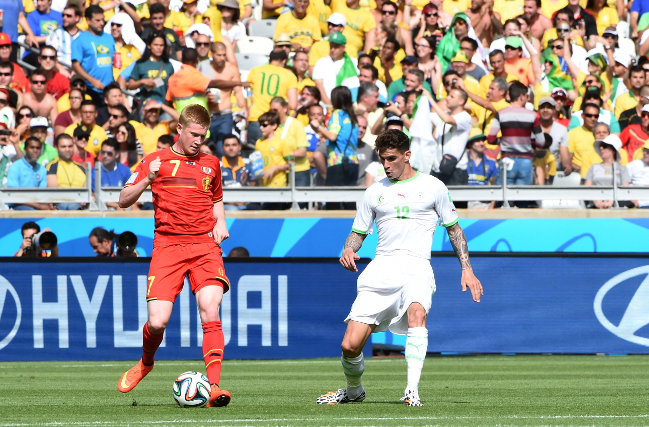
Photo: Magharebia / Wikimedia Commons / CC BY 2.0
The World Cup is the ultimate auditor. It exposes every flaw and magnifies every triumph. De Bruyne’s three tournaments form a perfect arc of hope, achievement, and anticlimax.

In 2014, he was the exciting newcomer. His goal against the USA in the round of 16 was a statement, a powerful, first-time finish that announced his arrival on the biggest stage. The quarter-final loss to Argentina was a lesson in tournament nuance. In 2018, he was the superstar in his prime. His goal against Brazil, a sweeping, low shot from distance after driving through midfield, was the moment Belgium believed they could win it all. The semi-final loss to France was a tactical defeat, but the bronze medal felt like a deserved consolation.
Then came Qatar 2022. The warning signs were there: he called the squad “too old” in a pre-tournament interview. He looked physically off the pace, a step slow, perhaps still feeling the effects of earlier injuries. The team played without cohesion and crashed out in the group stage. It was a jarring, abrupt end for a generation that had been ranked world number one. This kind of dramatic tournament shift is why understanding soccer tactics guide principles is key for fans, a small systemic failure can unravel the best individuals.
The contrast between his club and country World Cup experiences is stark. With City, he operated in a perfectly drilled system. With Belgium, he often had to be the system, a burden that grew heavier as other key talents aged or declined. This divergence highlights a central truth in modern football: sustained club dominance is often more achievable than conquering a four-year international cycle.
The 2026 Finale: Leader in Transition
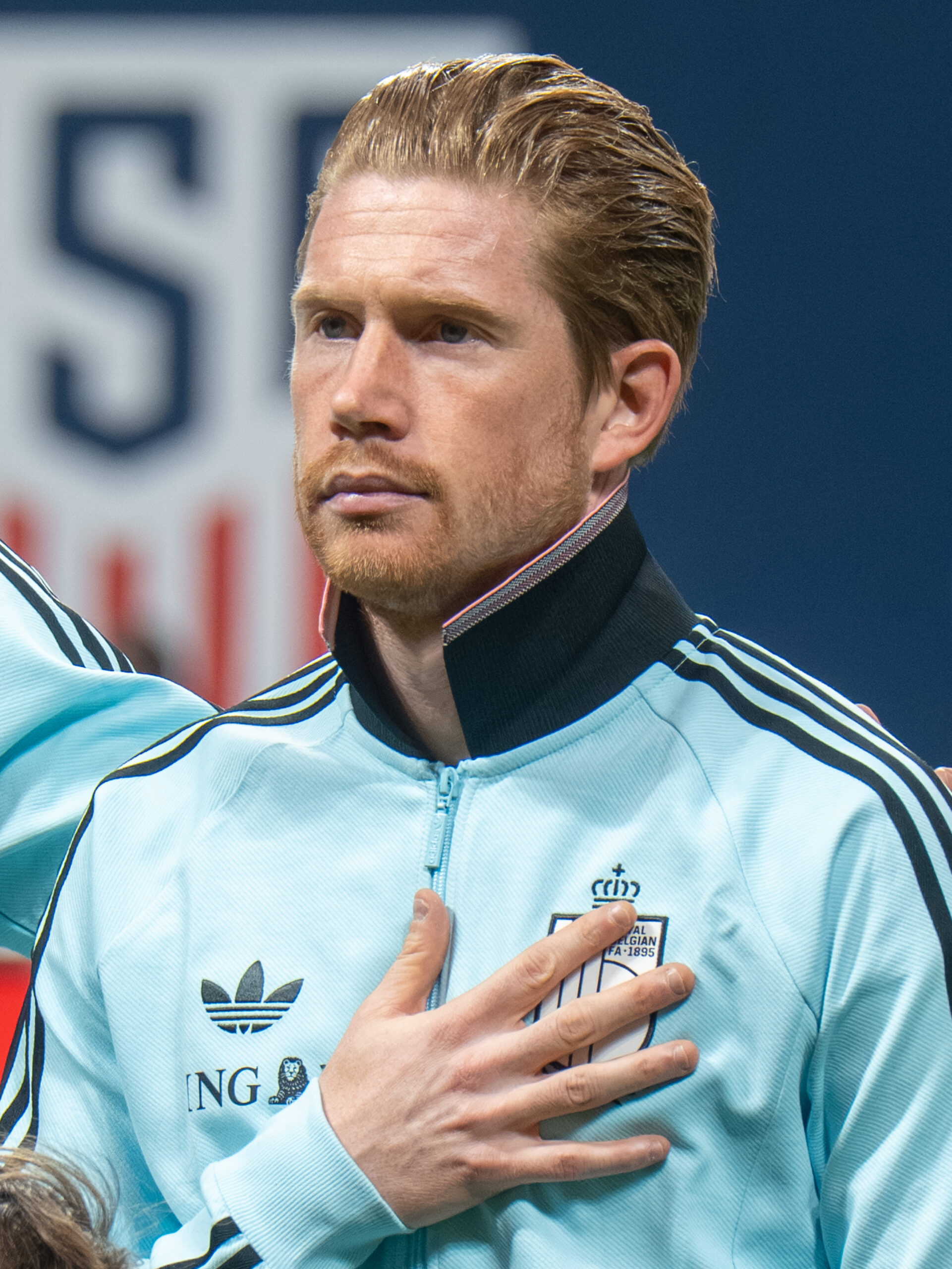
Photo: Bryan Berlin / Wikimedia Commons / CC BY-SA 4.0
The 2026 World Cup, hosted across the USA, Canada, and Mexico, is framed as a farewell tour for the legends of the 1980s. For De Bruyne, who will be 35, it’s his last dance. But his role is no longer that of the sole protagonist. Belgium qualified comfortably, but the squad is different. The emerging talents, like Johan Bakayoko or Zeno Debast, look to him for guidance, not just for passes.
.jpg)
His group stage draw is intriguing: Egypt, IR Iran, and New Zealand. These are matches where Belgium will command possession and face deep, organized blocks. This is De Bruyne’s bread and butter, the kind of tactical puzzle he has solved weekly in the Premier League. His ability to dictate tempo and find a seam will be paramount. However, the travel and climate demands of a 48-team tournament in North America are an unprecedented challenge for an older athlete. Maintaining peak condition will be a battle in itself, reliant on a rigorous soccer player workout plan.
The biggest variable is his club situation. His contract at Manchester City expires in June 2025, and he is confirmed to join Napoli on a free transfer. Moving to Serie A presents a new challenge: a more tactical, less transitional league, and the pressure of replacing another club icon. Will it extend his peak, or will the adaptation phase sap his energy for the national team? His performance in Italy will be the most watched form guide ahead of the 2026 finals, a season that will determine if he joins the list of dominant players of 2026.
I think his Napoli move is a masterstroke for 2026. Serie A’s slower pace will preserve his legs better than the relentless sprint of the Premier League or a physical league like Saudi Arabia. He’ll get the ball more, in deeper areas, and have to break down even more organized defenses, perfect rehearsal for the World Cup group stage.
Legacy and the Assist King’s Place in History
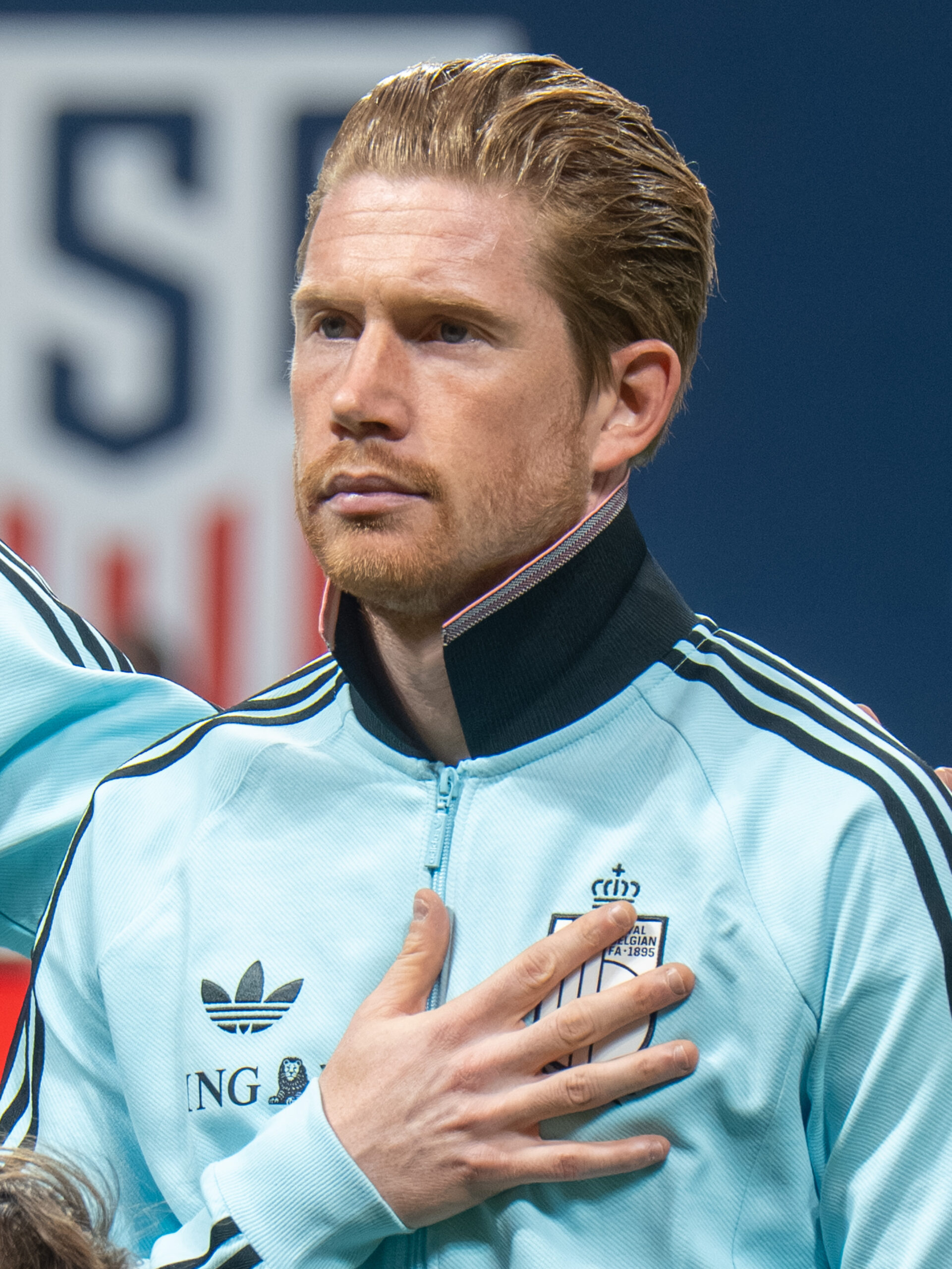
Photo: Bryan Berlin / Wikimedia Commons / CC BY-SA 4.0
How do you measure a player who never won the Ballon d’Or or a World Cup? You look at the irreplaceable impact. When De Bruyne was injured, Manchester City looked functional but not frightening. Belgium, without him, lost its strategic compass. He is the prototype of the modern “complete” midfielder: capable of playing the final pass, scoring from 25 yards, and executing the tactical press.
His assist record is his most tangible claim to greatness. Sharing the all-time Premier League single-season record (20) with Thierry Henry places him in rarefied air. When discussing the most assists in soccer history, his name belongs in the conversation for the sheer consistency and difficulty of the chances he created. It wasn’t just volume; it was the weight of the passes in the biggest games.
He also represents a certain footballing intelligence. He isn’t the flashiest dribbler like Lionel Messi’s career epitomizes, nor does he have the raw physical power of some contemporaries. His genius is in processing the game two moves ahead and possessing the technical mastery to execute the solution he sees. This makes him a coach’s player, the ultimate on-field translator of complex tactics.
Common mistake: Judging De Bruyne’s career solely on the lack of a World Cup win, this ignores his transformative role in one of club football’s greatest ever dynasties and his status as the creative benchmark for an entire generation of midfielders.
Will he be underrated by history? Possibly. Players who define eras for a single club, without a defining international trophy, sometimes are. But anyone who watched him week-in, week-out for a decade knows his true value. He wasn’t just a great player; he was the reason a system became legendary. For more on talents whose impact exceeds their acclaim, explore our thoughts on underrated soccer players.
Frequently Asked Questions
Has Kevin De Bruyne ever won the FIFA World Cup?
No, Kevin De Bruyne has never won the FIFA World Cup. The highest finish achieved by Belgium with De Bruyne in the squad was third place in the 2018 tournament in Russia. This is a common misconception, as some casual sources occasionally misstate his achievements.
Is Kevin De Bruyne playing in the 2026 World Cup?
Barring injury, yes. De Bruyne is expected to be a central figure for Belgium at the 2026 FIFA World Cup. He will be 35 years old and is likely approaching his final major international tournament. Belgium has already qualified, and his leadership will be crucial for a squad blending experienced veterans with newer talents.
What is Kevin De Bruyne’s best World Cup performance?
His best individual World Cup performance was in 2018. He scored a magnificent winning goal in the quarter-final victory over Brazil and provided key assists throughout the tournament. Belgium’s run to third place that year represents the pinnacle of his, and his generation’s, World Cup journey.
How many assists does Kevin De Bruyne have in his career?
Providing a precise, official total is complex due to differing record-keeping across all competitions. However, his Premier League tally alone is historic. He holds the record for most assists in a single Premier League season (20, shared with Thierry Henry). For detailed career statistics, including his assist numbers across all club and international matches, the Wikipedia entry for the Belgian midfielder serves as a comprehensive, authoritative source.
What club will Kevin De Bruyne play for after Manchester City?
Kevin De Bruyne will join the Italian Serie A club Napoli on a free transfer in July 2025, following the expiration of his Manchester City contract. This move has been confirmed by multiple reports and marks the end of his iconic nine-year stay in the Premier League.
The Bottom Line
Kevin De Bruyne’s story is one of relentless excellence in a defined role. He mastered the craft of chance creation to a degree that powered a club to immortality. On the world stage, he carried the hopes of a nation’s golden age to the brink, but not over the top. The 2026 World Cup offers a final, fitting chapter: not as the undisputed star, but as the seasoned architect trying to build one more masterpiece against the clock. His legacy is secure not in a single trophy, but in the undeniable truth that for over a decade, he made every team he played for fundamentally better. That’s the mark of a true great.
I come from the “soccer heart” of Germany, the Ruhrpott. I have played, trained and followed soccer all my life and am a big fan of FC Schalke 04. I also enjoy following international soccer extensively.