Short Passing Technique Soccer: The 7-Step Pro Method
A short passing technique in soccer is the inside-of-foot push pass, executed by striking the center of the ball with a locked ankle while your plant foot points at the target. The pass travels 2-15 yards along the ground with controlled pace, or ‘weight,’ to maintain possession and connect play.
Most players think a short pass is just a soft kick. They focus on where the ball goes, not how it gets there. The result is a wobbly, bouncing pass that forces their teammate to stop and adjust, killing any attacking momentum.
This guide breaks down the exact mechanics of a pro-level short pass. You’ll learn the seven-step technique, the drills that build real-game confidence, and the common mistakes that keep your passing from improving.
Key Takeaways
- The inside-of-foot pass is non-negotiable for accuracy under 15 yards. Your ankle must be locked and firm on contact.
- Weight of pass is as critical as direction. A pass that arrives too hard or too soft is a turnover.
- Always receive the ball with an open body shape. This lets you play forward with one touch.
- Drills must progress from static technique to dynamic, pressured scenarios. Passing in a circle is step one. Passing in a 3v1 rondo is step ten.
- Your weaker foot isn’t optional. Dedicate 30% of every practice session to your non-dominant side.
What Exactly Is a Short Pass?
Forget the vague idea of a “little kick.” A short pass has a defined range and a specific job. It’s a pass covering 2 to 15 yards (1.8 to 13.7 meters), delivered along the ground with the primary objective of maintaining possession and connecting teammates in tight spaces. Its value isn’t in distance, but in reliability.
This is the foundation of possession-based soccer. Look at any top team executing a patient buildup – Barcelona under Guardiola, Manchester City under Pep, the German national team in their 2014 World Cup run. Their play is a web of short, precise connections. These passes draw opponents out of position, control the tempo, and are the essential first link in any attacking chain. Without sharp short passing, even the most exciting soccer tactics guide falls apart. You can’t execute a high-press or a counter-attack if you can’t keep the ball for three passes.
The short pass is defined by its intent: to keep the ball under pressure and progress it safely. It is the most frequently used pass in the game, accounting for over 60% of all passes in professional matches according to Opta-powered match reports.
| Pass Type | Typical Range | Primary Tool | Main Objective |
|---|---|---|---|
| Short Pass | 2–15 yards | Inside of foot | Possession, connection, buildup |
| Long Pass | 30+ yards | Instep / laces | Switch play, bypass midfield, direct attack |
| Through Pass | Varies | Inside / outside of foot | Penetrate defensive lines |
The table shows the role. The short pass is your workhorse. Mastering it means you become a player your team can trust in the middle of the park, whether you’re in a classic 4-4-2 or a fluid modern 3-5-2.
TL;DR: A short pass is a 2–15 yard ground pass made with the inside of the foot to keep possession. It’s the bedrock of team play.
The 7-Step Pro Passing Technique
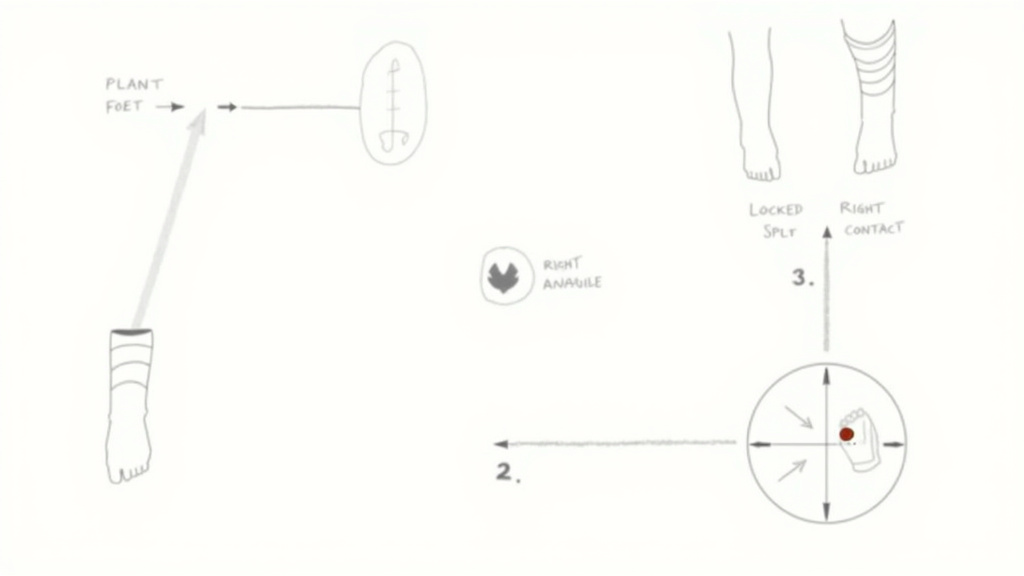
This isn’t a suggestion. It’s the sequence. Miss one step, and the pass loses its consistency.
Step 1: Approach Angle. Don’t run straight at the ball. Approach from a slight angle, about 30 degrees off your target line. This lets your kicking leg swing through naturally without your hips blocking the motion.
Step 2: Plant Foot Placement. Your non-kicking foot decides everything. Place it alongside the ball, 6-8 inches away. Your toes must point like an arrow directly at your target. If your plant foot is behind the ball, you’ll lean back and scoop it. If it’s in front, you’ll stub your toe into the ground.
Step 3: Ankle Lock. This is the moment most players skip. Rotate your passing foot outward so the inside is flat and facing the target. Now, tense your ankle joint until it feels solid. A floppy ankle produces a weak, spinning pass. A locked ankle is a firm surface that drives the ball true.
Step 4: Contact Point. Strike the exact middle of the ball with the broad, flat area of your foot between your ankle bone and the arch. Hitting too high makes the ball roll. Hitting too low lifts it. The sweet spot sends it rolling like a train on tracks.
Step 5: Follow-Through. Your leg should continue its swing toward your target after contact. Don’t stab at the ball and stop. A smooth, short follow-through ensures the ball stays on the ground and carries the right weight. Your hips and shoulders stay square to the target throughout.
Step 6: Weight Adjustment. This is feel, not force. For a 5-yard pass, your leg swing is a short pendulum from the knee. For a 15-yard pass, you engage the hip for more power. The ball should arrive at your teammate’s foot at a speed they can control without stopping their run.
Step 7: Immediate Recovery. After you follow through, bring your foot back to the ground quickly and get into a ready position. The pass is your first action, not your last. Be prepared to move and support the next phase of play.
Common mistake: Stabbing at the ball with a ‘poke’ motion — the pass lacks pace, spins awkwardly, and dies before reaching its target, forcing your teammate to check back and lose forward momentum.
TL;DR: Plant foot points at target, ankle locks firm, strike the center, follow through. Adjust swing length for distance.
How to Receive a Pass Like You Mean It
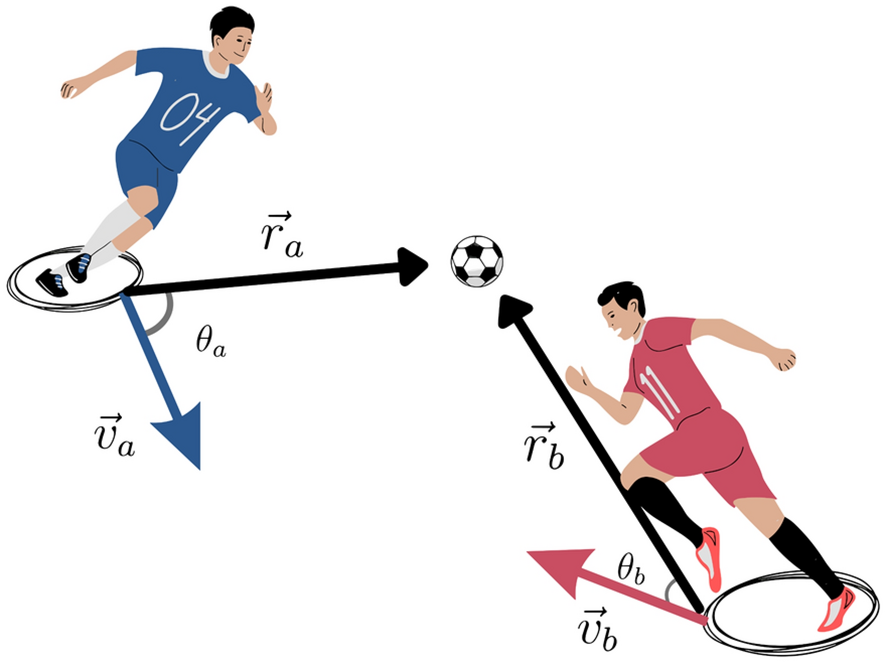
A perfect pass is wasted if the first touch is poor. Receiving isn’t passive. It’s an active preparation to play forward.
The golden rule is open body shape. Before the ball arrives, angle your body so you can see both the passer and the field ahead of you. Your hips should be at roughly 45 degrees to the direction of the pass. This opens up your passing lanes instantly.
Now, use your back foot – the foot farthest from the passer. Receive the ball across your body with this foot. Why? Because that first touch now sets the ball into the space in front of you, in the direction your body is already facing. You’ve taken the ball away from pressure and positioned it for your next action in one motion.
I spent my first two years as a central midfielder receiving every pass square-on. I looked competent, but I was always taking two touches: one to control, one to pass. My coach at Schalke’s youth camp made us do a drill where we could only use one touch if we received closed. It was impossible. The lesson stuck. Open your body, and the game slows down.
Contrast this with a closed body shape. You receive the ball square to the passer, with your hips blocking the forward view. Your first touch is likely backward or sideways, and you need an extra touch to turn and see your options. That extra touch is all a defender needs to close you down. This is especially punishing in fast, confined spaces like 7v7 indoor formations.
Scanning is the partner to body shape. In the second before the ball arrives to you, take a quick look over your shoulder. This ‘check’ tells you where the pressure is and where your next pass should go. You’re not receiving the ball to figure out what’s next. You’re receiving it already knowing.
5 Drills That Build Game Intelligence
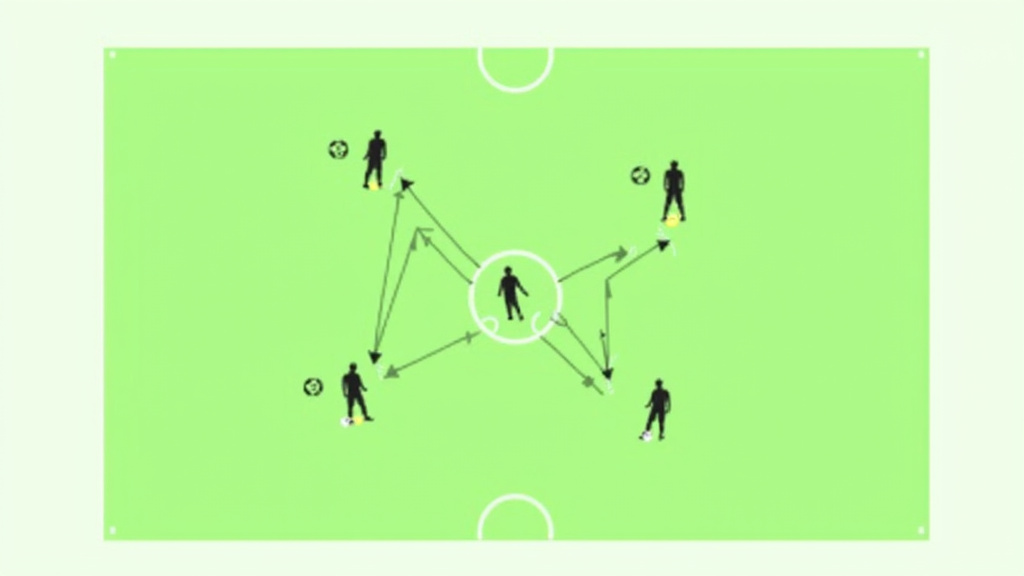
Drill one until it’s boring. Then add a constraint. That’s the progression.
1. Static Wall Passing (Foundation).
Stand 5 yards from a wall or use a soccer rebounder. Pass with your right foot, control the rebound with your right, pass again. Do 50 repetitions. Then switch to left foot only. Focus purely on technique: plant foot, ankle lock, clean strike. The instant feedback from the wall tells you everything.
2. Moving Passes in Pairs (Add Dynamics).
With a partner, pass back and forth while slowly moving across a 20-yard square. First, two-touch only (control, pass). Then progress to one-touch. The moving target teaches you to adjust your plant foot and pass weight constantly. Now add a rule: you must receive every ball with an open body shape, using your back foot.
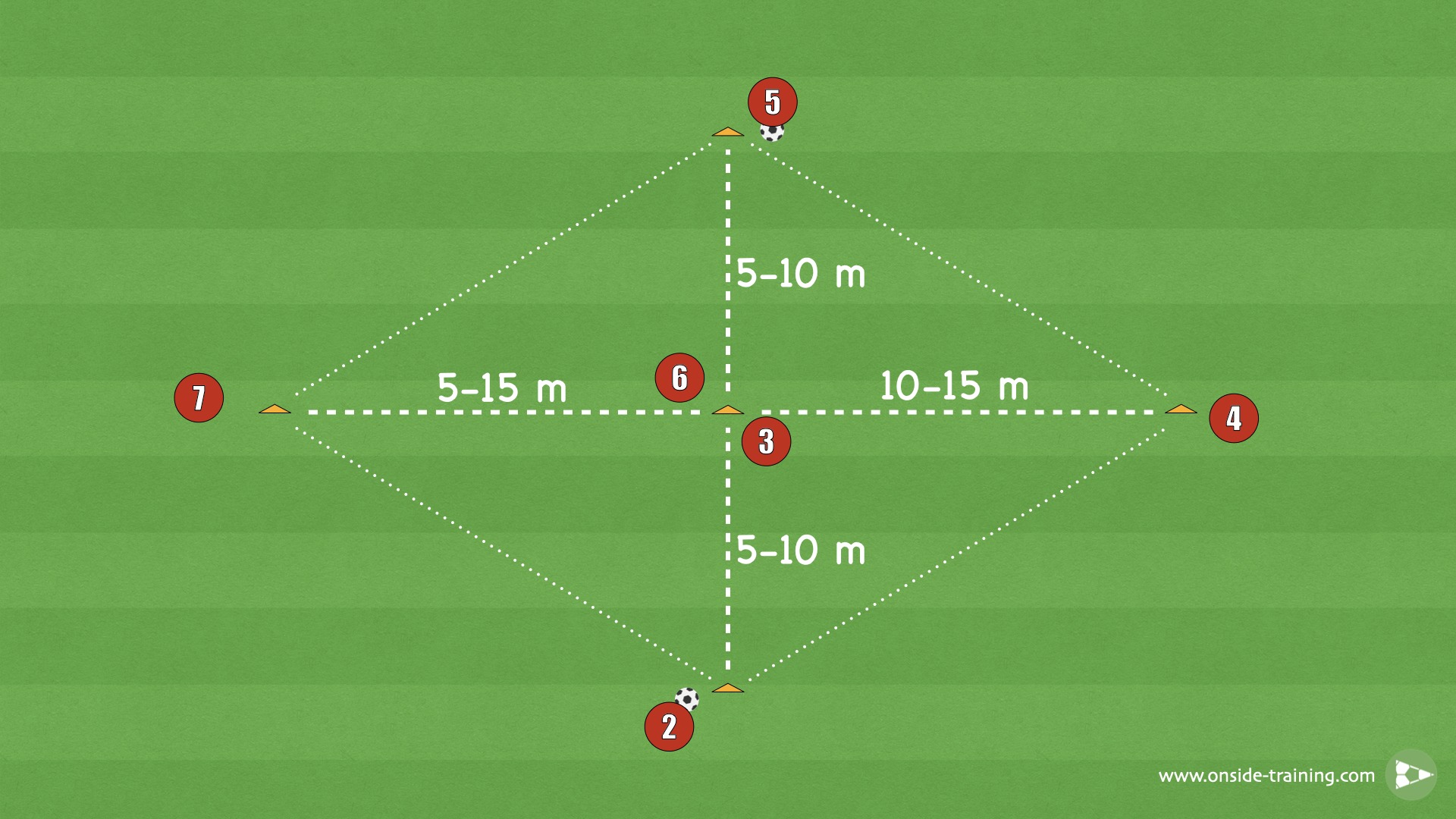
3. The Triangle (Angles and Movement).
Set up three cones in a triangle, 10 yards apart. With two partners, circulate the ball. Always move to the cone after you pass. This drill ingrains movement after passing. Start with two touches. Then mandate one-touch. The player who passes and stands still breaks the drill.
4. 4v1 Rondo (Pressure Cooker).
Four players form a 10-yard square. One defender tries to intercept in the middle. The rule: maximum two touches. This is where technique meets panic. The limited space and immediate pressure force quick decisions, accurate weight, and perfect open-body reception. If you lose possession, you go in the middle.
5. Integrated Circuit (Game Reality).
Set up a box: dribble through cones, perform a sharp pass to a target, immediately sprint to receive a return, then finish on a mini-goal. This links dribbling, passing, moving, and shooting drills in one sequence. It’s no longer an isolated skill. It’s a chain of actions, which is exactly what a match is.
| Drill | Primary Focus | Key Coaching Point | Progression |
|---|---|---|---|
| Static Wall Pass | Pure technique | Ankle lock on contact | Switch feet, increase distance |
| Moving Pairs | Passing while moving | Weight adjustment for moving target | One-touch only, increase speed |
| Triangle | Angles & off-ball movement | Pass and immediately move | One-touch, add passive defender |
| 4v1 Rondo | Decision-making under pressure | Open body shape before receiving | Smaller grid, one-touch only |
| Integrated Circuit | Combining skills | Smooth transition between actions | Add time limit, competitive element |
TL;DR: Start with a wall. Progress to moving pairs, then angled triangles, then pressured rondos. Finish with circuits that combine passing with other skills.
Common Mistakes and How to Fix Them
You’ll make these. Everyone does. Recognizing them is half the battle.
Mistake 1: The Ankle Flop.
You don’t lock your ankle. The pass comes off the side of your foot, spins weakly, and lacks pace.
* Fix: Practice without a ball. Sit in a chair and rotate your foot outward, flexing your ankle until the inside is flat and tense. Hold for 10 seconds. Repeat 20 times. Build that muscle memory.
Mistake 2: Stabbing, Not Swinging.
You kick at the ball with a stiff leg, jabbing your foot forward. The pass pops up or dies.
* Fix: Place two cones a foot apart in front of the ball. Focus on swinging your leg through the ‘gate’ smoothly. The follow-through is mandatory.
Mistake 3: Ignoring Your Weak Foot.
You twist your body into awkward shapes to avoid using your left foot (or right foot). You become predictable.
* Fix: Dedicate the first 10 minutes of every training session to weak-foot only wall passing. It will feel terrible for weeks. Then it won’t.
Common mistake: Receiving with a closed body because you’re watching the ball all the way to your foot — by the time you look up, the passing lane you wanted is gone and you’re forced into a safe, backward pass.
Mistake 4: Passing to Feet, Not Space.
You always aim directly at your stationary teammate’s foot. This allows defenders to close in.
* Fix: In drills, call for the ball and point where you want it. Passers must learn to lead a moving player, playing the ball into the path of their run. This is critical for breaking lines in any 11v11 formations.
Mistake 5: No Scan Before Reception.
The ball comes to you as a surprise. You have no plan.
* Fix: Implement the ‘check’ rule. In any possession drill, if a coach or partner shouts “CHECK!” as the ball is traveling to you, you must be able to name the color of a cone behind you. It forces the habit.
Short Passing in Different Formations
Your role changes with the system. A short pass isn’t used the same way everywhere.
In a 4-3-3, the central midfielder is the hub. Their short passes are about tempo control and switching point of attack between the wingers. The pass is often horizontal, keeping possession until a gap appears.
In a 5-3-2 formation](https://allaboutfootball.net/5-3-2-formation-soccer-a-tactical-guide/), the wing-backs are key. The central midfielders play short, vertical passes into the feet of the strikers or out to the advancing wing-backs. The pass is more penetrative, looking to release runners quickly from a solid base.
In an attacking 3-4-3](https://allaboutfootball.net/3-4-3-formation-soccer-a-tactical-guide/), short passing is frenetic and forward-thinking. The three forwards and advanced midfielders combine with quick one-twos in the final third. The passes are shorter, sharper, and riskier, aimed at breaking a packed defensive line.
The principle remains: accuracy, proper weight, and open body shape. The application shifts based on the tactical objective. Understanding this is the bridge between being a good passer and a smart player. Your passing must serve the advanced tactical principles of your team.
Frequently Asked Questions
What is the most important part of a short pass?
The locked ankle. If your ankle is loose, you have no control over the ball’s direction or pace. Every other technical detail relies on having a firm striking surface.
How can I improve my passing under pressure?
You must train under pressure. Drills like the 4v1 rondo are essential. Start with a larger playing area and two touches allowed. Gradually shrink the space and move to one-touch only. Your brain and feet will adapt to the speed.
Is the push pass the only way to make a short pass?
For grounded passes requiring maximum accuracy, yes, the inside-of-foot push pass is the primary tool. For very short, disguised passes (like a backheel), you might use other surfaces. But for 95% of short passing situations, the push pass is the correct and most reliable technique.
How do I know if my pass has the right ‘weight’?
well-weighted pass arrives at your teammate’s foot at a speed that allows them to control it in stride without breaking their running motion. If they have to stop and wait, it’s too slow. If it rockets at them and bounces off, it’s too hard. Practice with a moving partner and ask for feedback.
Can I practice short passing alone?
Absolutely. A wall or a soccer rebounder is your best investment. You can also use cones as stationary targets. Combine this with agility ladder drills to improve the footwork that supports quick passing.
The Bottom Line
Short passing isn’t a beginner skill you outgrow. It’s the fundamental language of the game. The difference between a good player and a great one is often the consistency and intelligence of their simplest passes.
Master the seven-step technique until you don’t have to think about it. Drill it until your ankle locks by instinct and your plant foot always points true. Then, train your mind. Scan, receive open, and play forward. Integrate these passes into dynamic, pressured exercises that mimic the chaos of a match.
This is how you build a game that’s not just about running, but about thinking. It’s how you become the player your team looks for when the pressure is on and the ball needs to be kept. Start with the wall.
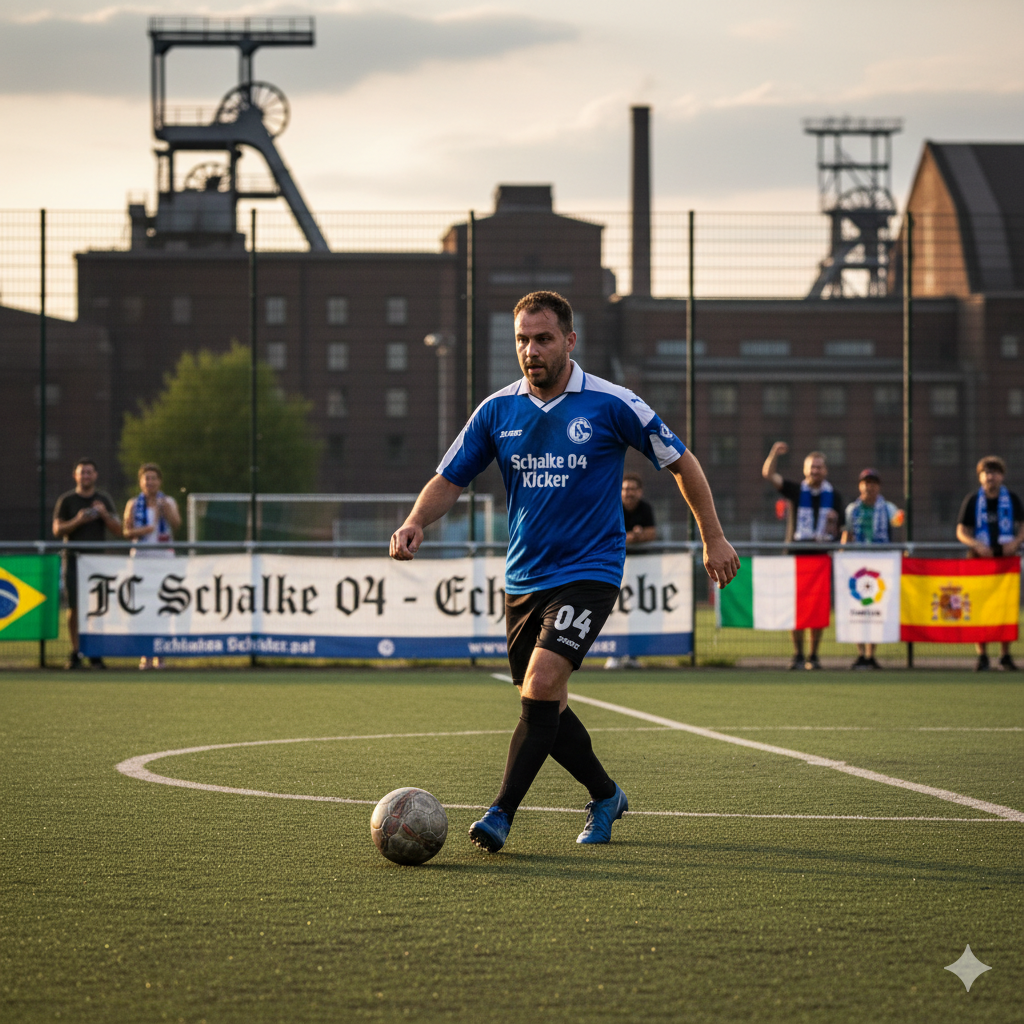
I come from the “soccer heart” of Germany, the Ruhrpott. I have played, trained and followed soccer all my life and am a big fan of FC Schalke 04. I also enjoy following international soccer extensively.