USA World Cup History: Best Results, 1930 to
The United States men’s national soccer team’s best FIFA World Cup finish is a third-place result from the inaugural 1930 tournament. In the modern era, their peak performance was a quarterfinal run in 2002. The USMNT has participated in 12 World Cups, with their history defined by early promise, a long absence, and a modern resurgence capped by hosting the 2026 edition.
Most people look at that 1930 bronze medal and dismiss it as ancient history, a fluke from a 13-team contest. They miss the point. That result set a continental benchmark no CONCACAF nation has matched in nearly a century. It also created a ghost that American soccer has chased ever since.
This guide walks through every significant chapter of the USMNT’s World Cup story. We’ll separate the official record from the meaningful performances, highlight the players who defined eras, and look at what hosting in 2026 really means for the program’s trajectory.
Key Takeaways
- The 1930 third-place finish is the official best result and a CONCACAF record, but the tournament involved only three games for the U.S.
- The 2002 quarterfinal run, featuring wins over Portugal and Mexico, is widely considered the team’s best modern achievement against a full, global field.
- A 40-year qualification drought from 1950 to 1990 stalled the program’s development before a consistent seven-tournament run began in 1990.
- The cultural impact of the 1994 home tournament and the 2002 run did more for American soccer’s growth than the 1930 result ever could.
- With an automatic berth as co-host in 2026, the USMNT faces immense pressure to deliver a performance that finally eclipses its historical benchmarks.
What Is the U.S. Men’s Best World Cup Finish?
Officially, it is third place at the 1930 World Cup in Uruguay. FIFA’s records list the United States as the bronze medalist, a status that remains the highest finish for any team from the CONCACAF region. This fact is non-negotiable in the record books.
The tournament structure was primitive. Only 13 teams participated, and the U.S. squad, made up largely of amateur players, played just three matches. They beat Belgium 3-0 and Paraguay 3-0 in the group stage before losing 6-1 to Argentina in the semifinal. There was no official third-place match; FIFA awarded the placement based on overall tournament records.
The United States’ third-place finish at the 1930 FIFA World Cup is recognized as the best performance by a CONCACAF nation in the tournament’s history. American forward Bert Patenaude scored the first hat-trick in World Cup history during the group stage match against Paraguay.
TL;DR: The official best finish is third place in 1930, a CONCACAF record set in a 13-team tournament.
The 1930 Run: Context and Legacy
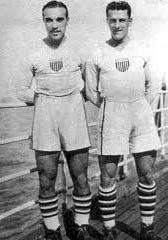
Photo: Unknown authorUnknown author / Wikimedia Commons / Public domain

Calling it a fluke is lazy analysis. The team was competent. They deployed a 2-3-5 formation common for the era and relied on physicality and direct play. Striker Bert Patenaude’s hat-trick against Paraguay wasn’t just a U.S. first; it was a World Cup first.
But the context matters enormously. European powers like Italy, Spain, and Germany declined to participate due to the long sea voyage. The level of organization and preparation was nothing like today’s professionalized environment. The legacy of 1930 isn’t about proving the U.S. was a world power in 1930. It’s about setting a ceiling that every subsequent American team has been measured against.
The victory over England in 1950 was a bigger shock in sporting terms. The 1-0 win in Belo Horizonte, Brazil, remains one of the greatest upsets in World Cup history. Joe Gaetjens’ goal is legendary. That result, however, did not lead to a knockout round berth. It was a bright spark in a group-stage exit, soon followed by the long, dark period of non-qualification.
The real weight of 1930 is symbolic. It’s a reminder that American soccer has been here before. It creates a persistent “what if” narrative. What if the program hadn’t fallen into a 40-year coma after 1950? That question haunts the entire USA World Cup history page.
The Long Drought: 1954 to 1990

Photo: North American Soccer League / Wikimedia Commons / Public domain
.png)
The program didn’t just stall; it vanished. For seven consecutive World Cup cycles, the United States failed to qualify. This wasn’t a case of near misses. It was a complete absence from the global stage, coinciding with the professionalization of the sport in Europe and South America.
The reasons were systemic.
* No professional league: The North American Soccer League (NASL) had a brief, flashy life but did not build a sustainable development pipeline for American players.
* Amateur structure: The sport was largely organized through colleges and amateur clubs, leaving a massive gap in high-level, consistent competition.
* Cultural isolation: Soccer was a distant fourth behind baseball, football, and basketball in the American sports landscape.
This gap had a compounding effect. While the world’s soccer tactics evolved through the 1960s and 70s, the U.S. was not in the conversation. A whole generation of potential players and coaches grew up without a national team to follow. The drought wasn’t just a statistic; it was a lost era.
The Modern Resurgence: 1990 to 2014
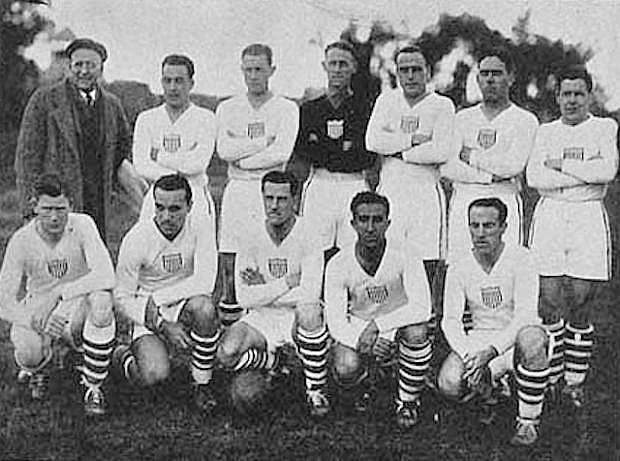
Photo: Unknown authorUnknown author / Wikimedia Commons / Public domain

Qualification for Italia ’90 was the crack in the dam. The team, led by a core of players gaining experience in Europe, was thoroughly outclassed. They lost all three group games. But they were back. The mere presence mattered.
Hosting the 1994 World Cup changed everything. It wasn’t about the team’s performance, a Round of 16 loss to Brazil, but about the spectacle. Sold-out stadiums, massive TV ratings, and a wave of youth registration created a foundation. The Major League Soccer (MLS) launch in 1996 provided the missing domestic pillar.
This era established a new identity. The USMNT became known for athleticism, relentless work rate, and a stubborn defensive resilience. They were hard to beat. Coaches like Bora Milutinović and Bruce Arena built pragmatic teams that could punish mistakes. The classic 4-4-2 formation was often their vehicle, providing defensive banks of four and quick transitions.
| World Cup | Result | Key Figure | Defining Moment |
|---|---|---|---|
| 1990 | Group Stage | Paul Caligiuri | Simply qualifying after 40 years. |
| 1994 | Round of 16 | Alexi Lalas | Hosting the tournament, losing 1-0 to Brazil. |
| 1998 | Group Stage (Last) | (None) | A disastrous regression, losing all three games. |
| 2002 | Quarterfinals | Landon Donovan | Beating Mexico 2-0 in the knockout round. |
| 2006 | Group Stage | Claudio Reyna | A disappointing exit with one draw, two losses. |
| 2010 | Round of 16 | Landon Donovan | Donovan’s last-minute winner vs. Algeria. |
| 2014 | Round of 16 | Tim Howard | Howard’s 16-save performance vs. Belgium. |
The table shows the arc: from re-entry, to hosting, to catastrophe in 1998, then the modern peak, followed by cycles of raised expectations.
The 2002 Quarterfinal: The Modern Peak
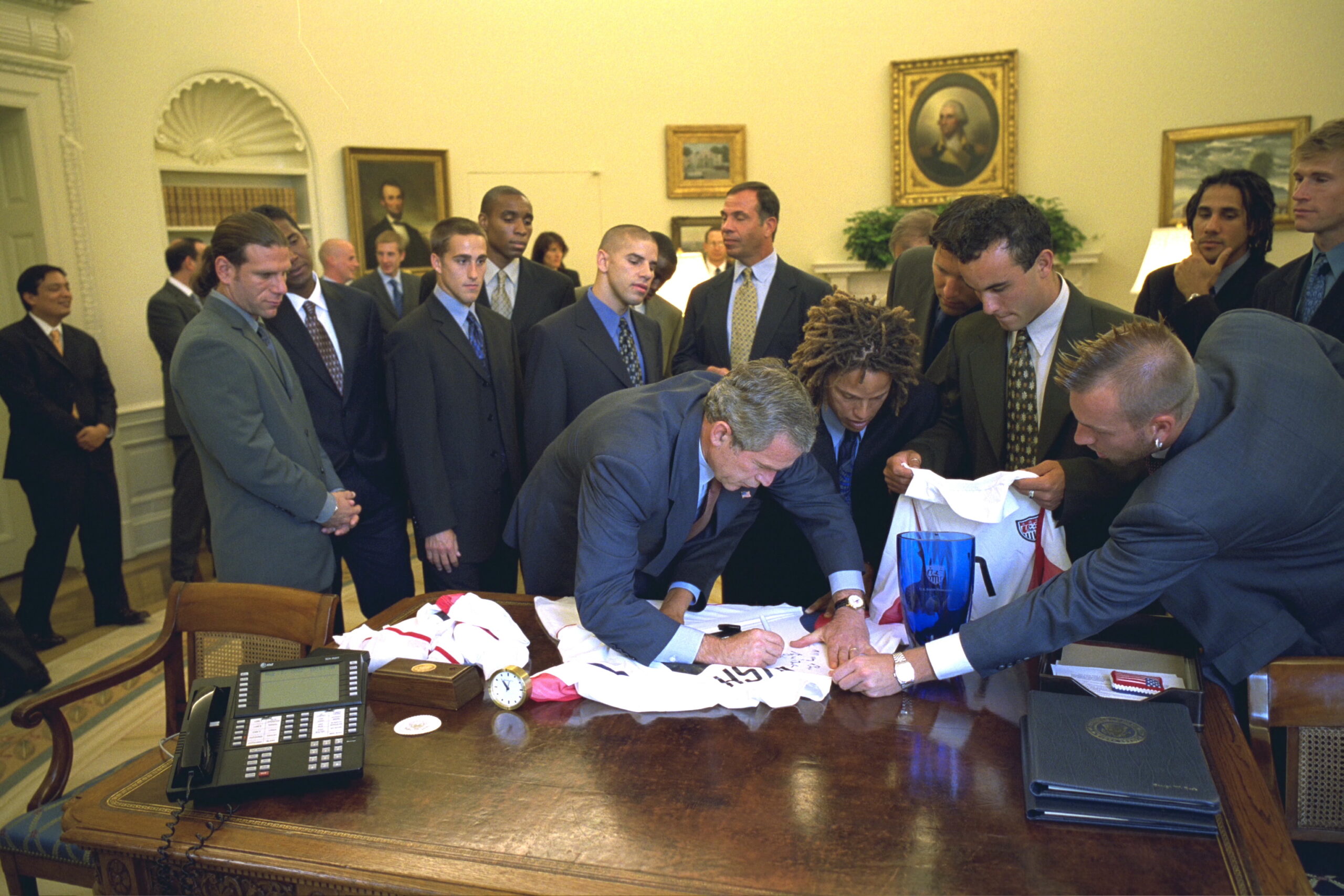
Photo: White House Photo by Eric Draper / Wikimedia Commons / Public domain

Forget 1930. The 2002 tournament in South Korea/Japan is the USMNT’s authentic masterpiece. This was a full 32-team field. The draw placed them in a “Group of Death” with Portugal, South Korea, and Poland. Their 3-2 win over a Portuguese side featuring Luis Figo and Rui Costa was a statement of intent, not a fluke.
The Round of 16 victory over Mexico was cathartic. It was the first World Cup meeting between the rivals. Brian McBride’s opener and Landon Donovan’s insurance goal delivered a 2-0 win that is still replayed on American soccer channels. The quarterfinal against Germany was a 1-0 loss marred by controversy. Torsten Frings’ clear handball on the line wasn’t called. They were one non-call from a potential semifinal.
Common mistake: Dismissing the 2002 run because they didn’t win a trophy. The quarterfinal achievement, in the context of the opponents faced and the tournament format, represents the highest-quality soccer the USMNT has ever produced on the world stage. The 1930 result is a record; the 2002 run is a benchmark.
Why was it possible? The core of Donovan, DaMarcus Beasley, and Clint Dempsey was young, fearless, and technically improved. Manager Bruce Arena’s tactical adjustments were spot-on, often shifting from a 4-4-2 to a more defensive 4-5-1 to absorb pressure. The team played with a tactical intelligence that hadn’t been seen before.
TL;DR: The 2002 quarterfinal run, with wins over Portugal and Mexico, is the USMNT’s best modern achievement, surpassing the 1930 result in competitive significance.
The Golden Generation and the 2010-2014 Cycle
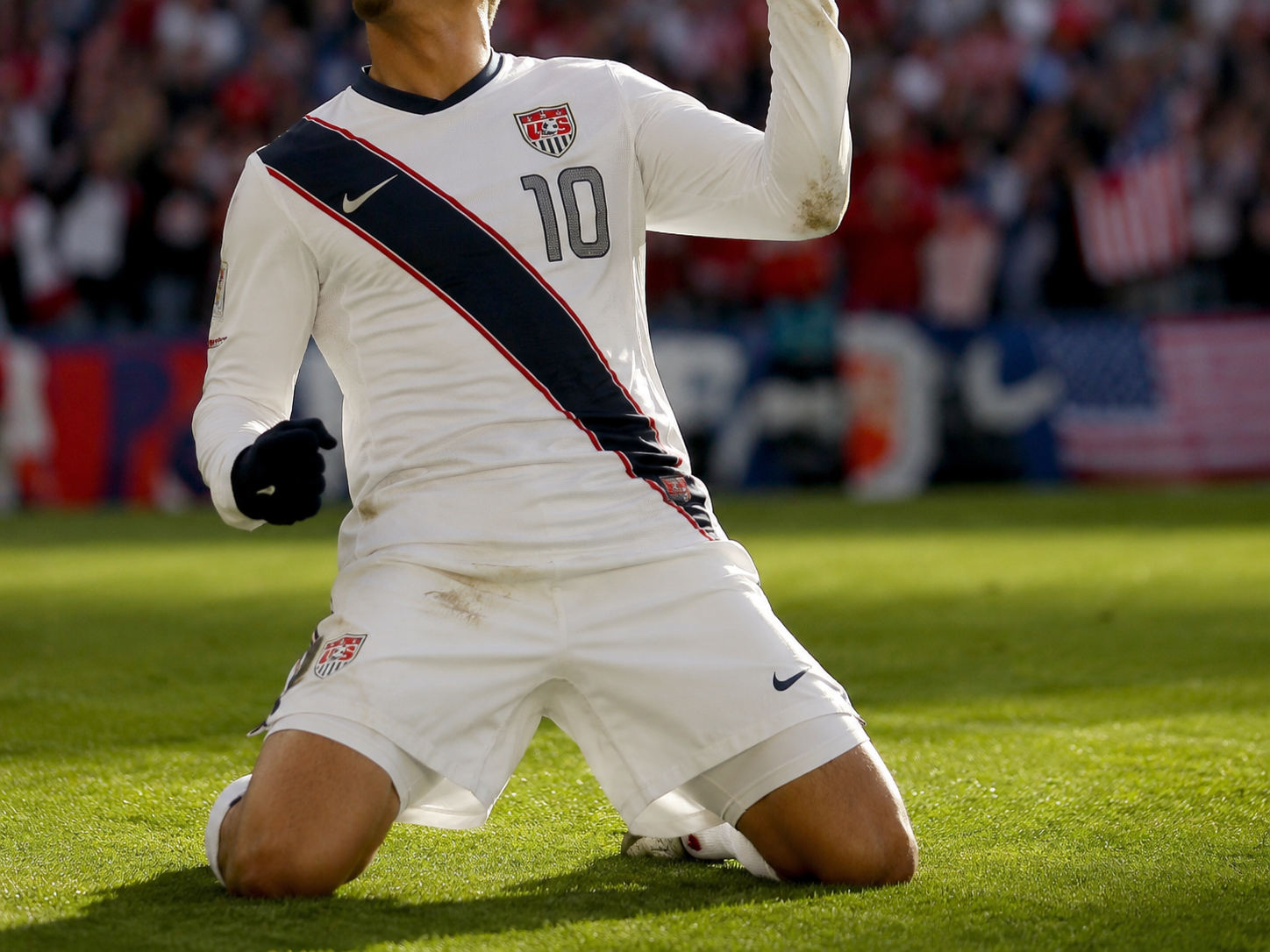
The group that emerged after 2006. Donovan, Dempsey, Tim Howard, Michael Bradley, carried the program for a decade. Their mission was to prove 2002 wasn’t an anomaly.
In 2010, Donovan’s last-gasp goal against Algeria is an iconic American sports moment. It won the group and sent the team to the knockout round. The subsequent loss to Ghana was a bitter reminder of the fine margins at that level.
2014 was the culmination of that generation. In a brutally difficult group with Ghana, Portugal, and Germany, they advanced. Then came the Round of 16 match against Belgium. Tim Howard’s legendary 16-save performance was a display of sheer will, but they lost 2-1 in extra time. The image of a exhausted, tearful Jermaine Jones after that game captured the feeling: so close, yet still just the Round of 16.
The cycle ended with the catastrophic failure to qualify for 2018. It was a system-wide collapse, from player development to coaching strategies to federation planning. The golden generation had retired, and the pipeline sputtered. It reset expectations brutally.
The New Cycle: 2022 and the 2026 Horizon
The 2022 World Cup in Qatar was a reboot. A young, athletic squad led by Christian Pulisic regained the nation’s place, advancing from the group over Iran and Wales before falling to the Netherlands in the Round of 16. The style was different, more possession-oriented, led by players developed in top European academies.
All roads now lead to 2026. Co-hosting with Canada and Mexico brings an automatic berth and immense pressure. The conversation is no longer about qualifying; it’s about performing. The focus will be on maximizing the talent of Pulisic, Giovanni Reyna, Yunus Musah, and others.
Tactically, this may demand a shift. To compete with elite nations, the U.S. may need to move beyond reactive shapes and master a proactive system. We might see a fluid 4-3-3 formation or even a 3-5-2 formation to leverage attacking wing-backs. The strategic play must evolve.
The 2026 squad will be compared directly to the 2002 team. The expectation is clear: reach the quarterfinals, at a minimum, and this time, find a way to win that game. The project is no longer about participation. It’s about legacy.
How Does the USMNT Compare to Other CONCACAF Nations?
The United States owns the region’s best single result (1930). Mexico, however, has greater historical consistency and depth. El Tri has participated in 18 World Cups, reaching the quarterfinals twice as hosts (1970, 1986). They have more knockout-round appearances.
Costa Rica’s 2014 quarterfinal run matches the U.S.’s 2002 achievement. Their defeat of Uruguay, Italy, and England in the group stage that year was arguably more impressive than any single U.S. group-stage performance.
The current era is a tight three-way battle between the U.S., Mexico, and Canada. The U.S. holds the edge in young talent playing at the highest club levels in Europe. This player pool advantage is what fuels the belief that the 2026 cycle is America’s best chance to finally pull decisively ahead of its regional rivals and make a deep run. The development of future American soccer stars in MLS will be critical to sustaining this edge.
Frequently Asked Questions
Has the USMNT ever won the World Cup?
No. The United States men’s national team has never won the FIFA World Cup. Their best finish is third place in the inaugural 1930 tournament.
What was the USA’s best World Cup result in the modern era?
The best result in the modern, 32-team era is a quarterfinal appearance in the 2002 World Cup. The team beat Portugal and Mexico before losing 1-0 to Germany.
How many times has the USA qualified for the World Cup?
The USMNT has qualified for 12 World Cup tournaments (1930, 1934, 1950, 1990, 1994, 1998, 2002, 2006, 2010, 2014, 2022, 2026). The 1994 and 2026 appearances are as host nation.
Why is the 1930 finish considered controversial by some?
Some fans and analysts argue that because the 1930 tournament had only 13 teams and a different format, the third-place finish isn’t comparable to modern achievements. However, FIFA officially recognizes it as the team’s best result and a CONCACAF record.
Who is the best USMNT player in World Cup history?
Landon Donovan holds the strong claim. He is the team’s joint all-time World Cup scorer (5 goals) and was the engine of the 2002 and 2010 runs. Tim Howard’s 2014 performance against Belgium is the single most dominant display by an American at the tournament.
The Bottom Line
The U.S. men’s World Cup story is a tale of two bookends: a startling beginning in 1930 and the looming opportunity of 2026. The 40-year gap in the middle is the ghost that still haunts the program’s potential. While the record books will always show 1930 as the pinnacle, the 2002 quarterfinal run is the true standard for quality in the modern game.
The current generation carries the burden of bridging that history. Their task is to use the platform of 2026 not just to match the 2002 team, but to surpass it. It requires more than athleticism and heart. It demands tactical sophistication, mental fortitude in knockout games, and a squad depth built through consistent player fitness and development. The history is written. The next chapter is theirs to define.
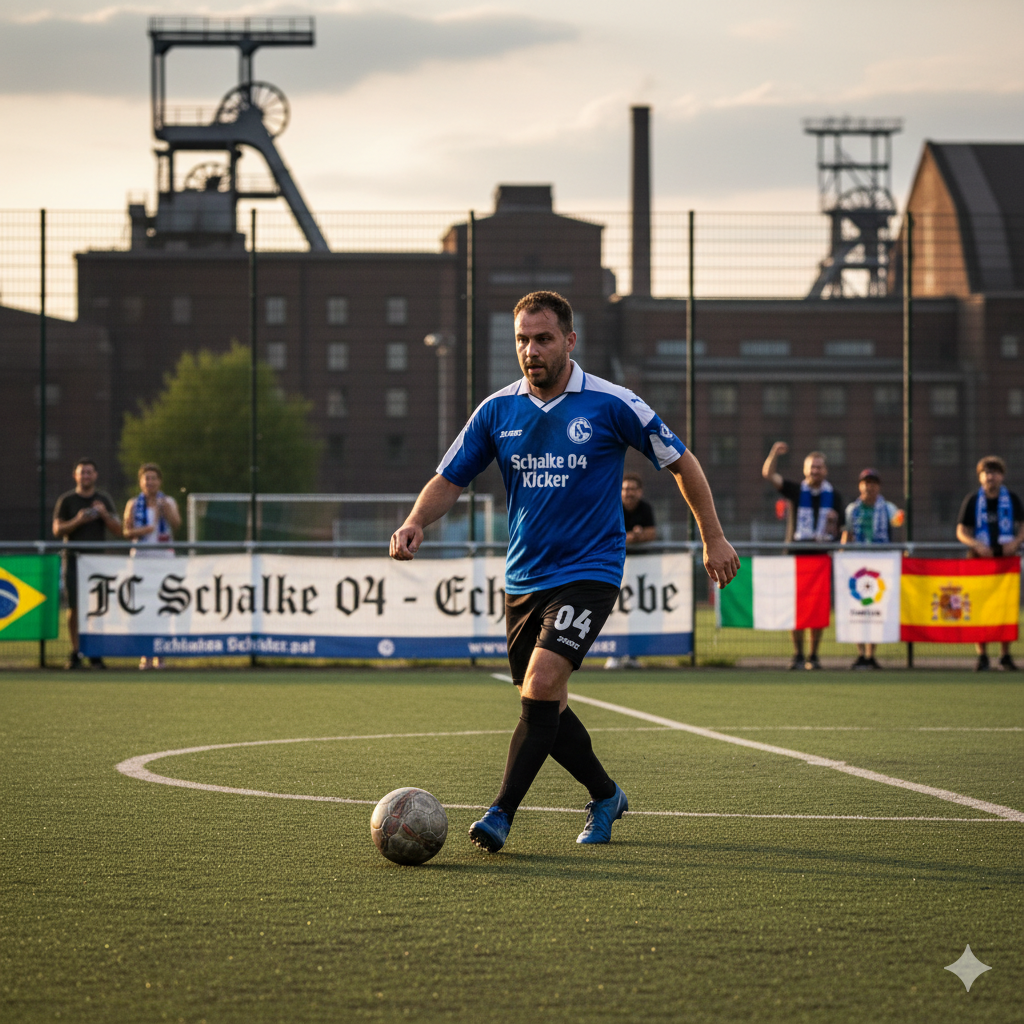
I come from the “soccer heart” of Germany, the Ruhrpott. I have played, trained and followed soccer all my life and am a big fan of FC Schalke 04. I also enjoy following international soccer extensively.