When Is a Penalty Kick Awarded? The 5 Fouls That Give a PK
A penalty kick is awarded in soccer when a defending player commits a direct free-kick offense inside their own penalty area. The foul must be one of the ten offenses listed in Law 12 of the IFAB Laws of the Game, such as tripping, pushing, or intentional handball. The entire ball must be over the penalty area line for the foul to qualify.
Most people think a penalty is just for a foul near the goal. That misses the point. The real trigger is the combination of a specific type of foul and its exact location. Get the location wrong by an inch, and it’s just a free kick.
This guide breaks down the five fouls that force a referee’s hand, the non-negotiable rules about where they happen, and the messy, real-game scenarios that even seasoned fans get wrong.
Key Takeaways
- The foul must happen inside the defending team’s penalty area. If the ball is even partly on the line, it’s outside.
- Only direct free-kick offenses qualify. Indirect offenses, like playing in a dangerous manner, do not warrant a penalty.
- Handball calls now hinge on whether the player’s arm position made their body “unnaturally larger,” not just intent.
- Off-the-ball violence inside the area, like striking an opponent, is a penalty, even if the ball is 30 yards away.
- The referee must signal before the kick can be taken. Taking it early forces a retake and a yellow card for the kicker.
The 5 Direct Free-Kick Offenses That Trigger a Penalty
Forget vague notions of “a foul in the box.” The International Football Association Board (IFAB) lists ten specific direct free-kick offenses in Law 12. When one of these happens inside the penalty area, the referee points to the spot.
Kicking, tripping, jumping at, charging, striking, pushing, tackling, or holding an opponent, or handling the ball deliberately, or impeding an opponent with contact inside one’s own penalty area results in a penalty kick. The offense is penalized irrespective of the ball’s location if it involves violent conduct, spitting, or throwing an object at an opponent within the area.
The list is precise. Let’s translate it into the five fouls you’ll actually see called.
Kicking, tripping, or jumping at an opponent. This covers most clumsy tackles. A mistimed slide that takes the player before the ball is the classic example. It doesn’t need to be malicious. A careless trip while chasing a loose ball counts.
Pushing or holding. You see this constantly on corner kicks. A defender two-hand shoves an attacker in the back while jumping for a header. Or they wrap an arm around the waist to stop a run. In the modern game, referees are instructed to penalize this more strictly.
Handling the ball deliberately. This is the most debated rule. Intent matters, but the modern interpretation focuses on body shape. Is the arm in a “natural” position for the player’s movement? If the arm is extended, making the body “unnaturally larger,” it’s often given as a penalty, even if the contact seems accidental. A ball striking a tucked arm rarely is.
A tackle or challenge that makes contact with the opponent before the ball. This is the professional foul. The defender is late. The point of contact is the attacker’s shin, not the ball. Even if the defender gets a piece of the ball afterward, if the primary contact is the player, it’s a foul. And in the box, that’s a penalty.
Striking, violent conduct, or spitting. This is the off-the-ball stuff. A player elbows an opponent during a jostle for position. A goalkeeper punches an attacker after collecting a cross. The ball might be dead or elsewhere on the field. If the incident occurs inside the penalty area, it’s a penalty kick.
TL;DR: Only direct free-kick offenses inside the box become penalties. Modern handball calls focus on unnatural arm position, not just intent.
Where and How: The Non-Negotiables
The type of foul is only half the equation. The location and context are the other half. Get one wrong, and the referee’s whistle means nothing.
The foul must occur inside the defending team’s penalty area. We’re talking about the 18-yard box plus the goal area. The critical detail is the position of the ball, not the players. If the ball is on the penalty area line, it is considered outside the area. The entire ball must be over the line.
The offense must be a direct free-kick offense. This is the key distinction many miss. Not all fouls are equal. The official soccer rules document separates offenses into direct and indirect. A penalty can only come from a direct offense.
| Direct Free-Kick Offense (Penalty Possible) | Indirect Free-Kick Offense (No Penalty) |
|---|---|
| Kicking an opponent | Playing in a dangerous manner |
| Tripping | Impeding an opponent without contact |
| Handball (as defined by Law 12) | Offside |
| Pushing | Goalkeeper holding the ball > 6 seconds |
| Violent conduct | Obstruction |
A goalkeeper handling a back-pass is an indirect offense. That happens in the box every week. It’s never a penalty. It’s an indirect free kick from the spot of the offense.
The referee must have signaled for the kick to be taken. I’ve seen youth players blast the ball into the net while the ref is still dealing with a protesting defender. The goal doesn’t count. The kick is retaken, and the kicker gets a yellow card for unsporting behavior. Wait for the whistle.
TL;DR: Ball location decides penalty vs. free kick. Only direct offenses count. Always wait for the referee’s signal.
Handball: The Rule That Changed Everything
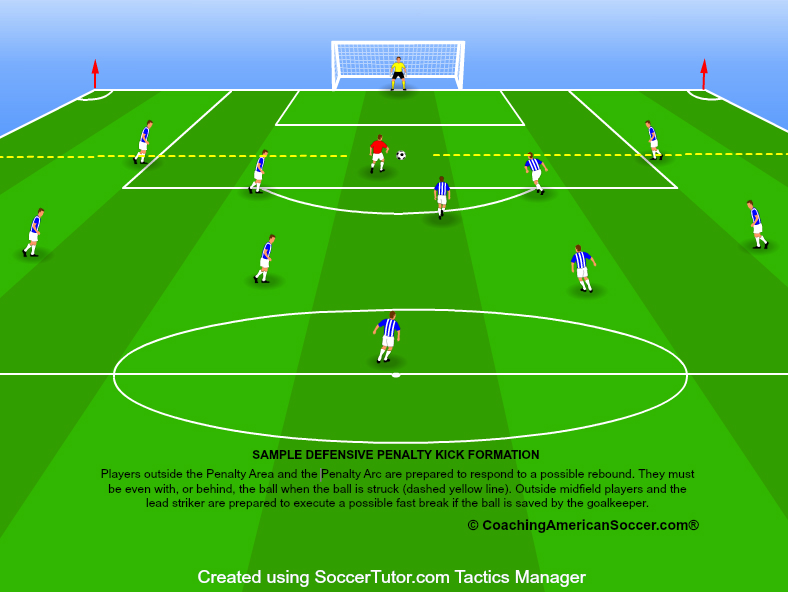
Handball decisions cause more arguments than any other call. The rule used to be about “deliberate” handling. Now, it’s about body shape and consequence.
The current IFAB guidance states a handball offense occurs when a player:
* Deliberately touches the ball with their hand/arm.
* Makes their body unnaturally bigger when the ball makes contact.
* Scores a goal directly with their hand/arm, or immediately after.
The phrase “unnaturally larger” is what changed the game. An arm extended away from the body, making your silhouette bigger, is now considered an offense even if you didn’t mean to touch the ball. It’s a penalty in the box.
Common mistake: Assuming accidental touch means no foul, if your arm is out, making your body bigger, referees are instructed to call it. That arm-out block of a cross is a penalty nine times out of ten now.
What’s a natural position? Arms at your side while jumping to block a shot is natural. Arms above your head in the same situation is not. Running with arms pumping is natural. Having your arm out to the side for balance while sliding is a gray area, but referees often give it.
The rule is stricter for attackers. If an attacker scores or creates a chance immediately after the ball touches their hand or arm, even accidentally, it’s disallowed. In the box, that means a free kick to the defense, not a penalty for the attack.
Off-the-Ball Incidents and Fouls Off the Field
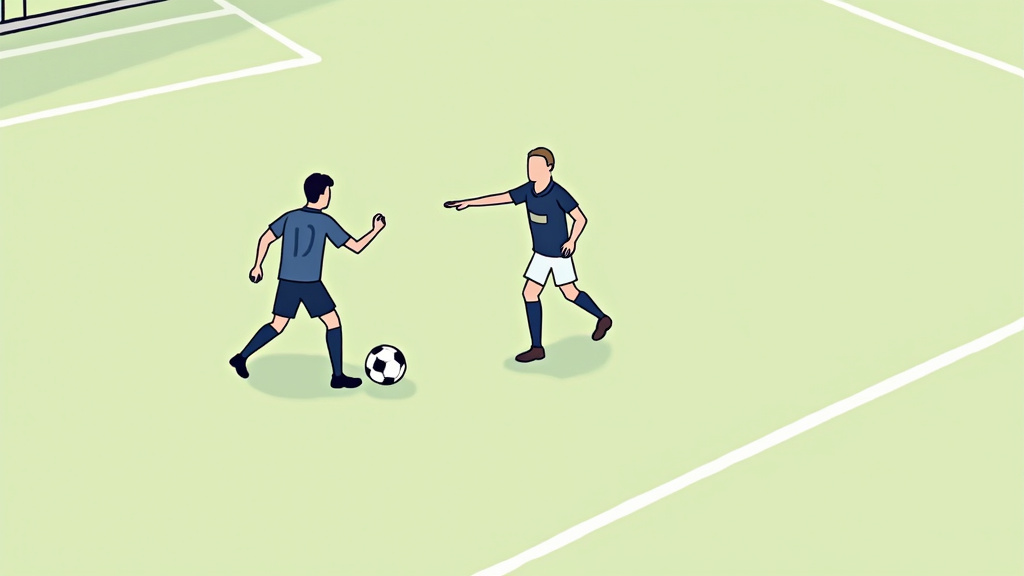
The ball’s location isn’t always relevant. This trips up a lot of new viewers.
Law 12 is clear: if a player commits an act of violent conduct, spits at an opponent, or throws an object at someone, it’s a direct free-kick offense. If that act happens inside the player’s own penalty area, it’s a penalty kick. Period.
Imagine a corner kick is about to be taken. Two players are wrestling in the six-yard box. The ball is still in the corner taker’s hands. Defender A elbows Attacker B in the ribs. The referee sees it. That’s violent conduct inside the penalty area. Penalty kick.
Similarly, a foul can be committed “off the field of play as part of play.” If an attacker is heading towards the goal just beyond the end line and a defender holds them back, the referee can award a penalty. The offense is considered part of active play if the ball is still in play on the field.
These are rare calls. But they highlight that the laws govern player behavior everywhere relevant to the match, not just where the ball is.
What Happens After the Whistle: Retakes and Offenses
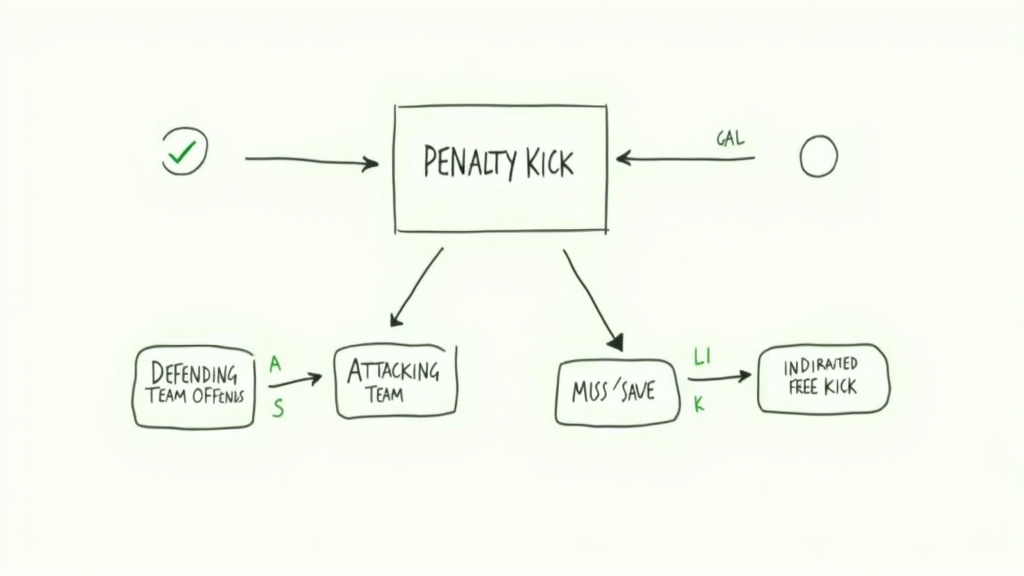
The referee points to the spot. The drama isn’t over. What players do next can change everything.
If the defending team (including the goalkeeper) offends:
- And the penalty is scored: The goal stands.
- And the penalty is missed or saved: The kick is retaken if the offense clearly impacted the kicker. This is new. If the goalkeeper comes off the line early and saves it, it’s a retake. If a defender encroaches and clears the rebound, it’s a retake.
If the attacking team (the kicker or a teammate) offends:
- And the penalty is scored: The goal is disallowed, and an indirect free kick is given to the defending team.
- And the penalty is missed or saved: Play continues with the rebound. No retake.
The penalty kick procedure has strict steps. The goalkeeper movement rules require both feet on the goal line until the ball is kicked. The kicker cannot feint after completing their run-up. They can stutter in the run, but stopping completely to fake the goalkeeper is a yellow card and an indirect free kick to the defense.
The most recent clarification concerns the double-touch. If the kicker slips and accidentally kicks the ball against their own standing foot, and the initial kick was a goal, the penalty is now retaken. The old rule disallowed the goal immediately. This change, noted in IFAB Circular No. 31, recognizes genuine accidents.
Frequently Asked Questions
Can a penalty be given if the foul started outside the box?
No. The location of the foul is determined by where the initial contact or offense occurs. If a trip begins with contact outside the line and continues inside, the free kick is awarded from the point of initial contact, outside the box.
Is it a penalty if a defender handles the ball on the goal line to stop a goal?
Yes, absolutely. This is a deliberate handball offense inside the penalty area. It is a penalty kick, and the defender is almost always sent off with a red card for denying an obvious goal-scoring opportunity.
What’s the difference between a penalty and a free kick in the box?
penalty kick is taken from the 12-yard spot with only the goalkeeper defending. A free kick awarded inside the box (for an indirect offense) is taken from the spot of the foul, with the defending team allowed to form a wall. The free kick classification into direct and indirect is crucial here.
Why wasn’t that a penalty? The player was clearly fouled in the box!
The most common reasons: the referee judged the contact to be incidental (not a foul), the attacker initiated the contact (simulation), or the foul was for an indirect free kick offenses like obstruction without contact. Also, the attacker may have been offside before the foul occurred.
What happens after a saved penalty kick?
Play continues immediately. The ball is live. Anyone can play the rebound except the kicker, who cannot touch it again until another player has. This leads to frantic scrambles and quick follow-up shots, which is why understanding the penalty kick outcome is key for players.
The Bottom Line
Awarding a penalty kick isn’t a mystery. It’s a checklist. First, verify the foul is one of the ten direct offenses. Second, confirm the entire ball was inside the penalty area when it happened. Get those two right, and the referee’s arm will point to the spot every time.
The modern game has tightened the rules, especially around handball and goalkeeper movement. What felt like a 50/50 call a decade ago is now a clear directive for officials. Knowing these specifics, the unnatural arm, the off-the-ball violence, the retake rules, turns a confusing moment into a clear understanding of the game’s laws.
I come from the “soccer heart” of Germany, the Ruhrpott. I have played, trained and followed soccer all my life and am a big fan of FC Schalke 04. I also enjoy following international soccer extensively.