What Is First Touch in Soccer? The Complete Skill Guide
First touch in soccer is a player’s initial contact with the ball when receiving it from a pass, a deflection, or a loose ball. It is a decisive technical action that sets the immediate direction, speed, and control of the ball, directly influencing the player’s next move and the team’s attacking rhythm.
Most players think a good first touch means stopping the ball dead at their feet. That’s the universal mistake. A stopped ball is a dead play. It gives the nearest defender two full seconds to close you down, and you lose every advantage the pass just gave you.
This guide breaks down the mechanics, the mindset, and the muscle memory. We’ll cover what separates a useful touch from a useless one, the drills that actually translate to game speed, and why this single skill dictates your entire effectiveness on the pitch.
Key Takeaways
- A good first touch is directional and intentional, moving the ball into space away from pressure, not just stopping it.
- Scanning the field before the ball arrives is non-negotiable. Your eyes decide where the touch goes before your foot makes contact.
- The quality of your first touch directly controls your speed of play. A poor touch forces you to rush; a good one creates time.
- Training must replicate game pressure. Static repetition builds bad habits. You need a partner, a wall, or cones that force decision-making.
- Improving your first touch is the fastest way to elevate every other part of your game, from dribbling speed to long passing technique.
What Does ‘First Touch’ Actually Mean?
The Cambridge Dictionary definition of ‘first touch’ calls it “in football, the first time a player touches the ball after it has been passed to them.” That’s the textbook version. On the pitch, it’s the half-second that decides your next five seconds.
A proper first touch does three things simultaneously: it cushions the ball’s momentum, places it into a specific area of space, and positions your body to execute the next action. The ball should land 2 to 4 feet in front of your leading foot, not directly underneath you. That distance is the difference between playing a pass in one fluid motion and needing a stutter-step to reach the ball.
A player’s first touch is the technical execution of a pre-made decision. The foot follows where the eyes have already looked, moving the ball into a pre-identified space to facilitate a shot, pass, or dribble before defensive pressure arrives.
TL;DR: Your first touch is your first decision with the ball. Make it a move, not a stop.
Why Your First Touch is Everything
Your first touch is your foundation. Every problem with awareness, speed of play, or feeling rushed stems from here. If your initial control is shaky, you spend your next touch just recovering the ball. By then, the passing lane is closed, the defender is set, and your only option is a panicked clearance.
A clean, intentional touch does the opposite. It creates time and space where none existed. It allows you to look up and see the game unfolding because the ball is already where you need it to be. This is the core benefit of improving your first touch — it turns reactive play into proactive play.
For attackers, it’s the difference between a chance and a goal. Receive a cross at the top of the box with a touch that sets the ball across your body, and you’re lining up a shot with your strong foot. Take a bad touch that pops up, and you’re chasing it toward the sideline.
| Good First Touch Enables… | Poor First Touch Forces… |
|---|---|
| Early vision and scanning | Head down, ball watching |
| One-touch combination play | Extra, recovery touches |
| Beating a defender with speed | Shielding under pressure |
| Accurate long-range passing | Rushed, inaccurate clearances |
The table shows the domino effect. This skill is the gatekeeper for advanced tactics like the give-and-go tactic, which relies on crisp, one-touch exchanges.
The 3 Types of First Touch (And When to Use Them)
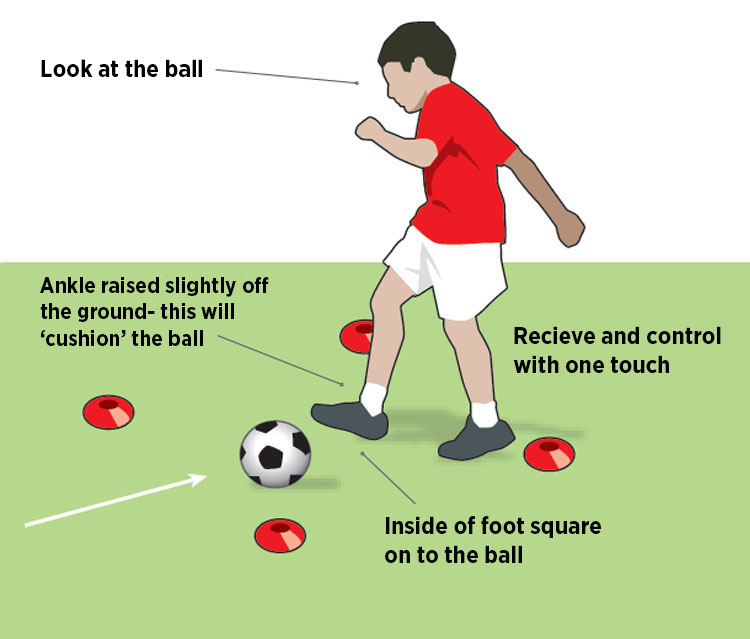
There is no single “correct” touch. The best players have a menu, and they choose based on the game’s demands.
1. The Cushioning Touch
This is the classic control. You withdraw your foot slightly upon impact to absorb the ball’s energy, killing its pace. Use it when receiving a hard-driven pass in tight space, when you have no immediate pressure, or when you need to settle the ball before a precise action like a side-foot pass. The risk? It can be too passive. If a defender is within five yards, this touch invites a tackle.
2. The Directional Touch
This is the modern standard. Instead of killing the ball’s momentum, you redirect it. Use the inside or outside of your foot to push the ball into open space, away from an approaching defender. This touch is proactive. It’s the key to transitioning from defense to attack and is fundamental for effective close control dribbling.
3. The One-Touch Pass
Sometimes, the best first touch is no touch at all—just a redirection. This is a decision, not a lapse. Use it when you see a teammate in a better position before the ball arrives. It requires perfect awareness and is the pinnacle of team play benefits.
Common mistake: Taking a cushioning touch when under pressure — the ball dies at your feet, the defender arrives, and you lose possession within two seconds. Always redirect away from pressure.
The Mental Game: Scanning Before You Receive
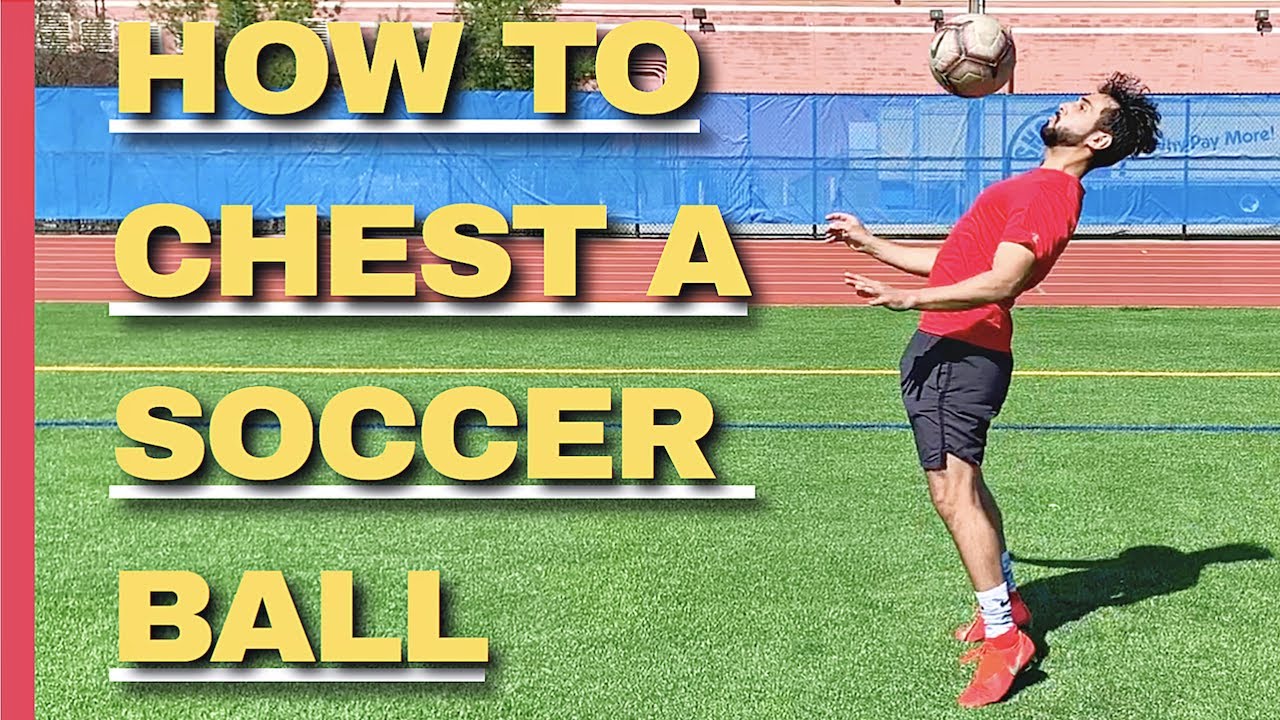
The technical execution is only half the battle. The other half happens before the ball arrives. This is the cognitive layer most training ignores.
You must scan your surroundings. Look over your shoulder. Identify the nearest defender, locate open space, and pick a teammate. Your brain should process: Pressure left, space right, teammate ahead. Your first touch is simply your foot carrying out that pre-loaded command.
If you wait until the ball is at your foot to look up, it’s too late. The game has moved, the space is gone, and your touch will be reactive. This scanning habit is what separates academy players from park players. It’s a skill that integrates directly with understanding pass trajectory differences for your next move.
TL;DR: Your eyes plan the route. Your foot just drives.
How to Train Your First Touch: Drills That Work
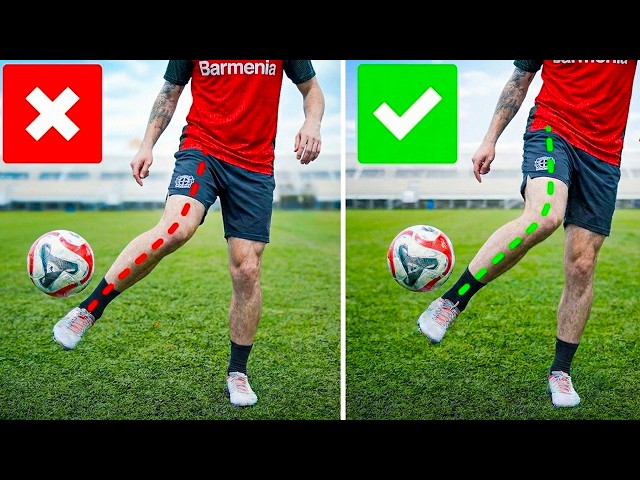
Forget endless static repetitions. Your training must be uncomfortable and game-realistic. Pressure, decision-making, and consequences are mandatory.
1. The Wall Drill (Solo)
Find a solid wall. Stand 5-7 yards back.
* Pass the ball firmly against the wall.
* Control the rebound with one touch, aiming to keep it within a three-foot circle.
* Immediately pass again.
* Advanced: Call out a spot on the wall before you pass, then control the rebound and spin to touch a cone placed behind you. This adds scanning and turning.
2. Partner Pressure Drill (With a Friend)
You need a partner and four cones.
* Set up two gates of cones 10 yards apart.
* Your partner passes to you from one gate.
* As the pass is in the air, they close you down as a defender.
* Use your first touch to push the ball through the opposite gate, then follow it.
* Consequence: If your touch is too heavy, the defender intercepts. If it’s too soft, you get tackled.
3. The Juggling Integration
Juggling isn’t just for show. It teaches delicate touch and coordination from all angles.
* Juggle 20 times.
* On the 21st touch, kick the ball high against a wall.
* Control the awkward rebound with the inside of your foot, settle it, and restart juggling.
This is excellent for first touch practice drills when you’re alone.
These drills build the specific muscle memory for ball control and acceleration. The wall and partner drills directly improve your first touch control techniques.
First Touch for Specific Positions
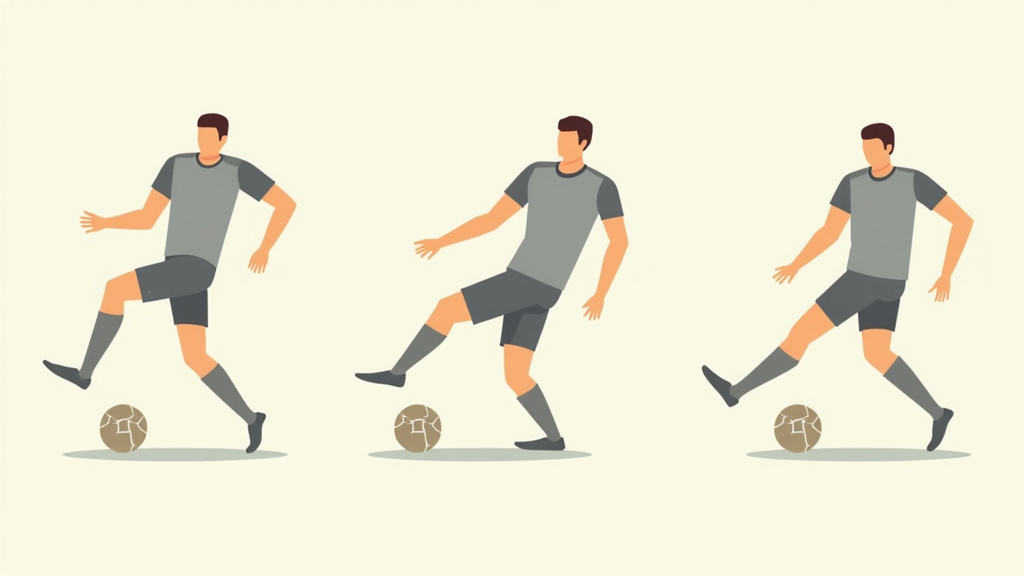
The application changes based on where you play. A center-back’s touch has a different job than a winger’s.
Strikers & Forwards
Your first touch is a scoring tool. In the penalty area, your touch must set the ball for a shot. This often means using a directional touch to roll the ball across your body onto your stronger foot. The touch needs to be precise enough that your next action is a shot, not another settling touch. This ties directly to mastering the instep kick for power.
Midfielders
You are the engine room. Your touch must be clean under extreme pressure, often with your back to goal. The directional touch is your best friend, rolling away from tackles into space to play a driven pass technique to switch the play. Your training should focus on receiving with both feet.
Defenders
Your primary goal is safety and possession. A cushioning touch to secure a high ball is standard. However, the modern defender also needs a sharp directional touch to break the first line of press and initiate an attack, linking to accurate long passes.
Equipment and Surfaces Matter
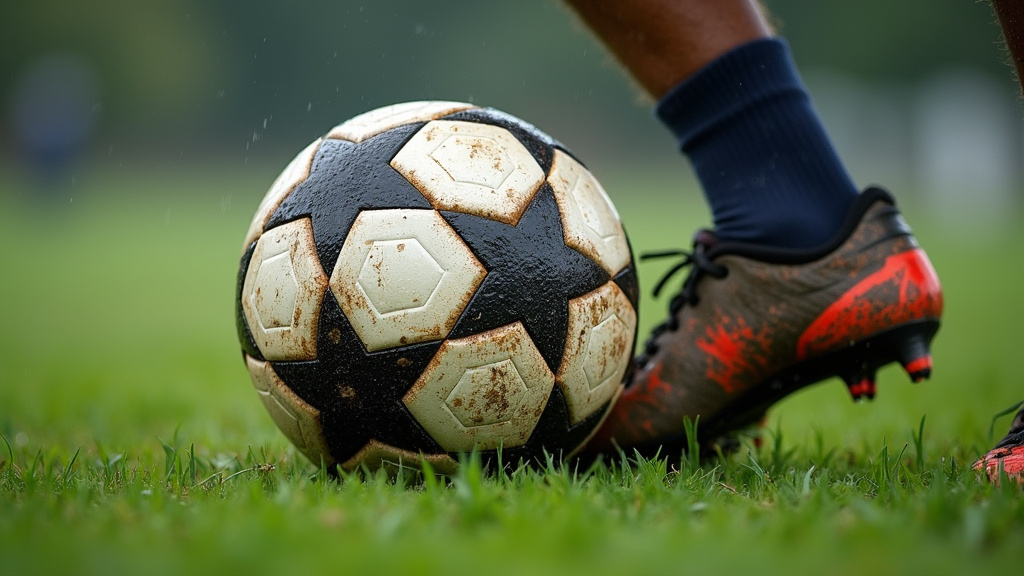
What you train on and with changes the game. A smooth, dry ball on short grass behaves predictably. A wet, heavy ball on a long, muddy pitch does not.
- Grass vs. Artificial Turf: Turf is faster and truer. The ball skids. On grass, especially if long or wet, you need to take a firmer touch to ensure the ball rolls true.
- Ball Pressure: A properly inflated ball (8.5-15.6 PSI) rebounds predictably. A soft ball will die on impact, fooling you into over-hitting your touch in a game.
- Footwear: Studs (cleats) provide grip for sharp turns after a touch. Turf shoes or flats on grass can cause your foot to slip as you redirect the ball.
Train in the conditions you play in. If your Saturday games are on a bumpy field, some of your home ball control exercises should be on an uneven surface.
Frequently Asked Questions
What’s the difference between first touch and ball control?
Ball control is the broad skill of manipulating the ball with all parts of your body. First touch is a specific, critical subset of ball control—the very first manipulation after receiving possession. All good ball control starts with a good first touch.
Can you improve your first touch quickly?
Yes, if you train correctly. Consistent, focused practice for 15-20 minutes a day, using game-realistic drills like the wall or partner pressure drills, will show noticeable improvement in 3-4 weeks. Mindless repetition without pressure will not.
Is it better to use the inside or outside of the foot for a first touch?
It depends on the pass and the space. The inside of the foot offers a larger, flatter surface for control and is best for cushioning. The outside of the foot allows for sharper redirection and is excellent for turning away from pressure. Mastering both the inside foot kick and outside foot techniques is essential.
How does first touch affect passing?
good first touch sets the ball perfectly for your next action. If you want to play a long pass, your first touch should roll the ball a step ahead of you, allowing a full, clean striking motion. A bad touch forces you to adjust your body, killing power and accuracy.
Why do I have a good first touch in practice but not in games?
This is almost always due to a lack of scanning and the presence of mental pressure. In practice, you’re relaxed and know what’s coming. In games, you must process opponents, space, and time. The fix is to add decision-making and light pressure to every single drill.
The Bottom Line
First touch isn’t a secondary skill. It is the primary skill. It dictates your tempo, your options, and your value to the team. Stop practicing to stop the ball. Start practicing to move it—into space, away from trouble, toward opportunity.
The work is simple but not easy. Hit the wall. Train with a friend who pressures you. Scan before every pass arrives. This single commitment will improve your dribbling speed, your long passing technique, and your confidence more than any other training focus. The game is played in the spaces between touches. Master the first one, and you own all the ones that follow.
I come from the “soccer heart” of Germany, the Ruhrpott. I have played, trained and followed soccer all my life and am a big fan of FC Schalke 04. I also enjoy following international soccer extensively.