World Cup Hardest Path to Final | The Gauntlet No Team Wants
The World Cup 2026 hardest path to the final is a specific bracket trap created by the new 48-team format. It forces a team to beat at least three, and possibly four, former World Cup champions in consecutive knockout rounds, while also battling extreme heat, altitude, and cross-continent travel. The team most likely to face this gauntlet is the runner-up from Group K, which features Portugal and Colombia.
Most fans look at a group and think first place is everything. The 2026 bracket turns that logic on its head. Finishing second in the wrong group doesn’t just mean a tougher round of 16 opponent, it triggers a chain reaction that can pit a contender against a murderers’ row of giants before the semifinals.
This guide breaks down the specific knockout bracket structure for 2026, identifies the exact path that qualifies as the hardest, and names the teams staring down that barrel. We will also examine how environmental factors and the expanded format turn a difficult draw into a potentially tournament-breaking ordeal.
Key Takeaways
- The runner-up in Group K faces the worst immediate bracket, locked into a Round of 32 match against the runner-up from Group L (likely England or Croatia).
- Winning that match then likely sets up clashes with France, Argentina, and Brazil in the Round of 16, quarterfinals, and semifinals respectively.
- The 2026 host city geography adds a physical tax: teams on this path could play in Miami’s extreme heat, Mexico City’s 2240m altitude, and cross three time zones in a week.
- Even the Group K winner’s path is brutal, requiring a win over Colombia and then a likely quarterfinal against Argentina.
- Success requires more than talent; it demands deep squad rotation and advanced sports science protocols to survive the environmental gauntlet.
What Makes a Path ‘Hard’ in a 48-Team World Cup?
Forget the old 32-team format. The new 48-team structure, with 12 groups of four, creates a longer knockout phase and more potential for bracket asymmetry. Hardness is no longer just about your first knockout opponent.
It is a combination of three concrete factors: the caliber of consecutive opponents, the physical toll of travel between host cities, and the specific environmental conditions of match locations. A path that demands you beat three top-five ranked nations is hard. A path that makes you do it while flying from Miami to Mexico City to Los Angeles in the summer is brutal.
The 2026 FIFA World Cup will expose players to an unprecedented combination of extreme environmental factors: extreme heat, altitude, air pollution/seasonal allergens, and travel across host cities spanning ~4300 km east-west and ~4000 km north-south.
The official regulations seed the draw using the FIFA World Ranking, but geographical constraints also shape the bracket. This can funnel multiple traditional powers into the same knockout quadrant. The hardness is baked into the structure before a ball is kicked.
TL;DR: Hardness equals elite opponents plus debilitating travel plus extreme weather. The 2026 format maximizes all three.
The Bracket Trap: Mapping the Nightmare Path

The 2026 draw has already set the stage. Based on the released match schedule and group placements, one quadrant of the bracket is disproportionately stacked.
Group K contains Portugal, Colombia, Uzbekistan, and a playoff winner. Group L contains England, Croatia, Ghana, and Panama. The bracket rules lock the Group K runner-up against the Group L runner-up in the Round of 32 in Toronto. This is the trap door.
| Knockout Round | Probable Opponent for Group K Runner-Up | Match Location & Challenge |
|---|---|---|
| Round of 32 | England or Croatia | Toronto (Long travel for both) |
| Round of 16 | France (or Belgium / USA) | Likely in the USA |
| Quarterfinal | Argentina (or Spain / Uruguay) | Los Angeles |
| Semifinal | Brazil | Arlington, Texas |
That is a potential sequence of England, France, Argentina, and Brazil. Each of those nations has either won a World Cup or reached a final in the last decade. There are no “easy” games. There is no breather.
The travel is just as punishing. A team could play in Toronto, fly to a US city like Atlanta or Boston for the Round of 16, then to Los Angeles for the quarterfinal, and finally to Arlington for the semifinal. That is crisscrossing the continent under immense pressure.
Common mistake: Assuming winning your group avoids all danger, the Group K winner still faces a likely quarterfinal against Argentina, and their “easier” Round of 32 match could still be against a third-place team like France or Norway.
TL;DR: Finishing second in Group K triggers a bracket sequence requiring wins over four historic powers, with exhausting travel between each match.
The Contenders for the Hardest Path
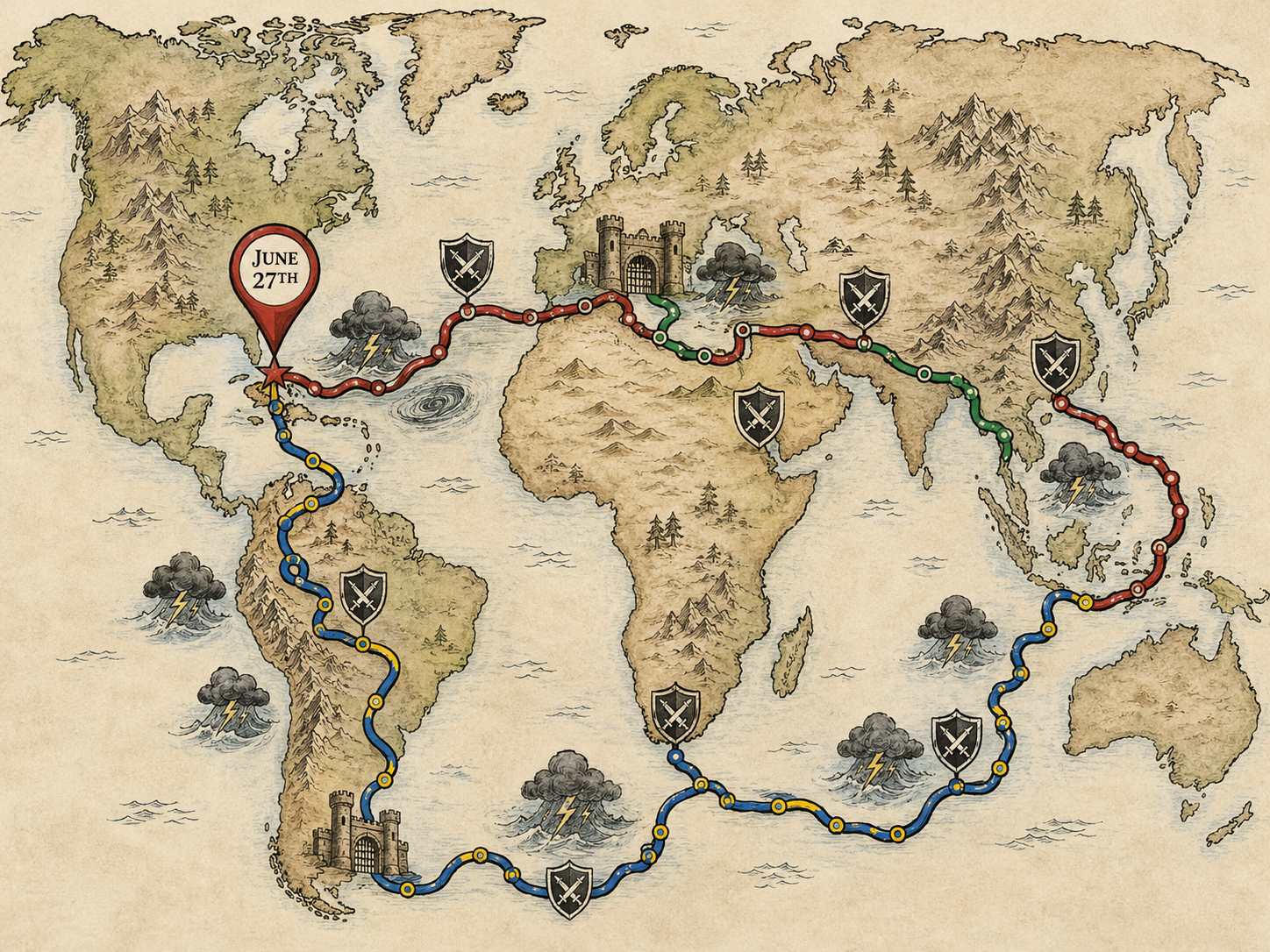
Two teams are most likely to enter this gauntlet: Portugal and Colombia. Whoever loses their head-to-head match on June 27th in Miami is the prime candidate.
Portugal’s Precarious Position
Portugal is ranked highly, but their group is a trick. Colombia is arguably the most in-form team in South America. A draw or loss in that match could relegate Portugal to second place. Analysts dissecting the draw have called Portugal’s potential second-place route a “logistical and competitive nightmare” where “every match would be a final in itself.”
If they finish second and face England in the Round of 32, it becomes a brutal early clash of generations, potentially Cristiano Ronaldo’s last World Cup match against Harry Kane’s. The tactical battle would be immense, requiring perfect execution of complex soccer tactics from the first minute. Surviving that only earns a match against France and Kylian Mbappé.
Colombia’s Golden Chance
Colombia, led by Luis Díaz, finished above Brazil and Uruguay in CONMEBOL qualifying. They fear no one. But falling to second place puts their explosive, attacking style on a collision course with Croatia’s legendary midfield control or England’s press. It is the worst possible style clash for a team that thrives on open play.
For Colombia, navigating this path would mean adopting a more pragmatic, tournament-tested approach. They might need to shift into a more defensively solid 5-3-2 formation to absorb pressure from elite attacks, rather than relying solely on their offensive flair.
The Environmental Gauntlet: Heat, Altitude, and Fatigue

The opponents are only half the battle. The 2026 host cities introduce a physical dimension rarely seen in a single tournament.
A study published in Sports Medicine titled “The 2026 Men’s FIFA Football World Cup: Evidence-Based Guidelines to Protect Player Health and Performance from Environmental Challenges” lays out the stark reality. Extreme heat is expected in 14 of the 16 host cities. Historical maximum wet-bulb globe temperatures, a measure of heat stress, range from 21 to 35 °C.
Matches in Miami, Houston, or Dallas in June will be played in sweltering, humid conditions. Player performance drops. Substitution patterns and hydration strategies become as important as game plans.
Then there is altitude. Mexico City sits at 2240 meters (7349 feet). Guadalajara is at 1566 meters. A team that must play a knockout match in Mexico City with only three days’ preparation will face players gasping for air by the 60th minute. The science is clear, altitude impacts high-intensity running and recovery.
Teams that fail to plan for recovery between matches in different climate zones will see their performance fall off a cliff in the later stages. It is a measurable, predictable decline.
The research calls for evidence-based protocols, something the follow-up article “Integrating Environmental Guidelines into Practice” expands upon. A team on the hardest path cannot just have the best players; it must have the best sports science team managing travel, sleep, and acclimatization.
TL;DR: The hardest path includes games in extreme heat and at altitude. Surviving requires a world-class medical and logistics team, not just a world-class starting eleven.
Tactical Survival Kit for the Gauntlet
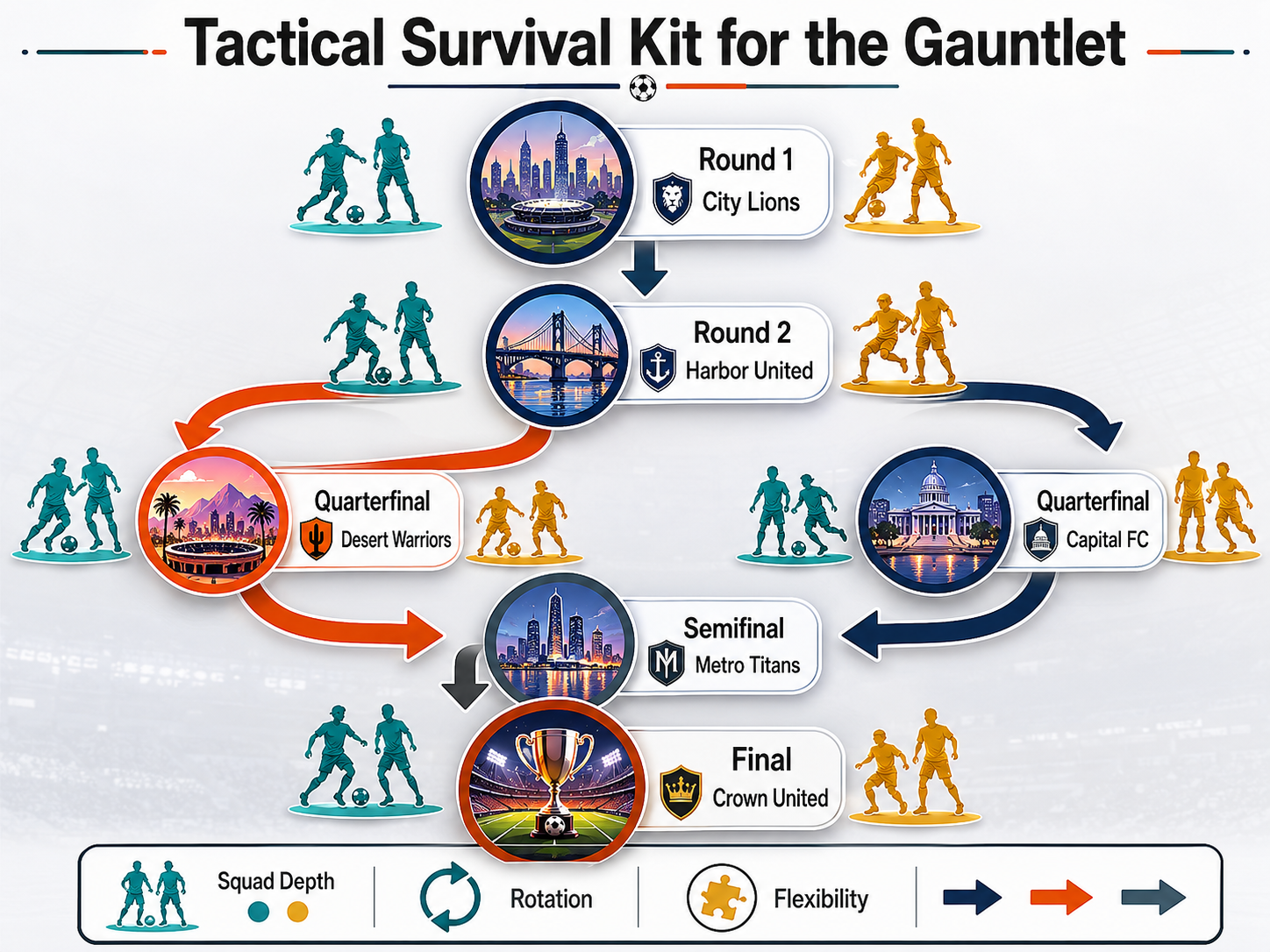
What does a coach do when handed this schedule? You cannot change the opponents or the cities. You can change how you prepare.
First, squad depth is non-negotiable. Rotating players becomes a strategic imperative, not a luxury. You need two quality players for every position, trusting your bench in knockout games. This favors nations with deep talent pools like France or England.
Second, tactical flexibility is key. You might need a 3-5-2 formation to control midfield against Croatia, then shift to a low-block 4-4-2 formation to frustrate Brazil’s wingers. Sticking rigidly to one system is a recipe for failure.
| Game Scenario | Recommended Tactical Approach | Why It Works |
|---|---|---|
| Protecting a lead vs. elite attack | 5-3-2 / Low Block | Compacts space, forces opponents to cross into crowded box. |
| Needing a goal vs. organized defense | 3-4-3 / High Width | Stretches play, creates 1v1 situations for wingers. |
| Managing fatigue / controlling tempo | 4-2-3-1 with possession | Reduces high-intensity sprints, conserves energy. |
Third, set pieces become disproportionately valuable. In tight, fatigued games against equally matched opponents, a goal from a corner or free-kick is often the difference. Drilling these situations is a high-return investment.
Finally, mental preparation is everything. Coaches must be honest with players about the challenge. They must foster a “one game at a time” mentality while secretly planning for a four-game war of attrition. The team that believes it can survive the gauntlet is halfway there.
Historical Precedent: When Hard Paths Were Conquered
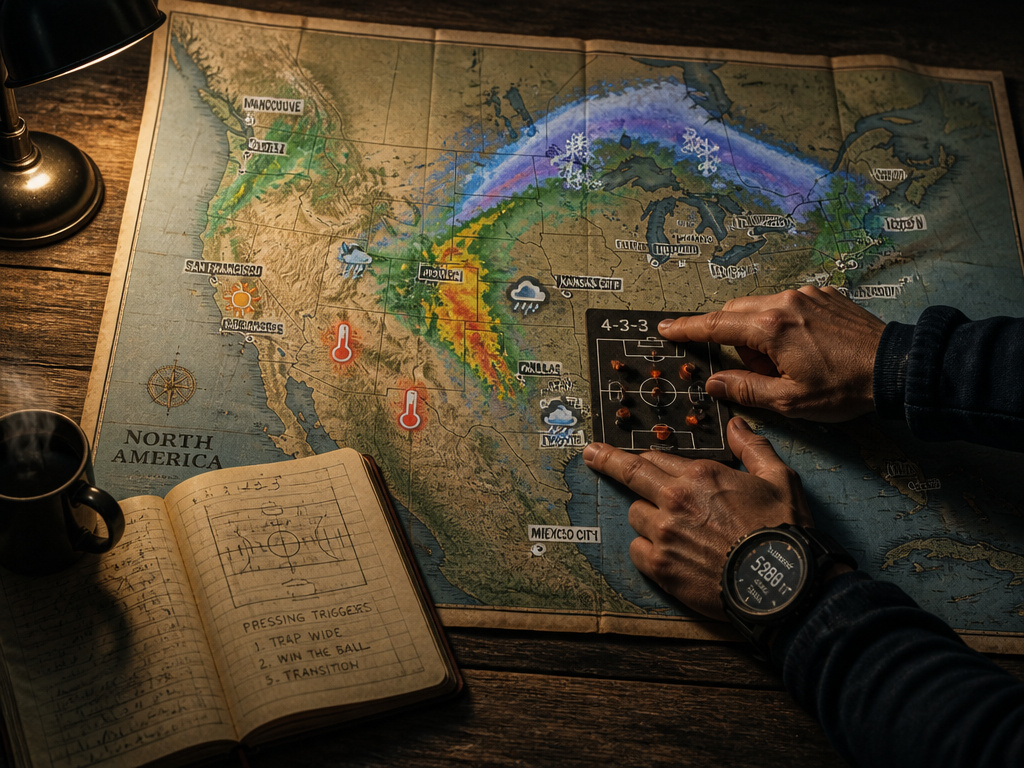
This is not without precedent. Italy in 2006 faced a brutal knockout run: Australia, Ukraine, Germany, and then France in the final. They were not the favorites in every match, but their defensive discipline and tactical nous saw them through.
The difference in 2026 is the environmental layer. No past winner has had to deal with such varied and extreme conditions in such quick succession. Modern champions will be those who can adapt their strategic systems not just to the opponent, but to the weather and the altitude.
Consider the challenge for a European team used to a compact tournament footprint. The travel alone is a shock to the system. It gives a tangible, if controversial, advantage to teams from the CONCACAF region, who are more accustomed to the climates and travel distances.
Common mistake: Underestimating the travel impact, crossing three time zones for a knockout match disrupts sleep patterns and muscle recovery, effectively handing the fresher team a half-goal advantage before kickoff.
Frequently Asked Questions
Which team has the hardest path in the 2026 World Cup?
Based on the draw, the runner-up from Group K (Portugal or Colombia) has the hardest path. They are lined up to face the Group L runner-up (England or Croatia), then likely France, then Argentina or Spain, and finally Brazil just to reach the final.
Does winning your group guarantee an easier path in 2026?
No, it does not guarantee it. While it usually avoids an immediate clash with another group winner, the bracket can still be unbalanced. The winner of Group K, for example, would likely face Argentina in the quarterfinals, a match most teams would want to avoid until much later.
How does the 48-team format create harder paths?
The 48-team format means more groups (12) and a longer knockout stage (Round of 32). This increases the chances of bracket imbalance, where several top-tier nations can be funneled into the same knockout quadrant, forcing them to eliminate each other early.
Why are environmental factors a bigger deal in 2026?
The tournament is spread across 16 cities in three countries, spanning deserts, high-altitude plateaus, and humid coastal regions. The drastic changes in heat, humidity, and air density over a short period will test player physiology more than any previous World Cup, making recovery between games a central part of the competition.
The Bottom Line
The World Cup 2026 hardest path is a real, identifiable gauntlet. It is a product of a specific draw, an expanded format, and a continent-spanning host plan. For Portugal or Colombia, the mission is clear: win Group K at all costs.
Stumbling into second place means agreeing to a tournament-long fight against history, geography, and a parade of soccer royalty. The team that emerges from that side of the bracket will not just be champion; they will be the most battle-hardened, tactically flexible, and physically resilient winner the sport has ever seen. They will have earned it the hardest way possible.
I come from the “soccer heart” of Germany, the Ruhrpott. I have played, trained and followed soccer all my life and am a big fan of FC Schalke 04. I also enjoy following international soccer extensively.