Soccer vs Baseball Cleats: 5 Key Differences for Players
Choosing between soccer and baseball cleats requires matching three things: your sport’s movement patterns, the playing surface you use most, and your league’s specific safety rules. The wrong cleat reduces performance and increases injury risk within a single game.
Most players grab the wrong pair because they focus on brand or price, not on how the cleat interacts with the ground. They assume a stud is a stud. That assumption costs you acceleration, stability, and sometimes a spot in the lineup.
This guide breaks down the five non-negotiable differences. We will cover traction philosophy, stud design, league legality, material construction, and the specific performance features that separate a game-winner from a liability.
Key Takeaways
- Soccer cleats are engineered for multi-directional traction and pivoting on grass or turf; baseball cleats prioritize explosive forward/backward grip on dirt and grass, with a critical focus on the pitcher’s mound and batter’s box.
- Metal cleats, common in advanced baseball, are almost universally banned in soccer due to the high risk of serious lacerations during tackles, a youth league will send you home for wearing them.
- The toe area is a dead giveaway: baseball cleats have reinforced toe caps or drag guards for pitchers and right-handed hitters; soccer cleats prioritize a clean, uninterrupted striking surface for ball control.
- Never use baseball cleats for soccer. The lateral stud pattern cannot handle sharp 90-degree cuts, and you will roll your ankle the first time you try to defend a winger.
- Break-in times differ wildly. A synthetic baseball cleat molds minimally after three sessions. A kangaroo leather soccer cleat needs a full week of training to shape to your foot.
1. The Traction Showdown: Grip Philosophy
Traction is not a generic feature. It is a engineered response to a sport’s fundamental movements. Soccer is a game of arcs, curves, and sudden changes of direction. Baseball is a game of angles, straight lines, and controlled bursts.
A soccer player makes roughly 1,200 changes of direction during a match. The cleat must release and re-engage the turf with every cut. Studs are placed to provide a multi-directional anchor. You pivot on the ball of your foot, your heel, the outside edge. The soccer cleat studs are a system designed to prevent catastrophic slip during these rotations.
Baseball movement is linear. A shortstop shuffles laterally, then plants and throws. A batter explodes out of the box in a straight line. A pitcher drives off the rubber forward. The cleat’s job is to dig in and prevent backward slip. This is why baseball cleats, especially metal ones, have a pronounced heel cleat and aggressive forefoot traction aimed at resisting rearward force.
The design priority for soccer cleats is rotational release, allowing the foot to pivot without the studs locking into the turf and causing knee torque. For baseball cleats, the priority is linear lockdown, preventing the foot from sliding backwards during a pitch or swing.
TL;DR: Soccer cleats help you turn; baseball cleats help you push off. Using one for the other sport compromises the primary movement and invites injury.
2. Studs vs. Spikes: The Design War
This is the most visible difference. The terms “studs” and “spikes” are not interchangeable. Soccer cleats have molded or detachable studs. Baseball cleats have spikes, which can be metal, molded plastic, or rubber nubs for turf.
| Feature | Soccer Cleat Studs | Baseball Cleat Spikes |
|---|---|---|
| Primary Shape | Conical or bladed | Thin, metal cylinders or conical plastic |
| Deployment Goal | Multi-surface grip with pressure distribution | Penetrative grip on dirt and grass |
| Key Risk | Ankle roll if pattern lacks lateral support | Lacerations to other players (metal); poor turf grip (molded) |
| Typical Count | 10-14 studs | 9-12 spikes (often with a cleat at the heel) |
The conical studs common on firm ground cleats provide all-around grip. Bladed studs offer more aggressive bite for acceleration but can increase strain on the knee during turns. Baseball metal spikes are like nails. They sink into the ground. This gives a pitcher incredible leverage on the mound and a baserunner confidence digging for extra inches. That same penetrating design is dangerous in soccer. A metal spike caught in grass during a slide tackle does not release, it holds firm and can twist a knee or slice a calf.
Molded baseball cleats use a hybrid pattern. They often mix smaller forefoot lugs for agility with larger heel lugs for stability. They are the jack-of-all-trades, acceptable on grass and dirt but master of neither. This is the opposite approach of specialized soccer cleat categories like SG (soft ground) or AG soccer cleats.
Common mistake: Using molded baseball cleats on wet natural grass, the lugs clog with mud within two innings, and you lose all traction rounding first base.
3. League Legality and Safety Rules
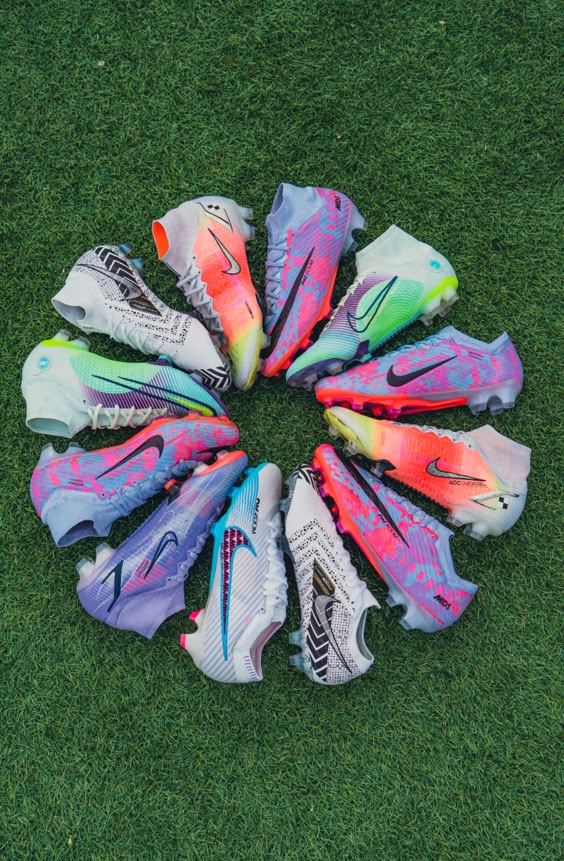
Your league’s rulebook decides this fight before you even step on the field. The regulations exist for concrete safety reasons, not arbitrary preference.
Baseball Rule Landscape:
- Youth Leagues (Little League, etc.): Metal cleats are almost universally banned. The reason is the close-contact play at bases and the catcher’s proximity to the batter. A metal spike to an ankle or hand causes a deep, jagged cut.
- High School & Above: Metal cleats are typically permitted. The assumption is that skill levels are higher, and players understand the risks.
- Turf Fields: Many complexes prohibit metal spikes to protect the expensive synthetic surface. Turf shoes or molded cleats are mandatory.
Soccer Rule Landscape:
- FIFA Laws of the Game: Law 4 states that a player must not use equipment that is dangerous to themselves or another player. The referee has full discretion.
- Metal Spikes: Are considered dangerous equipment and are banned at all levels of organized soccer.
- Stud Length: Studs must not be longer than 11mm (for FG cleats) and must be circular at the end. Referees check this pre-match. Too long, and you’re sitting out.
- Detachable Studs: Allowed, but the stud itself must be made of a compliant material (plastic, rubber, aluminum). The referee will inspect for sharp edges.
I have seen a talented U16 striker sent off the field minutes before kickoff because his new cleats had one slightly chipped, sharp-edged stud. The ref ran a finger over it, felt a burr, and that was that. No game. The soccer vs football cleats legality issue is taken that seriously.
TL;DR: Check your rulebook first. A $150 pair of metal cleats is worthless if your baseball league bans them. A pair of soccer cleat stud configurations with over-long studs will get you carded.
4. Material and Construction: Where the Cleat Meets the Foot

The upper material dictates touch, durability, and water management. The priorities diverge sharply between sports.
Soccer Cleat Materials:
The focus is on a barefoot-like feel for ball control. Thin, pliable materials are king.
1. Kangaroo Leather: The gold standard. It molds perfectly to your foot shape, provides sublime touch, and is naturally water-resistant. It requires maintenance, conditioning after wet games to prevent cracking.
2. Synthetic Leather (e.g., Nike Flyknit, Adidas Primeknit): Consistent in all weather, lighter, and requires zero break-in. Offers a precise, sometimes harsher, touch. It won’t stretch much.
3. Mesh & Speed Facades: Used on ultra-lightweight speed cleats. Prioritizes weight reduction over protection or durability.
The debate between leather soccer cleats and synthetic is a classic. Leather gives you a glove; synthetic gives you a shell.
Baseball Cleat Materials:
The focus shifts to durability, toe protection, and stability.
1. Full-Grain Leather: Durable, offers some water resistance, and molds over time. Common on higher-end models like the Mizuno Pro Metal.
2. Synthetic Leather: Used for easy cleaning, color retention, and to keep costs down. Less breathable.
3. Engineered Knit Uppers: Newer feature, as seen on the Mizuno Dominant Knit 2, for lightweight breathability.
4. The Toe Drag Guard: This is critical. Pitchers and right-handed hitters drag their back foot during delivery or swing. A reinforced toe cap or external abrasion patch (like Nike’s Drag-On tech) adds weeks of life to the cleat. You will not find this on a soccer cleat.
The interior construction also differs. Baseball cleats often feature more structured ankle collars and heel counters for stability during lateral moves in the field. Soccer cleats trend toward lower collars for unrestricted ankle mobility.
5. Sport-Specific Performance Features

High-end cleats from both sports incorporate technology aimed at their unique demands. These are not marketing gimmicks; they address documented performance gaps.
Soccer Cleat Tech:
- Lacing Systems: Off-center laces (like on the Adidas Copa) create a larger, smoother striking surface.
- Textured Uppers: Micro-dimples or fins (Nike’s ACC, Adidas’s Control Skin) are designed to grip the ball surface for added spin on passes and shots.
- Ankle Support: While less common, some models offer compression-style socks or padded collars for lockdown.
Baseball Cleat Tech:
- Cushioning Systems: This is huge for baseball, where players stand for long periods. Nike React foam, Zoom Air units, New Balance FuelCell, and Mizuno Enerzy midsoles are designed to reduce leg fatigue over a double-header. A systematic review of training modes underscores how athlete fatigue directly impacts explosive performance, cushioning mitigates that.
- Split Plates: Some outsoles (Nike Diamond Standout) have a split in the forefoot plate. This allows more natural flexion when running, theoretically increasing speed.
- Ankle Support: Mid-cut options, like some Under Armour models, are popular for infielders who value extra stability during quick stops.
The performance table below shows how these features map to on-field actions:
| On-Field Action | Soccer Cleat Response | Baseball Cleat Response |
|---|---|---|
| Sharp 90-Degree Cut | Bladed or conical studs provide lateral bite and release | Molded lugs may slip; metal spikes can lock and cause injury |
| Explosive Forward Sprint | Forefoot studs designed for traction on grass/turf | Metal spikes or aggressive lugs dig into dirt for push-off |
| Long-Duration Standing | Minimal cushioning, focused on feel | Advanced foam cushioning (React, Enerzy) to combat fatigue |
| Ball Strike (Kick/Swing) | Thin, textured upper for feel and spin | Reinforced toe area protects during foot drag; stiff plate for energy transfer |
I coached a high school player who used his baseball molded cleats for a casual soccer practice. On his third cut, the lateral lugs sheared right off the soleplate on the firm ground. The pattern wasn’t built for that shear force. He finished practice in socks.
How to Choose: Your Decision Checklist
Stop overthinking it. Follow this sequence.
1. Sport First: Are you playing soccer or baseball? This is not negotiable. Do not cross over.
2. Surface Second: Identify your primary surface.
* Soccer: Natural Grass → FG Cleats. Wet Grass → SG Cleats. Artificial Turf → AG or turf soccer cleats.
* Baseball: Natural Grass/Dirt → Metal or Molded Cleats (check league rules). Artificial Turf → Turf Shoes or Molded Cleats.
3. League Rules Third: Pull the rulebook. If it says “no metal,” the decision is made for you.
4. Fit Fourth: Try cleats on in the afternoon when feet are swollen. They should be snug with no heel slip. Remember, leather soccer cleats will stretch; synthetic ones will not.
5. Feature Last: Now consider cushioning, toe guard, or upper texture based on your position and personal needs.
Frequently Asked Questions
Can I wear baseball cleats for soccer if I’m just practicing?
No. The injury risk is too high. The traction pattern is wrong for cutting, which stresses your ankles and knees. The materials are often too stiff for proper ball feel. It’s a good way to turn an ankle or develop foot pain.
Why are metal cleats allowed in baseball but not soccer?
Baseball has less full-body, ground-level contact. The dangerous contact with metal spikes is mostly limited to slides at bases. Soccer involves constant tackling, kicking, and close ground combat where a metal spike is a weapon. The culture of the sports and their rule-making bodies (FIFA vs. MLB/USA Baseball) developed with these different risk profiles.
My son plays both baseball and soccer. Do I need two pairs?
Absolutely. This is not an area to save money. One pair of indoor soccer shoes and one pair of molded baseball cleats might cover both if he only plays soccer indoors and baseball on turf. But for outdoor grass, you need two specialized pairs. The performance and safety gap is real.
Are turf shoes the same for both sports?
They are similar but not identical. Baseball turf shoes often have a more robust toe guard. Soccer turf shoes prioritize a low-profile, flexible sole for better ground feel. You can sometimes get away with a soccer turf shoe for baseball practice, but not the other way around.
How long should cleats last?
For a competitive player, soccer cleats last one full season (8-10 months) before the studs wear down or the upper breaks down. Metal baseball cleats need the spikes replaced every season, but the upper can last two. Molded baseball cleats might last two seasons if not used daily. Rotating two pairs doubles the lifespan of both.
Before You Go
Soccer and baseball cleats solve different problems. One is a precision instrument for controlling a ball and your body in space. The other is a traction device for generating explosive power on dirt and grass. The cleat’s stud pattern, material, and construction all follow from that core purpose.
Forget the brand name on the side. Look at the bottom. Match that pattern to your sport’s movement and your field’s surface. Check your league’s safety rules, they exist for a reason. Then prioritize a snug fit over everything else. A perfect-fitting, sport-appropriate mid-tier cleat will always outperform the wrong high-end model. Your feet, and your game, will feel the difference immediately.
I come from the “soccer heart” of Germany, the Ruhrpott. I have played, trained and followed soccer all my life and am a big fan of FC Schalke 04. I also enjoy following international soccer extensively.