Average Salary for MLS Players: The Real Numbers in
The average salary for MLS players, specifically the “Annualized Average Guaranteed Compensation,” is $688,816 for the 2026 season. However, the median salary of $352,104 is the more accurate figure for what a typical player earns, as the average is heavily inflated by a few superstar contracts like Lionel Messi’s $28.3 million deal.
Most people look at the headline average and think every MLS player is a millionaire. They aren’t. The league’s unique financial rules create a massive gap between a handful of global stars and the rest of the roster, making the median salary the number that actually matters for career planning or understanding the league’s economic reality.
This guide breaks down the 2026 MLS salary numbers from the official MLSPA data. We’ll explain the difference between base pay and guaranteed compensation, show you how the Designated Player Rule warps the average, and compare what a rookie makes versus a veteran star.
Key Takeaways
- The median guaranteed compensation ($352,104) is half the average ($688,816), proving the typical player earns far less than the headline figure suggests.
- Lionel Messi’s $28.3 million salary alone exceeds the total player payroll of 28 out of 29 MLS teams, a perfect example of how the Designated Player Rule distorts averages.
- Always look at “Guaranteed Compensation,” not just base salary, as it includes signing bonuses and marketing money, giving the true annual value of an MLS contract.
- Team spending is wildly uneven, with Inter Miami’s payroll over $54 million and Philadelphia Union’s under $12 million, highlighting vast differences in roster-building strategy.
- Salary growth is real but uneven; the average rose 9.22% from 2024 to 2026, but that growth is concentrated at the top of the pay scale.
What is the Average MLS Player Salary in 2026?
The most cited figure is the “Annualized Average Guaranteed Compensation.” For the Spring 2026 season, that number is $688,816. This comes directly from the MLS Players Association salary guide, the official and only source for this data. This figure represents the average amount every player on an MLS roster is guaranteed to earn this year from their league contract.
The MLS Players Association defines “Guaranteed Compensation” as a player’s base salary, plus any signing bonus and guaranteed bonus annualized over the term of the contract (including option years), plus any marketing bonus and any agent’s fees paid by the club. Performance bonuses are excluded because they are not guaranteed.
But that average is a statistical trap. It’s like calculating the average wealth in a room containing nine schoolteachers and Elon Musk. The median salary, the point where half the players earn more and half earn less, is $352,104. That’s the number that tells you what the guy in the middle of the roster actually takes home. The median is less than half the average, and that discrepancy is the single most important fact in MLS economics.
TL;DR: The average MLS salary is $688,816, but the median of $352,104 is the real benchmark for a typical player’s earnings, because a few mega-containts skew the average beyond recognition.
Base Salary vs. Guaranteed Compensation: What You’re Actually Paid
If you only look at base salary, you’re missing at least a third of the picture. The average base salary across MLS last year was around $350,000. Guaranteed Compensation adds a significant layer on top of that.
Here’s what gets folded into that Guaranteed Compensation number, using a hypothetical $500,000 contract:
* Base Salary: $350,000
* Signing Bonus: $100,000 (paid upfront, but averaged over a 3-year contract = ~$33,333/year)
* Marketing Bonus: $15,000
* Agent’s Fee (club-paid): $10,000
* Total Guaranteed Compensation: ~$408,333
For top players, these ancillary payments are enormous. A $10 million signing bonus spread over four years adds $2.5 million to the annual Guaranteed Comp figure before you even count the base salary. This is why the official MLSPA salary guide is essential, it’s the only place that calculates and reports this total number.
Common mistake: Comparing MLS salaries to European leagues using only base salary figures, you’re comparing apples to oranges. The guaranteed compensation model in MLS, with its heavy use of signing bonuses, often makes the total package more lucrative than the base salary suggests, especially for middle-tier veterans.
This structure is a direct result of the league’s single-entity structure, where the league owns all player contracts. Bonuses are a key tool for clubs to structure deals within the complex salary cap rules. Understanding this difference is the first step to making sense of any MLS player salary benchmarks you see reported.
How the Designated Player Rule Skews the Average
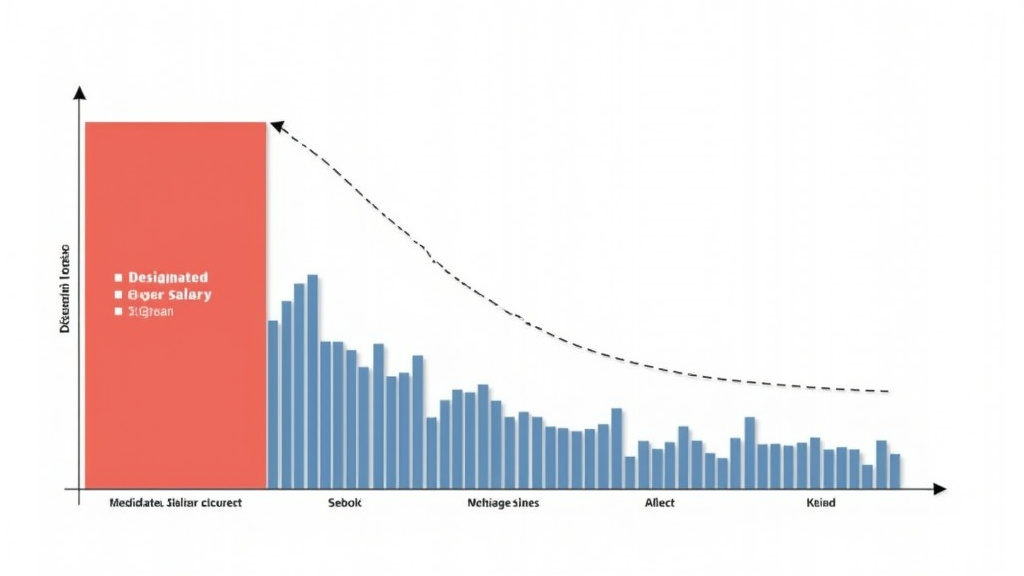
The Designated Player Rule (the “Beckham Rule”) is the engine behind the massive gap between average and median salary. It allows clubs to sign up to three players whose salaries exceed the maximum budget charge, with only a portion counting against the salary cap. This rule is why you can have Lionel Messi and a rookie on the same team.
The effect is staggering. In 2026:
* Lionel Messi (Inter Miami): $28,333,333 in Guaranteed Compensation.
* Son Heung-min (LAFC): $11,152,852.
* Only 36 players (3.9% of the league) earn $3 million or more.
* Only 133 players (14.5%) earn $1 million or more.
Messi’s salary alone is greater than the total combined Guaranteed Compensation for the entire rosters of 28 other MLS teams. When you add a number that large into an average, it pulls the entire league’s figure upward. The median salary, which simply finds the middle player, ignores these astronomical outliers and gives you a feel for the league’s rank-and-file.
This concentration of spending on a few high-value MLS stars fundamentally shapes team strategy and league perception. It creates the glamour that drives headlines, but it also means the economic experience for the majority of players is very different.
| Player Tier | Approx. Number of Players | % of League | Impact on Average Salary |
|---|---|---|---|
| Designated Players (Top Tier) | ~36 | 3.9% | Heavily Inflates |
| Million-Dollar Earners | 133 | 14.5% | Moderately Inflates |
| Players Earning Median ($352k) or Below | ~460 | 50% | Deflates / Balances |
TL;DR: The Designated Player Rule allows for superstar salaries that massively inflate the league average. The median salary filters out this distortion and shows what the typical professional in MLS actually earns.
MLS Team Payrolls: From Miami to Philadelphia
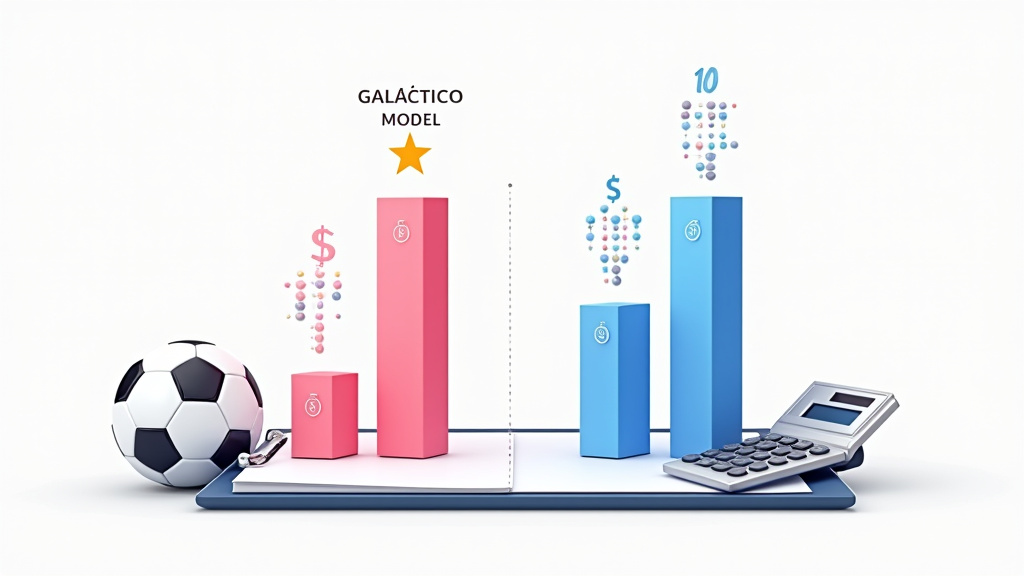
Team spending is not just uneven; it’s a chasm. How a club uses its Designated Player slots and allocates its total salary budget defines its entire competitive approach.
Inter Miami, driven by the Messi effect, has a total guaranteed compensation of $54,574,541. LAFC and Atlanta United follow as the other big spenders. At the other extreme, the Philadelphia Union operates with one of the league’s lowest payrolls at $11,696,829. Their highest-paid player earns $847,600, less than 3% of Messi’s salary.
This disparity highlights two valid roster-building philosophies within the MLS single-entity system. One is the “galáctico” model: invest heavily in two or three global stars to drive ticket sales, jerseys, and moments of brilliance. The other is the “moneyball” model: spread resources more evenly across the roster, develop academy talent, and build a cohesive, deep team that can grind through the long MLS season games.
I’ve followed leagues with promotion and relegation my whole life, where financial disparity often leads to the same teams winning. MLS doesn’t have that pressure, but this payroll gap is creating its own kind of hierarchy. The teams that spend wisely, not just lavishly, often go deeper in the MLS playoff format.
The efficiency metric, dollars spent per point earned in the standings, tells another story. Teams like the San Jose Earthquakes have recently spent little but earned points efficiently. Meanwhile, high-spending Atlanta United has sometimes found itself near the bottom of that efficiency table. Spending big guarantees attention, but it doesn’t guarantee a supporter’s shield.
Minimum Salaries and the Path for Young Players
While the headlines focus on millions, the entry point into MLS is modest. The league has two minimum salary tiers for its senior rosters:
* Senior Roster Minimum: $113,400
* Reserve Roster Minimum: $88,025
For a young player coming out of college or an academy, that reserve minimum is the starting line. It’s a good living, but it’s a world away from the perception of soccer stardom. These players are on short-term contracts, often with club options, and their job security is tenuous. They are the players who fill out the squad, provide depth, and hope for a breakthrough.
The path from that minimum to a secure, multi-year veteran contract is the untold story for hundreds of MLS professionals. It involves outperforming your salary, staying healthy, and fitting a coach’s system perfectly. Many talented players have long careers bouncing between the $100k and $300k range, becoming reliable journeymen who understand the nuances of the MLS season format better than any star.
This end of the scale is why the median salary matters. It represents the successful outcome for that path, a player who has secured a stable spot and is earning a solid professional wage. It’s the realistic career target for most players entering Major League Soccer.
How MLS Salaries Have Grown (And What’s Next)
The financial trajectory of MLS is upward. From the Spring 2024 salary guide to the Spring 2026 guide:
* Average Guaranteed Compensation increased by 9.22%, from ~$630,000 to $688,816.
* Median Guaranteed Compensation increased by 10.1%, from ~$320,000 to $352,104.
This growth is healthy and indicates a rising financial tide. New television deals, expansion fees, and increased commercial revenue are allowing the league to raise the floor and the ceiling. The number of players crossing the $1 million threshold has ballooned in recent years, a clear sign of increased spending power.
However, this growth is not linear or evenly distributed. The new wave of media rights money might lead to another jump in the salary cap, which would lift salaries for the middle class of players. The next collective bargaining agreement will be the real determinant of whether this growth continues and how it’s shared.
When you compare this growth to the career arc of a professional, it’s meaningful. A player who entered the league five years ago has likely seen their earning potential rise significantly, provided they’ve maintained their performance level. This growth is a key factor in improving the league’s overall quality and attracting talent in its prime, rather than only at the career longevity tail end.
| Metric | Spring 2024 | Spring 2026 | Growth |
|---|---|---|---|
| Average Guaranteed Compensation | ~$630,000 | $688,816 | +9.22% |
| Median Guaranteed Compensation | ~$320,000 | $352,104 | +10.1% |
| Players Earning ≥$1M | ~110 | 133 | +21% |
TL;DR: MLS player salaries are growing at nearly 10% every two years, with the median rising slightly faster than the average. This trend suggests a strengthening league, but the benefits still accrue disproportionately to players at the top of the scale.
How MLS Pay Compares to Other Leagues
This is the question that always comes up, especially from fans used to European football. The short answer: MLS is a solid middle-class league globally, but it’s not in the top tier of spenders.
The average guaranteed compensation of $688,816 (or the median of $352k) places MLS above most leagues in the Americas, like Liga MX or the Argentine Primera, but well below the “Big Five” European leagues. The average salary in England’s Championship (second tier) is likely higher than the MLS median. As noted in online discussions, an average player in France’s Ligue 2 might earn a salary comparable to the MLS median.
This comparison is crucial for understanding the league’s global market position. MLS can attract elite stars at the end of their careers with massive DP contracts, and it can be a very attractive destination for solid professionals from second-tier European leagues or South America. However, it does not yet compete financially for the prime-age stars heading to the Premier League or Bundesliga.
The lack of promotion and relegation in the North American system creates a different kind of financial stability that allows for this specific salary structure. Teams aren’t spending out of fear of dropping into a lower division; they’re spending based on a controlled budget within a closed system. This is a fundamental league format difference that shapes every dollar spent.
Frequently Asked Questions
What is the minimum salary in MLS?
The minimum base salary for a player on the senior roster is $113,400. For a player on the reserve roster, it’s $88,025. These are base salaries; guaranteed compensation could be slightly higher if a signing bonus is involved.
Who is the highest-paid MLS player?
Lionel Messi of Inter Miami is the highest-paid player by a massive margin. His Guaranteed Compensation for 2026 is $28,333,333. The next highest is Son Heung-min of LAFC at $11,152,852.
How often are MLS salaries updated?
The MLS Players Association (MLSPA) publishes an official salary guide twice a year, typically in the spring and fall. These releases provide the only authoritative snapshot of player compensation across the league.
Do MLS salaries include performance bonuses?
No. The reported “Guaranteed Compensation” figure specifically excludes performance bonuses (like goals scored or games won) because they are not guaranteed. It includes only base salary, signing bonuses, marketing bonuses, and agent fees.
What is a Designated Player in MLS?
Designated Player is a player whose total salary and transfer fee exceed the maximum budget charge for the team. Clubs are allowed up to three DPs, and only a fixed portion of their compensation counts against the team’s salary cap. This rule is how teams afford superstar salaries.
When does the MLS season end for salary calculation?
The salary guides are snapshots in time. The spring guide reflects rosters at the start of the regular season conclusion, while the fall guide accounts for mid-season transfers. A player’s annualized compensation is calculated based on their contract at that moment.
The Bottom Line
Forget the headline average of $688,816. The number that defines the economic reality of a career in Major League Soccer is the median salary of $352,104. That’s the earnings benchmark for a established, reliable professional. The league’s growth is real, with salaries rising roughly 10% every two years, but that growth is top-heavy, fueled by the Designated Player Rule.
Your takeaway should be this: MLS is a league of extremes. It has a handful of the world’s highest-paid athletes and hundreds of players earning solid but unspectacular professional wages. The path from a $88,025 reserve minimum to a multi-million dollar DP deal is rare and difficult. Understanding this split, between the glamorous average and the grounded median, is the key to understanding the business of soccer in North America.

I come from the “soccer heart” of Germany, the Ruhrpott. I have played, trained and followed soccer all my life and am a big fan of FC Schalke 04. I also enjoy following international soccer extensively.