Rafael Leão World Cup Profile: Stats, Impact & Analysis
Rafael Leão’s World Cup profile is defined by his explosive impact as Portugal’s primary wide threat. At 26, he will be in his physical prime, combining elite speed and dribbling to force defensive overhauls. His unique skillset creates a tactical puzzle opponents must solve to contain Portugal’s detonator.
To build a complete profile of Rafael Leão for the 2026 World Cup, focus on three things: his projected physical prime at age 26, his evolution as Portugal’s primary wide threat, and the tactical puzzle his unique skillset presents for opponents. The keyword is his impact, not just his goal tally.
Most profiles list his height and club. They miss the real story. The story is about a player whose mere presence on the team sheet forces opposing managers to rewrite their defensive plans. Portugal has technicians. They have controllers. Leão is the detonator.
This guide breaks down the numbers, the tape, and the tactical reality of Rafael Leão heading into the 2026 tournament. We will look at his statistical growth, his defined role under Roberto Martínez, and the specific match-ups where he becomes Portugal’s most dangerous weapon.
Key Takeaways
- Leão will be 26 during the 2026 World Cup, entering his absolute athletic prime with over 50 senior caps for Portugal.
- His value is defined by elite dribbling and progressive carries, not just goals; he ranks in the 99th percentile for successful take-ons among wingers.
- Portugal’s tactical system under Martínez is built to isolate him in one-on-one situations on the left flank, making him the team’s primary mechanism for breaking down deep defenses.
- His main challenge is consistency over a full tournament; his performances in the 2022 World Cup and Euro 2024 show flashes of brilliance mixed with quiet periods.
- A long-term contract with AC Milan until 2028 ensures club stability and continuous high-level competition before the World Cup.
Rafael Leão: The 2026 World Cup Numbers
Forget speculation. The foundation of any complete profile is verifiable data. By the time the 2026 World Cup kicks off, Rafael Leão will be 26 years old—a footballer’s peak physical window. He will arrive with the experience of a 2022 World Cup, a UEFA Euro 2024, and a UEFA Nations League title won in 2025. His Wikipedia biography of Rafael Leão details this journey from youth prospect to established star.
Current projections place him at over 50 caps and double-digit international goals for Portugal. His club situation is locked down, with a contract at AC Milan running until June 2028. This stability matters. It means his final season before the World Cup will be played at the highest level of European club football, without the distraction of transfer speculation.
Rafael Alexandre da Conceição Leão, born 10 June 1999, is a Portuguese professional footballer who plays as a left winger for Serie A club AC Milan and the Portugal national team. Standing 1.88 m (6 ft 2 in), he is known for his dribbling, speed, and acceleration. He scored two goals in the 2022 FIFA World Cup.
Let’s talk about the 2024-25 season as a precursor. For AC Milan, he recorded 8 goals and 8 assists in Serie A. In the Champions League, he added 3 goals and 1 assist. These are not MVP numbers. They are contributor numbers. The real story is in the underlying metrics that explain how he contributes.
| Metric Category | Leão’s Percentile Rank (vs. Wingers) | What It Means for Portugal |
|---|---|---|
| Progressive Carries | 99th | He single-handedly advances the ball into dangerous areas, relieving midfield pressure. |
| Successful Take-Ons | 99th | He beats his marker consistently, forcing defenses to collapse and create space elsewhere. |
| Shot-Creating Actions | 92nd | Even when not scoring, he is the catalyst for most dangerous attacking moves. |
| Tackles (Defensive) | 12th | He is not a defensive winger; his job is to stay high and conserve energy for attacks. |
TL;DR: Leão’s statistical profile is that of an elite ball-carrier and dribbler, not a pure finisher. Portugal’s system will be built to maximize these specific strengths.
The Leão Effect: Speed, Size, and Dribbling
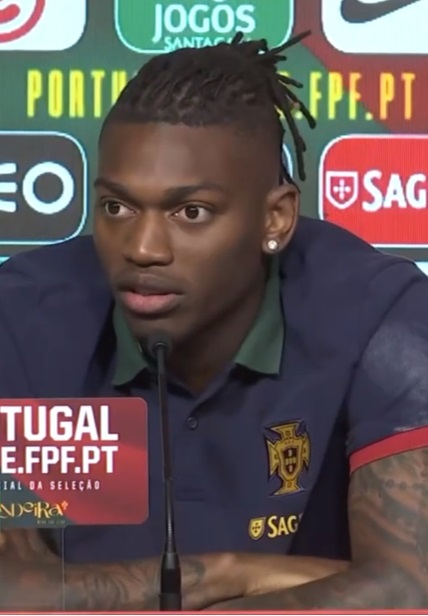
Photo: Agência Lusa / Wikimedia Commons / CC BY 3.0

Most fast wingers are small. Think of classic roadrunners. Leão breaks that mold. At 1.88m, he has the frame of a center-forward but the acceleration of a sprinter. This combination creates a unique physical mismatch. Fullbacks used to marking agile, slight wingers suddenly have to contend with a player who can outmuscle them and outrun them.
His dribbling style is direct. He uses a heavy first touch to push the ball past a defender and then unleashes his long stride to recover it. It is not about intricate footwork in tight spaces. It is about using power and pace to get from the halfway line to the byline in five touches. This makes him a constant outlet for transition moments, a quality that separates good tournament teams from champions.
I remember watching him in a Champions League knock-out match a couple of seasons ago. The opposing fullback, a seasoned international, had him pinned for sixty minutes. Then Leão received the ball on the left touchline, dropped a shoulder, and was gone. Three seconds later he was cutting the ball back across the six-yard box. The defender was still turning. That’s the effect. He only needs to win one duel to change a game.
This places him among the most unique fastest players in 2026. His top speed is elite, but it’s the acceleration from a standing start while shielding the ball that is truly devastating. Forwards with his height simply aren’t supposed to move like that. Defenders don’t have a blueprint for it.
Tactical Role and Fit in Portugal’s 2026 System
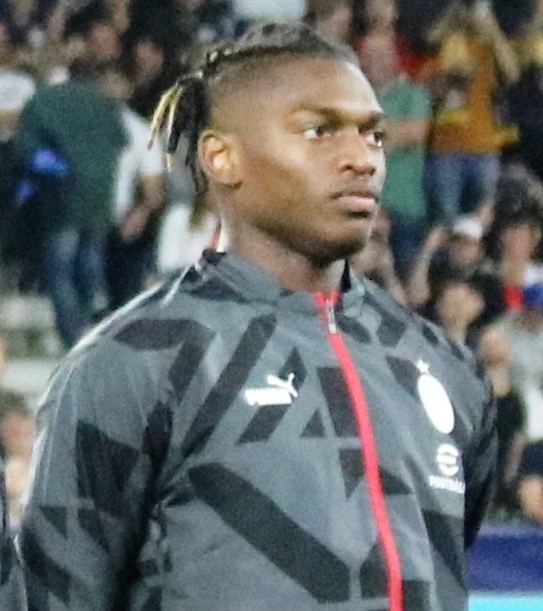
Photo: Werner100359 / Wikimedia Commons / CC BY-SA 4.0
.jpg)
Under manager Roberto Martínez, Portugal typically dominates possession. They field midfielders like Bruno Fernandes and Bernardo Silva who thrive between the lines. The tactical problem this creates is compact opposition defenses. This is where Leão is not just a player, but a system requirement.
His primary role is to provide width and stay high on the left flank. By pinning the opposing right-back, he creates the space in the half-space that Fernandes loves to exploit. When the ball is switched to him, his mandate is simple: isolate the defender and beat him. Every time he does this, he forces a second defender to engage. That disrupts the entire defensive shape.
Common mistake: Judging Leão solely on goals and assists — his mere presence on the left wing creates the gaps that Portugal’s midfield creators need to operate. If he draws two defenders, someone else is unmarked.
Martínez may also use him as a central striker in certain scenarios, leveraging his height and strength against slower center-backs. This tactical flexibility is a bonus. His main function, however, is as a wide threat. His performance is less about individual brilliance and more about how his skills unbalance the opponent to benefit the team’s overall advanced tactical principles.
This role requires specific physical management. The explosive sprints and dribbles are taxing. A smart soccer player nutrition and recovery plan is critical to keep him performing at peak level every four days during a tournament. This is where Portugal’s medical and fitness staff earn their keep.
The Consistency Question: Tournament Mentality

Photo: Calciopedia / Wikimedia Commons / CC BY-SA 4.0

Talent has never been the question. Application has. The narrative around Leão has always included a “but”. He’s fantastic, but… The “but” refers to his focus and output over a sustained period. Major tournaments are a seven-game grind, not a one-off showcase.
He scored twice in the 2022 World Cup, showing he can deliver on the biggest stage. His performances at Euro 2024 were more intermittent—glimpses of threat followed by quiet halves. This pattern is what opponents will study. They will hope to frustrate him early, to see if his influence wanes.
His growth at AC Milan has been about adding end product to his game. The assists are coming more regularly. He is making more deliberate decisions in the final third instead of relying purely on instinct. This maturity is the single most important factor for his 2026 impact. A consistent Leão elevates Portugal from contender to favorite. An inconsistent one makes them predictable.
I’ve seen players with his profile fade in knockout games because the defensive attention is so intense. The greats find a way. The 2026 World Cup is his audition for that category. He has the tools. The question is whether he brings them every single time the whistle blows.
This journey from talented prospect to reliable star is what defines a player’s entry into the list of dominant players of 2026. It’s not about one highlight reel; it’s about 90 minutes of relentless, effective threat.
Strengths, Weaknesses, and the 2026 Scouting Report
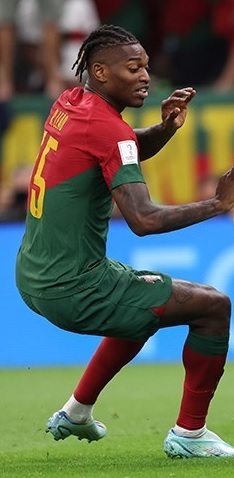
Photo: Hossein Zohrevand / Wikimedia Commons / CC BY 4.0

A complete profile demands honest assessment. Let’s break down what he does brilliantly and where opponents will look to exploit him.
Primary Strengths:
- Elite Dribbling & Carrying: The core of his game. He progresses the ball better than almost any winger in world football.
- Physical Mismatch: His combination of size and speed is rare and difficult to defend without committing multiple players.
- Space Creation: His very presence on the wing stretches defenses horizontally, creating crucial gaps for teammates.
- Improving Final Ball: His assist numbers are trending up as he learns to pick a pass after drawing defenders.
Identifiable Weaknesses:
- Defensive Contribution: He is not a willing tracker. This can leave his left-back exposed, especially against teams with attacking full-backs.
- Consistency of End Product: He can go from unplayable to peripheral within the same game. The final decision-making can still be erratic.
- Aerial Duels: For his height, he is not a dominant force in the air, which limits his utility as a target man.
- Tendency to Drift: In games where he is marked out, he can disappear from the action rather than finding new ways to influence play.
| Opponent Strategy | Likely Counter from Portugal |
|---|---|
| Double-team Leão with fullback and winger. | Quick switches of play to the right flank, exploiting the space left behind. |
| Sit deep and deny space behind the defensive line. | Use Leão as a decoy, instructing him to cut inside and allow the left-back to overlap. |
| Target his side with quick counter-attacks. | Pair him with a defensively robust left-back and instruct a midfielder to provide cover. |
Understanding these strengths and weaknesses is key for any fan or analyst. It moves the discussion beyond hype into the realm of practical modern football tactics. It also highlights why he is sometimes still listed among underrated talents—his most valuable contributions aren’t always captured by basic stats.
Historical Context and Legacy Building
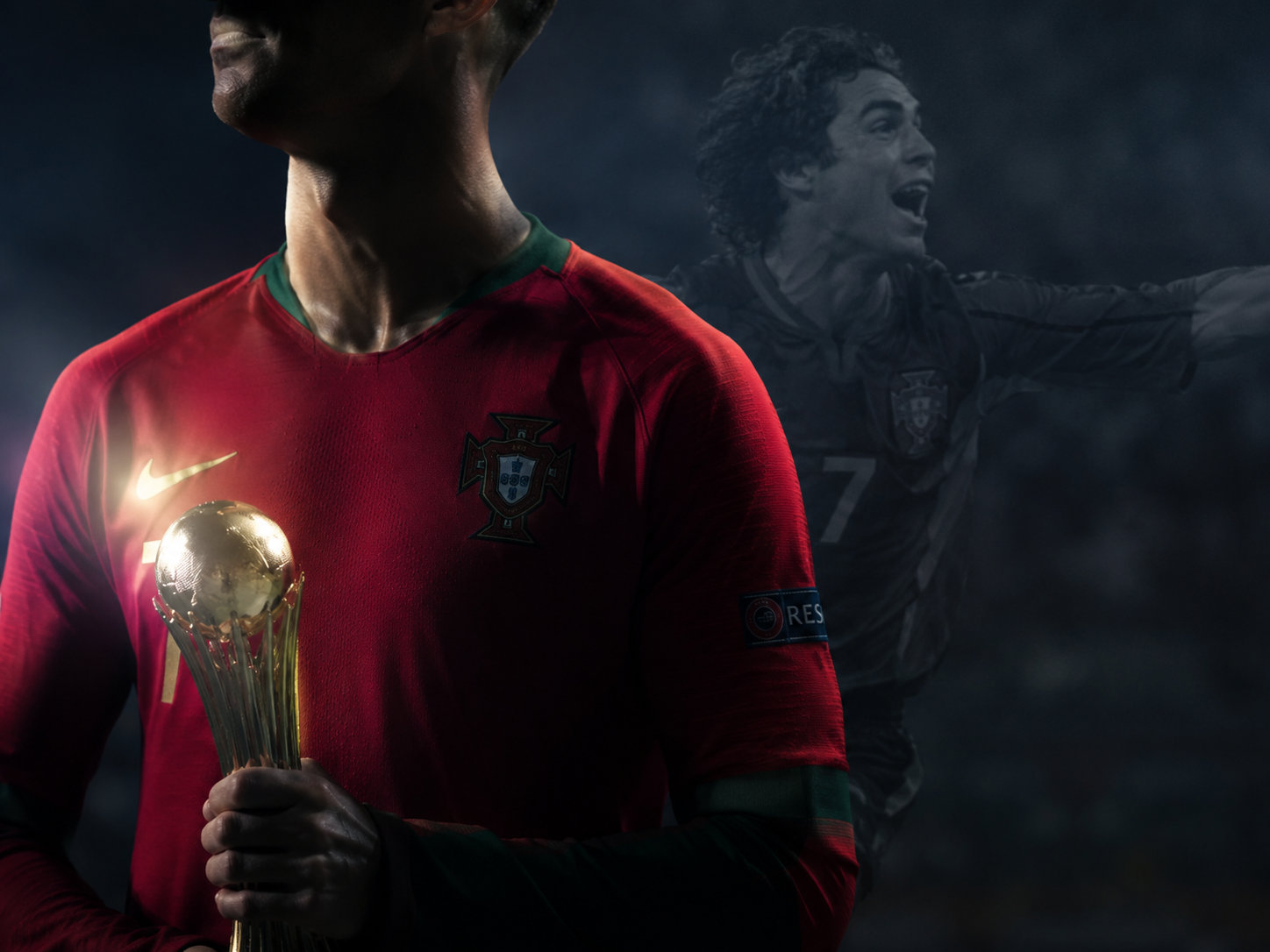
Leão’s mission at the 2026 World Cup is twofold: help Portugal win, and cement his own legacy. Portuguese football is defined by iconic wingers. He is the next in that lineage. A standout tournament would place him firmly in the conversation with the nation’s greats.
His story is also one of modern development. He is a product of Sporting CP’s academy, moved to Lille, and then to AC Milan. This path of progressive challenges at bigger clubs has prepared him for the international spotlight. It’s a different journey from the teenage prodigies who make youngest professional debuts, but arguably more sustainable for long-term success.
Comparisons to other global stars are inevitable. His style differs from classic famous Argentine players like Lionel Messi, who relied on close control. He is more comparable to a taller, stronger version of early Cristiano Ronaldo at Manchester United—a direct, powerful runner whose game is built on devastating transitions.
The 2026 World Cup represents his best chance to define his career narrative. At 26, he will have the experience of previous tournaments and the physical gifts of his prime. The stage is set for him to transition from a player of potential to a player of legacy. It requires seven big games. That’s the contract.
Frequently Asked Questions
How old will Rafael Leão be at the 2026 World Cup?
He will be 26 years old. Born on June 10, 1999, he will be in what is widely considered the peak physical age for a professional footballer during the tournament.
What is Rafael Leão’s primary position for Portugal?
His primary position is left winger. Portugal manager Roberto Martínez uses him as a wide forward to stretch defenses and create one-on-one opportunities. He can also play as a center forward in certain tactical setups.
How many World Cup goals does Rafael Leão have?
He scored two goals in the 2022 FIFA World Cup in Qatar. He found the net against Ghana and Switzerland, demonstrating his ability to perform on the biggest stage.
What are his main strengths as a player?
His overwhelming strengths are his dribbling ability and progressive ball-carrying. Standing 1.88m tall, he combines exceptional pace and acceleration with a powerful frame, making him a unique physical mismatch for most fullbacks. He ranks in the 99th percentile for successful take-ons among wingers.
Is consistency still an issue for Leão?
It remains the central question of his profile. He has shown he can be unplayable in moments, as seen in the 2022 World Cup, but his influence can wane within games or across a tournament, as noted during parts of Euro 2024. His development at AC Milan suggests he is adding more end product, but delivering over a full 7-game World Cup is his next challenge.
The Bottom Line
Rafael Leão is not just another player on Portugal’s team sheet. He is the tactical key that unlocks their possession-based system. His profile for the 2026 World Cup is that of a player entering his prime, armed with major tournament experience, and carrying a specific, devastating skill set.
Focus on his ability to beat defenders and carry the ball. That is his currency. His success will be measured less by his personal goal tally and more by how much defensive chaos he creates for others to exploit. The physical tools are world-class. The consistency over two intense tournament weeks is the final box to check.
If he brings his Milan form to the national team stage and maintains it, Portugal has one of the most potent weapons in the entire tournament. If not, they become a more predictable, less dynamic side. The 2026 World Cup will be the definitive chapter in the story of Rafael Leão.
I come from the “soccer heart” of Germany, the Ruhrpott. I have played, trained and followed soccer all my life and am a big fan of FC Schalke 04. I also enjoy following international soccer extensively.