Understanding Soccer’s Target Man vs Poacher Striker Roles
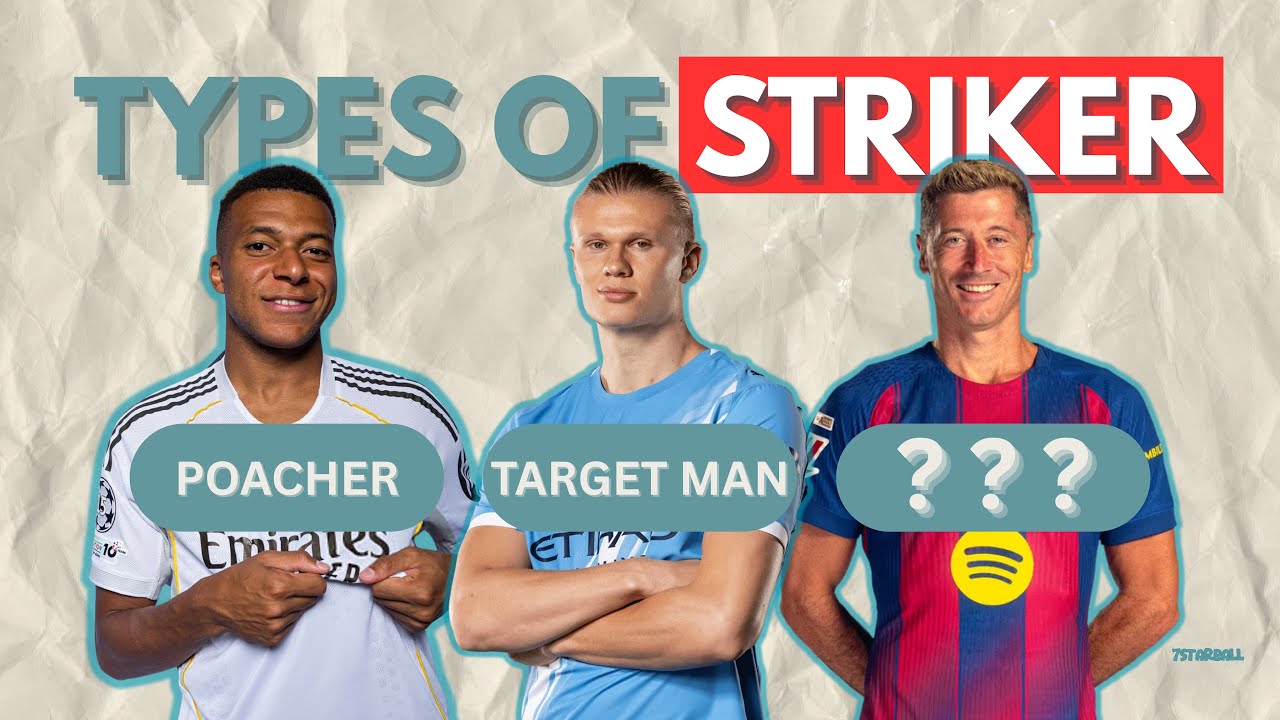
The target man vs poacher striker difference is tactical function. A target man is a physical pivot who links play with his back to goal, creating for teammates. A poacher is a predatory finisher who operates facing goal, using movement and instinct to score from inside the penalty area.
The core difference between a target man and a poacher striker in soccer is their function: a target man is a tactical pivot who uses physicality to link play and create for others, while a poacher is a goal-hunting specialist who uses positioning and instinct to finish chances inside the box. The target man operates with his back to goal, often outside the area; the poacher faces the goal, lurking within it.
Most confusion comes from judging both roles purely by goals scored. You see a tall forward scoring headers and call him a target man. You see a forward tapping in rebounds and call him a poacher. That’s surface-level. The real split is in their first touch: a target man’s first touch is a lay-off or a shield. A poacher’s first touch is a shot.
This guide breaks down the physical demands, tactical dependencies, and modern hybrids of each role. You’ll learn which formations unlock them, which historical players defined them, and how to identify which one your team actually needs.
Key Takeaways
- A target man’s value is measured in aerial duels won and second-ball possession; a poacher’s value is measured in expected goals (xG) per shot and conversion rate.
- The poacher is terminally dependent on service. Without a creative midfielder or crossing winger, they become a spectator.
- Modern elite strikers like Harry Kane and Karim Benzema are hybrids, blending the hold-up play of a target man with the movement and finishing of a poacher.
- The 4-4-2 formation is the classic home for a target man partnership, while a single poacher often leads the line in a 4-2-3-1.
- Coaches use a target man as a pressure valve against a high press; they use a poacher as a dagger against a low defensive block.
What’s the Difference Between a Target Man and a Poacher?
Forget height. The divide is action. A target man engages in the build-up phase, often 30 yards from goal. A poacher exists for the finishing phase, within 12 yards of goal.
A target man is a football striker who primarily acts as a tactical pivot, using physical strength and aerial dominance to receive long passes, hold off defenders, and link play with midfielders or second strikers. Their role is creation through occupation, often sacrificing personal scoring chances to generate space and opportunities for teammates.
The target man is your outlet. When the press is on and your center-backs have no passing lanes, they look for the big man’s chest or forehead. He doesn’t need to turn. He just needs to kill the ball’s momentum and lay it off to a runner. Olivier Giroud’s career, especially at Arsenal and France, is a masterclass in this. His job wasn’t to be top scorer; it was to bring Antoine Griezmann and the wide players into the game.
The poacher is the opposite. Their involvement ends the move.
| Aspect | Target Man | Poacher |
|---|---|---|
| Primary Location | Between midfield and penalty area, back to goal | Penalty area, facing goal |
| First Touch Intent | Control and distribute (lay-off, flick-on) | Shoot |
| Key Physical Trait | Strength, aerial reach | Acceleration, balance |
| Key Mental Trait | Spatial awareness for teammates | Anticipatory instinct for ball trajectory |
| Defensive Role | Presses center-backs, defends set-pieces | Minimal; conserves energy |
| Classic Example | Olivier Giroud | Filippo Inzaghi |
A poacher’s genius is invisible until the ball hits the net. They spend 89 minutes seeming disconnected, then score the winner from two yards. Their movement isn’t about dragging defenders, it’s about escaping them. They drift into the blind spot between center-back and full-back, or hover just behind the defensive line, waiting for the through ball or the spilled save.
TL;DR: Target men build attacks; poachers end them. One is a builder, the other a finisher.
The Target Man: Build-Up and Brute Force
A proper target man changes how a defense sets up. They must commit a dedicated marker, often the strongest center-back. This creates a chain reaction. It leaves space elsewhere.
The role has evolved from a static battering ram. The old English “big man up top” just won headers. The modern version, like Bayern Munich’s Harry Kane, is a complete footballer. He has the frame to hold off Niklas Sule in training, but also the passing range to hit a 40-yard diagonal. The modern target man is a playmaker who happens to be built like a fortress.
Common mistake: Using a target man as just a goal threat, you waste their chief asset, which is their ability to occupy two defenders and create a numerical advantage in midfield for your advancing playmakers.
Your target man must be fit to wrestle. A full match of back-to-goal duels is exhausting. They will take kicks to the ankles, elbows to the ribs, and constant shirt-tugging. They need the stamina to press when the ball is lost, too. A lazy target man is a liability, because they lose the ball and don’t recover.
The best ones have soft feet. Didier Drogba wasn’t just powerful; his first touch on a bouncing ball could kill it dead. That control under pressure is what separates a good target man from a mere tall player. It’s why some teams look at a tall youth prospect and wrongly assume he can play the role. They forget the technical layer.
Why the Target Man Never Dies
Tactics go in cycles. The rise of possession-based football and the false nine position made the target man look obsolete a decade ago. But it came roaring back. Why?
High pressing. When teams like Jurgen Klopp’s Liverpool or Pep Guardiola’s Manchester City swarm your midfield, the safest pass is over it. A competent target man gives you a vertical escape route. One long ball can beat three pressing players. This makes them a critical tactical counter-punch, a fact detailed in many an advanced tactics guide.
Modern defenders are also different. They are often faster and more technical, but sometimes smaller and less physical. A brutish target man presents a specific problem they rarely face. He is a stylistic mismatch.
The Poacher: Instinct and Invisibility
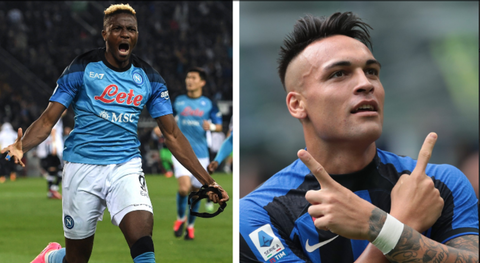
Poachers are predators. They operate on stolen space and split seconds. Their most important skill isn’t shooting, it’s starting their run a half-step before the defender realizes the pass is coming.
This role is the purest expression of a striker’s selfishness. A poacher will shoot from a tight angle when a teammate is open for a tap-in. That’s not a mistake to them; it’s a percentage play. They back their own finishing over a pass. This mentality is non-negotiable.
I once coached a youth player with a nose for goal but a conscience. He’d square the ball when he should have shot. We drilled it out of him. “Your job is to score, not to be polite.” He won the league golden boot the next season. The team’s creative midfielder hated him for a month, then got an assist record feeding him.
Poachers live and die by service. Put Erling Haaland in a team that doesn’t cross or play through balls, and his threat plummets. He needs a Kevin De Bruyne. This dependency is the role’s greatest weakness. It’s why understanding your team formations is crucial, a poacher stranded in a stagnant system is wasted.
Their defensive contribution is a polite fiction. They might make a token press, but their real work is mental. They are reading the goalkeeper’s positioning, tracking which defender is tiring, and calculating where a cross might deflect. This mental fatigue is real. It’s why poachers often subbed off late in games, their concentration, not their legs, goes first.
TL;DR: A poacher is a specialist weapon. You deploy them in the right system, feed them chances, and let them do the one thing they’re brilliant at.
Which Formations Suit Each Striker?
The formation dictates the striker’s diet. Some setups provide a feast of chances; others leave them starving.
The 4-4-2 formation is the target man’s natural habitat. It provides a strike partner. The classic pairing is “big man, little man.” The target man wins the flick-on or holds the ball, and the faster, agile partner runs off him. This partnership is the engine of the classic formation. It’s simple, direct, and brutally effective. Without a partner, the target man can become isolated, with no one to play the ball to.
The 4-3-3 or 4-2-3-1 formation is where you find the lone poacher. They are the tip of the spear. In a 4-3-3 formation, the width from the wingers stretches the defense, creating central gaps. The poacher’s job is to find those gaps. The 4-2-3-1 formation is even better, as the central attacking midfielder sits in the pocket behind, feeding the killer pass.
| Formation | Best For | Why It Works | Potential Pitfall |
|---|---|---|---|
| 4-4-2 | Target Man | Provides a strike partner to run off flick-ons; two banks of four offer crossing opportunities from deep. | Can become predictable; target man may be marked out by two center-backs. |
| 4-3-3 | Poacher | Wide forwards create crossing angles and pull defenders wide, opening central lanes for the poacher. | Poacher can be isolated if midfield doesn’t advance; requires high work rate from wingers. |
| 4-2-3-1 | Poacher or Hybrid | Attacking midfielder provides direct service through the lines; allows striker to focus purely on scoring. | Striker must be able to press from the front to maintain defensive shape. |
| 3-5-2 | Target Man | Two strikers supported by wing-backs providing relentless crosses; creates numerous aerial duels. | Can leave defensive flanks exposed if wing-backs are caught high. |
Choosing the wrong formation for your striker type is a common planning error. A formation comparison is a useful exercise before committing to a tactical setup. A target man in a fluid 4-3-3 might look clumsy. A poacher in a direct 4-4-2 might never touch the ball.
Modern Hybrids: The Best of Both Worlds
The pure archetypes are becoming rarer. The modern game demands more. Today’s elite strikers are blends.
Harry Kane is the blueprint. He has the strength and hold-up play of a classic target man. But he also has the movement and finishing of a poacher, plus the passing range of a creative number nine. He can drop deep to link play like a false nine, or stay high and attack crosses. He is a three-in-one striker.
Karim Benzema perfected this at Real Madrid. For years, he was the ultimate linking forward, sacrificing his own numbers for Cristiano Ronaldo. When Ronaldo left, Benzema’s poacher instincts emerged, and he won the Ballon d’Or. He showed that the roles aren’t fixed, they are phases of a career or facets of a complete game.
Erling Haaland is a fascinating case. He is a physical monster like a target man, but his movement is all poacher. He rarely comes deep. He pins defenders with his strength, then explodes into the space behind. He is a poacher built with target man hardware. This hybrid is the new gold standard for scouts.
These players force defenders to make impossible choices. Do you follow the target man when he drops deep? Do you hold your line against the poacher’s run? That hesitation is where goals are born.
How to Choose the Right Striker for Your Team
This isn’t about picking the “better” role. It’s about diagnosing your team’s illness and selecting the right medicine.
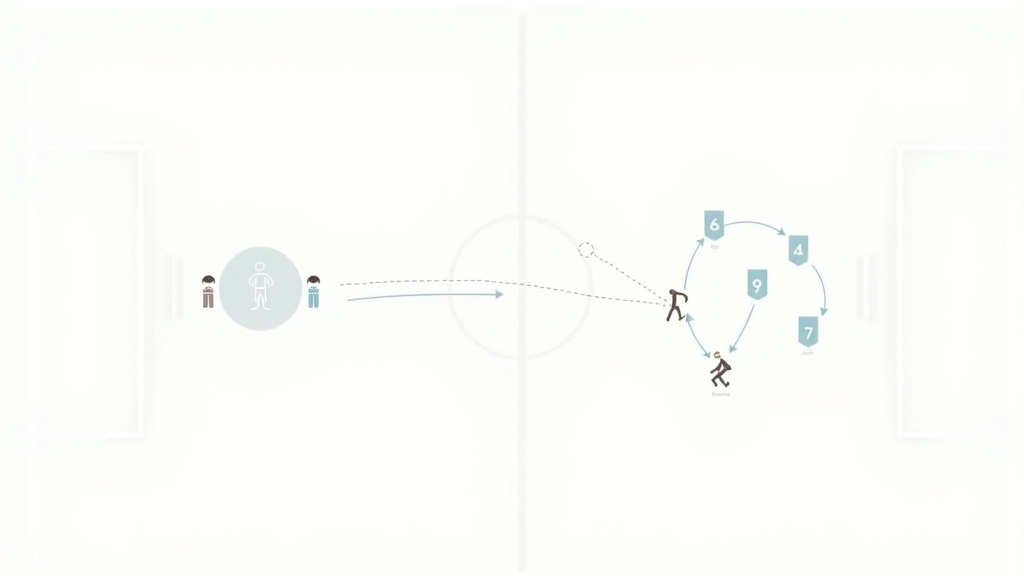
Start with your build-up. Do your defenders panic under pressure and launch it? You need a target man. Do you control midfield and thread intricate passes? A poacher awaits. Your attacking strategies must match your personnel.
Next, look at your supporting cast. A poacher requires a specific type of midfielder, a visionary passer. A target man needs runners. If you have a slow, technical midfield, a poacher will starve. If you have pacy wingers but no physical presence, a target man will give them a focal point.
Before you start: Do not force a player into a role they lack the attributes for. A technically weak tall player will not become a target man, he’ll just give the ball away. A slow, thoughtful finisher will not become a poacher, he’ll always arrive a second late. Profile honestly.
Finally, consider the opponent. Against a physically dominant defense, a poacher’s cunning might be better than a direct duel. Against a high defensive line, a target man’s ability to receive long balls in behind can be devastating. This situational thinking is the mark of mature tactical principles.
Your choice here fundamentally shapes your player organization and identity. Pick the striker that solves your biggest problem.
Frequently Asked Questions
Can a player be both a target man and a poacher?
Yes, and the best modern strikers are. Harry Kane, Karim Benzema, and Robert Lewandowski excel at both linking play and being lethal finishers in the box. This hybrid ability makes them nearly impossible to defend.
Is the poacher role outdated in modern soccer?
Not at all. While the pure, static poacher is less common, the core skills, elite positioning and clinical finishing, are timeless. Strikers like Erling Haaland and Kylian Mbappe use modern, dynamic versions of poacher movement to score prolifically. The role has evolved, not vanished.
Which role scores more goals?
Typically, the poacher will have a higher goals-per-game ratio because their entire function is scoring. However, a target man’s value often isn’t captured in goals, it’s in assists, pre-assists, and the space they create that leads to team goals. Judging them solely on goals is a mistake.
What youth attributes should I look for to develop a target man vs. a poacher?
For a target man: focus on strength training, aerial technique, first touch under pressure, and short passing. For a poacher: drill finishing from all angles, off-the-ball movement drills, reaction speed exercises, and developing a selfish scoring mentality. A good positional guide can help identify a young player’s natural inclinations.
Do I need different midfielders for each striker type?
Absolutely. A target man needs midfielders who make runs beyond him and wingers who can deliver early crosses. A poacher needs a playmaking midfielder (a “10” or a deep-lying playmaker) who can spot and execute the killer pass. Your midfield recruitment should be directly tied to your striker’s profile.
The Bottom Line
Stop looking at the size of the striker. Look at the shape of your team. The target man is a builder, a bully, and a release valve. The poacher is a sniper, a ghost, and a finisher. One starts attacks, the other ends them.
The smartest teams don’t choose one archetype forever. They develop hybrid players, or they have different strikers for different tactical puzzles. Your formation, your midfield, and your opponent should dictate your choice. Understand the difference, match the role to the need, and watch your attack click into place.
I come from the “soccer heart” of Germany, the Ruhrpott. I have played, trained and followed soccer all my life and am a big fan of FC Schalke 04. I also enjoy following international soccer extensively.