Soccer’s False Nine Position: Definition and Tactical Role
The false nine position in soccer is a center-forward who deliberately drops deep from a high starting position into midfield. This movement pulls opposition center-backs out of their defensive line, creating space for teammates to exploit. It requires a player with exceptional technical skill, intelligence, and creativity rather than just a goal-scorer’s instinct.
Most explanations get stuck on Lionel Messi and stop there. They treat it like a magic trick only he could pull off. That’s wrong. The role has a century of history and a specific, coachable logic. It fails just as often as it succeeds, and when it fails, your attack looks toothless for ninety minutes.
This guide breaks down the false nine from the grass up. We’ll cover its ancient origins, the exact player profile that makes it work, and the tactical conditions where it becomes a liability. You’ll learn why some of the best teams in the world abandon it against certain opponents.
Key Takeaways
- The false nine is a decoy striker. Its primary job is to create chaos and space for others, not just to score.
- It works best in a possession-dominant system like a 4-3-3, flanked by quick, direct wingers who can attack the space left behind.
- The player needs a unique blend of skills: playmaker’s vision, a midfielder’s composure, and a forward’s finishing.
- The tactic is vulnerable against teams that play with three center-backs, as they can cover the central space without being pulled out of position.
- Its modern popularity stems from Pep Guardiola’s Barcelona, but its tactical roots go back to the 1920s.
The Core Idea: A Striker Who Isn’t a Striker
Forget the number on the shirt. A false nine is defined by movement, not position. You line up as the central striker. The moment play builds from the back, you check away from the goal, drifting into the space between the opponent’s defensive and midfield lines. This is the “hole” or “pocket.”
The false nine is a tactical role where the designated central striker actively withdraws from the forward line into midfield during possession phases. This withdrawal creates a dilemma for opposing center-backs: follow the player and leave a dangerous gap in the defensive line, or hold their position and cede control of the midfield zone.
The defender’s choice is the entire point. If a center-back follows you, they break their defensive line. That opens a channel for a winger to cut into or a midfielder to burst through. If they stay, you receive the ball in space, turn, and now you’re facing the goal with the defense in front of you, not at your back. It turns the traditional striker-defender duel on its head.
TL;DR: The false nine’s power comes from forcing defenders into a bad choice: follow and disrupt the line, or stay and lose midfield control.
False Nine vs. Every Other Attacker (Don’t Mix Them Up)
This is where most casual observers get tangled. A false nine is not a lazy striker, a target man having a bad game, or a number 10 playing up front. The differences are in the starting point and the defensive reaction they provoke.
| Role | Starting Position | Primary Action | Defender’s Problem |
|---|---|---|---|
| Traditional Striker (True 9) | High, on the last defender | Holds the line, runs in behind | Physical battle, pace in behind |
| False Nine | High, on the last defender | Drops deep into midfield | To follow or not to follow |
| Attacking Midfielder (Number 10) | Deep, between midfield and attack | Creates from behind the striker | Marking by a defensive midfielder |
| Inverted Winger | Wide, on the touchline | Cuts inside onto strong foot | Overlap with fullback, 1v1 duel |
A number 10, like a classic trequartista, starts the play deeper. They are already in that midfield space. Their marker is usually a holding midfielder. A false nine starts high, pulling a center-back into an area they hate. That dislocation is the tactical win. Confusing these roles leads to poor team structure. You can’t have two players trying to occupy the same “hole.”
Understanding this distinction is a cornerstone of any modern soccer tactics guide. It’s also why the 4-3-3 formation is its natural home—it provides the width and midfield control to exploit the created space.
A Quick History Lesson (It’s Older Than You Think)
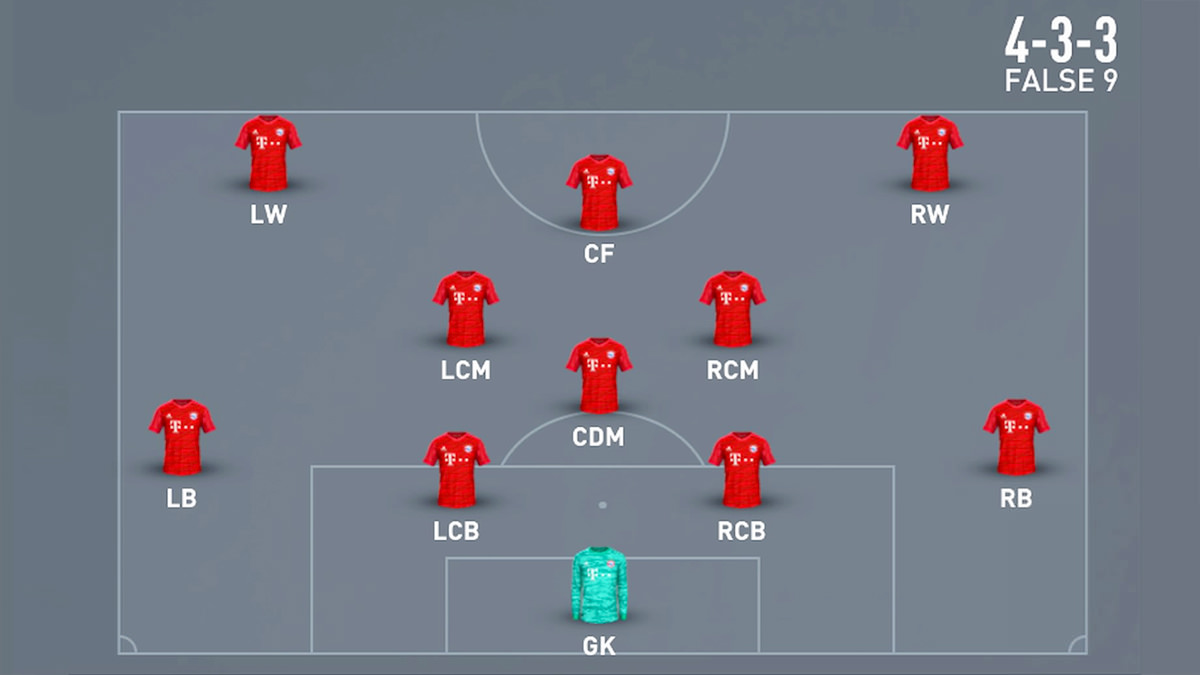
Pep Guardiola didn’t invent this. He refined it with the perfect player. The history of the false nine has deeper roots.
In the 1950s, the legendary Hungarian forward Nándor Hidegkuti would drop off the front line for the “Magnificent Magyars,” confusing English defenders who were used to a static center-forward. Go further back to the 1920s and 30s, and you’ll find Austrian and Scottish teams using a withdrawn center-forward as part of their “W-M” formation.
The modern iconic examples are clear:
1. Francesco Totti at Roma (2000s): Coach Luciano Spalletti used Totti as a “trequartista falsa.” With no outright striker, Totti dropped deep, and midfield runners like Rodrigo Taddei burst past him.
2. Lionel Messi at Barcelona (2009-2012): Guardiola’s masterstroke. With Thierry Henry and Samuel Eto’o gone, Messi moved centrally. His dribbling and passing from deep positions dismantled teams. This era cemented the term “false nine” in the global lexicon.
3. Roberto Firmino at Liverpool (2015-2023): Perhaps the purest modern embodiment. Firmino’s work rate, pressing, and link-up play were the glue for Mohamed Salah and Sadio Mané’s goal avalanches. He was the decoy that made the system tick.
I remember watching Firmino at Anfield. From the stands, you’d see him win a tackle near the center circle, and before you could applaud, he’d played a first-time flick to release Salah. He wasn’t just a forward; he was the team’s first defender and primary connector. Most highlight reels miss that.
The Essential Toolkit: What Makes a Great False Nine?
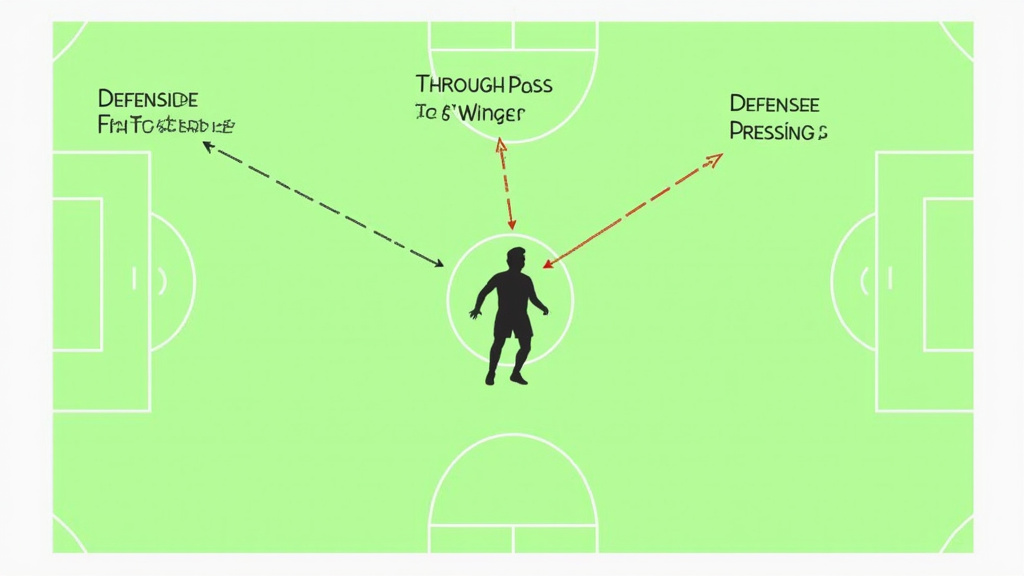
You can’t just put any clever player there. The role demands a contradictory skill set that filters out 99% of forwards. It’s a specific profile.
- Technical Security Under Pressure: This is non-negotiable. You will receive the ball with your back to goal, a defender on your back, and limited time. Your first touch must be a cushion, not a rebound. You need to be able to turn in a phone booth.
- Playmaker’s Vision and Passing: You are now a creator. The pass that splits the line for a winger is more valuable than taking a hopeful shot. Weighted through-balls, disguised flicks, and simple retention are key.
- Spatial Awareness (The “When”): Knowing when to drop is the true art. Drop too early, and the defenders ignore you. Drop too late, and the passing lane is closed. It’s about feeling the defender’s body shape and the midfield’s passing angle.
- Dribbling Ability: Sometimes the best pass is a dribble. Drawing multiple defenders and then beating them creates total panic. Messi’s proficiency here made the tactic devastating.
- Conditioning and Defensive Work Rate: You are the first line of the press. When the team loses the ball, you must immediately harass the opposition’s deepest distributors. A lazy false nine is a tactical hole.
Missing any one of these, and the system crumbles. A player strong only in finishing becomes a ghost. A player with only vision gets bullied off the ball. This is why the traditional striker role is simpler and more common—the job description is narrower.
Why It Works: The Tactical Payoff
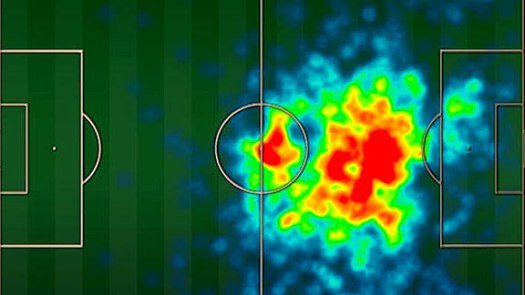
When you have the right player and the right setup, the false nine generates clear advantages. It’s a form of strategic overload.
- Creates Midfield Superiority: By dropping a forward into midfield, you create a 4-vs-3 or 5-vs-4 numerical overload in the center. This makes it easier to keep possession and play through pressure.
- Disrupts Defensive Organization: It pulls defenders into positions they are not trained to hold. A center-back in midfield is a fish out of water, vulnerable to quick passes and turns.
- Generates Space for Wingers: This is the most common benefit. With the center-back occupied, the space between fullback and center-back widens. This is the corridor where modern inverted wingers thrive, cutting inside to shoot or combine.
- Unpredictability: Defenders prepare for patterns. A constantly moving focal point makes set defensive plans difficult.
These benefits explain why the role is often discussed in the context of a 4-2-3-1 formation, where the attacking midfielder can also exploit the spaces the false nine creates.
When the False Nine Fails: The Limitations and Counters
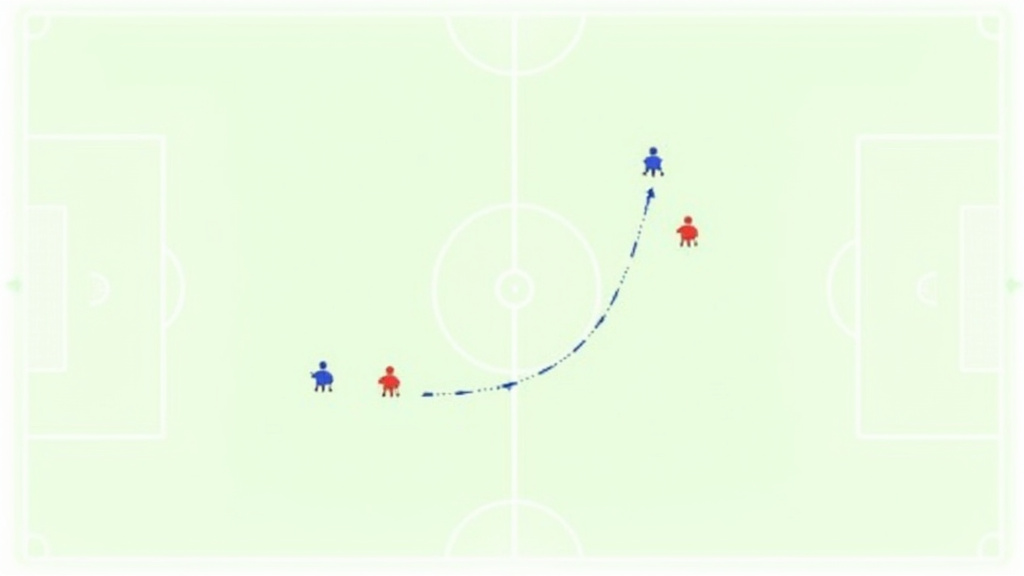
It’s not a magic bullet. I’ve seen it fail more times than I’ve seen it work at the amateur level. Coaches copy Guardiola without the personnel, and the result is a disconnected attack.
Common mistake: Using a false nine against a back three — the outside center-backs can step into midfield to cover without destroying the defensive shape, nullifying the spatial advantage completely.
Here are the main pitfalls:
- Requires Possession Dominance: If your team is under constant pressure, the false nine is isolated and irrelevant. The tactic needs the ball.
- Needs Complementary Runners: The false nine is the sower, not the reaper. If your wingers are static or your midfielders don’t break their necks to get forward, the created space goes to waste.
- Can Lack a Penalty Box Presence: In games where you’re pumping crosses into the box, having no aerial threat is a glaring weakness. You miss a direct option.
- Vulnerable to a Disciplined Holding Midfielder: A smart “number 6” can decide not to follow the false nine deep, instead holding their position to block the passing lanes into the wingers’ running paths.
This is where understanding broader soccer formations is critical. A coach might start in a 4-3-3 with a false nine, but if they’re facing a stubborn 3-5-2 formation, they may need to switch to a true striker at halftime.
Training and Implementing the Role
You can’t just tell a player “go be a false nine.” It requires specific, drilled understanding from the whole unit.
For the False Nine Player:
- Drill: “Check-and-Turn” exercises under heavy pressure from a defender. Focus on receiving on the half-turn to immediately face the game.
- Drill: Small-sided games in congested central areas to improve quick combination play and one-touch passing.
For the Team (Wingers and Midfielders):
- Drill: Pattern recognition exercises. When the false nine drops, the winger must immediately make the diagonal run inside. This needs to become automatic.
- Drill: Possession games with a “trigger rule.” The only forward pass into the attacking third must be a run behind the defensive line, forcing players to time their movements off the false nine’s positioning.
The communication is constant. A raised hand, a pointed run—these small signals synchronize the attack. Without this cohesion, you just have a striker wandering around in midfield.
Frequently Asked Questions
Is a false nine the same as a number 10?
No. A number 10 (or attacking midfielder) starts play in a deeper position behind a striker. A false nine starts as the highest attacker and then drops back. Their markers are different: a number 10 is marked by a defensive midfielder; a false nine aims to pull a center-back out of position.
Do false nines score goals?
They can, and the best ones do. However, their primary metric for success is often chances created or team expected goals (xG) rather than just their personal goal tally. Lionel Messi scored prolifically as a false nine because he was also the best finisher in the world.
Which current players are good false nines?
Beyond the classic examples, players like Harry Kane (when dropping deep for Tottenham and England), Thomas Müller (in specific systems for Bayern Munich), and even Kevin De Bruyne (when deployed in a hybrid role for Manchester City) exhibit false nine tendencies. In women’s soccer, players like Alex Morgan for the USWNT have effectively used this movement to create for teammates.
Why don’t all teams use a false nine?
Because it requires a very specific, rare type of player and a team built to exploit the spaces they create. Most teams benefit from the direct, physical presence of a traditional forward role. It’s a high-risk, high-reward tactic unsuitable for many game situations or squad builds.
Can a false nine work in a 4-4-2 formation?
It’s extremely rare and tactically awkward. The 4-4-2 typically relies on two strikers in partnership. If one drops deep, they often just congest the space of the central midfielders. The system lacks the inherent width and midfield control of a 4-3-3 to properly leverage the false nine’s movement.
The Bottom Line
The false nine is a weapon of sophistication, not brute force. It represents the evolution of soccer from rigid positions to fluid, dynamic roles. Its power lies in manipulation—of space, of defenders, of the game’s very geometry.
But remember this: it is a conditional tool. It needs the right craftsman (a technically gifted, intelligent player) and the right workshop (a possession-based team with explosive runners). Attempt it without those elements, and you’re not playing clever soccer; you’re just playing with ten men. Study its principles, appreciate its artistry in the hands of masters like Messi and Firmino, and you’ll see the game with a deeper, more tactical eye. For more on how roles fit into broader systems, our guide on formation interpretation is a great next step.

I come from the “soccer heart” of Germany, the Ruhrpott. I have played, trained and followed soccer all my life and am a big fan of FC Schalke 04. I also enjoy following international soccer extensively.