Will Luka Modric Play in the World Cup? The Squad Answer
Luka Modrić will play in the 2026 FIFA World Cup. He has been officially named in Croatia’s final 26-man squad, marking his historic fifth tournament. Despite undergoing surgery for a fractured cheekbone in late April, team officials expect a full recovery in time for the group stage.
Most fans hear “facial fracture” and assume a player is out. For a 40-year-old midfielder, that assumption feels even safer. The reality is different. Modern sports medicine and a player’s own obsessive conditioning rewrite those rules.
This guide covers everything from the specifics of his injury and protective gear to what his fifth World Cup means for Croatia’s tactics in a tough group. We’ll look at the recovery timeline, the coach’s unwavering confidence, and why Modrić remains irreplaceable.
Key Takeaways
- Modrić is in the 2026 squad, securing his fifth World Cup, a rare feat for an outfield player.
- A fractured cheekbone required surgery, but he is training with a custom protective mask and is expected to be match-fit.
- Coach Zlatko Dalić has built his entire midfield system around Modrić’s ability to control tempo and possession.
- Croatia faces England, Ghana, and Panama in Group L; Modrić’s experience is crucial for navigating this stage.
- His continued presence delays the inevitable transition for Croatia’s next generation of midfielders.
The Official Squad Announcement: Modrić Is In
The Croatian Football Federation (HNS) released its final list. Luka Modrić’s name was there, as expected by anyone who follows the team’s rhythm. This wasn’t a sentimental pick. Coach Zlatko Dalić doesn’t operate that way. The inclusion is a direct reflection of Modrić’s current performance level at AC Milan and his undiminished importance to the national team’s tactical identity. You can read the full confirmation in this BBC Sport squad announcement.
The squad selection process for a major tournament always involves fierce internal debate. For Croatia, that debate never touched Modrić. The discussion was about who would play alongside him, not instead of him. His 196 caps and role as captain make him the team’s on-field brain. Leaving him out would be like changing the engine of a car mid-race because the bodywork has a scratch.
Modrić’s selection for a fifth FIFA World Cup places him in an exclusive group of players, primarily goalkeepers, who have achieved such longevity at the sport’s highest level. His consistent technical output and low injury history, excluding the recent acute fracture, made this decision straightforward for the coaching staff.
TL;DR: Modrić’s selection was never in doubt; his current form and role as Croatia’s tactical nucleus made him an automatic pick for the 2026 squad.
The Injury & Recovery: Cheekbone Fracture Timeline
The concern started in late April. During a Serie A match for AC Milan, Modrić suffered a fractured zygomatic bone, the main cheekbone. The impact wasn’t a minor clash. These injuries happen from direct, high-force contact, usually an elbow or a knee. He underwent successful surgery shortly after, which involved realigning the bone and potentially placing a small plate for stability.
The immediate aftermath meant missing the remainder of Milan’s club season. For the World Cup, the clock started ticking.
| Recovery Phase | Key Activity | Risk If Rushed |
|---|---|---|
| Week 1-2 (Post-Op) | Bone healing, swelling reduction. No contact. | Early impact can re-displace the bone, requiring a second surgery and ending World Cup hopes. |
| Week 3-4 | Light individual training, aerobic work. Mask fitting and adaptation. | Skipping mask adaptation leads to discomfort, blurred vision, and distraction during matches. |
| Week 5-6 (Present) | Integrated team training with protective mask. Tactical drills. | A poorly fitted mask shifts on impact, failing to protect the injury and causing a stoppage. |
| Tournament (Week 7+) | Match participation with mask. Managed minutes. | Overuse in group stage leads to cumulative fatigue, reducing effectiveness in knockout rounds. |
The key tool is the protective mask. It’s a custom-made, carbon-fiber shell molded to his face. It feels alien. Your peripheral vision narrows slightly. Your breathing sounds louder in your own ears. It traps heat. But it works. Players like Antonio Rüdiger and Jan Vertonghen have played entire tournaments with them. The adaptation period is non-negotiable. Modrić has been in team training with his mask for over a week now. The latest Al Jazeera surgery report confirms his progress is on track.
Common mistake: Assuming a facial fracture is a soft-tissue injury with a standard 2-week rehab. Bone trauma requires 4-6 weeks for basic structural integrity, and returning before that with a mask is merely protecting an unstable site, a major risk.
TL;DR: The surgery was successful; his current training with a custom protective mask is the final phase of a 6-week recovery plan aimed at peak readiness for June 17.
Why Dalić’s Confidence Isn’t Just Coach Talk
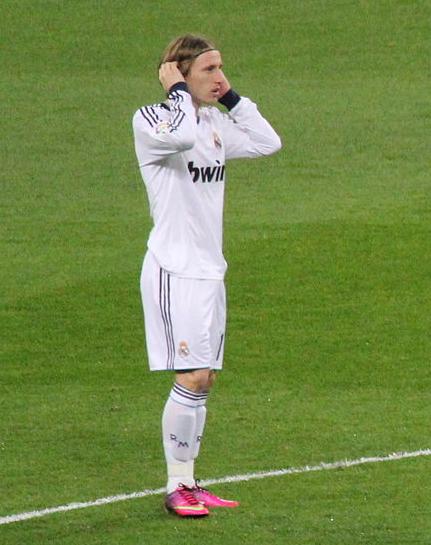
Photo: LauraHale / Wikimedia Commons / CC BY-SA 1.0

Zlatko Dalić’s public statements have been uniformly bullish. “We have no doubts regarding his form,” he told the press. This isn’t generic manager-speak. It’s based on two concrete things. First, the medical reports crossing his desk show textbook healing. Second, and more importantly, Dalić’s entire game model for Croatia is built on Modrić’s specific skill set.
Croatia doesn’t play with a traditional defensive midfielder. They play with Modrić as a regista, a deep-lying playmaker who orchestrates everything. His first touch away from pressure, his passing range to switch play, and his ability to dictate the tempo are the team’s primary offensive mechanisms. Without him, the system lacks its central processor. Dalić knows that even a masked Modrić at 90% is more effective for this specific style than a 100% fit alternative. This strategic dependency is why there’s such public BBC Sport recovery confidence in his readiness.
I’ve watched Croatia try to prep for this transition. In Nations League matches where Modrić was rested, the midfield looked disjointed. The passes between the lines were slower. The ball circulation lacked its usual hypnotic control. It confirmed what many analysts suspect: Croatia’s tactical architecture is still a one-man blueprint. This reliance speaks to both Modrić’s genius and a looming challenge for Croatian football, a topic we explore in our piece on career longevity.
TL;DR: Dalić’s confidence stems from medical data and tactical necessity; Modrić is the irreplaceable engine of Croatia’s midfield system.
A Historic Fifth World Cup
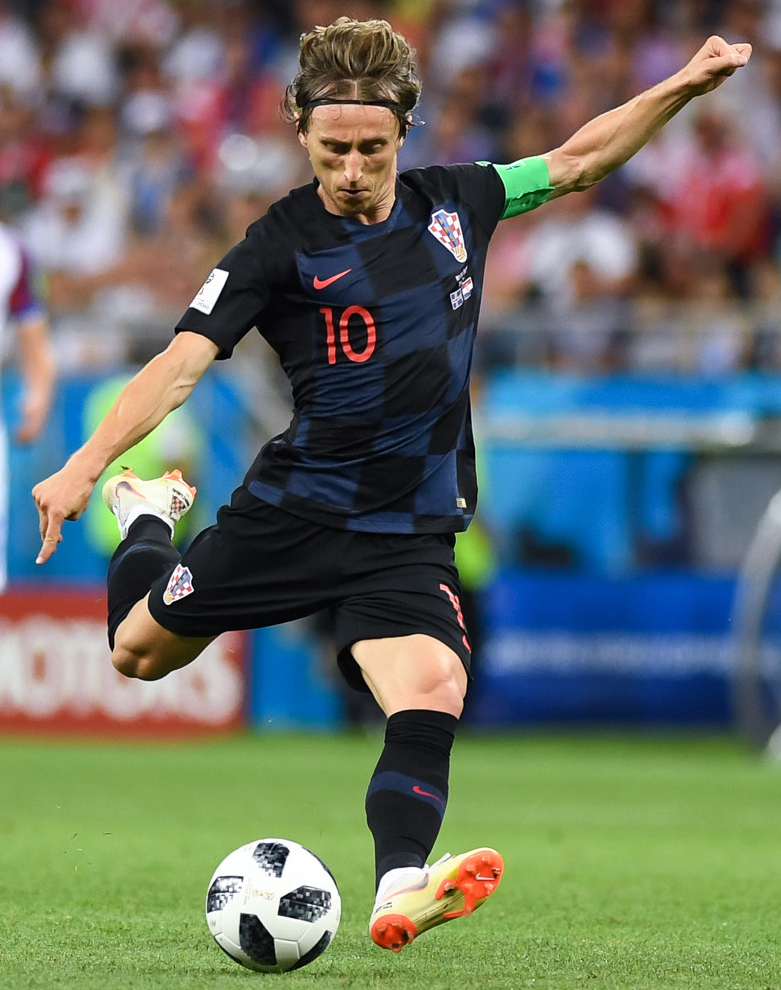
Photo: Светлана Бекетова / Wikimedia Commons / CC BY-SA 3.0

Let’s frame this achievement. Only a handful of players have appeared in five World Cups. The list is dominated by goalkeepers. Gianluigi Buffon, Manuel Neuer, where physical conditioning and positional savvy grant longer careers. For an outfield player, especially a midfielder who covers immense ground, it’s almost unheard of in the modern game.
Modrić will join that exclusive club. His journey spans:
* 2010 South Africa: A young talent, but the team exited in the group stage.
* 2014 Brazil: A rising star, again stopped in the group stage.
* 2018 Russia: The pinnacle. Ballon d’Or winner, Golden Ball recipient, captain leading his nation to the final.
* 2022 Qatar: The veteran. A third-place finish, still pulling the strings.
* 2026 North America: The legend. Defying time and a recent injury.
This longevity isn’t an accident. It’s a product of his intelligent playing style, he avoids reckless tackles, and meticulous self-care, including a strict performance diet. He conserves energy through positioning rather than wasteful movement. It’s why, at 40, he can still dictate play against players half his age. His career stands as a masterclass in sustaining excellence, placing him among the game’s true modern legends.
Croatia’s 2026 Path and Modrić’s Role
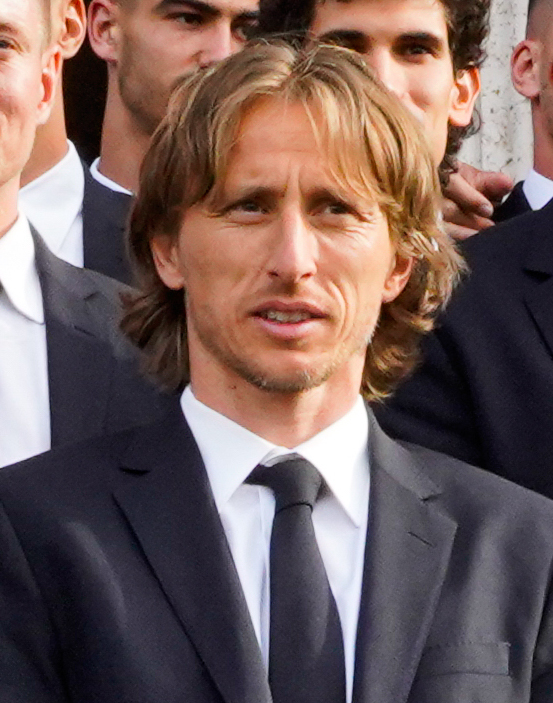
Photo: Fotografías Archimadrid.es / Wikimedia Commons / CC BY 2.0
_(Luka_Modri%C4%87).jpg)
Croatia landed in Group L. The schedule is a narrative in itself:
1. England (June 17): The toughest test first. Modrić’s role will be about control and disruption. He’ll sit deep, intercept England’s transitions, and look to feed runners like Mateo Kovačić. Expect a battle for possession.
2. Ghana (June 23): A different challenge. Ghana’s athleticism and direct play require defensive discipline. Modrić will need to help shield the backline and pick moments to launch counters.
3. Panama (June 27): The match where Croatia should dominate possession. This is where Modrić can fully orchestrate, unpick a low block, and manage his minutes if progression is secure.
His positional role is clearer than ever. He will no longer make those surging box-to-box runs of 2018. He operates from a deeper pivot, almost as a quarter-back. His passing map will show a high volume of lateral and diagonal switches, probing for space. This shift preserves his legs and maximizes his greatest remaining weapon: his football brain. It’s a classic example of intelligent player role evolution.
The team’s success hinges on his connection with the younger midfielders. Can he and Mateo Kovačić establish the same telepathy he once had with Ivan Rakitić? The group stage will be their laboratory. This need for seamless integration is a core tenet of effective team formations.
The Bigger Picture: Transition and Legacy
Every match Modrić plays in 2026 is a borrowed moment. Croatia is acutely aware that the post-Modrić era is looming. Talents like Luka Sučić are waiting in the wings. This tournament serves a dual purpose: compete now, and school the future.
The legacy is already cemented. A Ballon d’Or, a World Cup final, a third-place finish, and a record cap count. This fifth World Cup is the final chapter. It’s about showing that genius, coupled with professionalism, can bend the conventional timelines of an athlete’s career. He has redefined what’s possible for a midfielder’s lifespan at the summit, moving from a potential underrated talent in his early years to a global icon.
When he finally does retire, the focus will shift to the next generation of international icons. For now, the spotlight remains on the maestro. The mask is just a prop. The performance, as always, will be timeless.
Frequently Asked Questions
Is Luka Modrić fit for the 2026 World Cup?
Yes. He has recovered from surgery for a fractured cheekbone and is training fully with the Croatian national team. He is expected to be available for selection for their opening match against England on June 17, likely wearing a protective facial mask.
How many World Cups has Luka Modrić played in?
The 2026 tournament will be his fifth World Cup, following appearances in 2010, 2014, 2018, and 2022. This places him among a very small group of players, and an even rarer group of outfield players, to achieve this feat.
What happened to Luka Modrić’s face?
He suffered a fractured cheekbone (zygomatic bone) in an AC Milan Serie A match in late April. He underwent successful surgery to stabilize the fracture. The recovery has gone to plan, allowing him to rejoin training.
Will Modrić wear a mask in the World Cup?
Almost certainly, yes. To protect the healing bone from further impact, he will wear a custom-fitted, carbon-fiber protective mask during matches and possibly in training. Many top players have used similar masks successfully in major tournaments.
How important is Modrić to Croatia’s chances?
He is the single most important player tactically. Coach Zlatko Dalić’s system is built around Modrić’s ability to control the game’s tempo and possession from a deep midfield position. His experience and leadership are irreplaceable for a team in a competitive group.
Could this be Modrić’s last World Cup?
While he has not officially announced his international retirement plans, given he will be 40 years old at the start of the 2026 tournament, it is highly probable this will be his final World Cup appearance.
The Bottom Line
Luka Modrić is playing in the 2026 World Cup. The squad sheet is signed, the injury is healing, and the mask is fitted. The story shifts from “if” to “how.” How will his experienced legs handle a tough group? How will the mask affect his vision and comfort? How will Croatia manage his minutes to keep him sharp for a potential knockout run?
The answers will unfold on the pitch. For now, fans can bookmark June 17. Watch number 10 in the red-and-white checkerboard, possibly with a black mask across his face, receive the ball in his own half. Watch him look up, pause for half a second, and pass the ball into a space that didn’t exist until he created it. That’s the confirmation that matters.
I come from the “soccer heart” of Germany, the Ruhrpott. I have played, trained and followed soccer all my life and am a big fan of FC Schalke 04. I also enjoy following international soccer extensively.