3-5-2 Formation: 5 Key Advantages & 4 Hidden Disadvantages
The 3-5-2 formation uses three center-backs, five midfielders (including two wing-backs), and two strikers to dominate central areas and create attacking overloads. Its primary advantages are central defensive solidity, midfield numerical superiority, and attacking versatility through wing-backs. The main disadvantages are vulnerability on the flanks, extreme physical demands on players, and a high tactical complexity that makes it difficult for amateur teams to execute.
Most people look at the three defenders and assume it’s a defensive, negative system. They’re wrong. The modern 3-5-2 is an aggressive, possession-based formation that asks more from its players than almost any other setup. The failure happens when a coach tries to copy Antonio Conte’s Inter Milan blueprint without the specific athletes he had.
This guide breaks down the real pros and cons, the exact player profiles you need, and the tactical adaptations that make the 3-5-2 a weapon at the professional level and a liability everywhere else.
Key Takeaways
- The wing-back role is non-negotiable. You need two players who can run 12 kilometers a game, defend one-on-one, and deliver a telling cross. Missing one ruins the entire system.
- Central dominance is the point. The three center-backs and three central midfielders create a numerical overload in the middle third, suffocating opponents who play through the center.
- It’s a shape-shifter. Out of possession, the 3-5-2 seamlessly becomes a 5-3-2 low block or a 4-4-2 mid-block for pressing. This fluidity confuses static attacks.
- The wide center-backs are exposed. Without natural full-backs, the outside defenders must defend huge channels. Slow or poor readers of the game get isolated and beaten.
- This is not a formation for tired legs or low football IQ. Implementing it successfully requires elite fitness and players who understand multiple roles. At amateur levels, a 4-4-2 is almost always more effective.
The Anatomy of a Modern 3-5-2
Forget the old Italian catenaccio stereotypes. Today’s 3-5-2 is a proactive system built on control and verticality. The shape is just a starting point.
The three central defenders are not just blockers. The central one acts as a sweeper and leader, often stepping into midfield. The two outside center-backs must be comfortable carrying the ball forward and hitting diagonal switches to the wing-backs. If they can only defend, your build-up play stops dead.
The 3-5-2 formation creates a structured yet fluid framework where player roles are interdependent. The wing-backs provide essential width, transforming the shape into a 3-4-3 in attack, while the three central midfielders work to control the game’s tempo and disrupt opposition play through the center. Defensive solidity comes from the back three’s ability to cover wide areas and the team’s collective transition into a compact mid or low block.
The five midfielders are the engine. This is where most formation comparisons live or die. You have the two wing-backs and a central trio. The wing-backs define the system’s character. When they push high, you have five attackers. When they sit, you have five defenders. Their stamina dictates how long you can sustain pressure.
Why the 3-5-2 Formation Works (and When It Fails)
The formation’s strengths are interconnected. You don’t get one without committing to the others.
Advantage 1: Central Defensive and Midfield Overloads
You have five central players (three defenders, three midfielders) against most formations’ four. This is mathematical dominance. Against a standard 4-4-2 formation, your three central midfielders always have a free man. That spare player can press, cover passing lanes, or join the attack. It makes your team incredibly hard to play through the middle.
Advantage 2: Attacking Versatility and Fluidity
With the wing-backs pushed on, you attack with a front five. The two strikers can split, with one dropping to link play and the other stretching the backline. The midfield three support from deep. This creates multiple passing triangles and makes the team unpredictable. It’s why the attacking 3-4-3 is a natural in-possession cousin.
Advantage 3: Defensive Flexibility and Compactness
Lose the ball, and the wing-backs drop to form a back five. Instantly, you have a defensive 5-3-2 system. Alternatively, one forward can drop to create a 4-4-2 mid-block for pressing. This adaptability makes you a nightmare to prepare for.
Advantage 4: Exploiting the Half-Spaces
The space between the opponent’s full-back and center-back is the holy grail of modern tactics. The 3-5-2’s wing-backs and attacking midfielders naturally target these zones. A drifting striker or an advancing central midfielder can receive the ball there with time to turn.
The Failure Point: The Physical and Tactical Tax
The system fails when you lack the players. It’s that simple.
Common mistake: Using traditional full-backs as wing-backs — they get caught upfield repeatedly, and the wide center-back gets roasted two-on-one. You’ll concede from crosses within twenty minutes.
The wing-back role demands a complete player. They need a winger’s speed and crossing, a full-back’s tackling, and a midfielder’s engine. Find one? Great. Now find another exactly like him on the opposite flank. Most squads don’t have that luxury.
The three center-backs must be excellent communicators. One missed coverage call, and the channel is wide open. The central midfield trio requires a perfect balance—a holder, a runner, and a creator. Get one profile wrong, and the whole midfield tilts.
TL;DR: The 3-5-2 works when you have elite, multi-functional athletes. It fails spectacularly with players who can only perform one role or lack the stamina to sustain the system for 90 minutes.
The Non-Negotiable Player Profiles

You cannot force a square peg into this round hole. Each position has specific demands.
| Position | Key Attributes | Risk of Wrong Profile |
|---|---|---|
| Wide Center-Back | Pace, long-passing range, comfort defending in space | Isolated in channels, becomes a turnover machine under pressure |
| Central Sweeper | Leadership, organizing, reading the game, interception timing | Defensive line gets disjointed, no cover for wing-back surges |
| Wing-Back | Elite stamina (12km+ match), 1v1 defending, crossing accuracy | System collapses; you are defensively exposed and lack width in attack |
| Central Midfield Anchor | Positioning, tackling, short distribution | Opposition plays through the center; no protection for back three |
| Box-to-Box Midfielder | Endurance, late runs into box, ball recovery | Midfield lacks penetration; defensive transition is too slow |
| Striker Partnership | Complementary skills (hold-up + mobility), understanding | Attack becomes static and predictable; easy to defend |
The striker pair is its own science. You often see a physical target man paired with a quicker, more mobile forward. The target man occupies center-backs and brings others into play, much like in a two-striker system, while the other makes runs in behind.
The midfield balance is critical. Many top teams use a double pivot in front of the defense for stability, but in a 3-5-2, the single anchor must be impeccable. If he’s not, the entire structure is unstable.
Head-to-Head: How the 3-5-2 Matches Up Against Common Formations
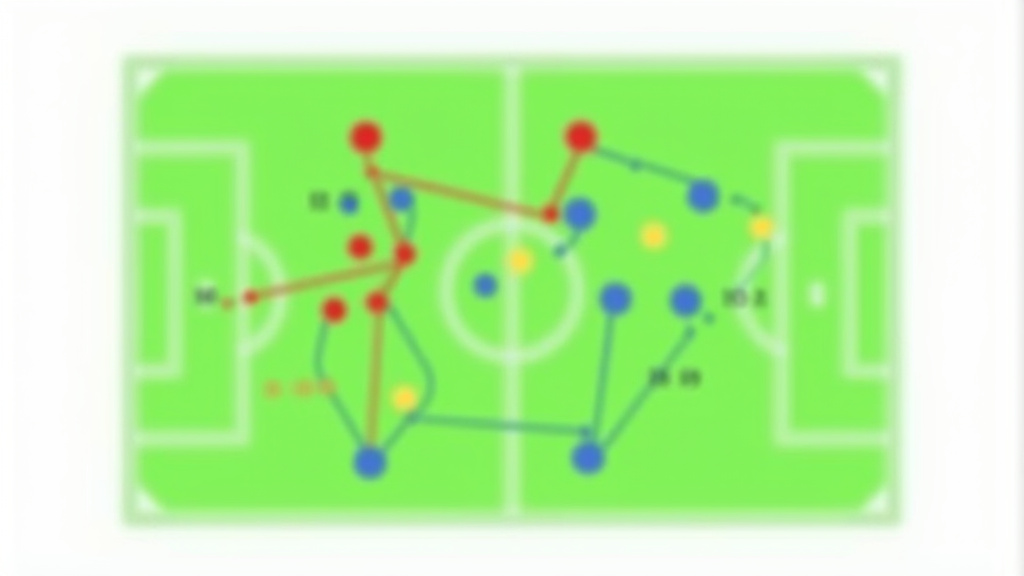
Your game plan changes completely based on the opponent’s shape. This isn’t a plug-and-play system.
Vs. 4-4-2: Natural Superiority
This is the 3-5-2’s ideal matchup. Your three central midfielders outnumber their two. Your wing-backs pin their wide midfielders, creating overloads. The 3-5-2 pros and cons are overwhelmingly positive here. You control the game.
Vs. 4-3-3: The Tactical Duel
This is the chess match. Their front three lines up directly against your back three. If their wingers are elite and your wing-backs are caught high, you’re in trouble. The key is for your wing-backs to be disciplined, forcing their wingers to defend. The battle for midfield control between your trio and theirs is decisive. A detailed 3-5-2 vs 4-3-3 analysis often hinges on individual quality out wide.
Vs. 4-2-3-1: The Modern Challenge
The 4-2-3-1 formation is designed to break lines with an attacking midfielder. Your spare center-back must step up to mark that number ten. If he doesn’t, the playmaker operates freely. Your wing-backs must also track the opposition’s inverted wingers. It’s a complex, demanding game of coordination.
Vs. 3-4-3 or Other Three-Back Systems: A Mirror Match
When facing another three-at-the-back system like a 3-4-3 formation, it becomes a battle of individual matchups and which wing-backs can dominate their flank. The game often stretches, leaving huge spaces in midfield for runners.
Common Mistakes & Misconceptions

The biggest error is treating this like any other formation. It has a steeper learning curve and a narrower margin for error.
Mistake 1: Assuming It’s Defensive
The old catenaccio image is dead. Antonio Conte’s Inter Milan and Chelsea teams played ferocious, high-tempo football in this shape. It’s a platform for aggression, not containment. Thinking it’s defensive leads to passive wing-backs and a huge gap between the lines.
Mistake 2: Neglecting Transition Training
You can’t just draw the shape on a board. The magic is in the movement between shapes—from 3-5-2 to 5-3-2 to 4-4-2. If you don’t drill these transitions until they’re automatic, players get caught between roles. This is where pressing tactics and defensive organization are make-or-break.
I tried implementing a 3-5-2 with a talented but young amateur team. We focused on possession for weeks. In our first friendly, we lost 4-0. The wing-backs didn’t recover, the center-backs were pulled apart, and the midfield was overrun. We switched back to a 4-4-2 the next week and won. The formation was too sophisticated for our level of understanding and fitness.
Mistake 3: Ignoring the Recruitment Problem
You can’t buy a standard full-back and call him a wing-back. You can’t play a slow, traditional center-back in the wide role. The system demands a specific squad profile. Forcing players into roles they can’t physically or technically perform is a recipe for failure. This is why it’s predominantly a formation for elite clubs with large budgets.
Is the 3-5-2 Right for Your Team? A Diagnostic
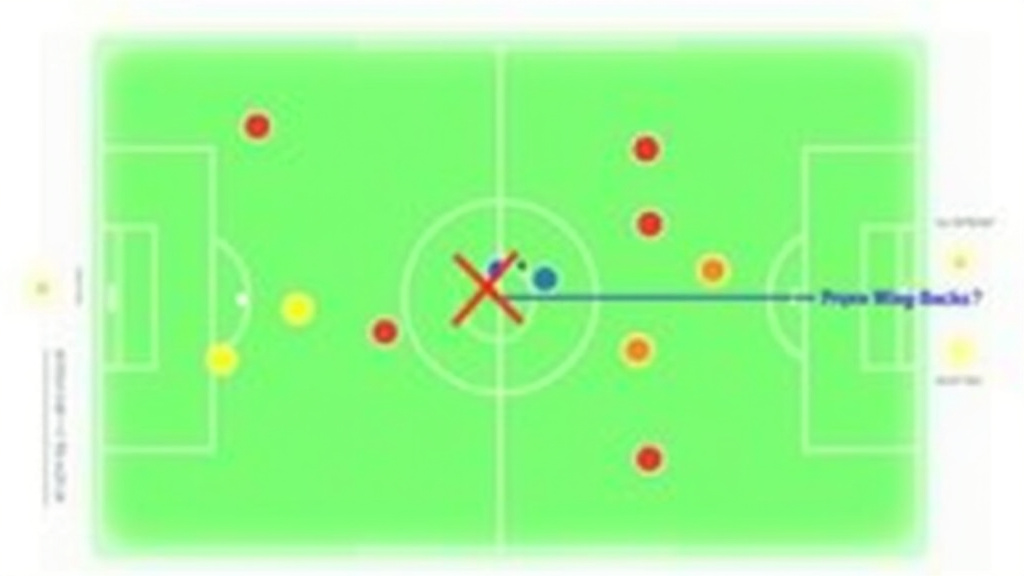
Ask these questions before you even consider this system.
- Do you have two players who can genuinely play the wing-back role for 90 minutes? Not hopefuls. Actual, proven engines.
- Are your three best defenders comfortable on the ball and able to communicate flawlessly? One weak link breaks the chain.
- Does your central midfield have a clear holder, runner, and creator? Imbalance here leaves you neither solid nor creative.
- Can you coach complex positional rotations and defensive transitions? If your training is basic, the system will be basic and flawed.
- Is your squad fit enough to sustain the high physical output for a full season? The 3-5-2 grinds players down.
If you answered “no” to any of these, a 4-3-3 formation or a traditional 4-4-2 is a safer, more effective choice. The 3-5-2 is a high-risk, high-reward strategy. A 2021 positional data analysis of 3-5-2 in PLOS ONE confirmed its effectiveness in creating elongated attacking shapes and efficient pressure passing, but it also highlighted the extreme positional demands placed on the wing-backs and wide center-backs to maintain that structure.
TL;DR: Use the 3-5-2 if you have a top-tier squad and coaching staff. For almost everyone else, a four-back system is more practical and forgiving.
Frequently Asked Questions
Why do so few amateur teams use the 3-5-2 formation?
It requires a level of tactical understanding, communication, and fitness that is rare at amateur levels. The margin for error is tiny. A simple 4-4-2 formation with clear roles is easier to coach and execute when training time is limited.
Can the 3-5-2 work with only one defensive midfielder?
Yes, this is the standard setup—a single pivot. However, that one player is arguably the most important on the pitch. He must shield the back three, distribute the ball, and be positionally perfect. If he has a bad game, the whole team struggles.
What’s the main difference between a 3-5-2 and a 5-3-2?
It’s about intent and the starting position of the wing-backs. In a 5-3-2 formation, the wide players are primarily defenders (full-backs/wing-backs) who start deep. In a 3-5-2, they are midfielders who start higher, with the expectation they will attack first and defend second. They are the same players, but the tactical instruction changes.
How do you stop a team that plays a 3-5-2?
Target the flanks. Pin the wing-backs in their own half with aggressive, fast wingers. Force the wide center-backs to defend in space, where they are uncomfortable. Avoid playing through the congested center. A well-executed 4-3-3 formation is often the best counter.
Which famous managers have used the 3-5-2 successfully?
Antonio Conte is the modern master, winning league titles with Juventus, Chelsea, and Inter Milan using it. Pep Guardiola has used variations at Manchester City. It was also a hallmark of Antonio Conte’s Juventus and Diego Simeone’s Atletico Madrid in certain phases.
The Bottom Line
The 3-5-2 is a formation of extremes. At its best, with the right players, it offers unrivalled control, flexibility, and attacking threat. It can dominate the center of the park and morph defensively to frustrate any opponent. This potential is what makes the modern 3-5-2 tactics so compelling for top coaches.
At its worst, without the specific personnel and drilled understanding, it is a chaotic, exposed, and physically draining system that leaves gaping holes on the pitch. It is not a magic solution. It is a demanding framework that ruthlessly exposes any weakness in your squad’s quality, fitness, or intelligence. Choose it only if you can meet its steep price.

I come from the “soccer heart” of Germany, the Ruhrpott. I have played, trained and followed soccer all my life and am a big fan of FC Schalke 04. I also enjoy following international soccer extensively.