World Cup Group J Qualification Scenarios & Knockout Paths
World Cup 2026 Group J qualification scenarios are determined by a 48-team format where the top two teams advance directly, and the third-placed team has a strong chance to qualify as one of eight “wildcards” based on a comparison of all third-placed finishers. The key is accumulating at least four points with a positive goal difference. For Argentina, Austria, Algeria, and Jordan, every goal and every card matters more than ever.
Most fans think qualification is a simple top-two race. They forget the new math. In the expanded 48-team tournament, finishing third isn’t a failure—it’s a ticket to a complex, nerve-wracking waiting game that depends on results in eleven other groups happening thousands of miles away.
This guide breaks down the exact paths for each team in Group J, the tie-breakers that will decide close races, and the strategic implications of the 2026 format. You will learn why a yellow card in the 89th minute could be the difference between going home and facing the Group H winner.
Key Takeaways
- The 3rd-place wildcard is the game-changer. With 32 of 48 teams advancing, finishing third with 4 points and a decent goal difference is often enough. This makes Matchday 2 the most critical for bubble teams.
- Head-to-head results trump everything. If Austria and Algeria finish level on points, their direct match result settles who finishes higher. Overall goal difference is only the fourth tie-breaker.
- Simultaneous kickoffs on June 27 eliminate tactical gaming. Algeria vs. Austria and Jordan vs. Argentina start at the same time, so no team can play for a specific score knowing another result.
- Fair Play points are a real tie-breaker. Each yellow card deducts 1 point, a second yellow/red deducts 3, and a direct red deducts 4. Team discipline could decide the final group order.
- Jordan’s path relies on defensive discipline. A single point from a draw against Austria or Algeria, coupled with narrow losses, could put them in the 3rd-place mix if goal difference stays tight.
The 2026 Format Changes Everything
The old 32-team World Cup had a brutal simplicity. Finish third, you’re on the plane home. The 2026 edition, with 48 teams split into twelve groups of four, rewrites that contract. Now, 32 teams progress. That means the top two from each group (24 teams) qualify, plus the eight best third-placed teams from across all groups.
This shifts the entire strategic landscape. The pressure to win the group outright is slightly lower for giants like Argentina. The incentive for a team like Austria or Algeria is not just to beat each other, but to pile up goals and points to win the “best third-placed” lottery if they slip up. A single loss isn’t fatal. A draw becomes a valuable asset, not a disappointment.
The 48-team format means 66.7% of all teams advance from the group stage, compared to just 50% in the 2022 tournament. This statistical cushion makes every point earned before the final matchday a potential lifesaver.
The calculation for the eight best third-placed teams is a league table of its own. It ranks all twelve third-place finishers by points, then goal difference, then goals scored, then fair play points. The top eight advance. Historically, in European Championships with a similar 24-team format, four points almost always guarantees advancement for a third-placed team. Three points with a good goal difference is often enough.
TL;DR: The new format makes 4 points the magic number for safety. It turns the group stage from a knockout sprint into a points-collecting marathon where goal difference is a secondary currency.
Breaking Down Group J: Teams and Fixtures
Group J is a fascinating mix of styles and expectations. You have the defending champion, a European side known for organization, a passionate African contender, and an Asian underdog with nothing to lose.
- Argentina: The obvious favorite and defending champion. Their soccer tactics guide is built around control and moments of magic from legends like Lionel Messi. They are expected to top the group, making their match against Austria the likely decider for first place.
- Austria: A solid, technically proficient European side. They lack a global superstar but excel as a unit. Their approach often utilizes a structured midfield diamond or a 3-5-2 formation to control the center of the park.
- Algeria: The Desert Foxes are unpredictable and explosive. They play with high emotion and possess individual talents who can decide games. They might opt for an attacking formation to utilize their pace on the counter.
- Jordan: The clear underdog. Their success hinges on a compact defense, likely a 5-3-2, and hoping to snatch a goal from a set-piece or a rare counter-attack. A single point would be a monumental achievement.
The fixture list, as detailed on the official Wikipedia page for Group J, creates a clear narrative:
- Matchday 1 (June 16): Argentina vs. Algeria (Kansas City), Austria vs. Jordan (Santa Clara). The pressure is on Algeria and Austria to start strong. A loss for either makes their path dramatically harder.
- Matchday 2 (June 22): Argentina vs. Austria (Arlington), Jordan vs. Algeria (Santa Clara). This is the pivotal round. Austria likely needs a result against Argentina to control its destiny. Algeria almost certainly must beat Jordan.
- Matchday 3 (June 27): Jordan vs. Argentina (Kansas City), Algeria vs. Austria (Arlington). The simultaneous kickoffs mean the Algeria-Austria clash could be a straight knockout for second place, or a tense duel for third-place ranking.
How Do Tie-Breakers Work in Group J?
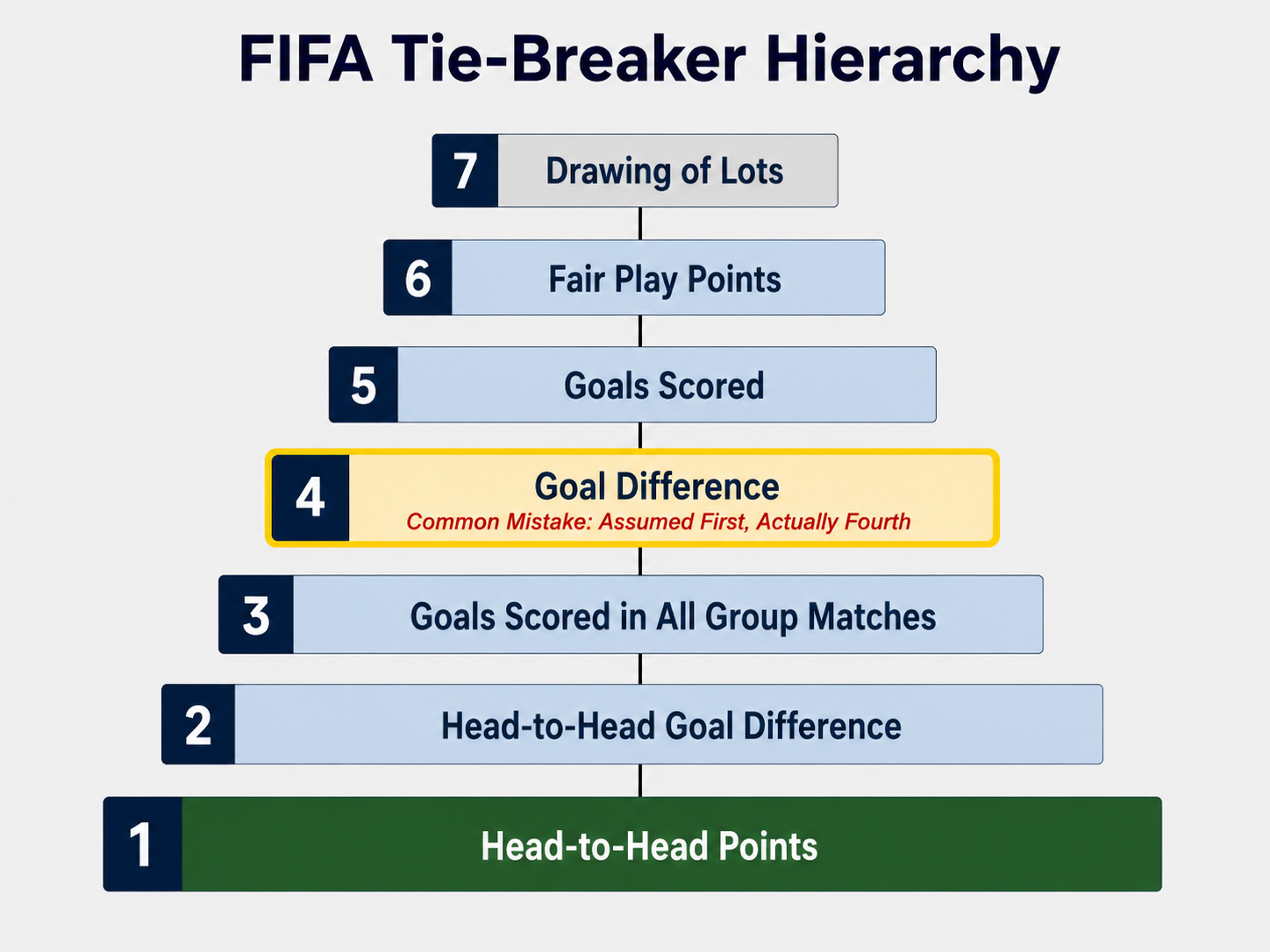
When two or more teams finish level on points, FIFA doesn’t just flip a coin. A strict seven-step hierarchy decides their final ranking. Most fans only remember goal difference. That’s the fourth step.
Common mistake: Assuming overall goal difference is the first tie-breaker — it’s actually the fourth. The head-to-head record between the tied teams is the primary decider.
Here is the exact order, crucial for understanding scenarios where Austria and Algeria might end up locked together:
- Points in head-to-head matches: If Austria and Algeria draw, and both finish on 4 points, it goes to step two.
- Goal difference in head-to-head matches: If that drawn match was 1-1, they’re still tied.
- Goals scored in head-to-head matches: Again, if it was 1-1, they remain tied.
- Overall goal difference in all group matches: This is where the margin of victory against Jordan becomes critical.
- Overall goals scored in all group matches.
- Fair Play points: This is where it gets interesting. Teams start with 0 points. A yellow card is -1. An indirect red card (two yellows) is -3. A direct red card is -4. A yellow card followed by a direct red is -5. The team with the higher score (i.e., fewer deductions) ranks higher.
- FIFA World Ranking: As a last resort, the higher-ranked team advances.
This system makes every disciplinary action a potential tie-breaker. A reckless challenge in the 94th minute of a decided game could cost a team their place in the Round of 32.
| Tie-Breaker Step | What It Means | Example for Austria vs. Algeria |
|---|---|---|
| 1. Head-to-Head Points | Points earned in the match between the tied teams. | If they drew, each gets 1 point here. Still tied. |
| 2. Head-to-Head Goal Difference | Goal difference from that specific match. | A 1-1 draw gives both 0 GD. Still tied. |
| 3. Head-to-Head Goals Scored | Goals scored in that match. | 1-1 means 1 goal each. Still tied. |
| 4. Overall Group Goal Difference | Goal difference across all three matches. | This is where beating Jordan 3-0 beats beating them 1-0. |
| 5. Overall Goals Scored | Total goals across all three matches. | |
| 6. Fair Play Conduct | Fewer yellow/red cards wins. | A single yellow card could decide it. |
| 7. FIFA Ranking | Higher rank advances. | Austria’s ranking is likely higher than Algeria’s. |
TL;DR: If Austria and Algeria are level on points, their match result is the first decider. If that was a draw, the team that beat Jordan by a larger margin advances. If that’s also equal, a yellow card from the first game could send one team home.
Qualification Scenarios for Each Team
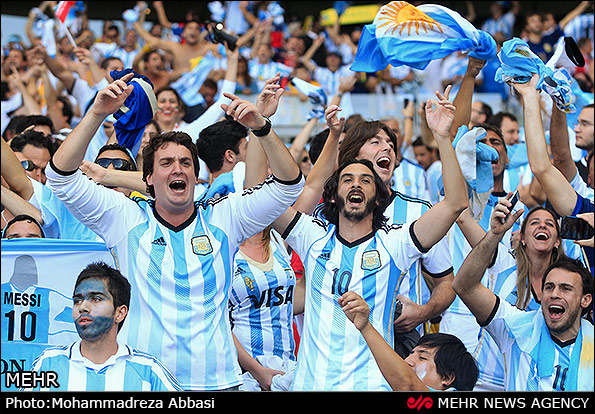
Photo: Mohammad Reza Abbasi / Wikimedia Commons / CC BY 4.0
.jpg)
Let’s move from theory to the specific paths each team can take to the Round of 32. These aren’t just guesses—they’re the mathematical realities based on the fixture list and the 48-team format.
Argentina’s Path: Managing the Throne
The Argentinian legends are expected to cruise. Their primary goal is winning the group to secure a theoretically easier knockout path. A draw against Austria wouldn’t be a disaster, but it could complicate matters if goal difference becomes a factor for the top spot.
- Win the group: Beat Algeria and Austria. This is the expected and simplest path.
- Finish second: Lose to Austria and beat Algeria and Jordan. This would likely set up a tougher Round of 32 match against the Group H winner.
- Unthinkable collapse: Lose to both Austria and Algeria. Even then, a win against Jordan would likely give them 3 points and a positive goal difference, probably enough for a 3rd-place wildcard. They are almost certainly advancing.
For Argentina, it’s about managing minutes, avoiding injuries, and building rhythm. Their game strategy will be about control, not goal avalanches.
Austria vs. Algeria: The Real Group Battle
This is the heart of Group J. Both teams will target the Algeria vs. Austria match on June 27 as the decisive fixture. But their strategies before that are different.
Austria’s Route:
Austria’s strength is system over star power. They will rely on a modern tactical system to stifle Argentina and dominate Jordan.
1. Target: At least a draw against Argentina. A point here is gold.
2. Mandate: Beat Jordan convincingly. Goal difference is a key weapon against Algeria.
3. Decider: Avoid defeat against Algeria. A draw might be enough for second if their goal difference is superior.
Algeria’s Route:
Algeria is the wildcard. They can beat anyone on their day and lose to anyone. Their path is riskier.
1. Target: Get a result against Argentina. A shock win or even a draw changes the group’s entire calculus.
2. Mandate: Beat Jordan. Non-negotiable.
3. Decider: Beat Austria. They likely need a win in the head-to-head to finish above them.
I’ve seen this dynamic in the Bundesliga for years. The organized team (Austria) wants to turn the final game into a tense, low-chance affair. The emotional, technical team (Algeria) needs the game to be open and chaotic. Whoever controls the tempo in Arlington on June 27 controls their fate.
Jordan’s Slim Hope: The 3rd-Place Math
Jordan is not expected to qualify. But the new format gives them a sliver of hope that old formats did not. Their goal isn’t to finish second—it’s to finish third with a respectable record.
- Realistic target: 1 point. A draw against Austria or Algeria, combined with narrow, respectable losses in the other two games.
- Goal difference is everything: Losing 1-0 to Argentina is a better result than losing 2-0. Every goal conceded hurts their chance in the 3rd-place ranking.
- The scenario: If Jordan draws with Austria 0-0, loses 2-0 to Argentina, and loses 1-0 to Algeria, they finish with 1 point and a -3 goal difference. If two other groups have third-placed teams with 1 point and a -4 or worse goal difference, Jordan could advance. It’s a long shot, but it’s a shot.
This changes how opponents play against them. Argentina might not risk key players if they’ve already qualified. Austria might settle for a 1-0 win rather than push for more. Jordan’s entire tournament is about being a stubborn, disciplined nuisance.
Group J’s Knockout Stage Path
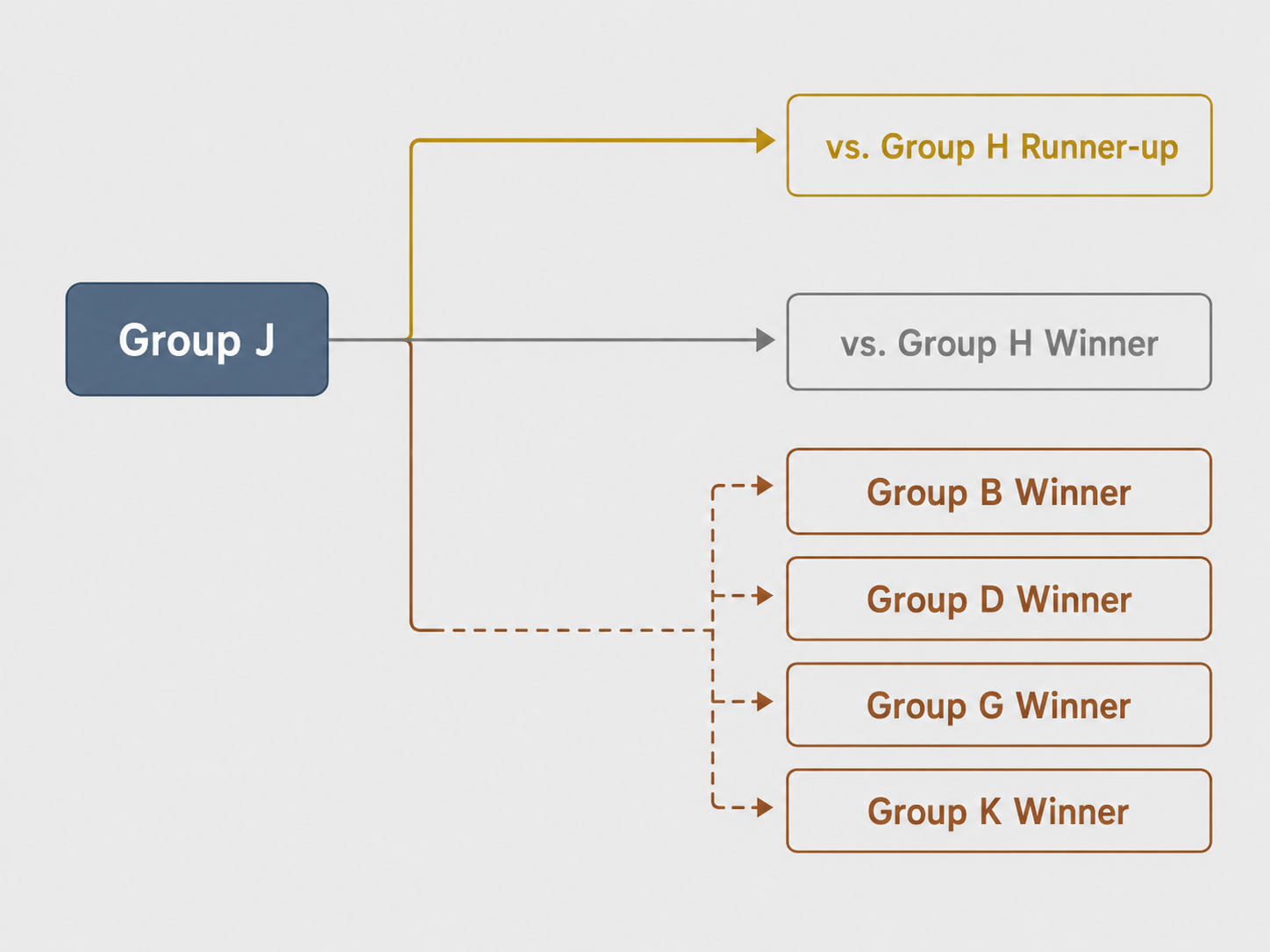
Where you finish in Group J determines your opponent in the Round of 32. This isn’t random draw—it’s a fixed bracket.
- Group J Winner: Plays the Runner-up of Group H. Group H is another set of four teams. Finishing first likely avoids another group winner in the first knockout round.
- Group J Runner-up: Plays the Winner of Group H. This is a tougher initial draw, facing a team that topped its group.
- Group J Third-Placed Team (if they qualify): This is where it gets complex. The eight qualifying third-placed teams are drawn against the winners of Groups B, D, G, K, and L. The specific matchup depends on which third-place teams qualify and a draw to ensure balance. You could face a group winner or have a slightly more open path.
The travel matters. Group J teams play in Kansas City, Santa Clara, and Arlington. The Group J winner who advances will likely stay in the central/southern US corridor. A third-placed qualifier could be sent anywhere. Fatigue from cross-country travel is a real factor in a tournament this vast, an element often missing from pure team structure analysis.
The Critical Role of Matchday 3
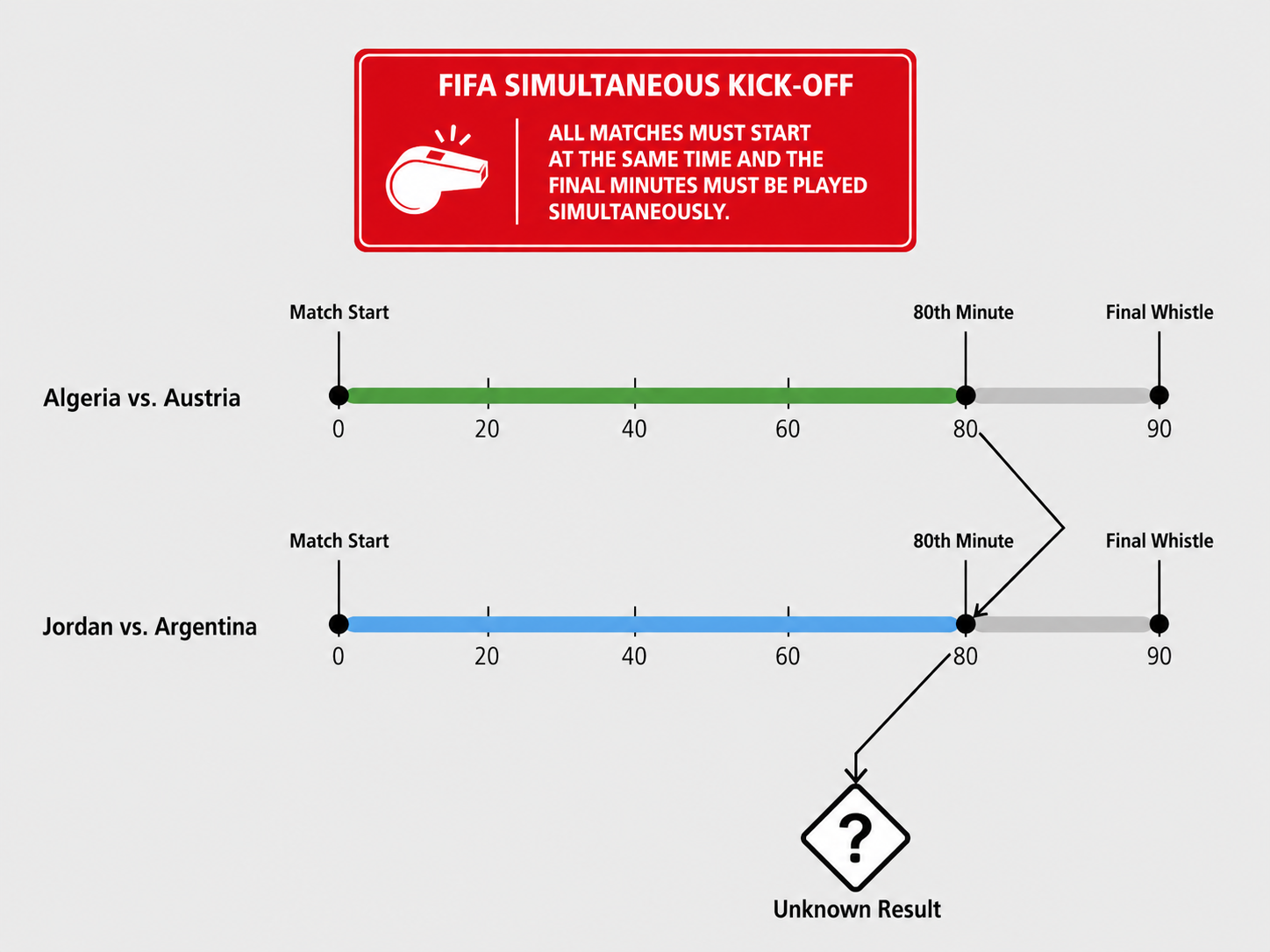
All final group matches kick off simultaneously. This is a sacred FIFA rule to preserve sporting integrity. It eliminates the scenario where one team knows exactly what result it needs from the final minutes of another game.
For Group J, this means the Algeria vs. Austria and Jordan vs. Argentina games start at the exact same time. No team can “play for a draw” knowing a draw is enough because the other game is finished. Both games are live unknowns.
This forces attacking play. If Algeria and Austria are drawing in the 80th minute, and that result would send Austria through on goal difference, Algeria must attack. They can’t sit back. Conversely, if that draw sends Algeria through, Austria must throw men forward. It creates a pure, pressurized football environment where every manager’s match strategy is tested in real-time, without a safety net of information.
It’s the opposite of a calculated indoor soccer strategy for a small field. This is grand, unpredictable theatre.
Frequently Asked Questions
Who are the teams in World Cup 2026 Group J?
Group J consists of Argentina (defending champion), Austria, Algeria, and Jordan. Argentina is the heavy favorite to win the group, with Austria and Algeria expected to battle for second place and Jordan as the significant underdog.
How many teams qualify from World Cup 2026 Group J?
The top two teams qualify directly for the Round of 32. Additionally, the third-placed team has a very strong chance of qualifying as one of the eight best third-placed teams from across all twelve World Cup groups.
What happens if teams are tied on points in Group J?
FIFA uses a seven-step tie-breaker system. The first and most important is the head-to-head record between the tied teams (points, then goal difference, then goals scored). Only if teams remain tied after those three steps does overall group goal difference become the fourth tie-breaker.
Can Jordan qualify from World Cup 2026 Group J?
It is highly unlikely but mathematically possible under the new 48-team format. Jordan’s most realistic path is to earn a draw against either Austria or Algeria, keep their other losses very narrow, and finish third with 1 point and a decent goal difference. They would then need to be among the eight best third-placed teams overall.
Where can I find the full fixture list and standings for Group J?
The complete schedule, venues, and live standings are maintained on the official 2026 World Cup Group J entry. All matches are in the United States, spanning Kansas City, Santa Clara, and Arlington.
Before You Go
Forget the simple top-two narrative. World Cup 2026 Group J is a three-dimensional puzzle where third place is a viable target, goal difference is a primary weapon, and a single yellow card could rewrite the script. Argentina should navigate it, but their focus will be on peaking for the knockouts. The real drama belongs to Austria and Algeria—a clash of styles where discipline meets passion, with the expanded format rewarding the team that best handles the new math. Watch Matchday 2 closest. That’s when the qualification scenarios crystalize, and the pressure of the simultaneous final day begins to build.
I come from the “soccer heart” of Germany, the Ruhrpott. I have played, trained and followed soccer all my life and am a big fan of FC Schalke 04. I also enjoy following international soccer extensively.