Understanding the 5-3-2 Defensive Formation in Soccer Tactics
The 5-3-2 defensive formation in soccer is a tactical system using five defenders, three midfielders, and two forwards. It prioritizes defensive solidity and compactness, creating a numerical advantage at the back to force opponents into wide areas and limit central penetration through organized spatial control.
The 5-3-2 defensive formation in soccer is a structured system with five defenders, three central midfielders, and two strikers. Its strength lies in creating numerical superiority in defensive zones, forcing opponents wide, and maintaining a compact block that is difficult to penetrate centrally. It is a flexible setup that can defend deep or press higher.
Most people see three center-backs and think “park the bus.” That’s the first mistake. The 5-3-2 isn’t about sitting back and hoping. It’s about controlling space. It dictates where the opponent can play, not just reacting to them. This guide breaks down the roles, the principles, and the real trade-offs—the kind you only learn from running it on a wet Tuesday night.
Key Takeaways
- The 5-3-2’s core principle is compactness. The three lines stay close together, denying space between them and forcing attacks into predictable wide areas.
- Wing-backs are the system’s engine. They must defend as a fifth defender and attack as a wide midfielder. A slow or undisciplined player in this role breaks the entire shape.
- It creates a 3v2 or 3v1 advantage in the penalty area against most attacks, making it exceptionally strong against crosses and second balls.
- The formation can be overloaded in midfield by opponents playing with four or five midfielders, requiring immense discipline from the central trio.
- While defensively solid, its attacking threat hinges on transitions. The two strikers are often isolated unless supported by midfielders or wing-backs on the break.
The Core Principles of the 5-3-2
Forget the idea that this is a purely reactive, low-block system. Modern implementations, like those used by Antonio Conte, use it as a proactive defensive structure. The formation prioritizes organization over frantic pressing and space over man-marking.
The 5-3-2 defensive formation operates on three foundational principles: compactness (minimizing space between defensive lines), central control (forcing play toward the flanks), and numerical superiority (creating overloads in key defensive zones, particularly the penalty box).
Compactness is non-negotiable. The distance between your back five and your midfield three should rarely exceed 20-25 yards when in a mid-block. This squeezes the playing area, making it impossible for the opponent to play penetrating passes between your lines. If a gap opens, a clever number 10 will find it.
Central control means you surrender the wings willingly. Your packed center funnels the opponent’s build-up toward the touchline. From there, your wing-back and nearest central midfielder can double-team the ball carrier in a confined space. It’s a trap.
Numerical superiority is the mathematical advantage. You have five defenders against two or three forwards. You have three central midfielders to patrol the most dangerous zone in front of your box. This is why the system is so reliable for protecting a lead. Understanding these core ideas is the first step in reading formations effectively.
TL;DR: The 5-3-2 controls games by being compact, forcing play wide, and always having more defenders in the box than the opponent has attackers.
Player Roles and Responsibilities
Every player has a hybrid duty. Get one role wrong, and the chain snaps.
The Back Five: More Than Just Defenders
The defensive line consists of three center-backs and two wing-backs. The central center-back is the organizer. They must communicate constantly, track the opposition’s central striker, and be dominant in the air. They are the last line.
The wide center-backs have a brutal job. They must defend the channel between themselves and the wing-back. If the wing-back pushes up, the wide center-back has to cover the entire flank. This requires pace and smart positioning. It’s not a role for a slow, traditional defender.
The wing-back is the most demanding position in modern soccer. In defense, they drop to form a flat back five. In attack, they must provide the team’s width, overlapping like a traditional winger. They need the engine of a midfielder and the defensive brain of a fullback. A tired wing-back is a glaring weakness.
Common mistake: Using a traditional attacking fullback as a wing-back — they defend on instinct, not structure, and will get caught upfield when the team loses possession, leaving the wide center-back exposed in a 2v1.
The Midfield Trio: The Protective Screen
This isn’t just three central midfielders thrown together. There’s a hierarchy. The central defensive midfielder (the “6”) sits deepest, shielding the center-backs and protecting “Zone 14″—the area just outside the penalty box where most chances are created. Their primary job is to intercept passes and recycle possession.
The two central midfielders ahead of the “6” are shuttlers. They need to be box-to-box players. Defensively, they slide wide to support the wing-back against opposition wingers. Offensively, they must arrive late in the box to support the two strikers. Their fitness dictates the team’s ability to transition. For a deeper look at this critical role, see our guide on the defensive midfielder duties.
The Striker Pair: The First and Last Line
The two strikers are not just goal scorers. They are the first line of the press. One striker often engages the opponent’s center-back with the ball, while the other cuts off the passing lane to the defensive midfielder. Their work rate triggers the entire team’s defensive shape.
In possession, they are the outlet. One may play as a “target man” to hold up the ball, allowing the wing-backs and midfielders to join the attack. This direct style is the heart of an effective counter-attacking strategy from this formation.
| Position | Primary Defensive Duty | Primary Attacking Duty | Key Attribute Needed |
|---|---|---|---|
| Wing-Back | Form back five, mark wide forward | Provide width, deliver crosses | Stamina, tactical discipline |
| Central Center-Back | Organize line, win aerial duels | Start buildup with passing | Leadership, communication |
| Central Defensive Midfielder | Shield defense, protect Zone 14 | Distribute to strikers/shuttlers | Positioning, anticipation |
| Striker | Press center-backs, block passes | Hold up play, finish crosses | Work rate, strength |
How the 5-3-2 Defends and Attacks
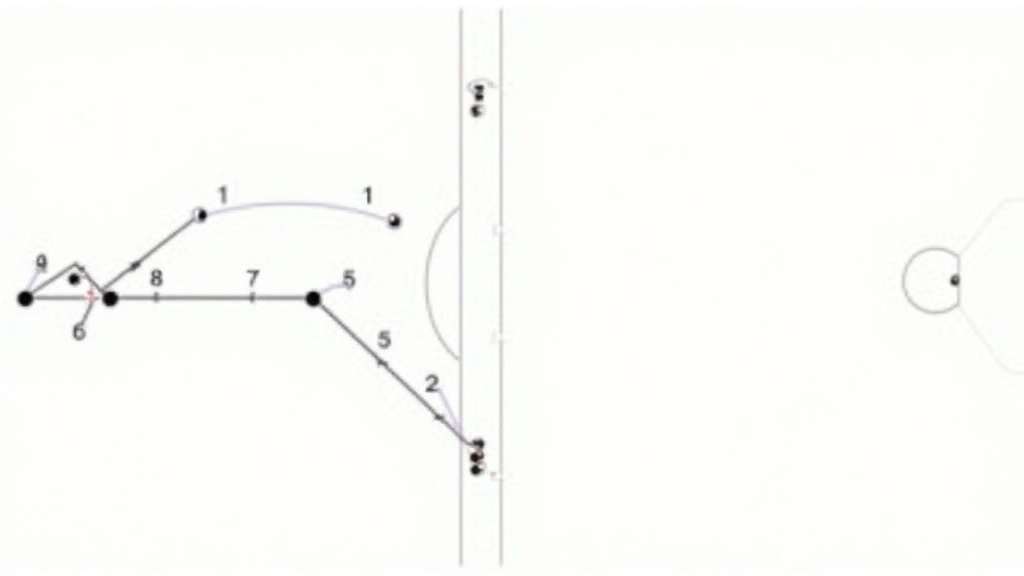
The system’s behavior changes based on the game state. It’s not static.
Defensive Organization: The Low and Mid Block
When defending deep in a low block, the entire team condenses near its own penalty area. The back five becomes a flat line, the midfield three sits just in front, and the strikers drop to the edge of the midfield. The goal is to create a wall of bodies. Crosses are allowed, but with three center-backs, you have the numbers to head them away.
The mid-block is more aggressive. The team defends from the halfway line back. The strikers press the opponent’s defenders, the midfielders mark passing options, and the defensive line steps up to compress space. This is the proactive version of the 5-3-2. The risk is the space left behind the wing-backs, which is why communication with the wide center-backs is critical.
I tried implementing a high press with a 5-3-2 during a preseason friendly. We were fit, we were motivated. It worked for 20 minutes. Then their clever central midfielder started dropping deep, pulling our “6” out of position, and hitting long diagonals into the space behind our advanced wing-backs. We lost 3-1. The lesson was simple: the 5-3-2 can press, but it must be a coordinated unit press, not a frantic chase. Otherwise, the structure you rely on vanishes.
Attacking Transitions: The Counter-Attack Threat
This is where the 5-3-2 shines. You win the ball in your compact defensive shape. The immediate outlet is one of the two strikers. The defensive midfielder looks for them instantly. If the striker can hold the ball, the wing-backs explode forward from their deep starting positions, and the shuttling midfielders sprint to join the attack.
You go from 5 defenders to 4 or 5 attackers in seconds. It’s a devastating change of pace. The numerical advantage you had in defense is now transferred to the attack. This is the classic “park the bus and counter” strategy, but it requires precise timing and understanding. It’s why this formation is a classic choice for specific defensive tactics.
TL;DR: Defend as a compact unit, force the ball wide, win it, and fire it forward to the strikers. The wing-backs’ forward runs are the signal to attack.
Strengths, Weaknesses, and Ideal Use Cases
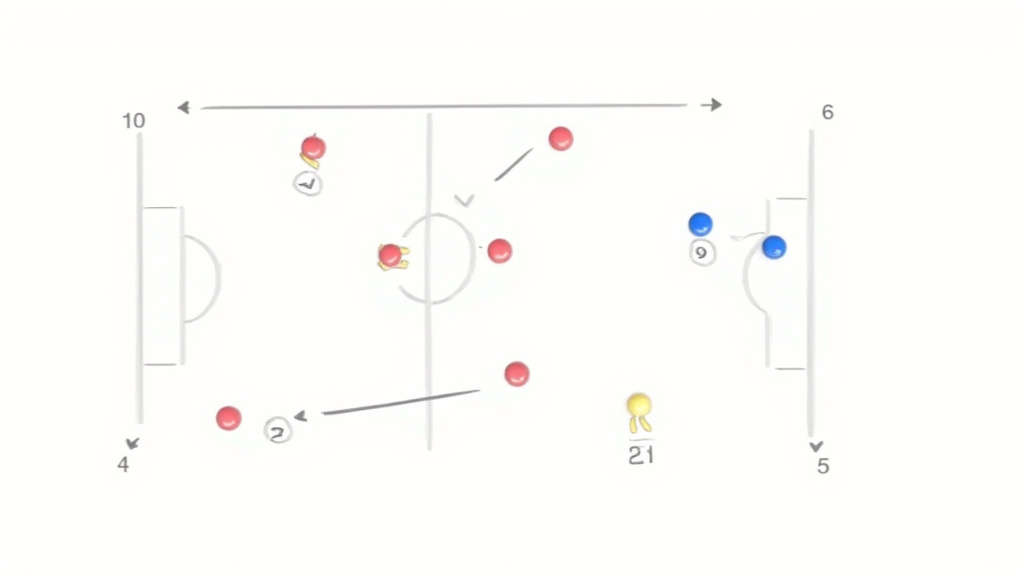
No formation is perfect. The 5-3-2 offers clear benefits at a clear cost.
| Strengths | Weaknesses | Mitigation Strategy |
|---|---|---|
| Numerical superiority in defense | Vulnerable to midfield overloads | Disciplined positioning; midfield trio must stay compact |
| Excellent against crosses & set-pieces | Wing-backs can be isolated defensively | Wide center-backs must provide immediate cover |
| Strong counter-attacking base | Strikers can become isolated in possession | One striker drops deep to link play; midfielders must support |
| Flexibility between low/mid block | Demands extremely high fitness levels | Strategic substitutions, especially at wing-back |
When to Use the 5-3-2
- Protecting a Lead: Its defensive solidity makes it ideal for seeing out a game.
- Against a Superior Opponent: The structured approach allows a less talented team to stay organized and competitive.
- When You Have Elite Wing-Backs: If you have players who can genuinely fulfill the dual role, the system becomes transformative.
- To Exploit a Two-Striker System: Your three center-backs can comfortably handle two opposing forwards.
When to Avoid the 5-3-2
- Against a 4-5-1 or 4-2-3-1 with a packed midfield: You risk being constantly overrun in the center of the park.
- If Your Wing-Backs Lack Stamina: They will be targeted relentlessly and become a liability by the 60th minute.
- When You Need to Dominate Possession: The formation naturally cedes territory and is better suited for transitional play.
It’s crucial to understand these trade-offs within the broader context of soccer formations. The 5-3-2 is a tool, not a universal solution.
Adapting to Common Opponent Formations
Your game plan must change based on who you’re playing.
Facing a 4-3-3
This is a common and challenging matchup. Their three forwards line up against your three center-backs, but their three midfielders face your three midfielders. It’s a straight numerical battle in the center. The key is your wing-backs. They must decide when to engage the 4-3-3’s advanced wingers. If they step up too early, the winger can spin in behind. If they drop too deep, the winger gets time to cross. Communication with the wide center-back is the only fix.
Facing a 4-2-3-1
Here, the problem is the “10”. Your defensive midfielder (“6”) is responsible for marking this player. If the “10” drops deep, your “6” must follow, potentially leaving a gap in front of the defense. The solution is for one of your shuttling midfielders to temporarily drop and cover that space, while your strikers adjust their press to block the pass back to the “10”. It’s a complex defensive dance.
The flexibility of the 5-3-2 is often contrasted with the 3-5-2 formation. The main difference is midfield emphasis. In a 3-5 2, the wing-backs are considered midfielders from the start, creating a more aggressive five-man midfield block. The 5-3-2 is fundamentally a five-defender system that can push two of them forward.
Academic research supports the complexity of these matchups. A notable PLOS ONE soccer formations study using positional data in 11 vs. 11 setups highlights how a formation’s effectiveness isn’t absolute but depends on the specific interactions with the opponent’s shape.
Training the 5-3-2: Key Drills
You can’t just draw this on a board and expect it to work. It needs muscle memory.
-
Compactness Rondo: Set up a 10×10 yard grid. Place 5 defenders (representing the back five) on the outside. Have 3 midfielders and 2 strikers (5 total) inside trying to keep possession from 4 pressers. The drill forces the inside group to stay tight and move as a unit, simulating the needed compactness.
Skip this, and your lines will play like separate teams. -
Wing-Back Transition Drill: Use a half-pitch. Start with the wing-back in a deep defensive position. A coach plays a ball to a striker. On that trigger, the wing-back must sprint 40 yards to receive an overlapping pass and cross. Repeat until the sprint quality drops. That’s the fitness threshold.
Do it wrong, and your attacks will have no width. -
Defensive Shifting: Set up a full back line and midfield line against a moving attack. As the ball is passed from center to wing, the entire unit must slide across the pitch, maintaining shape and distances. The wide center-back and wing-back must call out who marks the winger.
Fail to shift as one, and gaps big enough to drive a bus through will appear.
These drills build the specific habits required for this 5-3-2 formation. They are non-negotiable for making the theory work on the grass.
Frequently Asked Questions
Is the 5-3-2 just for “parking the bus”?
No. While it’s excellent for defending deep and protecting leads, modern implementations use it as a structured mid-block that can press and counter-attack effectively. It’s about controlled defense, not just desperation.
What’s the main difference between 5-3-2 and 3-5-2?
It’s a semantic shift with tactical implications. “5-3-2” emphasizes the five defensive players, with wing-backs dropping deep. “3-5-2” emphasizes the five midfield players, with wing-backs starting higher. The player roles are similar, but the default mindset and starting positions differ.
Can you play possession soccer with a 5-3-2?
It’s difficult but not impossible. It requires a very technical defensive midfielder and center-backs who are comfortable on the ball to build from the back. Typically, it’s not the formation’s strength. It’s more effective in transitional moments rather than sustained possession.
What type of player is most important in this formation?
The wing-back. If you have two players who can defend diligently, run relentlessly, and deliver quality crosses, the system functions at a high level. If you don’t, the formation’s weaknesses are exposed immediately.
How do you stop a team using the 5-3-2?
Overload the midfield. Play with a 4-5-1 or 4-2-3-1, using your extra midfielder to find pockets of space between their lines. Also, target the space behind the advanced wing-backs with quick switches of play and diagonal balls. Patience is key.
The Bottom Line
The 5-3-2 defensive formation is a tool of control, not fear. It sacrifices some attacking fluidity for defensive reliability and a clear plan. It asks specific, brutal questions of your players—especially your wing-backs. If they can answer, you have a system that can frustrate better teams and punish mistakes on the break.
Don’t use it because you’re scared. Use it because you have a plan to force the game into wide areas, win the ball there, and attack with speed. That’s the difference between a team that defends and a team that uses defense as a weapon. For coaches looking at the full spectrum of 11v11 formations, the 5-3-2 remains a potent, specialized option for the right situation.
I come from the “soccer heart” of Germany, the Ruhrpott. I have played, trained and followed soccer all my life and am a big fan of FC Schalke 04. I also enjoy following international soccer extensively.