What is a Defensive Midfielder’s Role in Soccer? Explained
A defensive midfielder, often called a CDM or holding midfielder, is the player positioned directly in front of the central defenders. Their primary role is to protect the defensive line, break up opposition attacks, and act as the primary link between defense and attack, dictating the team’s tempo and rhythm from deep positions.
Most people think this player is just a “destroyer” who runs around tackling. That view is a decade out of date. The modern game demands a defensive midfielder to be the team’s brain, its organizer, and its first playmaker. If they fail, the entire tactical structure collapses.
This guide breaks down the defensive midfielder’s evolution, core duties, and the specific skills that separate a good player from the engine of a championship team.
Key Takeaways
- The defensive midfielder is no longer just a tackler. The role now demands elite passing, game intelligence, and leadership to control play from deep.
- Three distinct archetypes exist: the Destroyer (wins duels), the Anchor (dictates tempo), and the Space-Eater (covers ground). Most elite players blend these traits.
- Your formation dictates your duties. A single pivot in a 4-3-3 carries immense solo responsibility, while a double pivot in a 4-2-3-1 creates a partnership with shared duties.
- The best defensive midfielders scan the field every 3 seconds. Anticipation and positioning prevent fires; pure speed puts them out.
- Communication is a technical skill. You must organize the back line, instruct the midfield, and be the on-pitch extension of the coach’s voice.
The Core Duties: What a Defensive Midfielder Actually Does
Head design changes the entire process. Look at the business end of your trimmer.
The job splits cleanly into two phases: what you do when the opponent has the ball, and what you do when your team has it. Most amateur players focus only on the first part. The professionals live in the second.
A defensive midfielder shields the backline, intercepts passes in central zones, and initiates attacking transitions. They maintain positional discipline between the center-backs, rarely venturing into advanced areas unless covering for a teammate. Success is measured by passes intercepted, defensive duels won, and progressive passes completed, not by tackles attempted.
Out of Possession: The Shield.
Your first duty is to be an obstacle. Position yourself in the central channel between your center-backs, forming a protective triangle. You are not man-marking a specific attacker unless instructed. You are zone-marking the most dangerous space on the pitch.
When the opposition’s center-back has the ball, your priority is to block the pass into their number 10. You don’t follow that player if he drifts wide. You hold your position, stay within the width of your penalty area, and ensure no one receives the ball between your lines. Any pass into that pocket is your cue to be aggressively tight, not passive. The closer the ball gets to your goal, the more aggressive your closing down must become.
In Possession: The Conductor.
This is where the role transformed. You receive the ball from your center-backs, often under immediate pressure from a pressing forward. Your first touch must be away from that pressure and into space. You now have three to five seconds to decide the game’s next move.
Option one is the simple, safe pass to a full-back or back to the center-back to reset. Option two is the line-breaking pass between the opponent’s midfield lines to your attacking midfielder’s feet. Option three is the long, diagonal switch to your winger on the weak side. Choosing the right option, and executing it with the correct weight, is what separates a distributor from a playmaker. Your pass doesn’t just find a teammate; it dictates the tempo and disorganizes the opponent.
TL;DR: Defend the space, not the man. In possession, your first touch decides the next phase of play. Hesitation in either moment breaks the team’s shape.
The Three Archetypes of a Modern CDM
Not all defensive midfielders are built the same. The old “destroyer” label has splintered into specialized profiles. Think of them as tools. A coach picks the tool that fits the tactical job and the players around him.
| Archetype | Primary Focus | Key Trait | Modern Example | Best For… |
|---|---|---|---|---|
| The Destroyer | Regaining possession | Physical duels, tackling, aggression | Casemiro, Aurélien Tchouaméni | Teams that defend deep and attack on the counter. Excels in a double pivot where a partner handles distribution. |
| The Anchor | Dictating tempo | Passing range, composure, positional IQ | Rodri, Sergio Busquets | Possession-dominant teams. The single pivot in a 4-3-3 who is the team’s metronome and deep-lying playmaker. |
| The Space-Eater | Defensive coverage | Stamina, speed, ball-winning agility | N’Golo Kanté, Declan Rice | High-pressing systems or teams in transition. Covers for attacking full-backs and acts as a defensive shuttle. |
The Destroyer is your wrecking ball. This player exists to break the opponent’s play. They relish the tackle, dominate aerial duels, and provide a physical presence that intimidates. Their passing is functional, not creative. The risk with a pure destroyer in today’s game is they can be bypassed by quick passing combinations and may leave the defense exposed if they dive into a challenge and miss.
The Anchor is your quarterback. They might not make the most tackles, but they make the most important passes. Their positioning is impeccable, always showing for the ball from the defenders. They control the game’s rhythm, slowing it down or speeding it up with their choice of pass. The anchor requires supreme confidence and the ability to play with their head up under pressure. A bad game from your anchor means your team has no rhythm.
The Space-Eater is your firefighter. Their game is defined by incredible athleticism and anticipation. They cover the ground that two players would normally occupy, plugging gaps left by teammates. They win the ball back high up the pitch and are excellent in transition. The limitation can be their technical ability in tight spaces when asked to build play from the back.
Common mistake: Deploying a pure Destroyer as a single pivot in a possession-based system. Without the passing range to build play, the team’s attacks stall at his feet, forcing long balls and surrendering control. It happens within twenty minutes.
Most elite players now are hybrids. Rodri is an Anchor with Destroyer traits. Declan Rice is a Space-Eater developing Anchor qualities. The job demands a blend.
How Formations Dictate the Role
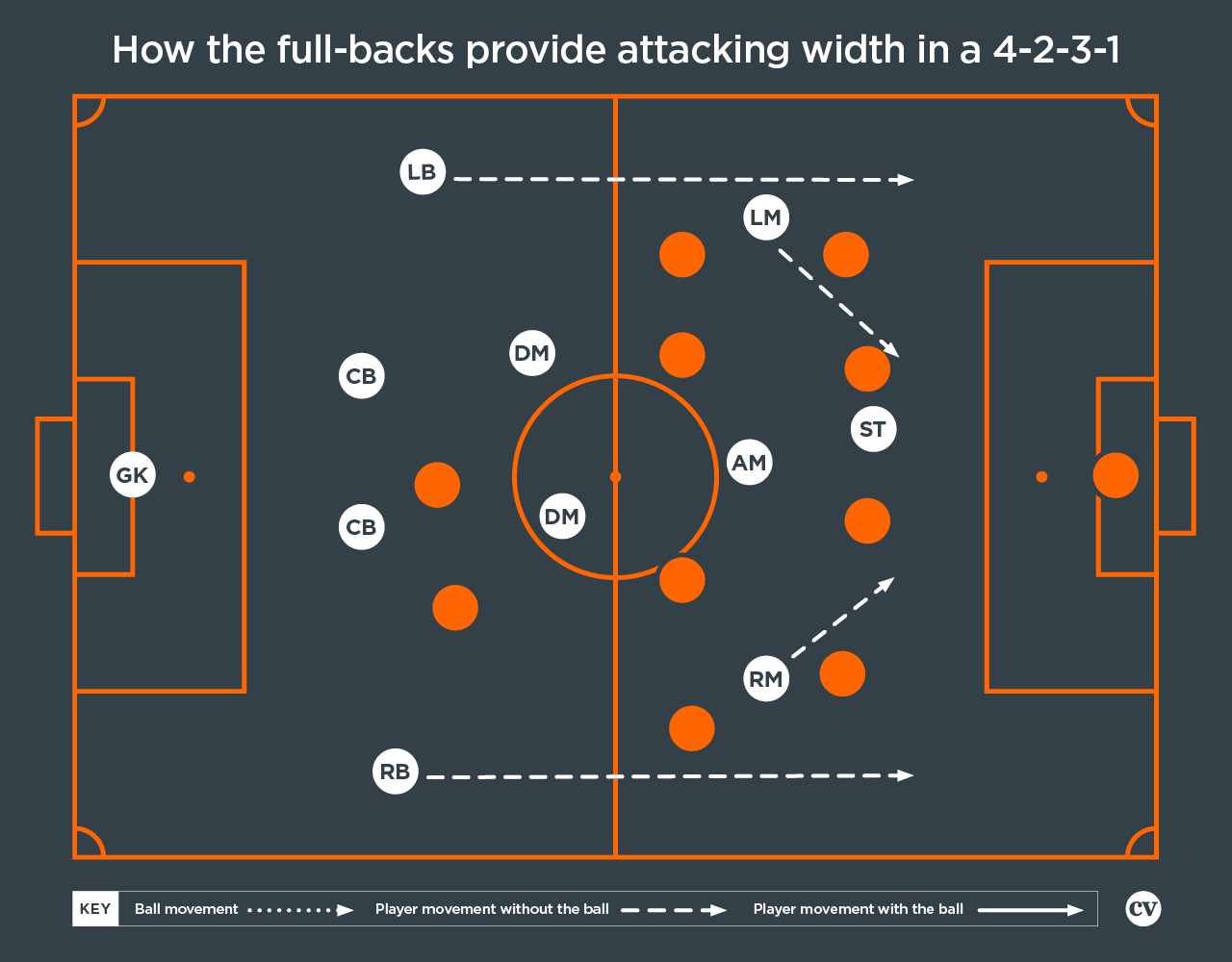
Your specific duties are not set in stone. They are dictated by the numbers on the coach’s whiteboard. A defensive midfielder’s world changes completely depending on whether they are alone or have a partner.
The Lone Sentinel: The Single Pivot.
This is the most demanding role in modern soccer. In a 4-3-3 or a 3-4-3, one player sits alone in front of the defense. They are the single pivot. All play flows through them. They have no direct partner to cover if they step out of position.
- Responsibilities skyrocket. You are the sole protector of the center-backs. You are also the primary link to the two advanced number 8 midfielders. Your positional discipline must be perfect. A single missed interception or a poorly timed forward run leaves a highway to your goal.
- The requirement shifts to passing. Because you are alone, you will receive the ball constantly under pressure. You must have the technical security to turn and find a pass. This is why coaches like Pep Guardiola use Anchors like Rodri in this role. The single pivot is a test of nerve and skill every single match.
The Partnership: The Double Pivot.
In a 4-2-3-1 formation, you have a partner. This defensive midfield partnership creates flexibility. One can push forward to press while the other holds. One can be the destroyer, the other the distributor.
- Roles can be specialized. This is where a classic Destroyer can thrive. He can focus on winning the ball, knowing his partner, often a more creative player, will be there to receive it and start the attack. The partnership requires intuitive understanding—you move as a unit, covering each other’s space.
- It changes the defensive shape. With two players screening the defense, the team can often defend in a more compact mid-block. The central zones are harder for the opponent to penetrate. Understanding this midfield pivot system is crucial for any coach designing their soccer tactics.
The choice between a single or double pivot fundamentally alters a team’s defensive strategies and attacking patterns. It’s the first decision a coach makes when building a team’s formation structure.
The Skills That Separate the Best From the Rest
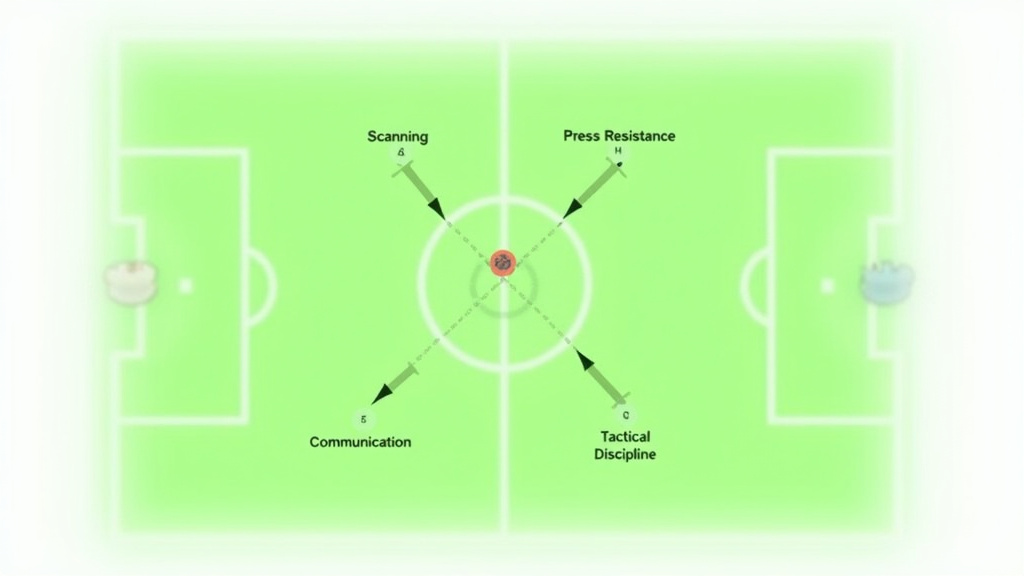
You can be strong and a decent passer. To be a top defensive midfielder, you need a toolkit that goes far beyond the physical.
1. Scanning and Anticipation (The Mental Skill).
This is non-negotiable. Before you receive the ball, you must know where every opponent and teammate is. The best, like Sergio Busquets, turn their heads every three seconds. They don’t watch the ball; they watch the spaces and the players moving into them. This allows them to intercept a pass they saw coming five seconds earlier. Anticipation lets you be in the right place without needing to sprint there. It looks like luck. It’s trained habit.
2. Press Resistance and First Touch (The Technical Skill).
A opponent will try to press you the moment you get the ball. Your first touch must be away from that pressure and into space. This often means receiving the ball back-foot, on the half-turn, so your body is already oriented to play forward. Drills that replicate this—a passer, a passive presser, and you in the middle—are essential. If your first touch is poor, you become a liability in your own third.
3. Communication and Leadership (The Vocal Skill).
You are the on-field conductor. You see the whole game. This means you must constantly talk.
* To your center-backs: “Step up!” “Hold the line!”
* To your full-backs: “Stay!” or “Go!”
* To your fellow midfielders: “Drop!” “Show!”
Your voice organizes the defensive block. It’s not yelling. It’s clear, concise instruction. A silent defensive midfielder is a useless one.
4. Tactical Intelligence and Discipline.
This is understanding the game plan and your role within it. If the tactic is a high press, you must know when to jump and when to hold. If it’s a low block, you must understand the exact distance to keep between you and the defenders. It means not getting drawn out to the wings to chase the ball, leaving the center exposed. Discipline is staying home even when your instincts scream to go win the ball.
I played with a guy at the regional level who had the tackling ability of a top-division player. His passing was fine. But he never stopped talking, and it was never useful information—just noise and frustration. Coaches dropped him because his communication scrambled the team’s organization, not helped it. The lesson was brutal: your voice is a tool, not a vent.
The Evolution: From Destroyer to Director
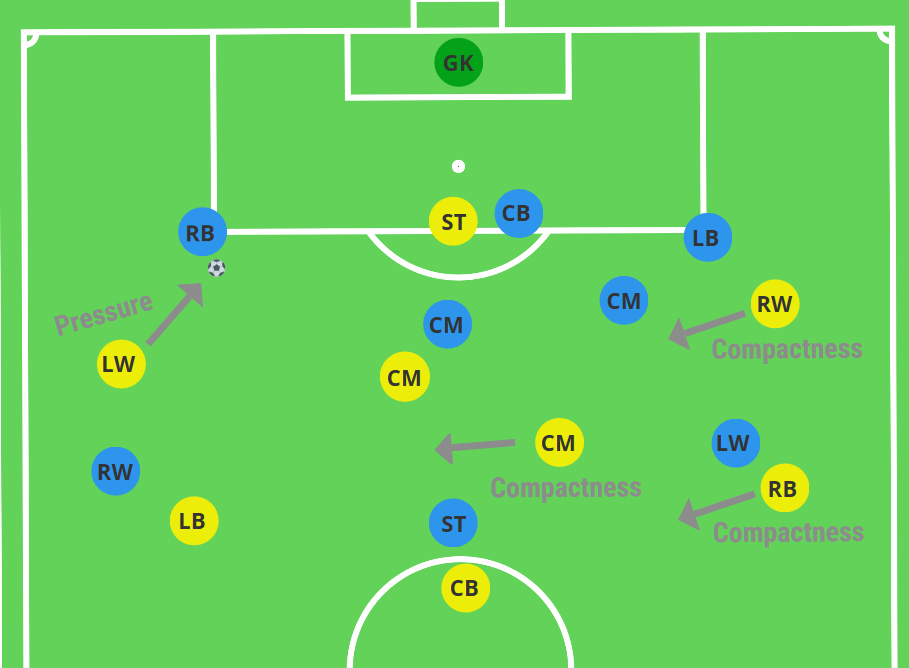
The role didn’t start as the brain of the team. It began as pure brawn.
In the 1990s and early 2000s, the “midfield destroyer” was king. Players like Claude Makélélé (though his game was more nuanced than the label) defined the role: break up play, give it simple. Their job was purely defensive, a shield for more creative players ahead. The Wikipedia entry on central midfielders documents this historical focus on defensive duties.
The change came with the rise of possession-based philosophies. Coaches realized that if your first player after winning the ball couldn’t pass, you just gave it back. The defensive midfielder became the starting point of attacks, not the end of them.
The modern “director” like Rodri is a product of this evolution. He is expected to defend, yes. But his primary value is in receiving the ball under pressure and picking the pass that breaks the opponent’s lines. The position’s physical demands have been supplemented, and in some systems surpassed, by technical and cognitive demands. This evolution mirrors the development of the regista role, a specialized deep-lying playmaker.
Training to Become a Modern Defensive Midfielder
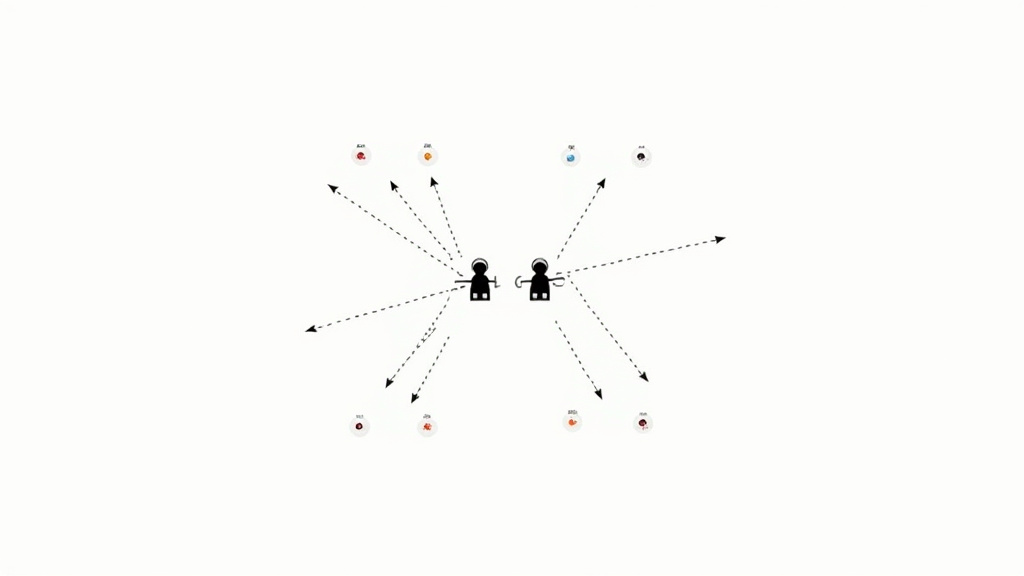
You can’t just play matches. Your training must be deliberate and focused on the role’s unique demands.
Positional Rondo (The Essential Drill).
Set up a 10×10 yard square. You are in the middle with one other defender. Four attackers on the outside must keep possession. Your job isn’t just to win the ball. It’s to work with your partner, cut passing lanes, and force the attackers into a mistake. This drills anticipation, communication, and compactness.
Scanning and Receiving Under Pressure.
Set up two mannequins or cones 15 yards apart to simulate center-backs. Have a coach or teammate play you the ball from one. As the ball travels, a second player applies pressure from behind you. Before you receive, you must scan over both shoulders. Your first touch must be away from the pressure and toward the other “center-back.” This builds the muscle memory for game day.
Shadow Play and Tactical Walkthroughs.
Without a ball, walk through your team’s defensive shape. Where do you go when the left-back is attacked? Where do you shift when the ball is with the opponent’s center-back? This seems simple, but it builds the unconscious understanding of space that defines elite players. It’s the foundation of all good midfield tactics.
TL;DR: Train your brain first. Drills that force you to scan and communicate are more valuable than endless fitness laps. Understand your role in the team’s tactical diagrams before you worry about your stats.
Frequently Asked Questions
What’s the difference between a CDM and a CM?
Central Midfielder (CM or number 8) is a box-to-box player with balanced offensive and defensive duties. A CDM (number 6) is primarily defensive, anchoring in front of the back line. The CM has freedom to join the attack; the CDM’s first thought is to protect. The formation numbering system makes this distinction clear.
Can a defensive midfielder be a team’s best player?
Absolutely. Players like Rodri at Manchester City are arguably their team’s most important player. They control the game’s tempo, provide defensive stability, and initiate almost every attack. Their value isn’t always in goals or assists, but in control and prevention.
What is a “regista” and how is it different?
regista is a specific type of defensive midfielder, a deep-lying playmaker whose primary focus is creative passing. Think Andrea Pirlo. While all registas are defensive midfielders, not all defensive midfielders are registas. A Destroyer like Casemiro has a completely different skillset. The nuances between a deep-lying playmaker and other playmaker types are important for tactical discussions.
Why do some teams play with two defensive midfielders?
Teams use a double pivot (two CDMs) for greater defensive stability, to cover for attacking full-backs, or to allow one midfielder to specialize in ball-winning and the other in distribution. It’s a common feature of the 4-2-3-1 tactics and provides a solid base against counter-attacking teams.
What’s the most important attribute for a young CDM?
Positional awareness and the ability to read the game. Speed and strength can be developed. The innate understanding of where to be, and what will happen three passes from now, is the rarest and most valuable trait. This cognitive skill is more important than any physical metric.
How does a CDM’s role change in a pressing system?
In a high-pressing system, the CDM becomes the leader of the midfield press. They must decide when to step up and press the opponent’s deep midfielder, cutting off the passing outlet. This requires incredible fitness and judgment, as a mistimed press leaves the defense exposed.
The Bottom Line
The defensive midfielder is the tactical heartbeat of a soccer team. The role has evolved from a simple destroyer into a complex, hybrid position demanding the mind of a quarterback, the composure of a center-back, and the passing range of a playmaker. Success isn’t measured in tackles, but in control—control of space, control of tempo, control of the game’s narrative.
Whether operating as a lone single pivot or in a partnership, the best ones make their teams predictable in possession and a nightmare to play against out of it. They are the players coaches build their team formations around. If you want to understand modern soccer, start by watching the number 6. Everything else flows from there.
I come from the “soccer heart” of Germany, the Ruhrpott. I have played, trained and followed soccer all my life and am a big fan of FC Schalke 04. I also enjoy following international soccer extensively.