What’s the Difference? Counter Pressing vs Normal Pressing
Counter pressing is a reactive, immediate swarm to win the ball back within 5-8 seconds of losing it, exploiting opponent disorganization. Normal pressing is a proactive, structured effort to win the ball based on opponent position and specific triggers like a bad touch or a pass into a trap.
Most coaches and fans confuse frantic chasing with a tactical press. They see players running and call it gegenpressing. The real difference isn’t effort. It’s timing, coordination, and a pre-planned reaction to a very specific moment: your own failure.
This guide breaks down the clock, the triggers, and the trade-offs. You’ll learn to spot the difference on TV, understand why one system burns out players, and decide which approach fits a team’s personnel.
Key Takeaways
- Counter-pressing’s 5-8 second window is non-negotiable. After that, it collapses into a desperate chase that leaves you exposed.
- Rest defense is the safety net. If your covering players are caught upfield when the press is broken, you concede a 3v2 counter within three passes.
- PPDA (Passes Per Defensive Action) measures press intensity. A PPDA under 10 signals an aggressive high or counter-press; above 15 suggests a mid or low block.
- Normal pressing is about controlling space. Counter-pressing is about exploiting time, the brief moment the opponent is least organized.
- Implementing true counter-pressing requires a squad with exceptional collective fitness and tactical intelligence. One player breaking shape wrecks the entire system.
What is Counter-Pressing (Gegenpressing)?
Counter-pressing is a coordinated defensive reaction that begins the millisecond your team loses the ball. It is not a general strategy for defending. It is a specific protocol for managing failure. The objective is to win the ball back immediately, capitalizing on the natural disarray that follows any turnover. The opponent’s players are out of position, their passing lanes are open, and their first thought is to secure possession, not attack. This is the vulnerability gegenpressing exists to exploit.
The system demands a compact team shape even when in possession. Players cannot be spread across the entire pitch. If your winger is isolated on the touchline when you lose the ball, no counter-press is possible. The compactness ensures that when possession is lost, three or four players are already within pressing distance. They swarm the ball carrier and the nearest passing options simultaneously.
Counter-pressing (gegenpressing) is a football tactic where a team immediately and aggressively presses the opponent within 0-8 seconds after losing possession. This coordinated reaction exploits the opponent’s vulnerability during the defensive transition phase, aiming to win the ball back high up the pitch before an organized attack can form.
The 8-Second Window and the Key Triggers
The reaction is not infinite. Studies of teams like Klopp’s Liverpool show the effective press lasts between 5 and 8 seconds. If the ball isn’t won back in that window, there’s a vocal or visual exit trigger. The team stops pressing and recovers into a structured defensive block. Ignoring this exit is the amateur mistake. You see a team press for 12 seconds, get passed around, and then watch a simple through-ball slice them open.
Triggers for the initial swarm are precise. They are not “the other team has the ball.” They are cues like a heavy first touch by the opponent, a pass to a player facing their own goal, or a recovery in a wide area where the sideline acts as an extra defender. The 2021 machine-learning study published in the Springer soccer tactics analysis quantified this, finding counter-pressing succeeds most often with numerical superiority near the sidelines.
TL;DR: Win the ball back within 8 seconds or drop off. The press is a sprint, not a marathon.
The Non-Negotiable Role of Rest Defense
This is the part training videos skip. Rest defense refers to the players positioned behind the immediate press. Their job is not to join the swarm. Their job is to protect the space behind it. If your two center-backs are 10 yards apart and your defensive midfielder is also pressing the ball, your rest defense is broken.
When the counter-press fails, and it will, these covering players must deal with the opponent’s outlet pass. If they’re not in place, the counter-attack is a foregone conclusion. I learned this coaching a youth side. We pressed perfectly for 6 seconds, but our holding midfielder had pushed up too high. One pass over the top, and their striker was alone against our keeper. Three times in one half. Rest defense isn’t an abstract concept. It’s the last line between a controlled risk and a goal conceded.
| Rest Defense Element | Correct Positioning | Consequence If Wrong |
|---|---|---|
| Central Defenders | Compact, 10-15 yards apart | Through-ball channels split them; 2v1 against the keeper. |
| Holding Midfielder | Central, between defenders and press | Opponent’s #10 receives turn-and-pass time; bypasses entire midfield. |
| Fullbacks | Slightly tucked, not stranded high | Wingers isolate them 1v1; early cross finds runners against retreating CBs. |
What is Normal Pressing in Soccer?
Normal pressing encompasses any organized team effort to win the ball back, but it is initiated by the opponent’s actions, not your own loss of possession. It is a proactive defensive strategy. You decide when and where to engage based on the game state, the scoreline, and the other team’s weaknesses. The core objective is to disrupt build-up play and force mistakes in areas you choose.
This is the broader category of pressing in soccer. It’s subdivided by where on the pitch you commit to the fight. Each type demands a different physical and tactical profile from your squad. Choosing the wrong one for your personnel is a season-killing error.
The Three Primary Pressing Systems
Teams don’t just “press.” They commit to a system that defines their defensive identity.
- High Press: The entire team pushes up, engaging the opponent in their own half. The striker pressures the center-backs, wingers cut off the fullbacks, and midfielders jump passing lanes into the center. The goal is to win the ball back within 40 yards of the opponent’s goal. It’s physically brutal and requires a squad of athletes. Pep Guardiola’s Manchester City uses a high press, but it’s often a controlled squeeze rather than the all-out frenzy of a counter-press.
- Mid-Block Press: The team defends in a compact shape, usually between the halfway line and their own penalty area. They concede possession in the opponent’s half but spring the trap when the ball enters the middle third. It’s a patient, space-oriented approach. Diego Simeone’s Atlético Madrid has mastered the mid-block, absorbing pressure before pouncing on a lazy pass.
- Low Block: All ten outfield players retreat behind the ball, packing the penalty area. The aim isn’t to win the ball high but to deny space and force low-percentage shots. It’s a pure survival tactic, often paired with a lightning-fast counter-attack. Burnley under Sean Dyche was the Premier League archetype.
Common mistake: Using a high press with slow center-backs, the opponent plays one ball over the top, and your defensive line lacks the pace to recover, conceding a clear chance every game.
Counter Pressing vs Normal Pressing: The Direct Comparison
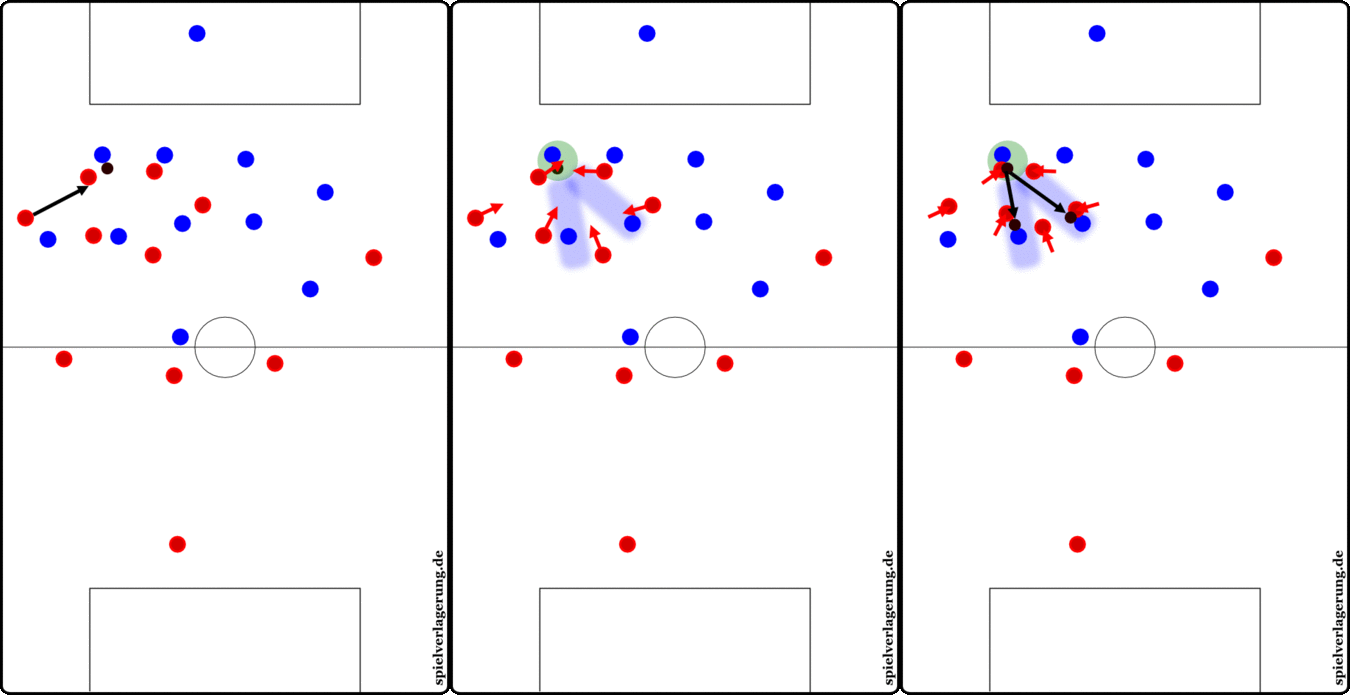
The confusion happens because a high press and a counter-press can look similar, lots of running, lots of pressure. The difference is in the why and the when. One is a plan you execute; the other is a reflex you train.
A normal high pressing strategy is like a planned siege. You decide to pressure their goalkeeper on every goal kick. You set traps for their left-footed center-back. It’s systematic. Counter-pressing is like a swarm of hornets whose nest was just kicked. The trigger is the kick (losing the ball), and the reaction is instant, chaotic, and designed to overwhelm before the opponent can think.
| Aspect | Counter-Pressing | Normal Pressing (e.g., High Press) |
|---|---|---|
| Primary Trigger | Your team loses possession. | Opponent’s build-up action (e.g., pass to fullback). |
| Time Window | Immediate (0-8 seconds). | Sustained, can last for multiple passing sequences. |
| Mental Mode | Reactive, transitional. | Proactive, strategic. |
| Key Risk | Broken rest defense leads to direct counters. | Physical burnout and being played through via switches. |
| Best Measured By | Ball recoveries in the final third. | Low PPDA (Passes Per Defensive Action) across entire match. |
| Coach Archetype | Jürgen Klopp, Ralf Rangnick. | Pep Guardiola (controlled high press). |
Why the Distinction Matters for Players and Coaches
For a player, the cognitive load is different. In a normal press, you’re reading the opponent’s shape and waiting for your cue. In a counter-press, you’re reacting to a sudden change of state, the turnover. There’s no time to think. The movement must be drilled to the point of instinct. This is why teams that master gegenpressing look chaotic to the untrained eye but are executing a precise, rehearsed script.
For a coach, choosing a system dictates everything. A commitment to counter-pressing means training for transition moments above all else. It means recruiting players with explosive speed and relentless engines. A commitment to a structured high press means drilling complex positional patterns and patient build-up play to support the press. Trying to hybridize without the right players is a recipe for confusion. You end up with a team that presses half-heartedly and gets picked apart.
Which System Fits Your Team? A Tactical Diagnosis
This isn’t an aesthetic choice. It’s a personnel audit. Imposing a gegenpress on a squad of technical but slow players is a fast track to the relegation zone. Likewise, asking a team of energetic runners to sit in a low block wastes their greatest asset.
Ask these questions:
1. How fit is your squad? True counter-pressing demands a squad that can sustain peak intensity. The 4-3-3 formation is a common fit because its natural width and central numbers support the compact shape needed.
2. How intelligent are your players? Can your central defenders read the game well enough to hold a high line for a high press? Does your defensive midfielder have the discipline to anchor the rest defense without chasing the ball?
3. What’s your margin for error? A low block is forgiving of individual mistakes in possession but offers little attacking control. A high-risk counter-press can win games against superior opponents but can also lead to humiliating defeats if the coordination fails.
I tried to implement a high-intensity press with a veteran Sunday league team. The idea was sound. The legs were not. By the 60th minute, we were a ghost of the first-half team, and opponents walked through us. We switched to a deep, compact 4-4-2 formation and started picking up points by being hard to beat. The system must serve the players, not the other way around.
TL;DR: Match the press to your players’ legs and brains, not to a trendy coaching manual. A well-executed mid-block beats a poorly executed gegenpress every time.
Frequently Asked Questions
Can a team use both counter-pressing and normal pressing?
Yes, and all top teams do. They might use a structured high press for most of the game (normal pressing) but immediately switch to a frantic counter-press for 8 seconds whenever they lose the ball in the opponent’s half. The systems are tools, not identities.
What does PPDA stand for?
PPDA stands for Passes Per Defensive Action. It counts how many passes the opponent makes, on average, before your team makes a defensive action (tackle, interception, foul). A lower number means you’re pressing more aggressively. A PPDA of 8 is extremely aggressive; 15 is more passive. It’s the best single-number metric for measuring pressing intensity.
Is counter-pressing only for top teams with elite players?
No, but its effectiveness is magnified with elite athletes. The principles can be applied at any level, swarm the ball on loss, stay compact. The difference is that elite players recover faster, press smarter, and have the technical quality to instantly capitalize on the turnovers they create. At amateur levels, the focus should be on the coordination and the 8-second rule, not expecting Bundesliga-level execution.
Which formation is best for counter-pressing?
Formations with a compact central core and wingers who can press inside are ideal. The 4-2-3-1 formation and the 4-3-3 are the most common. The 3-5-2 formation can also work if the wing-backs are disciplined in their positioning to provide rest defense.
What’s the biggest mistake coaches make when teaching pressing?
They emphasize effort over organization. Telling players to “press harder” without defining the triggers, the roles, and the exit signal creates chaos. Players chase shadows, gas out, and leave gaps. The first lesson in any soccer tactics guide should be about shape and communication, not just running.
The Bottom Line
Forget the fancy terms. The core question is: are you trying to win the ball back because you just lost it, or because you don’t want the other team to have it? The first is counter-pressing, a reflex of loss. The second is normal pressing, a strategy of control.
Watch any top match now. When a team like Liverpool loses the ball, count. One Mississippi, two Mississippi. By eight, the ball is either won back, or they’re sprinting to get behind it. That’s the 8-second rule in live action. It’s not magic. It’s a brutal, physical equation of risk and reward. Understand that equation, and you stop seeing a blur of players and start seeing the machinery of modern football. The choice between a single pivot or double pivot or between a high press and low defensive block flows from this fundamental decision: how do you want to fight for the ball?

I come from the “soccer heart” of Germany, the Ruhrpott. I have played, trained and followed soccer all my life and am a big fan of FC Schalke 04. I also enjoy following international soccer extensively.