Kevin De Bruyne World Cup Profile: Stats & Belgium’s Hopes
To build a complete profile of Kevin De Bruyne for the 2026 World Cup, focus on three evolving elements: his physical durability after a decade of elite football, his tactical role shift from pure creator to deep-lying orchestrator, and his leadership burden for a Belgian squad in transition. At 35, his class is permanent, but his availability and influence hinge on managing his body through the 2025-26 club season.
Most profiles get the first part right, the highlight reel passes, the stats. They miss the second act. The story isn’t about what he was at Manchester City; it’s about what he must become for Belgium in 2026. A 35-year-old midfielder carrying a nation’s hopes on legs that have logged over 50,000 competitive minutes.
This guide breaks down his journey, his current reality at Napoli, his World Cup history, and the specific challenges awaiting him in North America.
Key Takeaways
- De Bruyne’s 2026 World Cup readiness is directly tied to his injury management at Napoli, where a recurring hamstring issue sidelined him for over four months in the 2025-26 season.
- His tactical role for Belgium is evolving under Domenico Tedesco, likely shifting deeper into a midfield controller role to preserve his energy and leverage his long-range passing.
- With 115 caps and 36 goals, he is Belgium’s on-field brain and captain, tasked with mentoring a new generation including Jeremy Doku and Johan Bakayoko.
- His World Cup legacy is a mixed bag: a quarter-final in 2014, a third-place finish in 2018, and a shocking group-stage exit in 2022 that adds pressure for 2026.
- Despite his age, his technical passing range and football IQ remain elite, making him indispensable if fit, but “if” is the biggest word in Belgian football right now.
The Maestro’s Current Equation: Class vs. Durability
The conversation about Kevin De Bruyne now starts in the treatment room. You cannot discuss his 2026 World Cup profile without staring at the dates: October 25, 2025, to March 6, 2026. That’s a 132-day gap caused by a hamstring injury suffered at Napoli.
His move to Serie A was a footballing dream, a free transfer to a historic club. He scored three league goals by mid-September. Then the muscle went. Hamstrings are notoriously recursive for players in their mid-30s with his explosive running style. The Napoli medical staff managed his return cautiously, knowing the 2026 World Cup was the ultimate goal for player and country.
Common mistake: Assuming De Bruyne’s technique alone guarantees impact, his passing range is useless if he can’t train for three consecutive days or play 90 minutes twice in ten days. Manage his minutes wrong in the group stage, and he’s a spectator by the knockout rounds.
This isn’t abstract. I’ve seen technically brilliant players hit this wall. The mind writes checks the body can’t cash. For De Bruyne, the 2025-26 season is a prolonged fitness test. Every match for Napoli is a data point for Domenico Tedesco. Can he hold up? The early signs post-return are positive, but the doubt is now a permanent fixture.
TL;DR: De Bruyne’s world-class ability is not in doubt; his body’s ability to deliver that class over a seven-game tournament is the single biggest question for Belgium.
De Bruyne’s World Cup History: 2014–2022
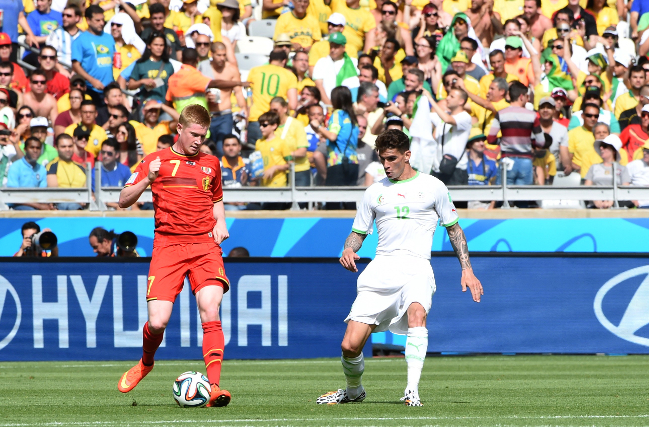
Photo: Magharebia / Wikimedia Commons / CC BY 2.0

His relationship with the tournament is a story of rising hope, glorious achievement, and bitter disappointment. It frames everything about 2026.
| Tournament | Role | Contribution | Outcome |
|---|---|---|---|
| 2014 Brazil | Emerging Playmaker | 1 goal, 2 assists; announced himself on the global stage | Quarter-final exit |
| 2018 Russia | Central Orchestrator | Scored vs. Brazil in QF; named to Fan Dream Team | Third Place |
| 2022 Qatar | Captain & Focal Point | Struggled with fitness; unable to prevent group collapse | Group stage exit |
In 2014, he was the bright young thing in a golden generation. By 2018, he was its engine, driving Belgium to their best-ever finish. The 2022 campaign was a catastrophe. The team looked old, slow, and disconnected. De Bruyne, admittedly not at peak fitness, cut a frustrated figure. His post-match comment that Belgium were “too old” to win the tournament was a brutal, honest assessment that reverberated for months.
That 2022 failure is the ghost in the machine. It’s why 2026 isn’t just another tournament. It’s a final chance for this core, led by De Bruyne, to rewrite the ending. The pressure isn’t just to perform; it’s to redeem.
The 2022 World Cup group stage exit against Morocco and Croatia was a systemic failure. De Bruyne, tasked with creating everything, was marked out of games by aggressive, athletic midfields. Belgium had no effective Plan B.
The Napoli Move & The Fitness Question
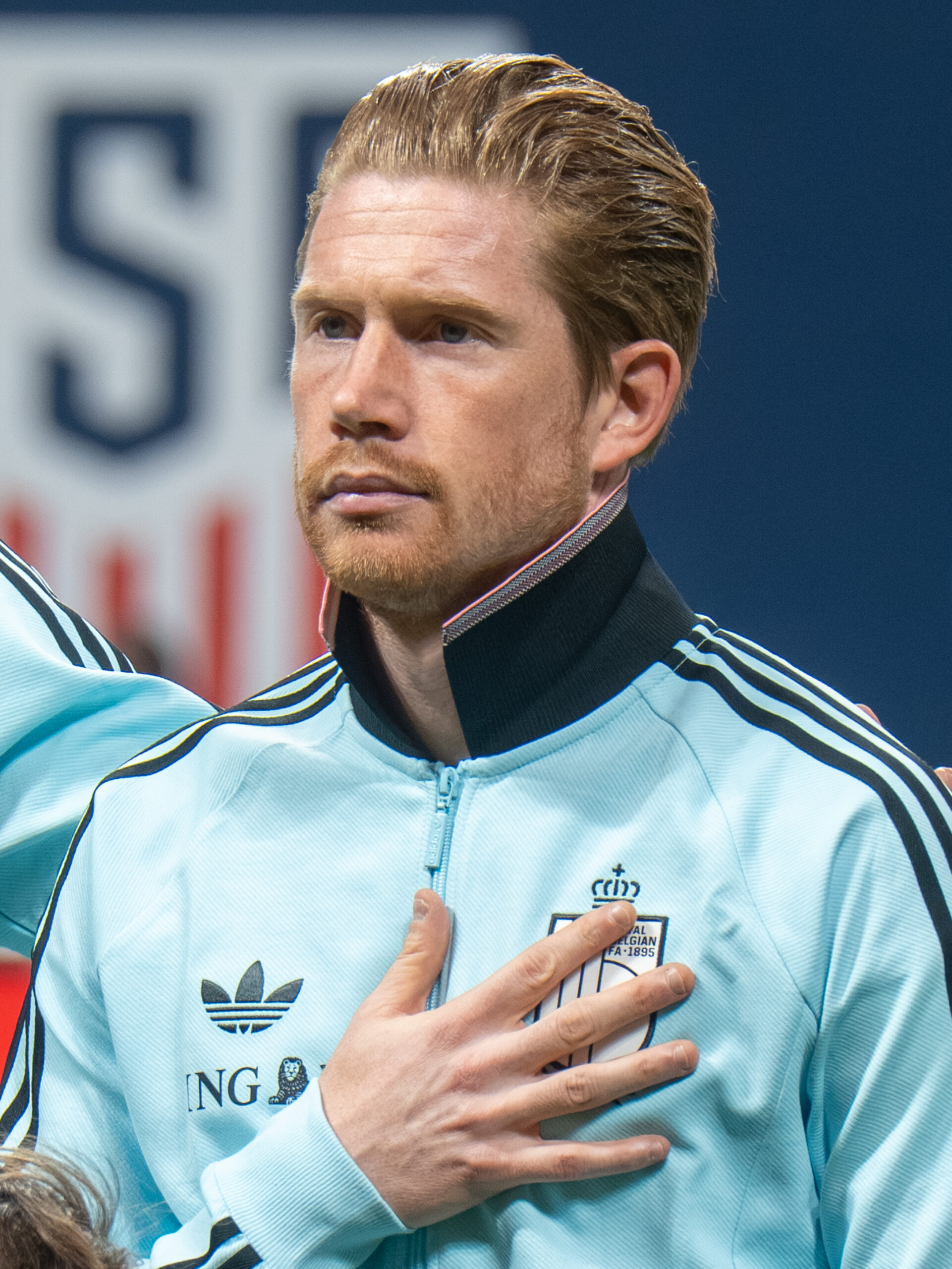
Photo: Bryan Berlin / Wikimedia Commons / CC BY-SA 4.0
.jpg)
Leaving Manchester City in 2025 was a seismic shift. After a decade defining the Premier League, he chose a new challenge in Naples. The logic was clear: less physical intensity week-to-week in Serie A, a central role in a top side, and a clearer path to managing his workload for the World Cup.
The reality has been more complicated. Serie A is tactically demanding and physically rugged. While the overall pace may be slower, the defensive discipline is relentless. For a player who thrives on space and time, it’s a different puzzle.
His injury timeline is the most critical data set for Belgian fans:
- August 2025: Makes fast start, scores debut goal.
- October 25, 2025: Suffers hamstring injury in a league match.
- March 6, 2026: Returns to action as a substitute.
- March–June 2026: Managed minutes, building towards peak fitness.
The Napoli medical team’s entire focus is on having him at 100% for July 2026. Every training session is monitored, every sprint distance logged. This isn’t just club football anymore; it’s a joint custody agreement between club and country for a priceless asset.
Tactical Evolution: How De Bruyne’s Role Changes at 35
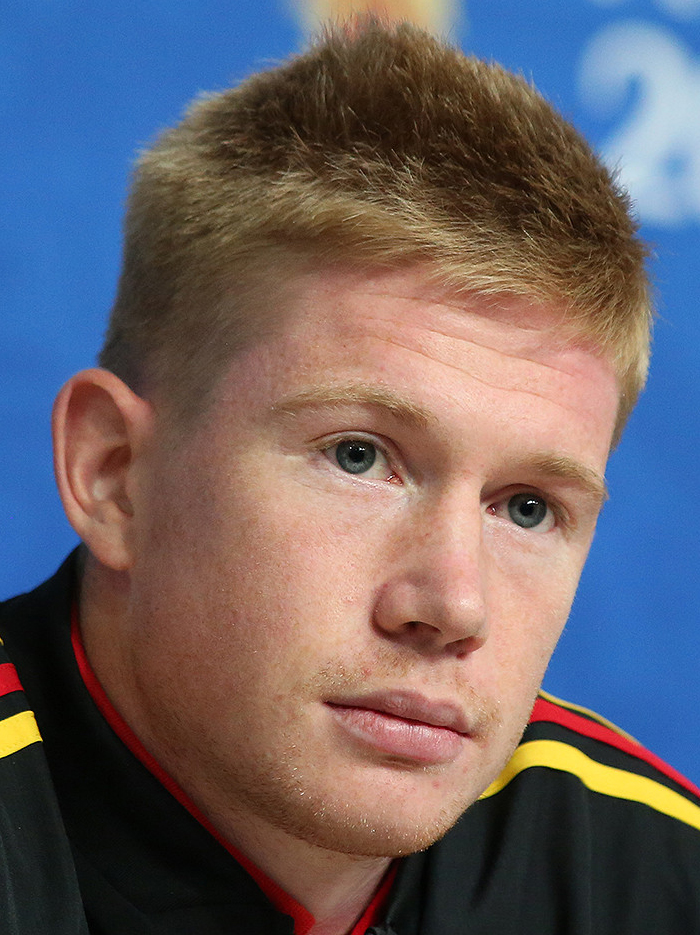
Photo: Кирилл Венедиктов / Wikimedia Commons / CC BY-SA 3.0

He can’t play the 2026 World Cup the same way he played the 2018 edition. The game has moved on, and so has his body. Under manager Domenico Tedesco, Belgium’s setup is evolving, and De Bruyne’s position within it is shifting.
Gone are the days of him being the highest advanced midfielder, making late runs into the box. That role demanded explosive acceleration dozens of times a game. The new version is deeper. Think Andrea Pirlo in his later years, not prime Kevin De Bruyne.
He will likely operate from a central midfield base in a 3-5-2 formation or a 4-3-3. From there, he can dictate tempo, hit early diagonals to flying wing-backs like Timothy Castagne, and pick passes for a mobile striker like Romelu Lukaku or Lois Openda. His defensive duties will be limited, shielded by a dedicated ball-winner like Amadou Onana.
I prefer him in this deeper role now. Not because he’s lost his magic in the final third, but because it stretches his influence over 90 minutes. From deep, he sees the whole chessboard and doesn’t have to win physical duels with 22-year-old defensive midfielders.
This shift is a core principle of modern soccer tactics: protecting your most creative asset while maximizing his unique skill. For Belgium, that skill is a right foot that can pass a ball through a keyhole from 50 yards.
Leadership & Legacy: Carrying the Belgian Hopes
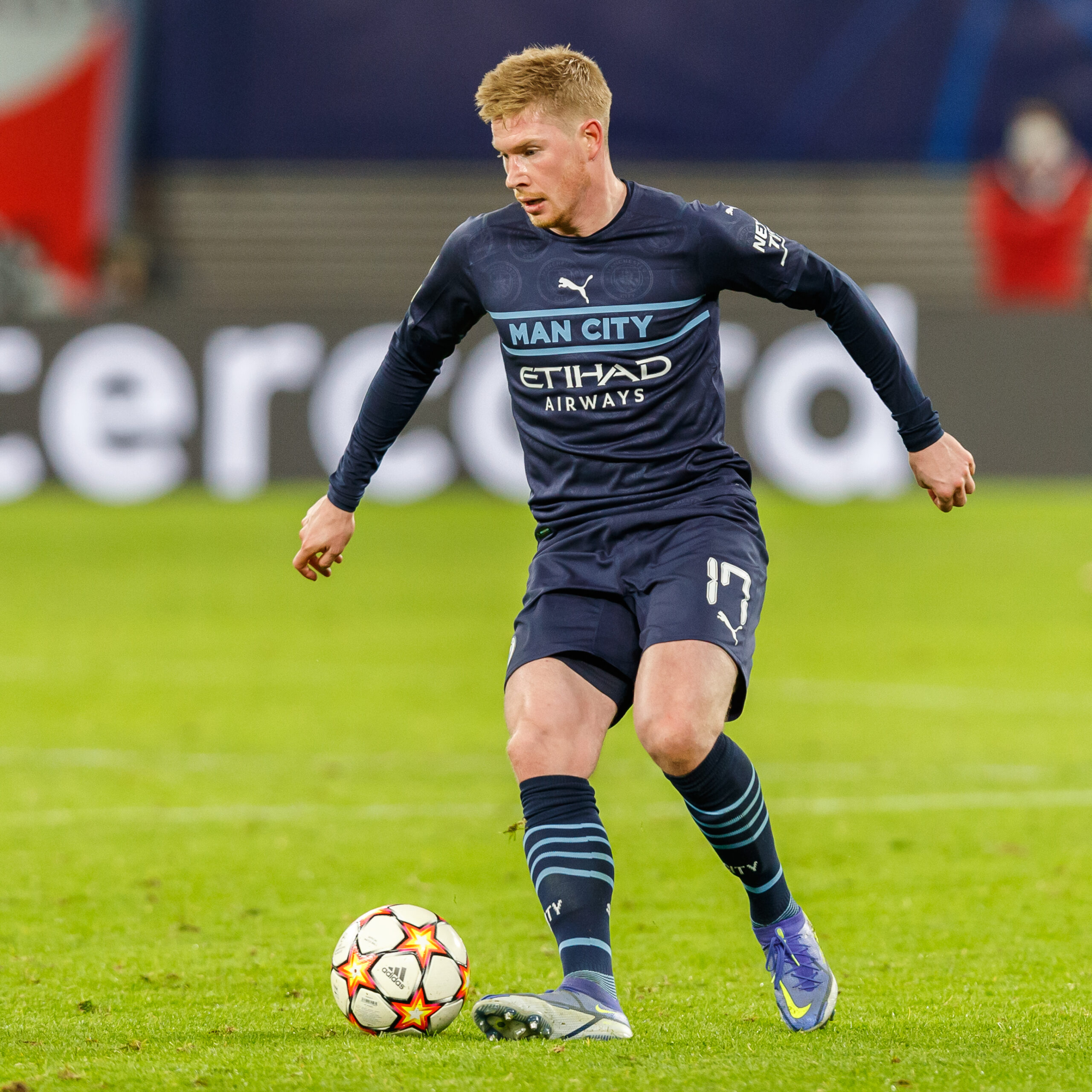
Photo: Steffen Prößdorf / Wikimedia Commons / CC BY-SA 4.0

He inherited the captain’s armband in a transitional period. The era of Eden Hazard, Vincent Kompany, and Jan Vertonghen is over. De Bruyne is now the elder statesman, the bridge between the old guard and a new wave featuring Jeremy Doku and Johan Bakayoko.
His leadership style is not a fiery orator. It’s leading by example with relentless standards in training and moments of sheer genius on the pitch. Younger players watch how he prepares, how he analyzes opponents, how he demands the ball in tight spaces. That is his classroom.
His legacy is already secure as Belgium’s greatest playmaker and one of the premier midfielders of his generation. But the final chapter is unwritten. Guiding this Belgian squad out of a manageable group (Egypt, IR Iran, New Zealand) and into the knockout stages is the minimum requirement. A deep run would cement his status not just as a great player, but as a true national team legend who delivered when it mattered most.
The parallel isn’t to other Belgians. It’s to legends like Luka Modrić, who at 37 dominated a World Cup midfield. That’s the blueprint. It requires a supreme soccer player workout plan focused on core stability and a meticulous soccer player diet for sustained energy. De Bruyne has the talent. The 2026 World Cup will test his discipline.
Belgium’s 2026 Path & De Bruyne’s Pivotal Role
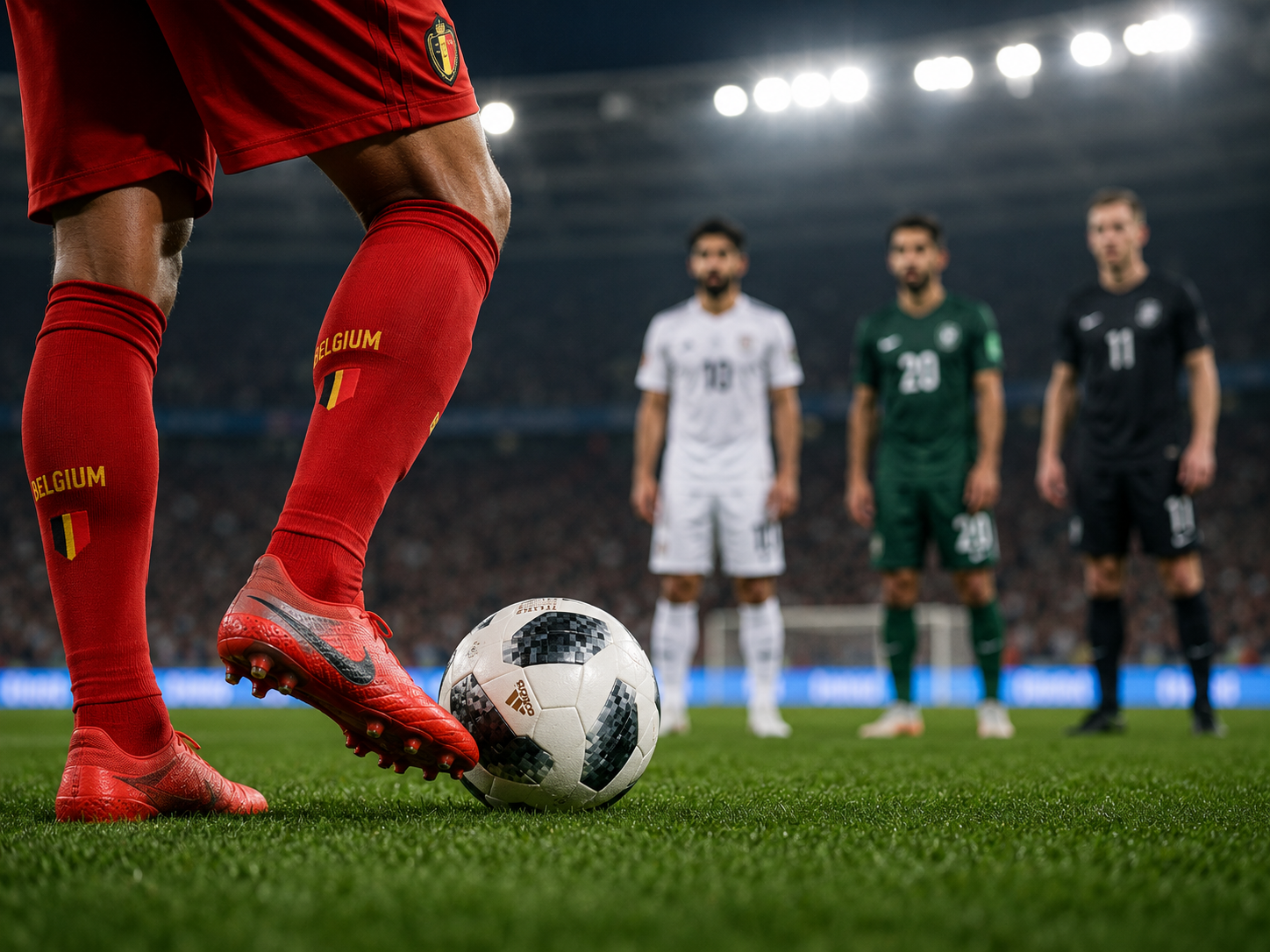
Belgium qualified comfortably, but the real test is the tournament draw. Landing in a group with Egypt, IR Iran, and New Zealand is as favorable as it gets. It allows Tedesco to manage De Bruyne’s minutes early, ideally building his rhythm without overextending him.
The strategy should be clear: use his quality to secure progression from the group stage with minimal physical expenditure. Then, unleash him in the single-elimination overtime rules in soccer drama, where one moment of vision can decide a match.
His ability to deliver in those moments is what Belgium will lean on. When spaces tighten and games become tactical grinds, his passing range is the skeleton key. A 40-yard switch of play, a disguised through ball, these are the actions that break organized defenses. They don’t require the pace of the fastest soccer players in 2026; they require a brain that processes the game three moves ahead.
Frequently Asked Questions
How old will Kevin De Bruyne be at the 2026 World Cup?
He will be 35 years old during the tournament, having been born on June 28, 1991. This places him in a category of experienced veterans whose fitness management is as important as their skill.
Is Kevin De Bruyne still one of the best midfielders in the world?
When fully fit, his technical passing and creative vision remain elite. However, consistent availability has become a challenge. His standing is now defined by his impact in big moments rather than week-to-week dominance, a common trajectory discussed in analyses of the retirement age for soccer players.
What is Kevin De Bruyne’s World Cup record with Belgium?
He has played in three World Cups (2014, 2018, 2022). His record includes a quarter-final, a third-place finish, and a group-stage exit. He has scored multiple goals in the tournament, including a famous strike against Brazil in the 2018 quarter-final.
Why did Kevin De Bruyne leave Manchester City?
He joined Napoli on a free transfer in July 2025 after his contract expired. The move offered a new challenge, a central role, and potentially a less physically demanding league schedule to prioritize longevity for the 2026 World Cup.
Can Belgium win the 2026 World Cup with an aging Kevin De Bruyne?
It is highly unlikely they are considered favorites. Winning requires a perfect blend of a fit De Bruyne, a firing Romelu Lukaku, and a stout defense. A semi-final run would be a magnificent achievement for this generation, leveraging his status among the all-time assist leaders.
The Bottom Line
Profiling Kevin De Bruyne for the 2026 World Cup is an exercise in balancing reverence with realism. The artist is still present; the canvas is just smaller. His days of covering every blade of grass are over, replaced by a more economical, cerebral influence.
Belgium’s hopes don’t ride on him alone, but they flow through him. Every attacking pattern, every moment of inspiration, will be channeled through his right foot. His partnership with a holder like Onana and his connection with wingers like Doku will define their attacking rhythm.
Forget the highlights from 2018. The 2026 version will be different, slower, deeper, smarter. If his body cooperates, that might just be enough. One last masterclass from a player whose professional career overview has been a masterclass in precision. The final exam is in North America.
I come from the “soccer heart” of Germany, the Ruhrpott. I have played, trained and followed soccer all my life and am a big fan of FC Schalke 04. I also enjoy following international soccer extensively.