What is Tiki-Taka Style in Soccer? The Full Breakdown
Tiki-Taka is a possession-dominant soccer philosophy built on short, rapid passing, constant off-the-ball movement, and immediate collective pressing to control the game’s space, rhythm, and opponent. It aims to create numerical overloads and passing triangles through strict positional rules, patiently waiting to exploit defensive gaps rather than forcing direct attacks.
Most people see the endless passes and think that’s the whole story. They miss the rigid geometry, the silent communication, and the defensive work that happens off the ball. This misunderstanding is why amateur teams trying to copy it end up passing sideways in their own half until they lose the ball.
Let’s break down what Tiki-Taka actually is, where it came from, and why it worked so devastatingly for a specific group of players at a specific time.
Key Takeaways
- Tiki-Taka is a system of control, not entertainment. The short passes are a means to dominate space, tire opponents, and eliminate their attacking opportunities.
- Its foundation is Positional Play (Juego de Posición), with codified rules like the “two-vertical, three-horizontal” player limit to automatically create passing lanes and triangles.
- The system is incomplete without pressing. The moment possession is lost, the nearest two or three players swarm to win the ball back within six seconds, this transition is non-negotiable.
- While perfected by Pep Guardiola’s Barcelona, its DNA comes from Johan Cruyff’s Total Football. Guardiola added structural discipline to Cruyff’s fluid attacking ideals.
- It requires a specific player profile: technically impeccable, mentally agile, and physically prepared to make hundreds of short sprints. You cannot graft this system onto just any squad.
The Core Principles: More Than Just Passing
The first touch sets the tempo. The second touch is a pass. The third touch is a movement into a new space. This cycle, repeated across eleven players, is the engine. Calling it “passing for passing’s sake” is the most common and costly mistake.
Tiki-Taka is a style of play within the broader tactical framework of positional play. It emphasizes retaining possession through short, quick passes and constant player movement to create numerical superiorities in specific areas of the pitch, with the ultimate aim of progressing the ball and creating scoring chances while minimizing defensive risk.
TL;DR: Every pass has a job: to move the opponent, not just the ball.
Possession as a Weapon
This is not passive keep-ball. Possession is a defensive shield and an offensive blade. If the other team doesn’t have the ball, they cannot score. More subtly, forcing them to chase shadows for 70 minutes drains their legs and will. By the final quarter, the gaps appear. The possession-based soccer mentality is absolute; it is the baseline from which all actions spring.
The Geometry of Positional Play
Guardiola painted Barcelona’s training pitch with a grid. He enforced two rules: no more than two players on the same vertical line, and no more than three on the same horizontal line. This is not a suggestion, it is the system’s architecture.
| Positional Rule | On-Field Effect | What Happens If You Break It |
|---|---|---|
| Max 2 players per vertical line | Creates natural passing lanes between lines | Passing angles disappear; play becomes predictable and easy to press |
| Max 3 players per horizontal line | Stretches the opponent horizontally, creating width | Players cluster, the pitch shrinks, and your own team gets in each other’s way |
| Constant rotation after a pass | Maintains structural shape while moving defenders | The structure becomes static, defenders can mark man-to-man, and the system stalls |
This rigid geometry automatically generates triangles and diamonds, the strongest shapes for ball retention. Players interchange positions, but the structure remains. This requires a level of spatial awareness and collective intelligence that most teams simply don’t possess. For a deeper dive into the framework that makes this work, our soccer tactics guide breaks down these strategic fundamentals.
The Six-Second Rule: Pressing as the Flip Side
The system’s most underrated element is its aggression without the ball. The moment possession is lost, the nearest players trigger an intense, coordinated press. The objective is to win the ball back within six seconds, before the opponent can organize a counter-attack.
Common mistake: Focusing only on the passing, the press is what made Barcelona and Spain unbeatable. Without it, you’re just a neat team that gets countered.
This pressing tactics protocol turns a lost ball into a potential turnover in a dangerous, advanced area. It’s a proactive defense. The famous gegenpressing popularized by Jürgen Klopp shares this urgent spirit, though its triggers and structure differ from Tiki-Taka’s more positional approach.
From Total Football to Tiki-Taka: A Tactical Evolution
It didn’t appear in a vacuum. The story starts with Johan Cruyff. As a player at Ajax, he was the embodiment of Total Football, a philosophy where any outfield player could take over any role, requiring supreme technical skill and intelligence. When Cruyff became Barcelona manager in 1988, he planted this seed.
He demanded his team keep the ball, play out from the back, and see the pitch in zones. His “Dream Team” of the early 90s played a fluid, attacking style that was the spiritual predecessor. But it was more romantic, less structured. The later managers, Louis van Gaal and Frank Rijkaard, worked with this foundation. Van Gaal added discipline and emphasis on youth development. Rijkaard’s Barcelona won the 2006 Champions League with a more physical, direct edge, but the core of Xavi, Iniesta, and Messi was there.
Then came Pep.
Guardiola’s Perfection: Adding the Code
Guardiola, a Cruyff disciple as a player, took the philosophy and wrote an operating manual. He codified the distances, formalized the pressing triggers, and drilled the positional rules until they were instinct. He didn’t invent the ideas; he systematized them. His 2008-2012 Barcelona side is the purest expression of Tiki-Taka, winning 14 trophies. They didn’t just have the idea, they had the perfect personnel, groomed from childhood in La Masia to execute it.
This evolution is a masterclass in how a possession-oriented philosophy can be refined from a broad ideal into a championship machine.
The Architects and Practitioners
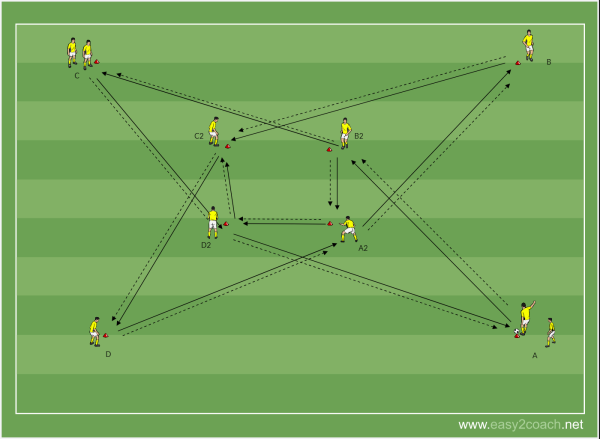
The system needed its perfect instruments. The players were not just talented; they were bespoke.
Pep Guardiola (Manager): The architect. He provided the blueprint, the obsession with detail, and the relentless drive to perfect the system. His training sessions were famously demanding, focused on repetitive pattern drills.
Xavi Hernández & Andrés Iniesta (Midfield): The brain and the soul. Xavi was the metronome, controlling tempo and choosing the direction of play. Iniesta was the dribbler and line-breaker in tight spaces. Their understanding was telepathic.
Sergio Busquets (Defensive Midfielder): The anchor. His role was critical, the first point of buildup, a press-resistant passer, and the defensive cover that allowed Xavi and Iniesta to roam. He is the definitive example of the modern regista role.
Lionel Messi (False Nine): The cheat code. Deployed as a false nine, Messi would drop deep into midfield, dragging central defenders out of position and creating chaos. This opened lanes for Pedro and David Villa to attack from wide.
The Spain National Team (2008-2012): The proof of concept at an international level. Under Luis Aragonés (Euro 2008) and Vicente del Bosque (2010 World Cup, Euro 2012), Spain used a slightly more pragmatic version of Tiki-Taka. They often played without a true striker, using Cesc Fàbregas as a false nine, to maximize control. They won three consecutive major tournaments, a feat unmatched in modern football.
How to Play It: The Player’s View
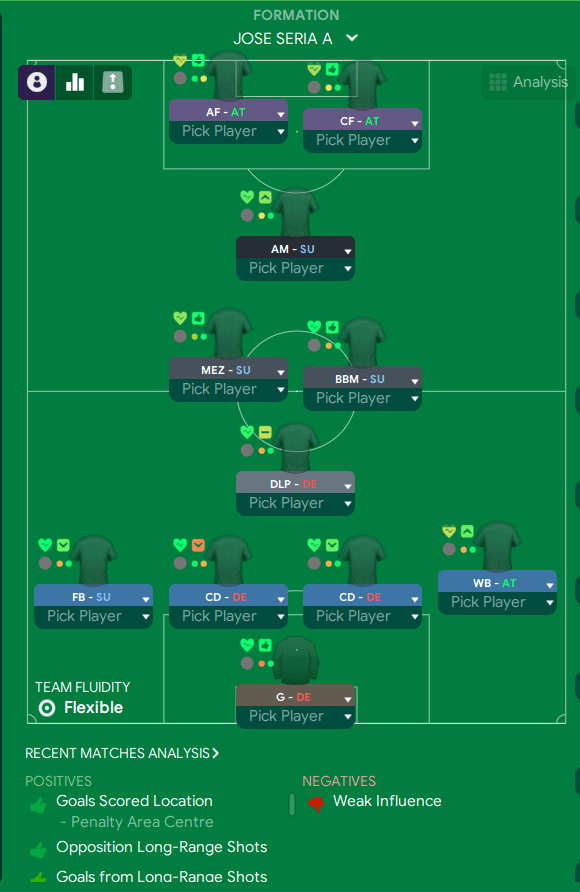
You are never stationary. Your first thought when receiving the ball is not “can I dribble?” but “where are my two closest passing options?” You scan before the ball arrives. Your pass is not to a player, but to a space they are moving into.
- Create the Triangle. Before you even receive the ball, you and two teammates must form a triangle. This gives the passer two options. If you are marked, the other lane is open.
- Pass and Move. This is the cardinal rule. The moment you release the ball, you must move. Your run creates a new option for a teammate and drags a defender. Standing still kills the system.
- Play One or Two Touch. The ball must zip. Three touches is a luxury, four is a mistake. This speed prevents the defense from settling and shifting.
- Press in Units. When we lose the ball, the nearest three players converge immediately. No waiting, no tracking back. Win it now, high up the pitch. This is a counter-pressing strategy built into the team’s muscle memory.
- Be Patient. We may circulate the ball across the back line for two minutes. This is not wasting time. We are probing, waiting for their forward to get frustrated and press, which opens a lane into midfield. We are stretching them sideways, waiting for a gap.
The formation is typically a 4-3-3 formation or a 4-2-3-1 formation, but the shape is fluid. The full-backs become wingers, the holding midfielder drops between the center-backs. It’s all about creating numerical overloads in specific zones.
The Legacy, Evolution, and Counters
No system lasts forever. Football adapts. The peak Tiki-Taka era ended as opponents found ways to disrupt it.
How Teams Countered Tiki-Taka:
- Low Block & Compactness: Teams like Inter Milan (2010) and Chelsea (2012) defended deep with two tight banks of four, denying space between the lines. They conceded possession and territory, betting on a single counter-attack or set piece.
- Aggressive Man-Marking: Some teams assigned a dedicated marker to harass Xavi or Busquets, disrupting the first link in the chain.
- Physicality: A well-timed, aggressive tackle to break up the rhythm could unsettle the precise flow.
Modern Evolution:
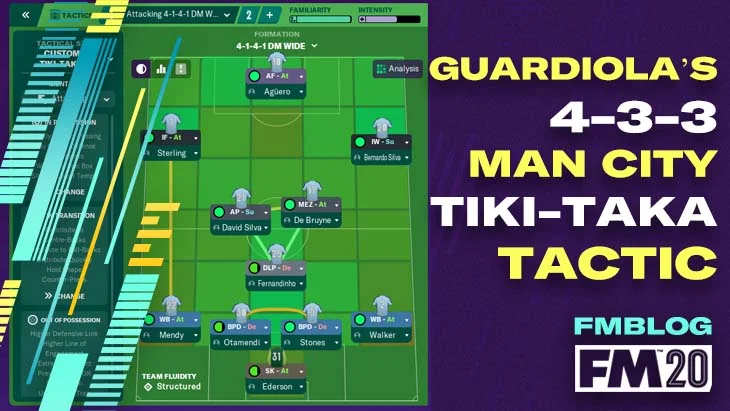
Guardiola himself evolved. At Manchester City, he incorporated more direct wing play, vertical passes from the goalkeeper, and physicality. The core principles of possession and positioning remain, but the application is more varied. Other top coaches have absorbed elements. The emphasis on playing out from the back, coordinated pressing, and positional rotation is now standard at the highest level.
The true legacy is a shift in philosophy. It proved that technical ability, intelligence, and collective structure could overcome pure physical power. It raised the baseline for what a “good” football team looks like. For a comprehensive look at how these midfield structures vary, the debate between a single pivot system and a double pivot is a direct descendant of Tiki-Taka’s influence.
Frequently Asked Questions
Is Tiki-Taka the same as Positional Play?
No. Positional Play (Juego de Posición) is the overarching tactical framework, the set of rules about spacing and zones. Tiki-Taka is a specific style of play that operates within that framework, characterized by its extremely short, fast passing rhythm.
Why did Tiki-Taka decline?
It didn’t so much decline as get solved and evolved. Opponents devised effective counters (deep defending, physical disruption), and the personnel required are incredibly rare. Also, the game’s athletic demands increased, favoring transitions. The principles live on in a more hybrid, physical form.
Can any team play Tiki-Taka?
No. It requires a squad of technically flawless players with high football IQ, bought into the system completely. It also needs years of consistent coaching to build the automatic understanding. Attempting it with average technicians leads to sterile, sideways possession in your own half.
What’s the difference between Tiki-Taka and Gegenpressing?
Both involve intense pressing after losing the ball. Tiki-Taka’s press is part of a broader possession-control system, aiming to win the ball back quickly to resume its attack. Gegenpressing, as used by Klopp, is often a primary weapon in a more direct, transition-based system, the press is the attack trigger.
Who coined the term “Tiki-Taka”?
Spanish commentator Andrés Montes is widely credited with popularizing the term during the 2006 World Cup, using it to describe Spain’s short-passing style. It’s an onomatopoeic phrase suggesting quick, light touches.
The Bottom Line
Tiki-Taka was a perfect storm: a philosophical seed planted by Cruyff, a generation of perfect players grown in La Masia, and a obsessive manager in Guardiola to fuse it all together. It was more than a tactic; it was a statement of identity.
It showed that football could be won with the mind and the foot, not just the heart and the lung. While the purest form has passed, its DNA, the demand for technical security, intelligent movement, and collective pressing, is now embedded in the modern game’s blueprint. You can trace a direct line from Cruyff’s ideals to every top coach’s whiteboard today. That is its ultimate victory.

I come from the “soccer heart” of Germany, the Ruhrpott. I have played, trained and followed soccer all my life and am a big fan of FC Schalke 04. I also enjoy following international soccer extensively.