What is Jockeying in Soccer? The Defender’s Secret Weapon
Jockeying in soccer is a defensive technique where a defender delays an attacker by maintaining a controlled, side-on stance and using shuffle steps to shepherd them away from goal. It prioritizes containment over immediate tackling, buying time for teammates to recover and forcing the attacker into a less dangerous area.
Jockeying in soccer defending is the controlled act of delaying an attacker with the ball by maintaining a defensive position, using a side-on stance and shuffle steps to shepherd them away from danger and into a less threatening area. It’s not about winning the ball immediately. It’s about buying time, dictating the attacker’s path, and waiting for a mistake or for defensive help to arrive.
Most players think defending is about the tackle. They see an attacker running at them and lunge. That’s how you get turned, how you give up a penalty, how you leave a gaping hole behind you. Jockeying flips that script.
This guide breaks down the stance, the footwork, the psychology, and the drills that turn containment from a passive retreat into an active, controlling defense.
Key Takeaways
- Jockeying is active containment, not passive backing off. Your movement forces the attacker where you want them to go.
- The side-on stance with bent knees is non-negotiable. A square stance gets you beaten with one feint.
- Distance is everything. Stay an arm’s length plus one step away. Any closer and you’re diving in; any farther and you’re just escorting them.
- Communication dictates the action. You jockey until you hear “step” or “tackle” from a teammate. Solo heroics get you burned.
- The end goal is rarely a solo tackle. It’s to force a bad pass, a heavy touch, or a shot from a bad angle so your team can win the ball back collectively.
Why Jockeying Beats Diving In Every Time
Watch a youth game. A defender sees an attacker and sprints straight at them. The attacker knocks the ball past, the defender misses, and suddenly it’s a breakaway. That defender wanted to win the ball. The smarter move is to not let the attacker play the ball forward at all.
Jockeying, sometimes called shepherding or channeling, is the defensive technique of delaying an opponent in possession by maintaining a position between them and their objective, while slowly giving ground and attempting to steer them into a less dangerous area or towards defensive support.
The Wikipedia entry on jockeying in football frames it as a delaying tactic. That’s the textbook version. On the pitch, it’s more aggressive than it sounds. You’re not just delaying; you’re manipulating. You’re using your body shape and footwork to say, “You can go here, or you can go there, but you’re not going through the middle.” You funnel them into a trap or toward the touchline where the ball goes out of play. That’s the core of modern defensive soccer tactics.
I learned this the hard way playing right-back in a regional cup final. Their left winger was faster than me. My first instinct was to get tight, to show him I wasn’t scared. He sold me a dummy, cut inside, and curled one into the far corner. At halftime, my coach grabbed my shoulder. “You’re not racing him,” he said. “You’re fencing him. Make him think he has space outside, then close the door when he takes it.” The second half was a different story. I shepherded him toward the line every time. He got frustrated. He started forcing passes. We won the ball back. That shift from confrontation to control changes everything.
TL;DR: Jockeying wins by making the attacker’s best option your team’s least dangerous option.
The 5-Step Jockeying Stance Checklist
Your body position is your toolbox. Get it wrong, and no amount of effort will save you.
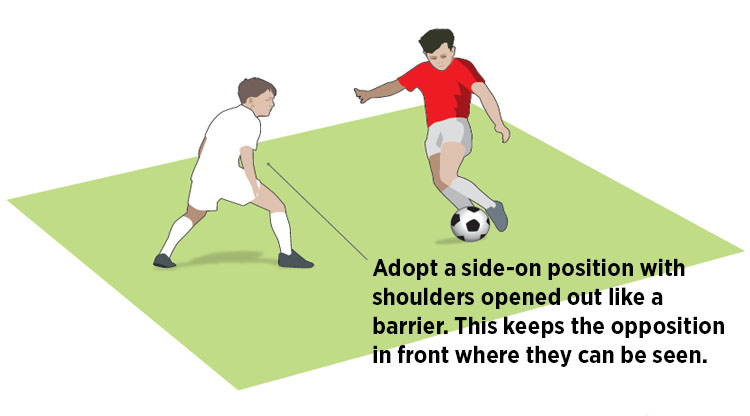
- Feet staggered, hips side-on. Your lead foot points at the attacker’s nearest foot. Your back foot is turned out, ready to push off. Your hips are at about a 45-degree angle to the attacker. This stance lets you shuffle laterally without crossing your feet. A square stance means you can only go backward or lunge forward – both are losing moves.
- Knees bent, weight forward. You’re not standing upright. You’re in a half-squat, weight on the balls of your feet. This lowers your center of gravity and lets you explode in any direction. If your heels are down, you’re already late.
- Eyes on the ball, not the eyes. Watch the ball, not the attacker’s shoulders or face. The ball doesn’t lie. A feint is just a shoulder drop; the ball stays still. If the ball moves, you react.
- Arms out for balance. Don’t grab. Use your arms like a tightrope walker uses a pole – for stability. It also makes your body appear bigger, subconsciously narrowing the attacker’s perceived passing lanes.
- The one-step rule. Maintain a distance where you are one explosive step away from making a clean tackle if the attacker takes a heavy touch. If you’re two steps away, you’re too far. If you’re close enough to smell their shampoo, you’re too close and they’ve already beaten you.
Common mistake: Standing square to the attacker – the first feint freezes your hips and you’re chasing their shadow for the next five yards. It happens in two seconds.
Here is the breakdown of what each part of the stance controls:
| Stance Element | What It Controls | What Happens If You Skip It |
|---|---|---|
| Side-on hips | Lateral movement speed | You can only backpedal; attacker goes around you easily |
| Bent knees | Reaction time and power | You’re slow off the mark; a quick shift leaves you flat-footed |
| Eyes on the ball | Deception detection | You bite on every fake and get beaten by the simplest move |
| One-step distance | Tackling range | You’re either a spectator or committed to a desperate lunge |
“Shepherd Him!” – The Art of Controlled Direction
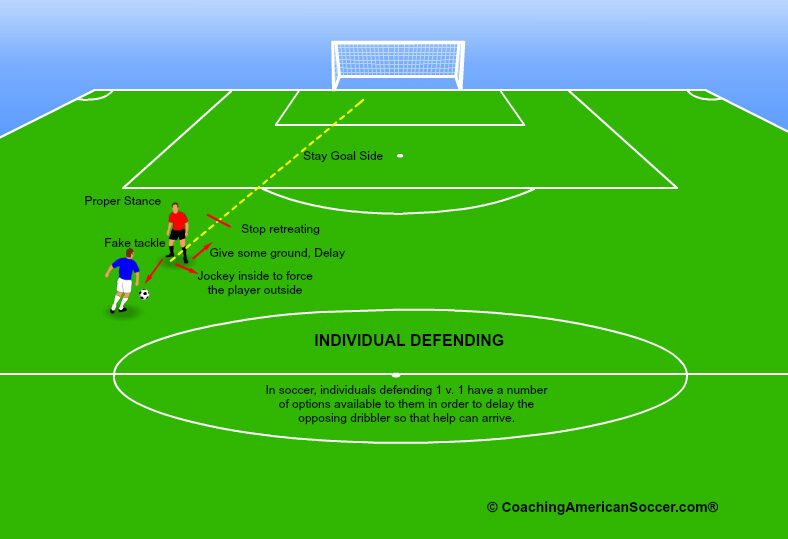
Jockeying isn’t passive waiting. You are actively herding the attacker. Think of a sheepdog working a flock. It doesn’t chase one sheep; it positions itself to make the flock move as a whole toward the pen. You are that dog. The ball is the flock.
Your first job as the First Defender is to contain the First Attacker. You do this by showing them a path you’re willing to give up. Usually, that’s the outside, toward the touchline. You open your body slightly, inviting them to go that way. You use small, quick shuffle steps to stay between them and the goal, but always nudging them wider. The touchline is your best friend – it’s an extra defender that never gets tired.
This is where defensive formations in soccer come into play. In a compact defensive shape like a 5-3-2, your job is to funnel the attacker toward the waiting wing-back or central midfielder. In a high defensive line system, you might be shepherding them into an offside trap. Your movement isn’t random; it’s guided by the defensive structure behind you.
The communication is key. You’ll hear shouts from teammates: “Jockey!” or “Contain!” That means hold your position, don’t dive. “Stand him up!” means hold the line, help is coming. Then you’ll hear “Step!” or “Tackle!” That’s your trigger. Support has arrived, and now you can commit. If you jump the gun and tackle before the call, you risk leaving your cover exposed.
TL;DR: Your footwork and body angle are a remote control for the attacker. Use them to steer the play into your team’s defensive trap.
When to Stop Jockeying and Make the Tackle
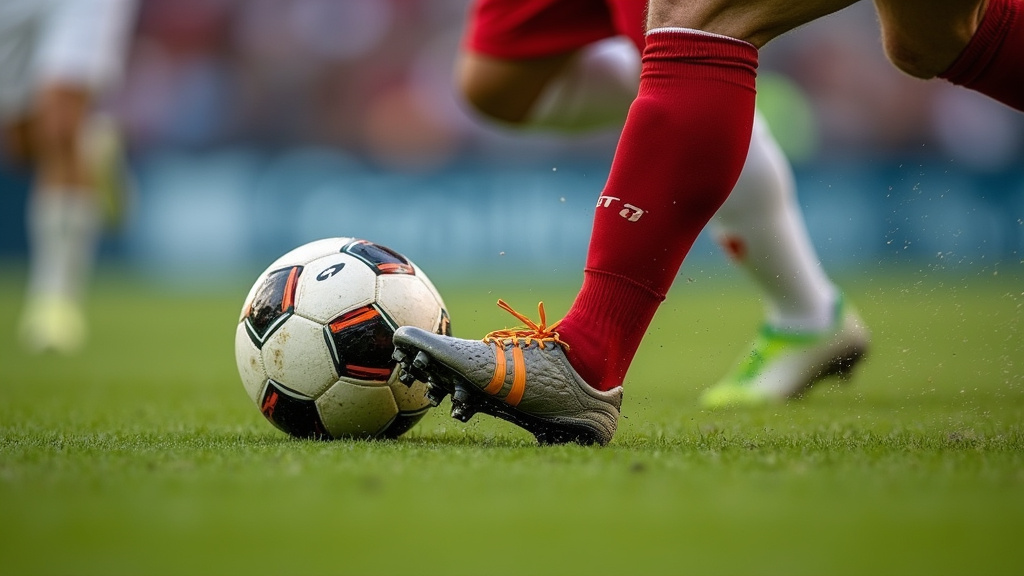
You can’t jockey forever. There’s a moment to pounce. Miss it, and you’ve wasted all that good work.
The trigger is usually one of three things:
1. A bad touch. The attacker pushes the ball too far ahead. That’s your invitation. That’s the one-step distance paying off.
2. They look down. The moment an attacker glances at the ball to check its position, they’ve lost sight of you and the play. That half-second is your window.
3. The call. Your covering defender arrives and shouts “Tackle!” That’s your signal that the risk is now shared, and it’s time to win the ball.
The worst thing you can do is tackle when you’re off-balance or when the attacker is between touches. That’s how you get dribbled past. Patience is a defender’s most underrated skill. Paolo Maldini, maybe the best defender ever, was a master of this. He would jockey, jockey, jockey, and then – snap – the ball was his. He waited for the mistake. He didn’t force the issue.
This patience is a physical skill built by soccer-specific conditioning. The distance covered by defenders isn’t just sprints; it’s countless small, controlled shuffle steps in this exact stance. Your legs burn in a different way. It’s a isometric burn, not a cardio one. That’s why a dedicated defender workout plan focuses on lateral strength and explosive power from a low position.
Common Mistakes That Get You Beaten
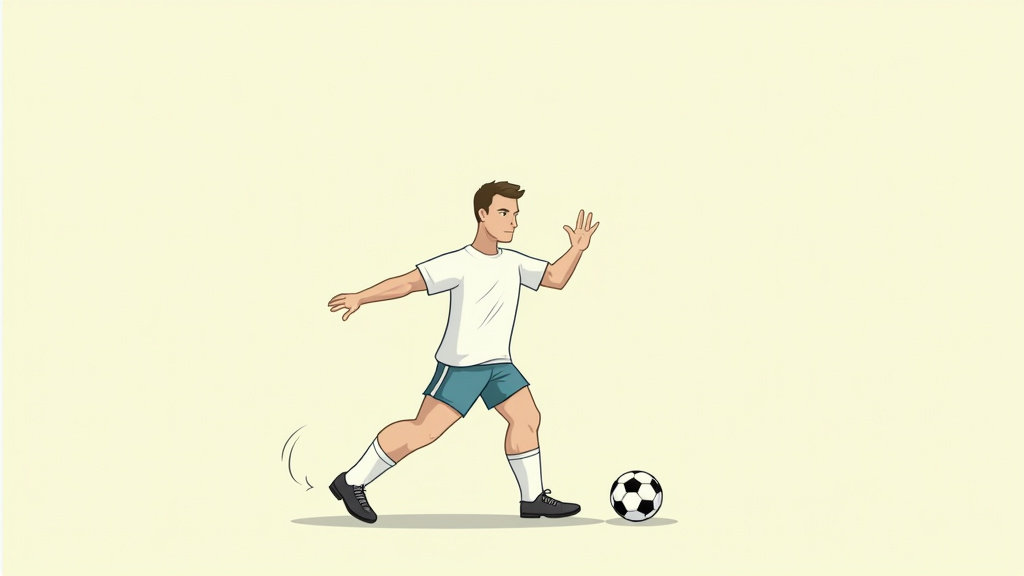
Common mistake: Jockeying with a straight back and high center of gravity – the attacker drops a shoulder, you lean, and you’re off-balance before they’ve even moved the ball. You’re on the ground while they’re celebrating.
Chasing the ball instead of the attacker. If you focus solely on the ball, a simple body feint can wrong-foot you. Your eyes should be on the ball, but your brain needs to track the attacker’s hips and weight distribution. The hips don’t lie about direction.
Getting too close, too early. This is the eager rookie error. You close the distance because you’re nervous. Now the attacker can use your momentum against you. They touch the ball past you, and because you’re over-committed, you can’t turn. You either foul them or watch them go.
Jockeying toward your own goal. Your default direction should be sideways, shepherding wide. If you backpedal straight toward your goal, you’re just giving the attacker a free run at the penalty area. Your sideways movement should force them to slow down and cut back.
Forgetting the cover. Jockeying is a team tactic. You’re buying time for your midfielders to track back or for your fellow defenders to slide over. If you’re jockeying with no one behind you, you’re just retreating. Know your defensive structure, whether it’s a flat back four defense or a three-center-back system.
Drills That Build Jockeying Instinct
You can’t just talk about it. You have to feel it. These drills bake the stance and decision-making into muscle memory.
The Channel Drill (1v1 in a lane)
Set up two parallel lines of cones about 5 yards apart and 15 yards long. Defender starts at one end, attacker with a ball at the other. The attacker tries to dribble to the far end. The defender’s job is to jockey, stay side-on, and shepherd the attacker out over the side cones. No tackling allowed. The defender “wins” by forcing the ball out. Switch roles. This teaches body shape and using the touchline.
The Trigger Tackle Drill
Same lane setup, but now add a passive defender (a coach or teammate) standing off to the side. The jockeying defender must contain the attacker until the passive defender shouts “TACKLE!” That’s the only moment the defender can attempt to win the ball. It trains patience and listening for the cue.
The 2v2 Trap Square
Set up a 10×10 yard grid. Two attackers vs. two defenders. The rule: the first defender must jockey and shepherd the ball-carrier toward the second defender. The second defender must communicate “I’m here!” or “Step!”. Only then can the first defender attempt a tackle. It integrates jockeying into defensive midfield screen teamwork.
Your equipment matters here, too. Wearing the right soccer cleats for defenders – ones with a stud configuration for agility and a firm ground soleplate – gives you the grip to make those sharp lateral cuts without slipping. You can’t jockey if you’re sliding around.
Jockeying a Dribbler vs. a Receiver
This is a subtle but critical distinction. Most guides only talk about jockeying the player with the ball. What about when a pass is in the air to an opponent?
Jockeying a Dribbler: This is the classic scenario. Your stance is side-on, your focus is on the ball, and you’re dictating their path. You have time to set your position.
Jockeying a Receiver: The pass is coming. Your goal is to get goal-side – between the receiver and your goal – before they control the ball. You’re not waiting for them to turn. You’re closing the space as the ball travels, so the moment they receive it, you’re already in that perfect one-step jockeying distance, shepherding them away from danger. Hesitate for a second, and they turn and face you up. Now you’re in a foot race you might lose.
This situational awareness separates good defenders from great ones. It’s what makes a player like Virgil van Dijk so dominant. He’s not just strong in the tackle; he reads the pass early, positions himself during the ball’s flight, and is already jockeying before the attacker has full control. It’s a pre-emptive strike disguised as defense.
The Psychological Edge of Containment
Jockeying is a mental game. You’re telling the attacker, “I’m not scared of you. I’m in control here.” That’s frustrating. Attackers want to commit defenders, to make them dive in. When you refuse, when you just shuffle and guide, they get impatient. They try harder tricks. They force passes. They take low-percentage shots.
This composure is the mark of an experienced defender. It’s why certain defensive soccer positions demand a specific temperament. Central defenders, especially in a structured defensive system, live by this principle. They understand that a controlled contain often leads to a better chance of winning the ball back than a speculative lunge ever will.
The pressure builds on the attacker, not you. You’re in your stance, you’re balanced, you’re waiting. They’re the one who has to make something happen before your teammates arrive. That shift in pressure is everything.
Frequently Asked Questions
What’s the difference between jockeying and just backing off?
Jockeying is active and controlling; backing off is passive and reactive. When you jockey, you use your body shape and movement to steer the attacker. Backing off just creates space for them to shoot or pick a pass.
How close should I be when jockeying?
The “one-step rule” is your guide. You should be far enough away that you can react to a change of direction, but close enough that one explosive step puts you in tackling range if they take a heavy touch. An arm’s length plus one step is a good starting point.
Can you jockey without any defensive support behind you?
Technically yes, but it’s high-risk. Jockeying is most effective when you’re shepherding the attacker toward a teammate or into a crowded area. If you’re the last defender with no cover, your priority shifts to preventing a shot on goal, which might mean standing up more and committing earlier.
Is jockeying only for central defenders?
No. It’s for any player in a 1v1 defensive situation. Full-backs use it to shepherd wingers to the touchline. Defensive midfielders use it to delay counter-attacks. Even forwards use a form of it to press and channel opponents into mistakes high up the pitch.
What if the attacker just stops and stands still?
You win. You’ve contained them. Hold your position. They now have to make the next move, and a stationary attacker is much less dangerous. Don’t feel pressured to tackle a player who isn’t going anywhere.
Before You Go
Jockeying isn’t a flashy skill. You won’t see it on a highlight reel next to a last-ditch sliding tackle. But watch any top-level game, and you’ll see it on every possession, in every defensive sequence. It’s the quiet work that stops attacks before they become chances.
Forget the idea that defending is about brute force. It’s about intelligence, patience, and controlled aggression. The stance, the distance, the shepherding – these are the tools. The next time you’re on the pitch and an attacker is running at you, don’t think about the tackle. Think about the funnel. Your job isn’t to win the ball. Your job is to make them lose it.
I come from the “soccer heart” of Germany, the Ruhrpott. I have played, trained and followed soccer all my life and am a big fan of FC Schalke 04. I also enjoy following international soccer extensively.