Zonal Marking vs Man Marking: The Real Defensive Choice
Zonal marking vs man marking in soccer comes down to one choice: do your defenders track space or a person? In a zonal system, players defend an area of the pitch. If an opponent enters that zone, they pick him up. In a man-marking system, each defender is assigned a specific opponent to follow across the field. The modern game uses zonal marking as the default in open play, reserving man-marking for specific threats or set pieces.
Most coaches get this wrong by treating it as a religious war. They pick a side and stick to it, ignoring the opponent in front of them. That rigidity loses games. A pure zonal system with poor communicators gets picked apart. A pure man-marking scheme against a technically gifted side turns your defensive shape into a scattered mess.
This guide breaks down the mechanics, the physical demands, and the specific scenarios where each system wins. You will learn how elite teams blend both, why your set-piece defense probably needs a hybrid approach, and how to diagnose which system fits your team right now.
Key Takeaways
- Zonal marking controls space and maintains team shape, but it demands high levels of player communication and spatial intelligence. One silent defender creates a passing lane.
- Man-marking creates direct accountability and can neutralize a star player, but it is physically exhausting and vulnerable to clever attacking rotations that pull defenders out of position.
- The 2004 UEFA Champions League knockout stage saw 15 of 16 teams use zonal marking in open play, establishing it as the dominant modern system.
- For set pieces like corners, a hybrid approach is most effective: use zonal defenders to cover critical spaces near the goal, while assigning man-markers to the opponent’s most dangerous aerial threats.
- Your choice should be opponent-specific. Use man-marking to shut down a single creative genius. Use zonal marking to defend against a possession-based team that rotates positions.
The Core Difference: Zone vs. Man
Head design changes the entire process. Look at the business end of your trimmer.
Zonal marking asks defenders to protect a territory. Their primary reference point is the space around them and the position of the ball. If an attacker moves into their zone, they engage. If that attacker moves out, they pass him on and hold their ground. The system prioritizes compactness and shape.
A zonal marking system assigns each defender a specific area of the pitch to patrol. Responsibility shifts based on the movement of opponents and the ball, requiring coordinated team movement and constant verbal communication to cover gaps.
Man-marking is personal. A defender’s sole focus is his assigned opponent. He follows that player everywhere, from the center circle to the byline. His movement is dictated by the man, not the space. This was the backbone of the classic Italian catenaccio system, with a dedicated libero sweeping up behind the man-markers.
The difference feels philosophical, but the on-field consequences are brutally practical. A zonal back four moves as a connected unit. A man-marking back four can end up with a center-back on the wing and a fullback in the center circle if their marks make those runs.
TL;DR: Zonal marking defends space; man-marking defends a person. Your team’s ability to communicate and hold shape decides which one you can run.
Strengths & Weaknesses: A Tactical Trade-Off
Neither system is perfect. Each one trades one strength for a corresponding weakness. Picking one is an exercise in choosing which problems you are better equipped to handle.
Zonal marking’s greatest strength is structural integrity. It keeps your defensive block compact, denying the central spaces attackers want to exploit. It also conserves energy. Defenders aren’t chasing players into irrelevant areas, so they are better positioned to transition into attack after winning the ball. This efficiency is why it became the default for elite teams.
Its weakness is complexity. It requires every player to understand not just their zone, but the zones of the players around them. Communication breakdowns are fatal. If two defenders both think the other is picking up a runner, a gap opens instantly. It also struggles against teams that overload a specific zone with multiple attackers, forcing a numerical disadvantage.
Man-marking’s strength is brutal simplicity and accountability. Every defender knows his job: stop that guy. It is incredibly effective for nullifying a single, dominant playmaker. It also forms the basis of aggressive, high-intensity pressing systems designed to win the ball back immediately.
The weakness is physical and tactical. A Frontiers sports science study on small-sided games found that man-marking significantly increases total distance covered, high-intensity running, and player load. Your squad needs the engine for it. Tactically, smart opponents use decoy runs and rotations to drag markers out of position, disorganizing your entire defensive line.
| Aspect | Zonal Marking | Man Marking |
|---|---|---|
| Primary Focus | Space & Team Shape | Specific Opponent |
| Physical Demand | Lower (positional) | Very High (tracking) |
| Tactical Demand | High (communication, awareness) | Lower (individual assignment) |
| Best Against | Possession-based, fluid attacking teams | Teams reliant on 1-2 star players |
| Biggest Risk | Communication breakdowns creating gaps | Being pulled out of shape by opponent rotations |
| Transition to Attack | Faster (players are in position) | Slower (players are out of position) |
When to Use Man-Marking (And When to Run Away From It)
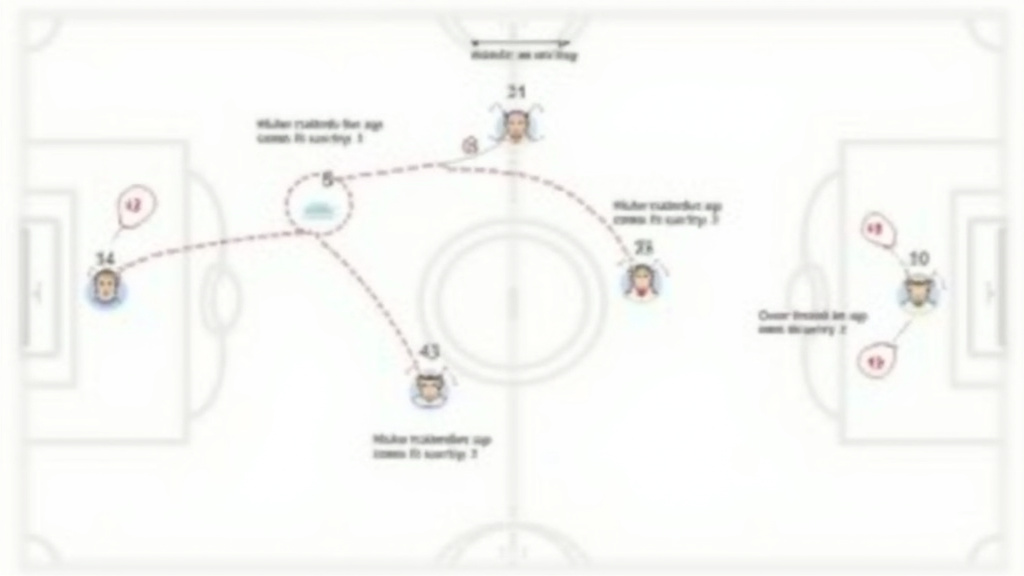
Man-marking is a scalpel, not a hammer. Deploy it for a specific surgical task, not as your default system for ninety minutes.
Use it to erase a single player. Think of how Atalanta man-marked Lionel Messi in a 2020 Champions League match. They assigned a dedicated midfielder to follow him everywhere in the first half, disrupting Barcelona’s entire build-up. The Wikipedia article on soccer marking details this historical use within systems like catenaccio. It is the ultimate tool for neutralizing a creative #10 or a target striker.
Use it within a high-pressing system. The intense, player-oriented pressure of gegenpressing often incorporates man-marking principles in the opponent’s half to deny passing options and force turnovers. This is proactive, aggressive defending.
Common mistake: Deploying man-marking across your entire back line against a team with fluid front three rotations — your center-back will end up on the touchline by the 30th minute, and your defensive shape will be unrecognizable.
Use it on set pieces. This is its most common and effective modern application. On corners and free kicks, you assign your strongest aerial defenders to physically battle the opponent’s biggest threats. It provides clear accountability in the box.
Now, when should you avoid it? Do not use it if your team lacks the fitness. The physiological effects research is clear: it dramatically increases workload. Do not use it against a team that rotates positions constantly. Your defensive organization will evaporate. And never use it as a panic switch when you are losing — without drilling, it creates more confusion.
When Zonal Marking Wins the Game
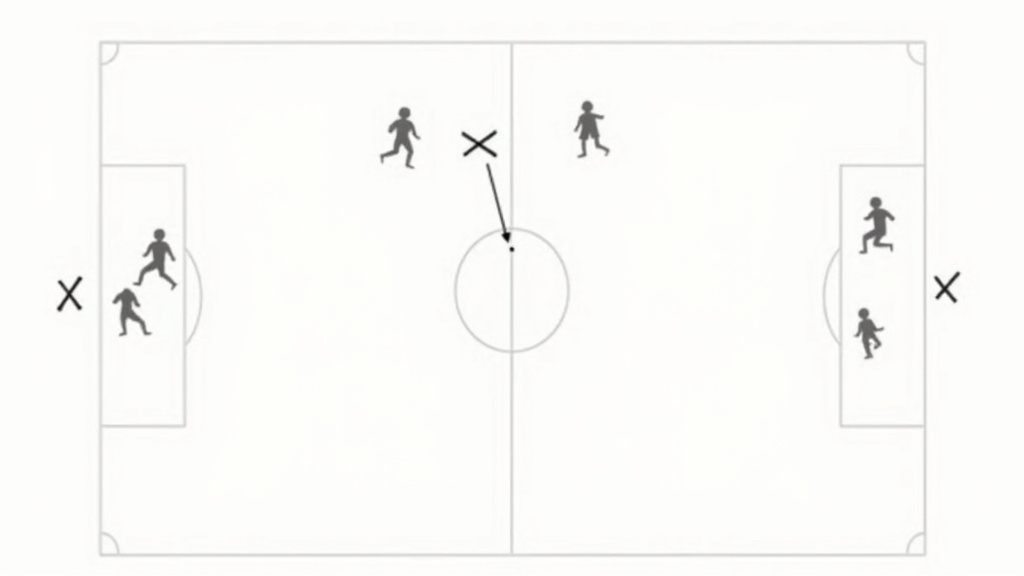
Zonal marking is the foundation of modern defensive organization. It is the system for coaches who want to control the game through structure.
Implement it as your base defensive system in open play. This is the standard for elite clubs. The data is stark: 15 of the 16 teams in the 2004 UEFA Champions League knockout stages used zonal marking. Coaches like Arrigo Sacchi and Pep Guardiola built dynasties on the principle of controlling space, not chasing players. The Wikipedia entry on zonal marking traces this tactical evolution.
It is the only rational choice against possession-dominant teams. If you are playing a side that holds 65% of the ball, man-marking will exhaust your players by the hour mark. A compact zonal block forces them to play around you, not through you, funneling attacks into less dangerous wide areas.
It is also superior for developing young players’ tactical intelligence. It teaches them to read the game, understand spacing, and communicate. These are foundational skills for any advanced soccer tactics guide.
I tried to implement a pure zonal system with an adult amateur team that had never played it before. For three weeks, we conceded at least two goals a game from simple through-balls between defenders who were both waiting for the other to step up. We switched to a hybrid for a month, drilling communication, before going back to full zonal. The silence on the pitch was the problem, not the system.
The system fails when players switch off. One lapse in concentration, one missed call, and the structure collapses. It also requires a disciplined defensive midfielder to shield the back line and plug gaps.
The Modern Hybrid Reality
The debate is a false binary. Today, no elite team uses one system exclusively for 90 minutes. The modern game is about hybridity — selecting the right tool for the specific phase of play.
In open play, the default is a zonal structure. Defenders protect zones, midfielders press in triggers. But within that, you will see situational man-marking. A defensive midfielder might be tasked with tracking an opposing playmaker when he drops into a specific zone. This is a man-oriented assignment within a zonal framework.
The most critical hybrid application is defending set pieces. Pure zonal marking at a corner kick leaves static defenders vulnerable to attackers running at them with momentum. Pure man-marking can lead to bunching and poor coverage of dangerous spaces.
The effective modern solution is a blend:
1. Place 2-3 zonal defenders on the goal line and the near post.
2. Assign your best aerial defenders to man-mark the opponent’s top two headers.
3. Station a player in the zone at the edge of the six-yard box to attack any knockdowns.
This approach was validated at the 2022 World Cup, where 62% of UEFA teams used zonal or hybrid setups at corners. It combines the security of covering key spaces with the accountability of picking up major threats.
This hybrid logic extends to other tactical scenarios. You might play a zonal 4-4-2 mid-block but switch to man-marking for the last 10 minutes when protecting a one-goal lead against a team launching long balls to a target man.
Choosing Your System: A Coach’s Checklist
Do not pick a system based on dogma. Pick it based on a cold analysis of your players and your next opponent. Use this checklist.
First, audit your squad.
* Fitness Level: Can they sustain the high-intensity running man-marking demands for a full match?
* Tactical IQ: Do they understand spatial relationships and communicate constantly?
* Personnel: Do you have a natural sweeper or libero to provide cover in a man-marking system?
* Discipline: Will players stick to their zone, or will they get drawn toward the ball?
Second, scout the opponent.
* Key Player Dependency: Do they have one irreplaceable creator? Man-mark him.
* Attacking Style: Do they use fluid positional rotations? Use zonal marking.
* Set-Piece Threat: Identify their primary aerial targets for your hybrid set-piece plan.
Third, consider the match context.
* Game State: Are you protecting a lead or chasing a game?
* Phase of Play: Is this for open play, a high press, or defending a corner?
Your answers point to the right tool. Most amateur and youth teams are better served starting with a simple zonal structure. It builds foundational habits. Introduce man-marking as a specific weapon for specific moments.
Frequently Asked Questions
Which is better, zonal or man marking?
Neither is universally better. Zonal marking is more efficient and is the dominant system in modern open-play defense. Man-marking is a potent situational tool for neutralizing a specific threat or used within an aggressive press. The best teams seamlessly blend both.
Why do teams concede from corners with zonal marking?
They often concede because of poor execution, not the system itself. Static zonal defenders can be attacked by players with a running start. The fix is a hybrid: use zonal players to cover the goal line and key spaces, but assign your best defenders to man-mark the opponent’s most dangerous aerial players.
Can you use both systems in one game?
Absolutely, and top teams do it constantly. The most common hybrid is using a zonal structure in open play but applying man-marking to a single dangerous opponent or switching to a man-marking scheme for defending set pieces.
What is the biggest mistake coaches make with marking?
The biggest mistake is ideological purity — refusing to adapt. Sticking with a pure zonal system against a team that overloads zones with three attackers is suicide. Likewise, man-marking a team with constant positional rotation will shred your defensive shape. Flexibility wins.
Is man-marking more physically demanding?
Yes, significantly. Research in the Frontiers in Sports and Active Living journal shows man-marking in small-sided games increases total distance covered, high-intensity running, and overall player load compared to zonal defending. Your squad needs the engine for it.
How do you beat a man-marking defense?
Use positional rotations and decoy runs. Have your wingers and strikers constantly switch positions. Drag the markers out of their comfort zones to create space for midfield runners. This requires high technical skill and understanding, which is why technically gifted teams excel against man-marking systems.
The Bottom Line
Forget the argument about which system is definitively better. That question ended about twenty years ago. The modern answer is both.
Use zonal marking as your defensive bedrock in open play. It conserves energy, maintains shape, and controls the spaces that matter. Drill the communication until it is automatic. Use man-marking as your specialist tool — to clamp down on a superstar, to add bite to your counter-pressing tactics, or to secure your box during a corner.
Your next training session should start with a simple question: what are we facing next weekend? If it is a team built around one brilliant number ten, spend a day drilling man-marking assignments. If it is a possession-based side that rotates, hone your zonal shifts and triggers. The best defensive formations are not drawn on a whiteboard. They are built in the minds of players who understand when to hold a line and when to hunt a man.

I come from the “soccer heart” of Germany, the Ruhrpott. I have played, trained and followed soccer all my life and am a big fan of FC Schalke 04. I also enjoy following international soccer extensively.